Free Shipping on US orders over $150
-
Collections
-
Bikini
- One Pieces
- Cover-Ups
- Men's
- Sale
- MODA GLAM x L'ANIMAL
- Nice Breed
-


A complete beach accessories checklist has eight core categories: a wide-brim UPF hat, a three-bag rotation, a convertible cover-up, sunglasses, waterproof jewelry, two shoe styles, and a scarf or pareo. If you buy only three things, make them a UPF 50+ wide-brim hat, a crossbody bag, and a large woven tote.
TL;DR:
- A UPF 50+ wide-brim hat and a three-bag rotation are essential, with a large tote, crossbody, and clutch covering most needs.
- High-quality materials like genuine straw, leather hardware, and gold-filled jewelry ensure accessories last multiple seasons and transition from beach to dinner.
- Protect your accessories during travel with specific packing tips: wear large hats and protect jewelry in transit to maintain their shape and condition.
- Use five key outfit formulas that combine swimwear, cover-ups, and accessories for quick, versatile dressing without unpacking entirely.
- Pair physical coverage with SPF 30 to 50 sunscreens, and always reapply every two hours, especially after swimming, to ensure full sun protection.
A checklist only works if you know what to look for inside each category, not just the category name. Here’s the breakdown Lanimal recommends when shoppers ask how to build a resortwear wardrobe around their swimsuits.
Each category earns its spot on the checklist because it multiplies outfits rather than adding one more single-use item to your suitcase.
Coordinating accessories isn’t about matching, it’s about restraint. Limit your palette to two or three tones per trip (say, sand, white, and one accent color pulled from your swimsuit print), then let texture do the rest of the work.
Editors who style swimwear for a living often skip single-use “beach clothes” entirely. Fashion stylist Allison Bornstein recommends reaching for closet staples like button-up shirts, silk pants, and wrap skirts as swimsuit cover-ups instead of buying something you’ll only wear on vacation. That approach also solves the sun-protection-versus-styling tension: when the coverage piece is a real garment, it blocks more sun than a mesh kaftan and still photographs well at dinner.
Pro Tip: Pack one piece of jewelry that works with everything, like a single gold cuff, rather than three sets that only match one suit.
Material quality is the difference between an accessory you rewear for five summers and one that’s dented, faded, or green at the clasp by July. A few signals separate the two.
Choosing one well-made hat and one versatile bag over several cheap add-ons is the more efficient buy: a single quality hat and bag combination produces more outfit combinations and a longer usable lifespan than a handful of inexpensive extras.
Care is simple once you know the rules: rinse jewelry in fresh water after ocean or pool time, air-dry raffia bags away from direct heat, and store leather hardware with a light conditioning wipe between trips.
Getting your accessories to the destination intact matters as much as choosing them well.
These are small habits, but they’re the reason your hat still has a crisp brim on day one instead of a crease down the middle.
Building an outfit shouldn’t take longer than deciding what to swim in. These five formulas cover pool, beach walk, and dinner without a second suitcase.
Pro Tip: Photograph your five formulas before you pack so you can recreate them without unpacking your whole suitcase on vacation.
Your hat and cover-up handle physical coverage, but sunscreen fills the gaps your accessories can’t, meaning your shoulders, the backs of your hands, and your feet in sandals. Mineral sunscreens (zinc oxide or titanium dioxide) sit on top of skin and tend to be gentler for sensitive or sunburn-prone skin, while chemical formulas absorb faster and layer better under makeup for evening. Either type should carry SPF 30 or higher for daily wear, with SPF 50 recommended for direct midday sun on a boat or beach chair.
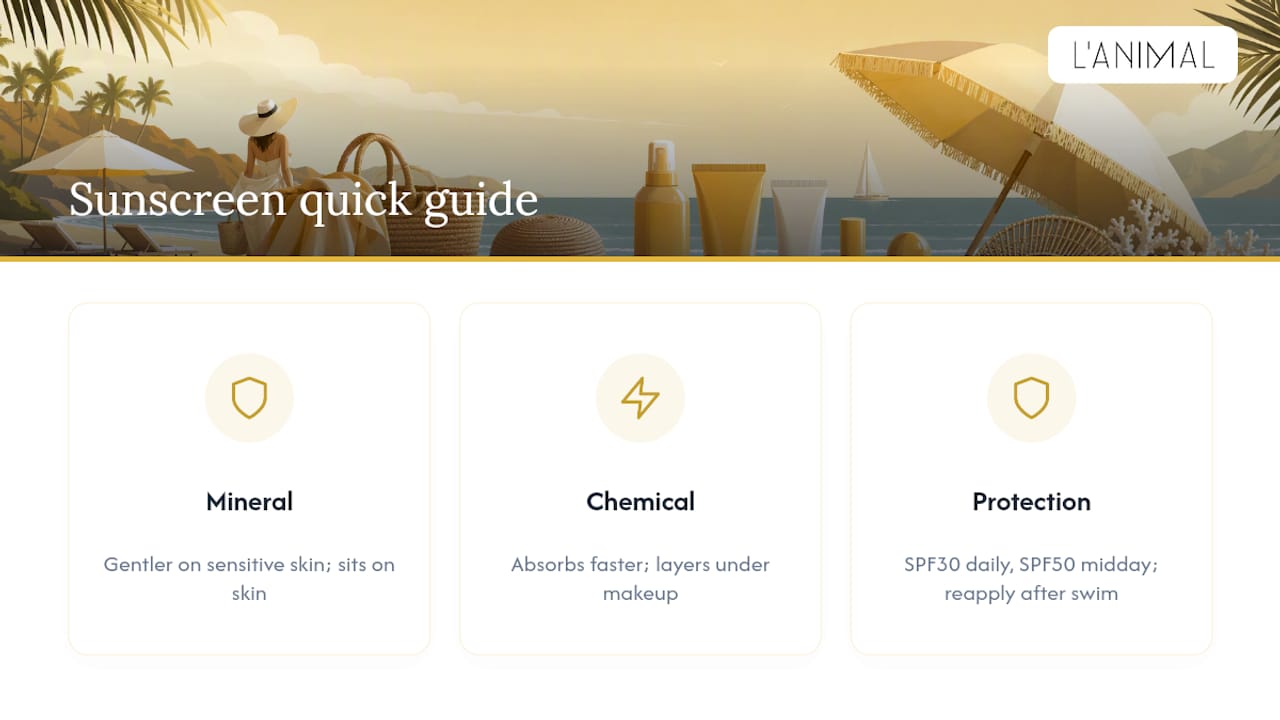
Match your sunscreen format to your accessory routine. A stick formula travels well in a small clutch for touch-ups before dinner, while a spray works faster over the shoulders and back before you head out with a tote in hand. Reapply every two hours in direct sun, and immediately after swimming, regardless of the “water-resistant” claim on the label. If you’re wearing waterproof jewelry, apply sunscreen before you put pieces on. Sunscreen residue is one of the fastest ways to dull a PVD coating or cloud a glass bead.
Keep a travel-size tube in your crossbody at all times. It’s the one accessory checklist item you’ll actually reach for multiple times a day, and running out mid-afternoon means either burning or improvising with a much larger bottle you left in your tote back at the umbrella.
A phone is the one item on every beach trip that has zero tolerance for sand, splashes, or a rogue wave. A dedicated waterproof pouch, the kind that seals with a roll-top or clip closure, protects against submersion and still lets you use the touchscreen through the clear front panel. These typically cost far less than a phone screen repair and pack flat inside your tote when not in use.
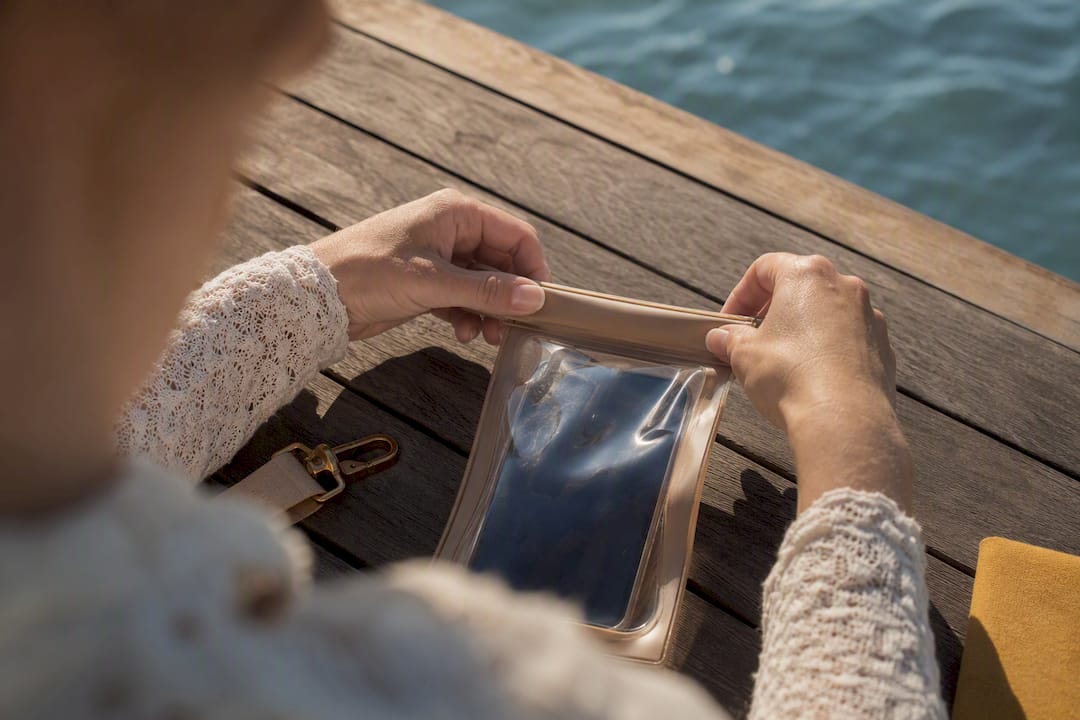
If you’re not fully submerging your phone, a slimmer splash-resistant sleeve is often enough, and it’s easier to tuck into a crossbody without adding bulk. Look for a case with a wrist strap or a clip-on ring so it can attach to your bag strap rather than floating loose in a pocket where sand works its way into the ports.
Pair the case with your bag strategy: keep the phone in your crossbody at the pool or ocean’s edge, and switch it to the evening clutch once you’ve dried off and changed. That way you’re not digging through a sandy tote for it at dinner, and the case never has to touch a wet bikini.
Sand sticking to a wet towel is one of the most common beach frustrations, and a proper mat solves it better than a towel ever will. Woven, sand-resistant mats made from ripstop nylon or tightly woven polyester let sand fall through rather than cling, and they shake clean in seconds.
Size matters more than most shoppers expect. A mat built for two people rarely feels big enough once bags, shoes, and a hat join you on it, so sizing up one notch beyond your group count avoids the awkward edge-sitting problem. Look for corner loops or built-in stakes if you’re setting up in any wind, and a mat that folds into its own pouch is easier to sling over a shoulder alongside your tote.
Color coordination matters here too, since your mat becomes the backdrop for every beach photo you take in your swimsuit. A neutral sand, white, or striped mat won’t clash with a bold print bikini, while a solid mat in your suit’s accent color pulls the whole scene together without looking overly matched.
Heat and salt water pull moisture from your body faster than most people account for, and a reusable bottle belongs in the same category as sunscreen: non-negotiable rather than optional. Insulated stainless steel tumblers keep water cold for hours in direct sun, which matters more at the beach than almost anywhere else you’d use one.
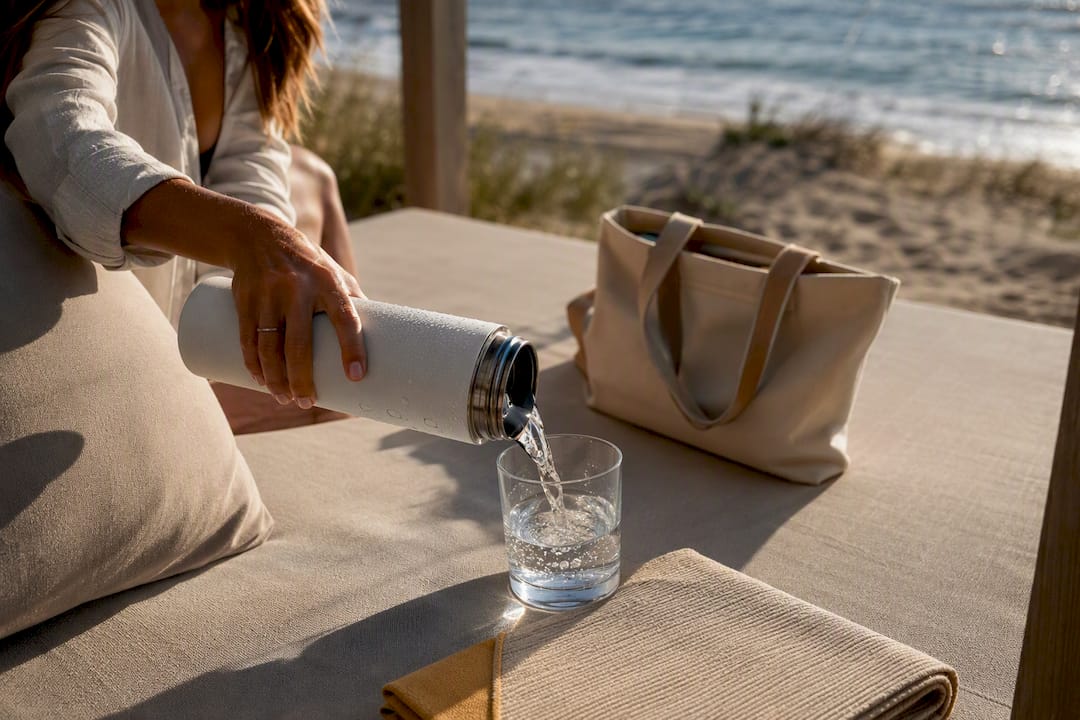
Choose a bottle with a secure, leak-proof lid, since a loose cap inside a tote full of jewelry and a phone case is how you end up with water damage instead of hydration. A wide-mouth design also makes it easier to add ice, which matters when there’s no cooler nearby.
For styling purposes, a tumbler in a neutral tone (matte black, white, or brushed steel) slides into a beach tote without competing with your other accessories, while a bright color can double as an easy way to spot your bag from a crowded stretch of sand.
Direct sun exposure adds up over hours, even with a hat and sunscreen in play, and portable shade closes that remaining gap. A vented beach umbrella with a sand anchor holds up better in coastal wind than a standard patio umbrella, and a tilting canopy lets you adjust the angle as the sun moves across the afternoon.
Pop-up tents suit longer beach days with kids or extended lounging, since they block sun from more angles and add a layer of privacy for changing. They’re bulkier to carry, so they work best for car-accessible beaches rather than a long walk from a resort.
Either option pairs naturally with your hat and cover-up strategy. Shade lets you spend more time out of direct sun without sacrificing a beach day entirely, which matters if you’re protecting color-treated hair or trying to keep a spray tan even before an evening dinner reservation.
Sand fleas and mosquitoes tend to show up right at dawn and dusk, exactly when the light is best for photos in your resortwear. A reef-safe insect repellent, free of oxybenzone and octinoxate, protects both your skin and the coral reefs many resort destinations depend on for their coastline.
A basic first aid kit earns its space in your tote even on a short trip: adhesive bandages, antihistamine cream for stings, and a small tube of aloe for sunburn cover most common beach mishaps. Add blister protection if new sandals are breaking in for the first time on this trip, since a raw heel can end an evening walk early.
Keep repellent and first aid items in a separate zippered pouch inside your tote, away from jewelry and sunglasses. Repellent sprays in particular can cloud lenses or discolor plated jewelry if they leak in transit.
Most beach checklists treat accessories as an afterthought to the swimsuit. Lital Simel-Rhedrick built Lanimal around the opposite idea: the swimsuit is the foundation, and the right hat, bag, and cover-up decide whether an outfit reads as styled or thrown together. That’s why every recommendation here prioritizes material and construction quality over sheer quantity of items.
Lanimal’s own collections follow the same logic, choosing silhouettes and fabrics that move between beach and evening without a full outfit change. For step-by-step packing and outfit breakdowns, the beach packing checklist and jewelry layering guide go deeper into the specifics touched on here.
— Lital
Building this checklist around your actual swimsuit is easier when the swimsuit and the accessories come from the same design point of view. Lanimal designs its swimwear and resortwear as one wardrobe, not separate purchases, so pieces are built to coordinate rather than compete for attention.

If you’re working from a bikini, the Bikini collection pairs naturally with a raffia tote and a single statement cuff for that pool-to-boardwalk formula. Shoppers building a one-piece look should start with the One-Piece Swimsuits collection, since a clean silhouette gives your hat and jewelry room to stand out. For the pool-to-dinner transition this whole checklist is built around, the Cover-Ups collection is designed specifically to work as a dress with a shoe and bag swap, not just a beach layer. Men shopping for a coordinated resort look can start with Mens Shorts for a matching palette across the group.
Browse the full range of collections to build your own three-bag, one-hat, one-cover-up rotation before your next trip.
For more on turning closet staples into cover-ups, see Allison Bornstein’s swimwear styling guide. The resort wear accessories packing guide covers UPF hats and the three-bag rule in more depth. If you’re packing for a full trip, Lanimal’s vacation packing checklist and beach capsule kit guide build on the categories covered here. Paddlers heading somewhere with kayaking on the itinerary might also check Joy&Paddling’s kayak accessories guide for activity-specific gear.
A wide-brim UPF 50+ hat, a beach tote, a crossbody bag, sunglasses, a cover-up, waterproof jewelry, and one pair each of pool slides and evening sandals cover most trips.
Three: a large tote for the beach, a mid-size crossbody for daytime errands, and a small clutch for evenings, following the three-bag rule most stylists recommend.
Choose PVD-coated stainless steel or 14k gold-filled pieces, since they resist tarnish from salt water, chlorine, and sunscreen far better than sterling silver.
Yes, a cover-up with structure or a defined hem works as a dress once you swap pool slides for sandals and add a clutch.
Yes, Lanimal’s Cover-Ups and Bikini collections are designed to work together; current prices can be found on the client’s website.


