Free Shipping on US orders over $150
-
Collections
-
Bikini
- One Pieces
- Cover-Ups
- Men's
- Sale
- MODA GLAM x L'ANIMAL
- Nice Breed
-


The most effective bikini tan line avoidance methods come down to three things: consistent swimsuit choice, smart sun timing, and the right fabric. Get those right, and you control exactly where your lines fall, or whether they appear at all.
Here are the core strategies to start with:
Consistency is the single biggest factor in tan line control. Tanning in short, gradual sessions over multiple days builds color evenly and avoids the sharp contrasts that come from one long, intense session. Rushing creates uneven darkness and increases the chance of peeling, which destroys line definition.
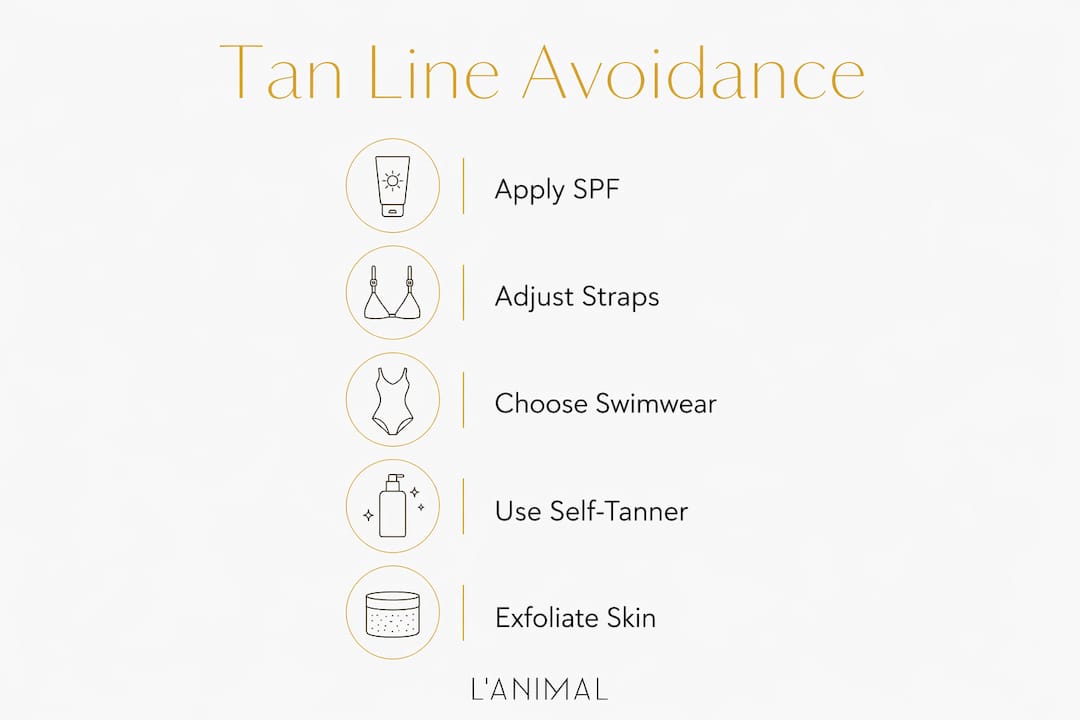
Sunscreen application is where most people cut corners. Apply SPF 30 or higher to every exposed area before going out, not just your face. Reapply every two hours, and always reapply after swimming or sweating. The areas right along your bikini edges are especially prone to burning because the skin transitions from covered to uncovered, so pay extra attention there.
Shifting your strap position slightly during a session blurs the transition zone between tanned and untanned skin. Pull straps to one side for part of the session, then the other. Roll waistbands up slightly. This creates a gradual fade rather than a hard line, which is exactly what you want if you’re trying to avoid visible marks.
Exfoliation and moisturizing both support even skin tone. Well-hydrated skin tans more evenly and holds onto color longer. Dry skin sheds unevenly, which blurs line edges and creates a patchy look between sessions.
Key behavioral habits for even tanning:
Pro Tip: Avoid tanning in a spaghetti-strap bikini the week before an event where you’ll wear a strapless dress. The lines won’t align, and pale shoulder strips will show.
Swimwear style and fabric have a direct effect on where lines form and how sharp they look. Tan-through swimwear uses micro-perforated fabric that allows UV-A rays to pass through evenly, which reduces harsh line contrast without requiring you to go without coverage. The tradeoff is softer, less defined lines overall.
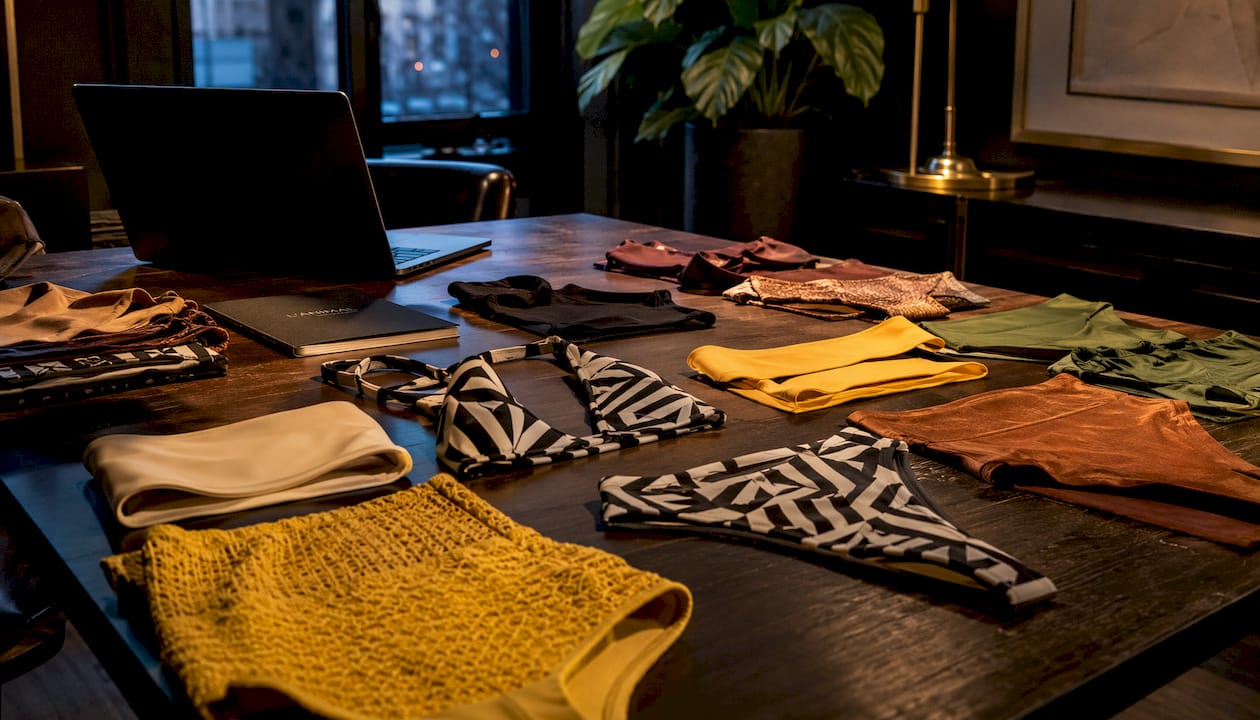
Fabric thickness and weave matter more than color. A white triangle top and a black triangle top of the same size block essentially the same amount of UV. What changes the result is density: thicker, tighter-weave fabrics block more UV and produce sharper lines, while thinner, looser-weave fabrics let more UV through and create softer gradients. Choose based on the result you want.
Style choices have the most immediate impact. Strapless bandeau tops eliminate shoulder strap lines entirely, which makes them ideal if you wear off-shoulder tops or strapless dresses regularly. String bikinis leave only the faintest marks because the straps are minimal. Triangle tops create clean, defined lines at the chest and shoulders. Brazilian-cut bottoms reduce back and hip line marks by covering less fabric across the rear.
Adjustable side-tie bottoms give you the most control over line placement. You can set the tie height precisely on each session, which keeps lines consistent. For bikini-friendly tanning, the fit matters as much as the style. A suit that shifts during a session creates blurred, uneven borders regardless of how good the cut is.
Swimwear features that support even tanning:
For minimal-coverage options designed with clean lines in mind, Lanimal’s collection covers both strapless and adjustable styles built for exactly this purpose.
The fastest fix for existing tan lines is a gradual self-tanner applied to the pale zones only. Use thin, well-blended layers and build color over 2–3 days for the most natural result. Apply with a small brush or the edge of a mitt along the line border so you don’t create a new artificial edge. Gradual tanners are more forgiving than mousse formulas because they build subtly and allow for correction.

Targeted sun exposure works well for closing the gap between tanned and pale areas. Spend 10–15 minutes exposing the pale line zones with SPF 30 applied to the already-tanned skin. This builds natural color in the lighter areas without overdoing the darker ones. The pale skin hasn’t had recent UV exposure, so it burns faster. Keep sessions short and consistent rather than long and infrequent.
Exfoliation on the tanned side of the line softens the transition. Gentle exfoliation every other day with a mild scrub or a chemical exfoliant like glycolic acid speeds up cell turnover on the darker skin, bringing it down toward the pale areas. Don’t scrub the pale side aggressively. The goal is to even out from both directions, not to strip one side.
Moisturizing the pale areas supports faster, more even color development. Hydrated skin tans more evenly and retains melanin longer, which helps close the contrast gap when you’re doing targeted sun sessions. Apply a rich moisturizer daily, particularly in the days between tanning sessions.
Natural tan lines fade on their own over several weeks as skin cells turn over. With consistent exfoliation, self-tanner application, and targeted exposure, you can shorten that timeline noticeably. Without any intervention, deep lines on fair skin can take longer to even out because the contrast between pale and tanned areas is more dramatic.
Options for correcting existing lines:
The most consistent advice from swimwear stylists comes down to one principle: treat your tanning bikini as a dedicated tool, not a rotating wardrobe choice.
Wearing the same bikini every session builds the exact same line every time, making it sharper. Varying your swimwear blurs lines because the edges shift slightly each time. Pick your tanning bikini, commit to it, and watch those lines sharpen session after session. The other bikinis are for swimming and hanging out. Your tanning bikini is for tanning.
That level of commitment extends to how you tie the suit. Stylist guides recommend marking bikini strings with a small dot of nail polish so you can retie to the exact same spot every session. It sounds precise, but that precision is what separates razor-sharp lines from blurry, inconsistent ones built up over weeks.
Lanimal’s design philosophy, built around clean geometry and precise fit, aligns directly with this approach. Swimwear that holds its position, sits consistently on the body, and uses quality fabric construction gives you the foundation for controlled, repeatable results. A suit that shifts, stretches unevenly, or uses flimsy ties undermines every other technique in this guide.
The same principle applies to strap adjustments. Keep everything in the same position throughout each session. Shifting straps halfway through blurs the line. If clean lines are the goal, set the suit and leave it.
Consistent swimsuit choice combined with proper SPF use and strategic sun timing gives you direct control over where bikini tan lines form and how sharp they appear.
| Point | Details |
|---|---|
| Consistency is the foundation | Wearing the same bikini in the same position every session builds sharper, cleaner lines over time. |
| SPF 30 or higher is non-optional | Apply before every session and reapply every two hours, especially after swimming or sweating. |
| Fabric density shapes line sharpness | Thicker, tighter-weave fabrics produce sharper lines; micro-perforated fabrics soften line contrast. |
| Self-tanner corrects lines fastest | Apply gradual self-tanner to pale zones only, building color over 2–3 days in thin, blended layers. |
| Tan outside peak UV hours | Tanning before 10 AM or after 4 PM reduces burn risk and supports more even color development. |
Ready to build your tanning routine around swimwear that actually holds its position? Lanimal’s luxury one-piece collection and precision-cut bikini styles are designed with the fit consistency that makes every technique in this guide work better.