FREE SHIPPING ON ALL US ORDERS OVER $150
-
Collections
-
Bikini
- One Pieces
- Cover-Ups
- Men's
- Sale
- MODA GLAM x L'ANIMAL
- Nice Breed
- Gift Card
-


Standing in front of your suitcase the night before a beach trip, unsure whether that cute cover-up will actually hold up through a full day of sun, sand, a waterside lunch, and a casual dinner walk is a frustration most of us know well. Beach fashion is uniquely demanding. It needs to perform in the water, protect you from UV rays, dry fast, and still look polished when you step off the sand. This guide breaks down every factor you need to consider, from fabric science to accessory choices, so your beachwear works as hard as your vacation schedule.
| Point | Details |
|---|---|
| UPF matters most | Focus on fabric sun protection—wet cotton loses effectiveness fast compared to UV-specialized materials. |
| Choose versatile layers | Plan outfits you can wear for swimming, relaxing, and going to dinner without needing a full change. |
| Accessorize smartly | A sun hat, sunglasses, and cover-up are essential for both style and protection. |
| Fit is functional | A good fit means comfort, support, and confidence in and out of the water. |
| Avoid single-use pieces | Your best beach outfits serve multiple roles—not just looking cute for photos. |
Picking beachwear is not just about grabbing whatever looks great on the hanger. Several practical factors determine whether a piece will serve you well across a full beach day or fall short by noon.
Sun protection starts with the fabric
Most people assume any clothing provides sun protection. That is not accurate. Fabrics are rated by UPF (Ultraviolet Protection Factor), which measures how much UV radiation passes through the material to your skin. A UPF of 50 blocks roughly 98% of UV rays, while a standard cotton T-shirt may offer low UPF protection that drops even further when the fabric gets wet. Wet fabric can drastically reduce the protection you thought you had, which is a critical point most shoppers overlook entirely.
Versatility is not optional
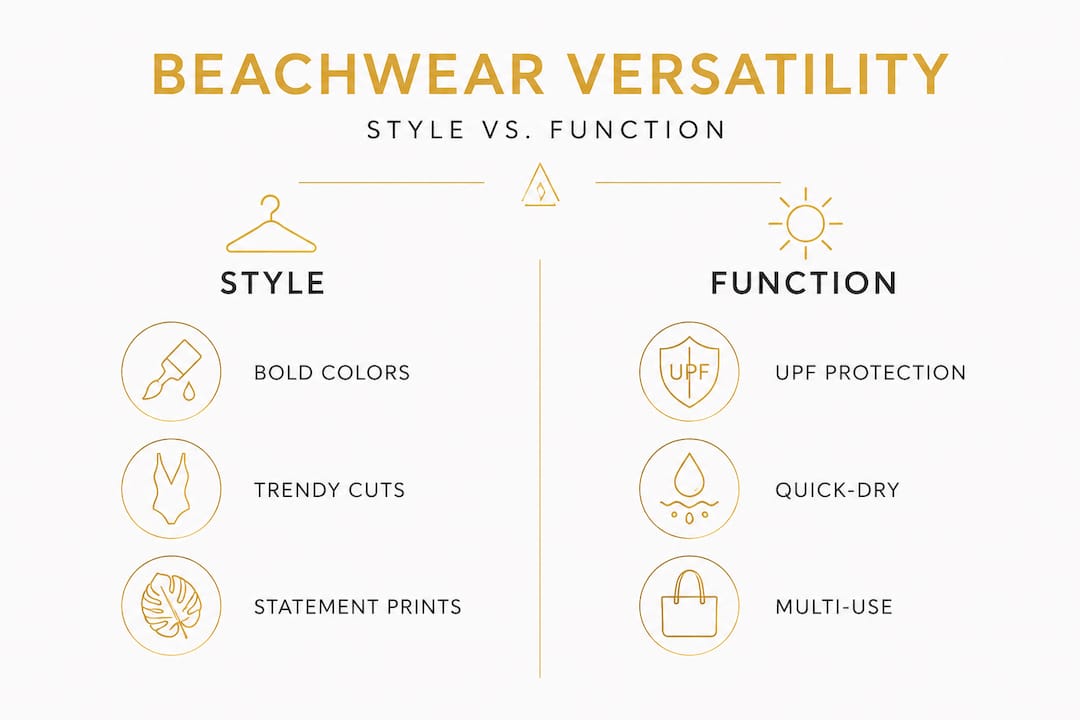
For anyone planning a beach vacation with multiple activities, versatility is the foundation of smart packing. Versatility and fit mechanics should be the first filter you apply before anything else. A swimsuit that can only be worn in the water is a missed opportunity. Quick-drying fabrics, reversible designs, and styles that layer easily under casual clothes are the pieces that earn their spot in your bag.
Key factors to evaluate before buying any beachwear piece:
“Think in terms of outfit systems, not individual pieces. A swimsuit that pairs with a wrap skirt and sandals gives you three settings in one.”
Pro Tip: Before your trip, lay out every beachwear item and ask whether it works in at least two settings. If it only functions at the water’s edge, reconsider bringing it.
For more beachwear outfit ideas that balance style and practicality, browsing curated lookbooks can help you visualize complete systems rather than isolated pieces.
With the core considerations in place, it is time to build your actual beach wardrobe. The goal is a tight, functional capsule that covers every scenario without overpacking.
The core beachwear capsule: 5 steps
Following a vacation packing benchmark keeps you from overpacking while ensuring nothing critical is missing.
Comparison table: Key beachwear garment types
| Garment type | UV protection | Comfort rating | Versatility |
|---|---|---|---|
| Swimwear (synthetic blend) | Medium to high | High | Medium |
| Linen cover-up | Low to medium | Very high | Very high |
| Cotton T-shirt (dry) | Low | High | High |
| Rashguard (UPF rated) | Very high | High | Medium |
| Wrap skirt or sarong | Low | Very high | High |
| Reversible bikini top | Medium | High | Very high |
Women’s options worth building around
For women, the most versatile foundation pieces combine function with style. High-performance bikini bottoms designed with active movement in mind hold their shape in and out of the water. Reversible bikini tops give you two distinct looks from a single piece, which is ideal for longer trips. And watercolor bikini bottoms with bold prints translate beautifully from the beach to a casual lunch setting when paired with the right cover-up.
Men’s options
For men, the priority is board shorts or swim trunks with a fast-dry fabric and a length that works both in the water and at a casual restaurant. A linen shirt or lightweight button-down over a solid swim trunk creates an effortless beach-to-bar look that requires zero effort to pull off.
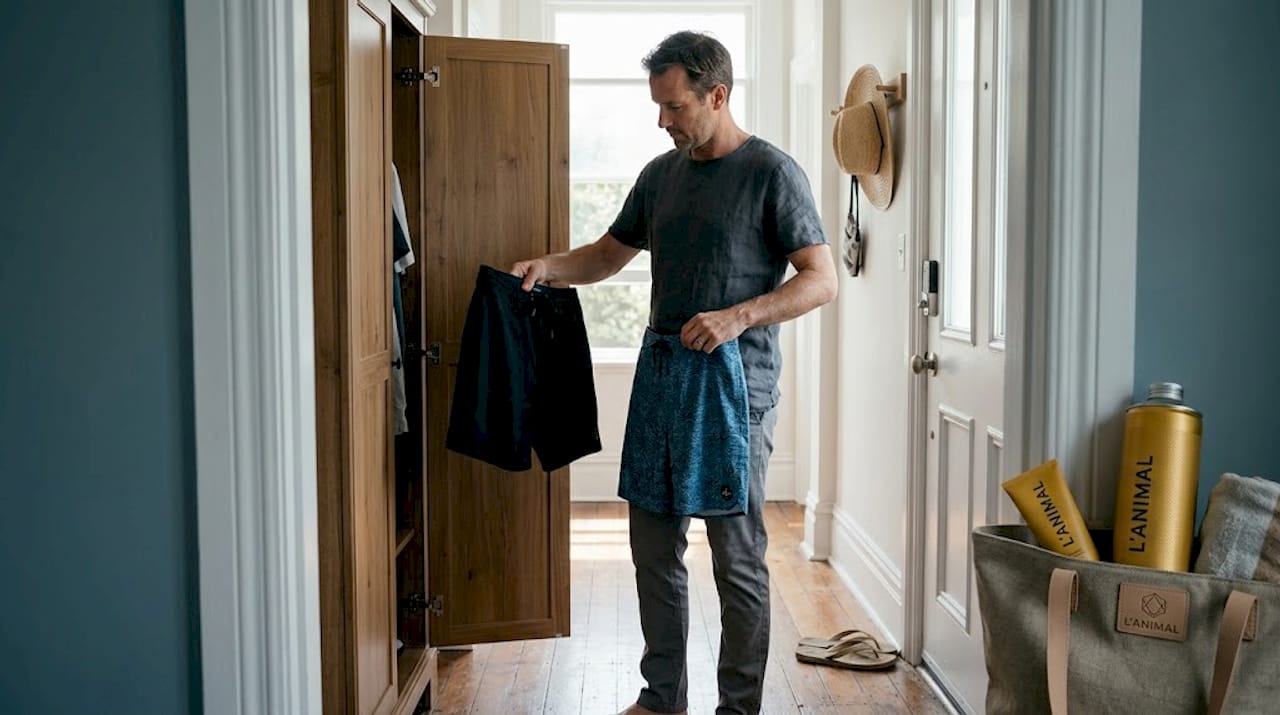
The difference between a good beach day and an uncomfortable one often comes down to the specific materials you are wearing and the accessories you brought along.
Fabric comparison: What actually performs at the beach
| Fabric | UPF rating | Comfort | Dry time | Best use |
|---|---|---|---|---|
| Standard cotton | Low (UPF 5 to 15) | High (dry) | Slow | Casual cover-up only |
| Linen | Low to medium | Very high | Medium | Cover-ups, wraps |
| Polyester blend | Medium to high | High | Fast | Swimwear, rashguards |
| Nylon/Lycra blend | High | Very high | Very fast | Performance swimwear |
| UV-protective synthetics | Very high (UPF 50+) | High | Fast | Full-day sun exposure |
Wet fabric can lose a significant portion of its UV-blocking ability, which means a cotton cover-up that felt protective while dry may offer almost no defense once it gets splashed. This is why purpose-built swimwear fabrics outperform everyday clothing at the beach, even if the everyday clothing looks similar.
Reading labels for UV protection
When shopping, look for the UPF number on the label or product description. UPF 15 to 24 is minimal protection. UPF 25 to 39 is good. UPF 40 to 50+ is excellent. If a garment has no UPF rating listed, assume it offers minimal protection, especially when wet.
Accessories checklist for a complete beach day
A well-chosen set of accessories rounds out any beach outfit and handles practical needs that clothing alone cannot cover:
UPF-rated swim tops and safari bikini tops with built-in UV protection take the guesswork out of sun safety while keeping your look sharp.
Pro Tip: Always test how a fabric feels when wet before committing to it for a full beach day. Some materials cling, sag, or become transparent when soaked, which affects both comfort and appearance.
A complete vacation packing list that factors in both function and style ensures you arrive prepared for every scenario, from a calm morning swim to an afternoon exploring a nearby town.
Even experienced travelers make predictable beachwear mistakes. Knowing them in advance saves you money, discomfort, and the frustration of an outfit that fails mid-trip.
The most common beachwear mistakes
“The best beach vacation picks are the ones that work across multiple scenarios rather than single-purpose items chosen only for appearance.”
Versatility and fit are the two factors that separate a well-built beach wardrobe from a frustrating one. A piece that fits perfectly and works in multiple settings will always outperform a flashy item that only functions in one narrow context.
Multi-use bikini bottoms that reverse to a second color or print are a practical example of how smart design solves the single-purpose problem without sacrificing style.
Pro Tip: Avoid the beach-only trap by running a quick mental test before you buy. Ask: can I wear this at the beach, for a walk to town, and at a casual lunch? If the answer is no to two of those, reconsider.
Here is a perspective that most beachwear guides will not say directly: the idea that beach fashion is purely a fun, low-stakes category is outdated and slightly misleading.
Beach trips in 2026 are not passive sunbathing sessions. They involve water sports, long walks, outdoor dining, spontaneous market visits, and sometimes a sunset cocktail hour. Your outfit needs to handle all of that without a full wardrobe change between each activity. That is not a small ask.
The brands and designers who understand this build pieces with intention. Reversible construction, fast-dry fabrics, and cuts that work both in and out of the water are not gimmicks. They are practical solutions to a real problem. When your swimwear looks just as good under a linen shirt at lunch as it did in the ocean an hour earlier, you are not just stylish. You are free to move through your day without logistics getting in the way.
True confidence at the beach comes from knowing your outfit is working for you, not against you. That means you are not adjusting your top every five minutes, not worrying about whether your cover-up is see-through when wet, and not wishing you had packed differently. Flexibility is what makes that possible. Fashion follows when the foundation is right.
The most stylish people at the beach are rarely wearing the most elaborate outfits. They are wearing pieces that fit perfectly, transition effortlessly, and look like they were chosen with purpose. That is the standard worth building toward.
Ready to put these strategies to work? L’ANIMAL CO offers a curated selection of swimwear designed with exactly these principles in mind: quality construction, versatile styling, and pieces that move with you from the water to wherever the day takes you.

Start with the Watercolor Bikini Bottom for a bold, beach-ready print that pairs with multiple tops. The Amazon Reversible Bikini Top gives you two distinct looks in one piece, solving the single-purpose problem instantly. For active days in and out of the water, the Sportif Bikini Bottom delivers the performance and fit you need. Every piece is designed by Lital Simel-Rhedrick with attention to detail, timeless style, and the kind of quality that holds up across every scenario your vacation throws at you.
The UPF rating is the most important factor, since wet cotton loses most of its UV-blocking ability while purpose-built UV-protective fabrics maintain their rating even when damp.
Ideally, your beachwear should include pieces that transition from beach to dinner, so a swimsuit paired with a cover-up and sandals handles both settings without a full outfit change.
A complete beach day kit includes a UPF-rated wide-brim hat, UV-blocking sunglasses, a lightweight cover-up, and comfortable sandals that work beyond the sand.
Bring at least two swimwear sets so one is always dry and ready, especially if you are swimming daily or doing water activities that keep fabric wet for extended periods.
Choosing items based only on appearance rather than versatility is the most frequent mistake, and it often leaves you unable to transition smoothly between the beach, lunch, and evening activities without a full wardrobe swap.
Article generated by BabyLoveGrowth


