Free Shipping on US orders over $150
-
Collections
-
Bikini
- One Pieces
- Cover-Ups
- Men's
- Sale
- MODA GLAM x L'ANIMAL
- Nice Breed
-


Choose a one-piece for lap swimming, water sports, and secure coverage. Choose a bikini for tanning, mix-and-match fit, and faster drying between dips. A racerback one-piece with UPF fabric wins for active days, while a bikini with separate top and bottom sizing wins for comfort and adjustability. Swimwear brands typically carry both styles, so the real decision comes down to what your day actually demands.
TL;DR:
- A one-piece provides full coverage and support, making it ideal for active water sports and swimming laps, but can lead to noticeable tan lines.
- Bikinis allow for faster drying and more even tanning, with adjustable fit and easier bathroom access, but offer less support during high-impact activities.
- Proper fit for a one-piece depends on torso length, requiring arm raise and bending tests, while separates allow mixing sizes to address proportion issues.
- UPF-rated fabrics and elastane percentage are key factors for sun protection and shape retention, respectively, and should be checked when choosing swimwear.
- Building a versatile swim wardrobe involves pairing a one-piece for active days with a bikini for lounging, with both styles available in durable construction and supportive features.
The one-piece vs bikini debate really comes down to five factors: coverage, support, adjustability, tan lines, and how fast you can get in and out of the suit. Each silhouette wins on different fronts, and neither is universally “better.”
Coverage and tan lines work in opposite directions. A one-piece covers the torso fully, which limits sun exposure but leaves a stark tan line at the edges. A bikini exposes more skin, which means a more even tan but also more surface area to protect.
Support and adjustability split the same way. One-pieces distribute support across a continuous panel, which helps larger busts and anyone doing anything strenuous in the water. Bikinis let you size the top and bottom independently, which solves the common problem of a proportionate top not matching a proportionate bottom.
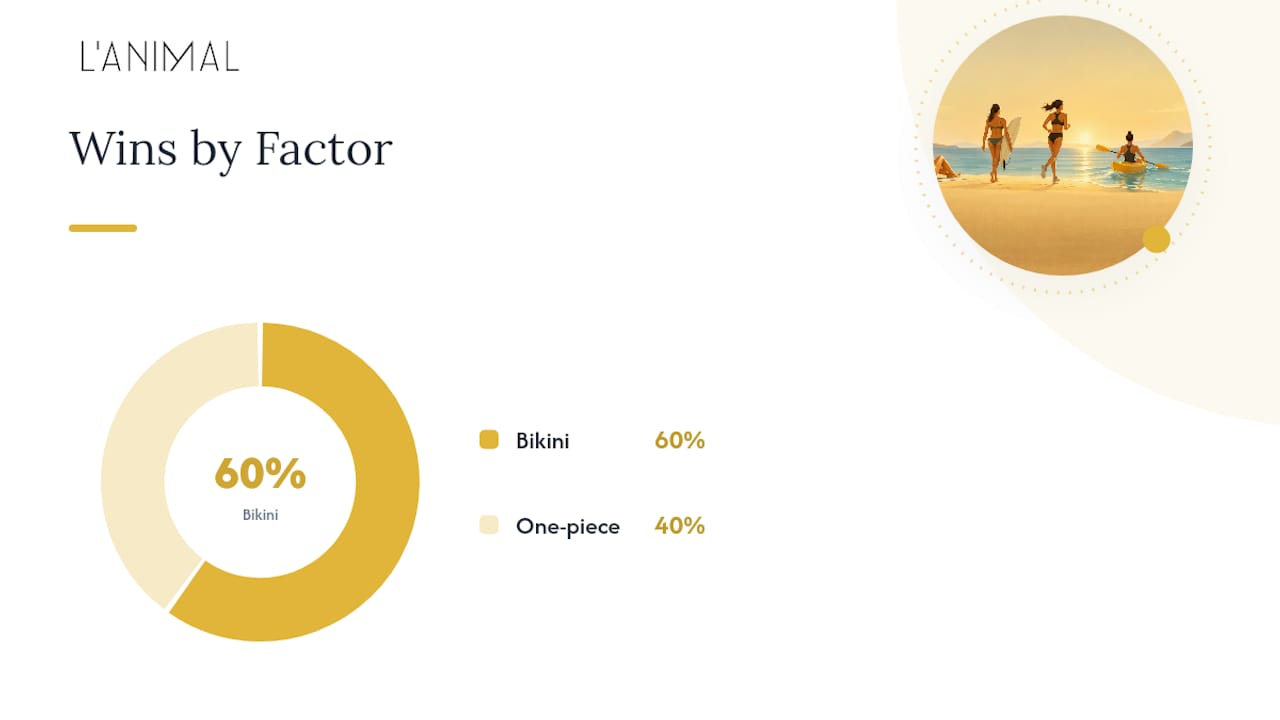
Bathroom breaks and drying time almost always favor the bikini. A two-piece swimsuit separates into two smaller pieces of fabric, so it dries faster and doesn’t require you to strip down entirely for a restroom stop.
Quick pros and cons:
When your day involves swimming laps or chasing kids through waves, lean one-piece. When your day is a pool chair and a paperback, lean bikini.
Design choices that look purely cosmetic actually change how a suit performs in water. A one-piece generally creates less drag and stays secure during dives, turns, and starts, which is why competitive and fitness swimmers reach for one almost by default. The single continuous panel does not shift when you push off a wall or take a wave to the shoulder.
That said, a bikini is not automatically off-limits for active days. A sport-style bikini or a tankini can hold up fine for casual swimming, paddleboarding, or beach volleyball, as long as it has the right construction. Look for:
For high-impact sports like surfing or bodyboarding, a one-piece’s fuller coverage and support matter more than they do for a quiet float in a lake.
Pro Tip: Before buying a bikini for active use, jump in place and raise both arms overhead in the fitting room. If the top shifts or the bottom slides, it will move a lot more in real waves.
Fit problems with one-pieces and bikinis are almost mirror images of each other. A one-piece can be genuinely tricky for a very long or very short torso, since the fabric has to stretch or bunch to connect top and bottom in one continuous piece. A bikini sidesteps the torso-length issue entirely but introduces two separate fit points instead of one.
Check torso fit before you commit to a one-piece:
If your top and bottom sizes don’t match your proportions, buying separates solves it instantly, and it’s one of the biggest practical advantages of the two-piece swimsuit format. Prioritize different support features depending on your bust size: a wide band and molded cup for fuller busts, light padding or a soft cup for smaller busts, and an underwire option if you want a lifted shape without a sports-bra feel. Readers with fuller busts or curvier proportions may want to start with a curvy-body fit guide before shopping either silhouette.
Elastane percentage is the number that decides whether a suit holds its shape after a season of pool visits. A blend with too little elastane goes limp and sags; one with the right ratio snaps back after every stretch, which is why higher-elastane blends tend to outlast cheaper suits by several seasons.
More fabric coverage means less UV exposure, according to CDC guidance on ultraviolet radiation, which is one real advantage of a full one-piece over a minimal bikini on a high-sun day.
Harvard Health recommends UPF-rated clothing as a genuine complement to sunscreen, not a replacement for it. If sun protection is your top priority, look specifically for a UPF label rather than assuming any swimsuit fabric blocks UV rays equally.
Care tips that extend the life of either style:
A one-piece is the quiet multitasker of a beach wardrobe. Thrown under a sheer cover-up or paired with denim shorts, it reads as a bodysuit for a beach walk or a boardwalk lunch, not just a swimsuit. Browsing a statement one-piece style makes this dual purpose obvious fast.
Bikinis earn their keep through mixing and matching. Pairing one top with two or three bottoms (or vice versa) stretches a small suitcase into a week’s worth of different looks, and separates let you fix fit issues on the fly instead of returning an entire suit.
Quick occasion guide:
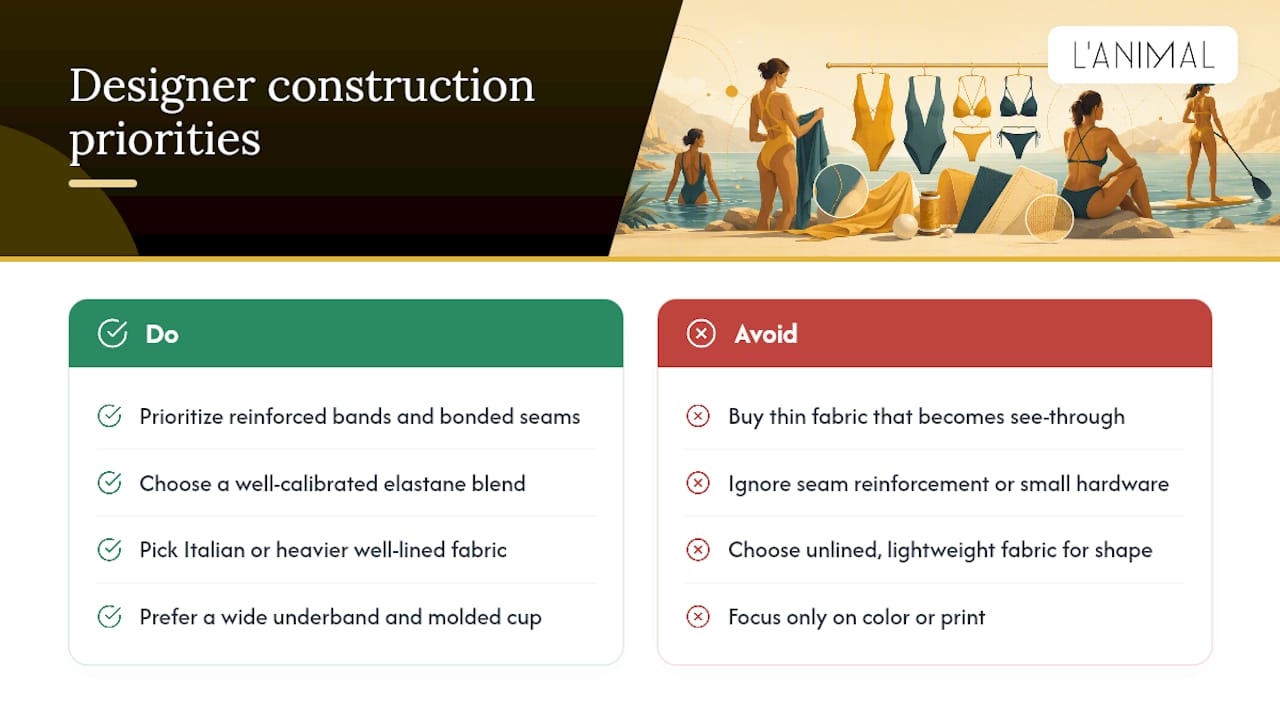
Cheap swimwear fails at the seams first, which is why fabric choice and construction deserve more attention than color or print.
Reinforced bands, bonded seams, and a well-calibrated elastane blend are what separate a suit that lasts one summer from one that lasts five. Italian fabrics tend to hold shape and color longer than standard blends, and small hardware details, like mother-of-pearl accents, signal that a brand cared about durability as much as looks.
For support, prioritize a wide underband and a molded or lightly structured cup. For style, prioritize fabric weight and finish, since a heavier, well-lined fabric drapes and sculpts in a way thin fabric never will.
Pro Tip: Stretch the fabric gently between your fingers before buying. If it feels thin enough to see through when pulled, it will likely lose shape within a season.
Most people ask me whether a one-piece or a bikini is “better,” and the honest answer is that the question itself is the mistake. I reach for a one-piece on days when I know I’ll be moving. I reach for a bikini on days when I know I’ll be sitting still. Neither choice says anything about your body or your style. It says something about your plans for the next few hours. Build your swimwear decisions around function first on active days, and let style lead on the days built for lounging.
— Lital
Many designers create both silhouettes with consistent construction standards, so you’re not trading fit quality for style either way. If your days lean active, start with the one-piece swimsuit collection, built with sculpting fits and durable Italian fabrics that hold up through real movement. If your days lean toward tanning, mixing prints, or adjusting fit piece by piece, the bikini collection gives you separate top and bottom sizing instead of a one-size compromise. Pair either with a cover-up from the cover-ups collection for the walk from pool to lunch. Browse both collections, check the fabric notes on each product page, and pick the one that matches your actual plans this week, not just the mood board.
No. A bikini is specifically a two-piece swimsuit, while a one-piece is a single connected garment. Both fall under the broader term “swimsuit,” but they’re distinct styles with different fit and support characteristics.
Yes, essentially. “Bikini” and “two-piece” are used interchangeably to describe a separate top and bottom, though “bikini” often implies less coverage than some two-piece styles like a high-waisted set.
A tankini is a hybrid: a tank-style top paired with separate bottoms, giving you more torso coverage than a bikini but the two-piece flexibility a true one-piece lacks. It solves the torso-length problem that can make a full one-piece fit awkwardly on longer or shorter frames.
Personal style and comfort drive that choice more than performance. For casual swimming, tanning, or lounging, a bikini’s independent top and bottom sizing and faster drying time often outweigh the extra support a one-piece offer, especially outside of competitive or high-impact settings.
Pack both if you can. A one-piece works best for pool laps, water sports, or a modest resort look, while a bikini suits tanning, sunbathing, and mixing styles across a trip. Lanimal’s one-piece and bikini collections are built to the same construction standard, so neither choice sacrifices quality.


