Free Shipping on US orders over $150
-
Collections
-
Bikini
- One Pieces
- Cover-Ups
- Men's
- Sale
- MODA GLAM x L'ANIMAL
- Nice Breed
-


Ethical swimwear is swimwear made from sustainable materials, produced under fair labor conditions, with transparent supply chains and durable construction that reduces environmental harm. It stands apart from fast fashion swimwear, which relies on virgin polyester and toxic dyeing processes, poor labor standards, and short garment lifespans. Defining ethical swimwear means looking at the full picture: what the fabric is made from, who made it, how it was dyed, and how long it will last. Key materials like ECONYL® and REPREVE® and certifications like OEKO-TEX® and the Global Recycled Standard (GRS) are the benchmarks that separate genuine ethical swimwear brands from greenwashed marketing.
Recycled synthetic fibers are the foundation of most ethical swimwear on the market today. ECONYL® is regenerated nylon made from ocean plastic, fishing nets, and industrial waste. REPREVE® converts plastic bottles into performance fiber. Newlife is a certified recycled polyester produced through a mechanical process that avoids chemical solvents. Each of these reduces carbon emissions by up to 90% compared to virgin nylon production. That reduction is not a minor efficiency gain. It represents a fundamental shift in how swimwear impacts the planet.
Bio-based fabrics like Evo® offer another path. Evo® is derived from castor oil, a renewable plant source, and it biodegrades more readily than petroleum-based synthetics. These materials are still less common than recycled nylons, but they signal where the industry is heading.
Fabric blend matters as much as fiber origin. Swimwear needs at least 15% spandex or elastane to maintain shape and resist sagging during use. A recycled nylon fabric with too little elastane will lose its fit quickly, which defeats the purpose of buying a durable, ethical piece. Look for blends in the range of 80% recycled nylon and 20% elastane for the best performance.
Pro Tip: Check the fabric label for both the recycled fiber name and the elastane percentage. A swimsuit labeled “recycled” with only 5% elastane will wear out fast, regardless of its eco credentials.
Sustainable fabric alone does not make a swimwear brand ethical. “Eco-friendly” branding does not guarantee fair labor. A brand can use ECONYL® and still pay workers poverty wages in unregulated factories. Labor ethics require separate verification through specific certifications and brand transparency.
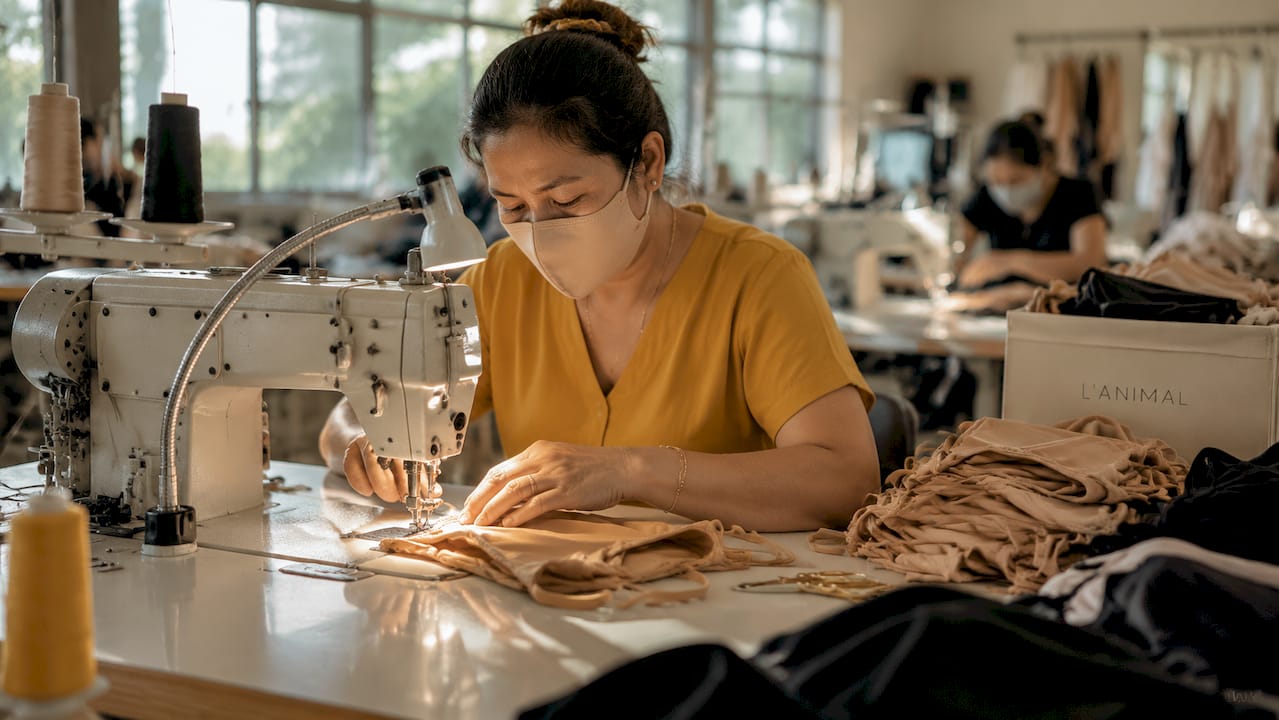
Fair Trade certification confirms that workers receive fair wages and safe conditions. B-Corp certification evaluates a company’s entire social and environmental performance, including supply chain accountability. SA8000 is an auditable standard focused specifically on workplace conditions, covering child labor, working hours, and health and safety. These certifications require third-party audits, which means a brand cannot simply self-declare compliance.
Transparent supply chains are a strong indicator of ethical production. Brands that publish factory names, locations, and audit results are far more accountable than those offering only vague sustainability statements. The contrast with fast fashion is stark. Fast fashion swimwear is typically manufactured in large, anonymous facilities with no public accountability and no labor audits.
Beyond certifications, look for these production practices:
Small-batch production and repair programs are among the clearest signals that a brand is genuinely committed to ethical standards rather than marketing optics.
Certifications are the most reliable tool for cutting through greenwashing. Each certification covers a specific part of the supply chain, and no single label covers everything.
| Certification | What it covers | Best for |
|---|---|---|
| OEKO-TEX Standard 100 | Tests finished fabric for harmful chemicals, including PFAS as of january 2024 | Consumer safety, non-toxic fabrics |
| Global Recycled Standard (GRS) | Verifies recycled content claims and chain of custody | Recycled fiber sourcing |
| Bluesign | Audits dyeing and finishing processes for chemical safety and water use | Manufacturing process |
| GOTS | Certifies organic natural fibers from farm to finished product | Organic cotton or linen blends |
| Fair Trade | Audits labor conditions and fair wages | Worker welfare |
| B-Corp | Evaluates overall company social and environmental performance | Brand-level ethics |
OEKO-TEX Standard 100 now requires PFAS testing as of january 2024. PFAS are a class of synthetic chemicals linked to health risks, and they were previously unaddressed by most fabric certifications. This update makes OEKO-TEX the most trusted certification for synthetic and recycled swimwear fabrics. GRS and Bluesign provide third-party verification of sustainable material sourcing and non-toxic production processes.
The critical point: labor certifications and material certifications are separate. A swimsuit can carry GRS and OEKO-TEX labels and still be made in a factory with poor labor conditions. You need both types of certification to confirm a piece is fully ethical.
Pro Tip: Search a brand’s website for its certification logos and click through to verify them. Legitimate certifications link to a public database where you can confirm the brand’s registration.
The durability gap between ethical and fast fashion swimwear is significant. High-quality recycled fibers like REPREVE®, ECONYL®, and Newlife last 50+ swims before significant degradation. Lower-quality materials used in fast fashion swimwear last about 15 swims. That is a difference of more than three times the lifespan per garment.
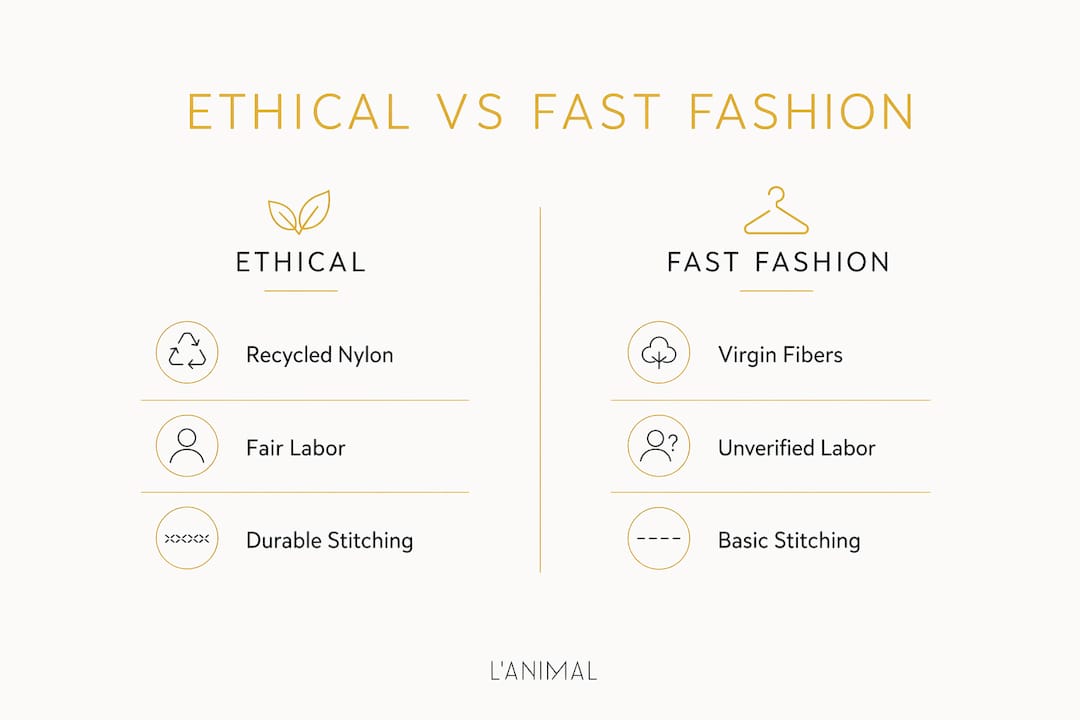
Construction quality amplifies this gap. Flatlock stitching is significantly stronger than basic overlock seams in high-stress areas like leg openings and bust lines. Ethical swimwear brands consistently use flatlock construction. Fast fashion brands default to cheaper overlock seams that fray and fail faster.
| Feature | Ethical swimwear | Fast fashion swimwear |
|---|---|---|
| Fiber type | Recycled nylon, ECONYL®, REPREVE® | Virgin polyester |
| Lifespan | 50+ swims | ~15 swims |
| Stitching | Flatlock | Basic overlock |
| Dyeing process | Low-impact or Bluesign-certified | Conventional toxic dyes |
| Labor standards | Fair Trade or B-Corp audited | Typically unaudited |
| Packaging | Recycled or minimal | Single-use plastic |
The environmental savings compound over time. Buying one ethical swimsuit that lasts three seasons replaces three fast fashion pieces. Each fast fashion piece carries the full environmental cost of virgin polyester production, toxic dyeing, and eventual landfill disposal. Ethical swimwear also tends to be designed for real body proportions rather than mass-produced sizing, which means better fit and less likelihood of early discard. You can read more about why quality swimwear pays off over time.
Choosing ethical swimwear is a process of verification, not just brand trust. Follow these steps to evaluate any brand or product before buying.
Check the fabric label first. Look for named recycled fibers: ECONYL®, REPREVE®, or Newlife. Confirm elastane is at least 15%. Generic “recycled polyester” without a named fiber source is harder to verify.
Search for certifications. Look for OEKO-TEX Standard 100, GRS, or Bluesign on the product page or brand website. For labor ethics, look for Fair Trade, B-Corp, or SA8000. Both material and labor certifications should be present.
Evaluate brand transparency. Does the brand publish factory locations? Does it share annual sustainability reports? Brands that disclose this information are accountable. Brands that use only vague “eco-friendly” language are not.
Examine construction details. Check whether the product description mentions flatlock stitching. Review the care instructions. Truly durable ethical swimwear is typically machine washable at low temperatures. Garments requiring hand wash only often indicate lower durability.
Look for ethical brand practices. Small-batch production, repair programs, and recycled packaging all signal genuine commitment. These practices cost brands more, so they tend to appear only where ethics are a real priority.
Spot greenwashing. Vague or generalized “eco-friendly” language without specific certifications or material names is a red flag. Authentic ethical brands name their fibers, certifications, and factories. Understanding recycled fabrics in swimwear helps you ask the right questions.
Pro Tip: Use the Good On You app or the brand’s own certification page to cross-check labor and material claims before purchasing. A brand that scores well on both labor and environmental metrics is rare and worth supporting.
Ethical swimwear requires verified sustainable materials, fair labor certifications, and durable construction to deliver genuine environmental and social benefits.
| Point | Details |
|---|---|
| Recycled fibers are the standard | ECONYL®, REPREVE®, and Newlife last 50+ swims and cut carbon emissions significantly. |
| Labor and material ethics are separate | A recycled fabric label does not confirm fair wages. Check for Fair Trade or B-Corp alongside GRS. |
| OEKO-TEX is the top safety cert | Updated in 2024 to include PFAS testing, making it the most trusted cert for synthetic swimwear. |
| Construction determines longevity | Flatlock stitching and at least 15% elastane are the two construction markers of a durable piece. |
| Greenwashing is common | Specific fiber names and third-party certifications separate genuine brands from vague eco claims. |
I have spent years working with swimwear fabrics and construction, and the single most common misconception I hear is that ethical swimwear is just regular swimwear with better marketing. It is not. The difference shows up in how a piece holds its shape after 20 swims, in whether the color fades after one season in chlorine, and in whether the seams hold under real movement.
What I find most consumers overlook is the labor side. Recycled fabric has become a relatively easy box to check. Brands have access to ECONYL® and REPREVE® at scale now. But publishing factory locations, committing to fair wages, and running repair programs? Those practices cost money and require genuine organizational commitment. When I see a brand doing all of that, I take it seriously.
The other thing worth saying plainly: ethical swimwear is not a sacrifice. The pieces I have seen made with flatlock construction, proper elastane blends, and low-impact dyes look better and feel better than fast fashion alternatives. They are designed to last, which means they are designed with intention. That shows in the fit and the finish. Conscious consumers deserve both style and substance, and the best ethical brands deliver exactly that.
— Lital
Lanimal was built on the belief that swimwear should be worth keeping. Designer and Stylist Lital Simel-Rhedrick created Lanimal to offer pieces with real attention to quality, construction, and timeless style.
The Sportif Bikini Bottom is a strong example of that commitment. It is designed for durability and fit, built to hold up across seasons rather than fall apart after a few wears. If you are ready to move away from disposable swimwear and toward pieces that reflect your values, browse the full collections at Lanimal. Each piece is made with the quality and care that ethical swimwear demands.
Ethical swimwear is swimwear made from sustainable or recycled materials, produced under fair labor conditions, with transparent supply chains and durable construction. It prioritizes both environmental protection and worker welfare throughout the production process.
The most common ethical swimwear fabrics are ECONYL®, REPREVE®, and Newlife, all made from recycled materials. These are typically blended with at least 15% elastane to maintain shape and durability.
Look for third-party certifications: OEKO-TEX Standard 100 or GRS for materials, and Fair Trade or B-Corp for labor. Brands that publish factory locations and sustainability reports are more credible than those using only general eco-friendly language.
Not always. Eco-friendly typically refers to sustainable materials, while ethical swimwear also covers fair labor and transparent production. A piece can use recycled fabric and still be made under poor working conditions.
Yes. High-quality recycled fibers like REPREVE® and ECONYL® last 50+ swims before degrading, compared to roughly 15 swims for lower-quality fast fashion materials. Flatlock stitching and proper elastane content extend that lifespan further.


