Free Shipping on US orders over $150
-
Collections
-
Bikini
- One Pieces
- Cover-Ups
- Men's
- Sale
- MODA GLAM x L'ANIMAL
- Nice Breed
-


Seamless swimwear is defined as garments constructed without traditional stitched seams, using bonded edges or circular-knit fabrics to create a smooth, pressure-free fit that moves with your body. The difference between a seamless suit and a conventional one is not subtle. Women who switch report “second-skin” comfort as the primary reason they never go back, with reduced pressure points driving that preference far more than aesthetics alone. What most shoppers do not realize is that nine out of ten retail items labeled “seamless” still retain seams at the waistband or leg openings. Knowing the difference between true seamless construction and a marketing label is the single most useful thing you can learn before buying.
The core advantage of seamless swimwear is the elimination of pressure points. Traditional swimwear uses overlocked or serged seams that sit against the skin, and after an hour of wear those ridges create visible indentations and real discomfort. Bonded construction and double-layered stretch fabrics distribute pressure evenly across the surface instead of concentrating it at seam lines. The result is a suit you stop thinking about, which is exactly what you want at the beach.
The visual payoff is just as significant. Circular-knit construction eliminates visible panty lines entirely, while flatlock stitching only reduces them. That distinction matters when you are wearing a fitted one-piece under sheer cover-ups or form-fitting resort wear. Bonded edges also improve shape retention without adding heavy lining, so the suit holds its silhouette without feeling stiff or restrictive.
Key comfort advantages at a glance:
Pro Tip: If you are between sizes, size up in seamless styles. The fabric’s inherent stretch means a slightly larger size will lie flat and smooth, while a too-tight fit can cause the bonded edges to roll.
Not all “seamless” swimwear is built the same way, and the construction method directly determines what you actually feel on your skin. Three distinct techniques get grouped under the same label, and they produce very different garments.
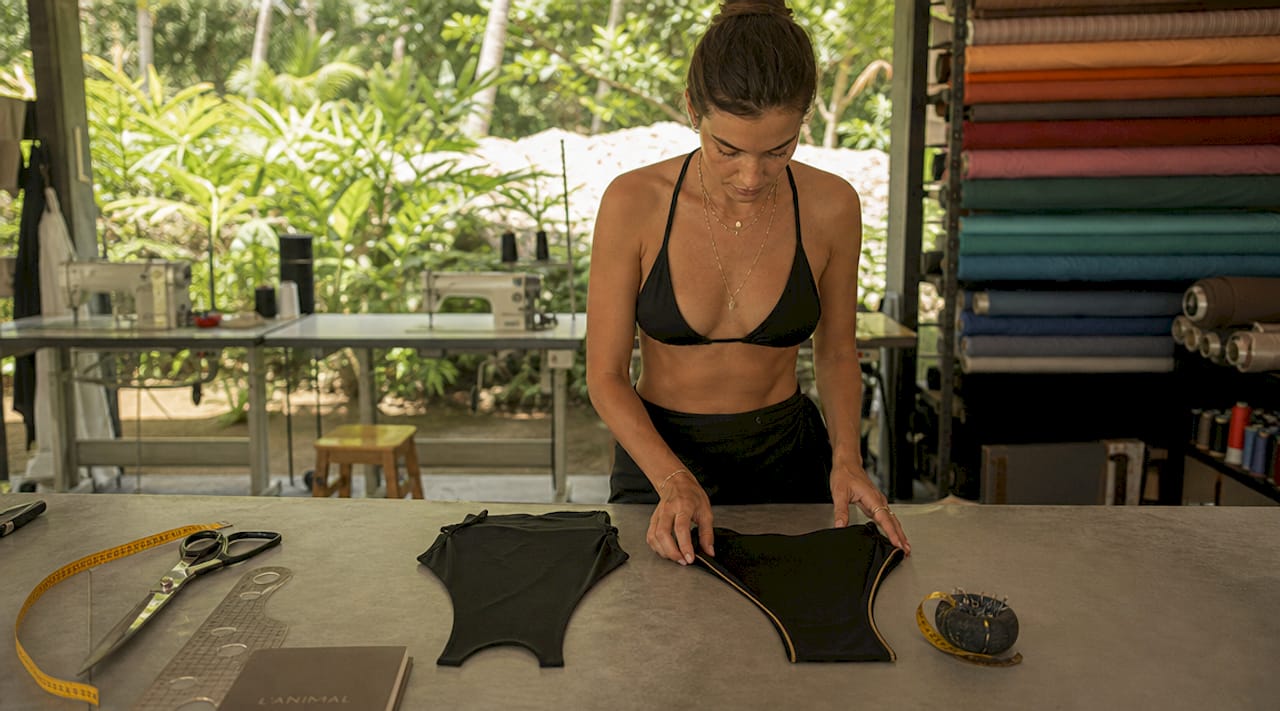
Circular-knit construction is the only method that produces a genuinely seam-free garment. The fabric is knit as a continuous tube on a specialized machine, so there is no assembly step and no seam line anywhere on the body of the suit. Circular-knit technology requires higher capital investment and slower production speeds than cut-and-sew lines, which is why it appears in premium collections rather than mass-market racks. The fabric itself must provide inherent shape, recovery, and durability without relying on seam structure to hold the garment together.
Flatlock stitching is the most common technique behind the “seamless” label in retail. The seam sits flat against the skin rather than protruding, which does reduce bulk and chafing compared to a standard overlocked seam. However, flatlock still leaves seams at the waistband and leg openings. It is a meaningful improvement over conventional construction, but it is not the same product as a circular-knit garment.
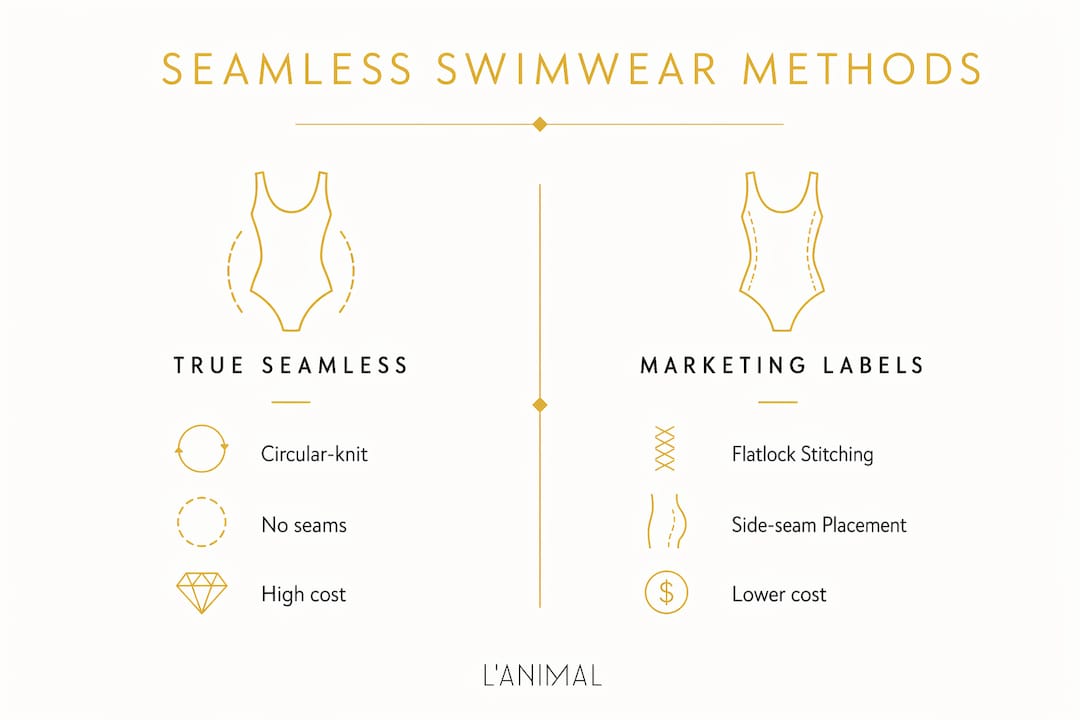
Side-seam placement simply moves the seam from the front or back panel to the side of the body, reducing visibility. The seam is still present and still contacts the skin. This technique is the weakest claim to the “seamless” label.
| Construction method | Seams present | VPL elimination | Cost tier | Best for |
|---|---|---|---|---|
| Circular-knit | None | Complete | Premium | Maximum comfort, clean silhouette |
| Flatlock stitching | Waistband, gusset | Partial | Mid-range | Reduced chafing, active use |
| Side-seam placement | Side panels | Minimal | Budget | Visual improvement only |
Pro Tip: Ask brands directly whether their “seamless” styles use circular-knit construction or flatlock stitching. A brand that cannot answer that question clearly is almost certainly selling flatlock.
Performance is where the construction difference becomes most obvious. Traditional seams restrict movement by creating fixed points in the fabric that resist stretching in multiple directions simultaneously. Circular-knit and bonded-edge construction adapts to body position without those fixed points, which translates directly to freedom during swimming, paddleboarding, or beach sports.
The engineering behind this was not straightforward. Seamless knitting machines existed for years before swimwear-grade seamless fabric was viable. The challenge was engineering the right hand feel and aquatic durability into the knit structure itself, since early attempts produced fabric that was too sheer or broke down quickly in chlorinated or salt water. Companies like Santoni developed the technical specifications that made performance seamless swimwear practical.
For active women, the practical benefits are concrete:
For travel specifically, reversible swimwear in seamless construction is one of the most practical investments you can make. The absence of protruding seams means both sides lie flat and look finished, which is not always the case with reversible cut-and-sew styles.
The gap between what “seamless” means on a hang tag and what it means technically is wide enough to cost you real money on a suit that does not deliver what you expected. These are the specific things to check before purchasing.
Ask about the knitting method. The only answer that confirms true seamless construction is “circular-knit” or “whole-garment knitting.” Flatlock and side-seam styles will typically be described as “minimal seam” or “reduced seam” by honest brands.
Examine the waistband and leg openings. On a true circular-knit garment, these edges are finished with bonded or folded fabric, not a separate sewn-on band. A stitched waistband is the clearest sign that the body of the suit may be seamless but the construction overall is not.
Check the fabric composition. Seamless swimwear fabric must provide shape and recovery without seam support. Look for nylon-spandex or polyamide-elastane blends with at least 15 to 20 percent elastane content. Lower elastane percentages often indicate the fabric will not hold its shape after repeated wear.
Evaluate the gusset construction. The gusset is the one area where even circular-knit suits typically require some assembly. A well-constructed seamless suit will have a flat, minimal gusset seam. A bulky or raised gusset seam in a “seamless” suit signals lower-quality construction throughout.
Price is a signal, not a guarantee. Circular-knit production costs more than flatlock. A genuinely seamless suit priced below $60 is almost certainly flatlock construction. That does not make it a bad suit, but you should know what you are buying.
Read the brand’s construction language carefully. Phrases like “smooth feel,” “no-dig design,” and “barely-there fit” describe the experience of flatlock stitching, not circular-knit construction. True seamless brands tend to use technical language because the technology is their actual selling point.
For a broader look at how construction quality separates premium swimwear from mass-market options, the distinction between these methods is a reliable starting point.
Seamless swimwear delivers its core benefits only when the construction is circular-knit, not flatlock stitched or side-seam shifted.
| Point | Details |
|---|---|
| True seamless means circular-knit | Only circular-knit garments eliminate all seams; flatlock and side-seam styles still retain seams at key points. |
| Comfort is structural, not cosmetic | Bonded edges and double-layered fabrics reduce pressure points and skin irritation during extended wear. |
| Performance improves with no seams | Absence of fixed seam points allows multi-directional stretch and reduces shifting during active use. |
| Most retail labels mislead | Nine out of ten “seamless” retail items use flatlock stitching rather than true circular-knit construction. |
| Price reflects production cost | Circular-knit production costs more; a genuine seamless suit priced under $60 is almost always flatlock. |
The most common mistake I see is women assuming that any suit labeled “seamless” will feel the same. It will not. The first time you wear a true circular-knit suit, the difference is immediate and obvious. There is no seam line to locate, no edge to adjust, and no point in the day where you become aware of the suit again. That experience is what the label promises, and flatlock construction does not deliver it.
What I find more interesting is that the consumer shift toward seamless is not primarily about aesthetics. Women are not buying these suits because they look different in photos. They are buying them because discomfort from traditional seams is a real, daily frustration that most swimwear has never addressed seriously. The industry caught up with that demand slowly, and the result is a market full of flatlock suits wearing the seamless label without earning it.
My advice is to treat construction knowledge as your primary shopping filter. Style matters, color matters, and fit matters. But if the construction is flatlock and you are paying for circular-knit, you are not getting what you paid for. Ask the question directly. Brands that invest in true seamless construction are proud of it and will tell you exactly how their garments are made.
— Lital

Lanimal carries a curated selection of swimwear built for women who want construction quality to match the design. The luxury one-piece collection features sculpting fits in Italian fabrics, with styles like the Sail One-Piece Swimsuit that combine mesh detail with a structured, body-contouring cut. For active wear, the Sportif Bikini Bottom is designed for movement, with a minimal-seam construction that stays in place during swimming and beach sports. Each piece reflects Lital’s focus on detail, fit, and timeless style. Browse the full collection at lanimal.co and find the construction quality your swimwear should have delivered all along.
Seamless swimwear refers to garments made without traditional stitched seams, using circular-knit or bonded construction to create a smooth, pressure-free fit. The term is also applied loosely to flatlock-stitched styles, which reduce but do not eliminate seams.
No. Nine out of ten retail items labeled seamless use flatlock stitching or side-seam placement, which still retain seams at the waistband and leg openings. Only circular-knit construction produces a genuinely seam-free garment.
Seamless construction eliminates fixed seam points that restrict movement, reducing shifting and riding up during swimming or beach sports. The fabric also tends to be lightweight and quick-drying, which improves comfort across multiple activities.
Check the waistband and leg openings for stitched bands, which indicate flatlock construction. Ask the brand directly whether the garment uses circular-knit technology. True seamless brands use technical language and can confirm the production method.
Circular-knit production requires higher investment and slower manufacturing than cut-and-sew, so genuinely seamless suits are priced higher. A “seamless” suit under $60 is almost always flatlock stitched rather than circular-knit.


