Free Shipping on US orders over $150
-
Collections
-
Bikini
- One Pieces
- Cover-Ups
- Men's
- Sale
- MODA GLAM x L'ANIMAL
- Nice Breed
-


Fashion pieces worn occasionally can lean softer and lighter; suits that see daily chlorine exposure need polyester or PBT blends with chlorine-resistant spandex. Test any swatch for recovery and wet opacity before committing to yardage.
TL;DR:
- Polyester and PBT fabrics resist fading and chlorine breakdown better than nylon, but PBT offers enhanced elasticity for frequent-use suits.
- Most swimwear needs 10% to 20% spandex for shape retention, with performance suits sometimes requiring even higher recovery standards.
- Heavier fabrics (230 to 250 GSM) provide better opacity and support, especially for shaping or competition suits, while lighter fabrics are suitable for fashion pieces.
- To ensure fabric quality, always test swatches for stretch, recovery, wet opacity, and chlorine resistance before purchasing bulk yardage.
- Recycled fabrics like Econyl and rPET can match virgin fiber performance only with certification and proper processing, and durability is key to long-term sustainability.
Every swimsuit fabric starts as a base fiber knitted with spandex (also called elastane or Lycra), and the base fiber decides almost everything else about how the suit feels, fades, and holds up. Nylon, polyester, and PBT are the three fibers doing nearly all the work in swimwear today, and they behave in genuinely different ways once they hit chlorine, saltwater, and sun.
Nylon has a soft hand-feel and takes dye beautifully, which is why most fashion-forward bikinis and resortwear use it. Colors come out rich and saturated, and the fabric drapes well against the body instead of feeling stiff. The tradeoff shows up over time: nylon spandex blends can lose recovery and fade faster under regular chlorine exposure, particularly if the spandex itself isn’t a chlorine-resistant variant.
Polyester runs the opposite direction. It resists UV fading and chlorine breakdown far better than standard nylon, dries quickly, and holds its shape through repeated wear. The hand-feel is slightly firmer and less silky than nylon, which is a fair trade for anyone swimming several times a week rather than lounging poolside twice a summer.
PBT (polybutylene terephthalate) is the fiber most casual shoppers have never heard of, and it deserves more attention. PBT knits have built-in molecular elasticity, which means the fabric itself flexes and recovers even before spandex gets involved. That property makes PBT blends a favorite for competition and training suits that face chlorine almost daily, since nylon vs. polyester vs. PBT blends each bring different strengths to swimwear performance.
Recycled versions of these fibers deserve equal consideration, not a discount.
Spandex content, not the base fiber alone, determines whether a suit holds its shape or sags by the third wear. Most swimwear needs strong recovery and typically falls in the 10% to 20% spandex range, with four-way stretch and recovery testing used to separate fabrics that will hold shape from those that won’t.
Performance and competition suits often sit even higher, though PBT-enhanced knits can hit similar shape retention with less spandex thanks to the fiber’s own elasticity.
Recovery is the property that actually matters day to day. A fabric can stretch impressively and still fail if it doesn’t snap back. Poor recovery shows up as baggy knees on boardshorts, a drooping bikini bottom by afternoon, or a one-piece that no longer sits where it did on day one.
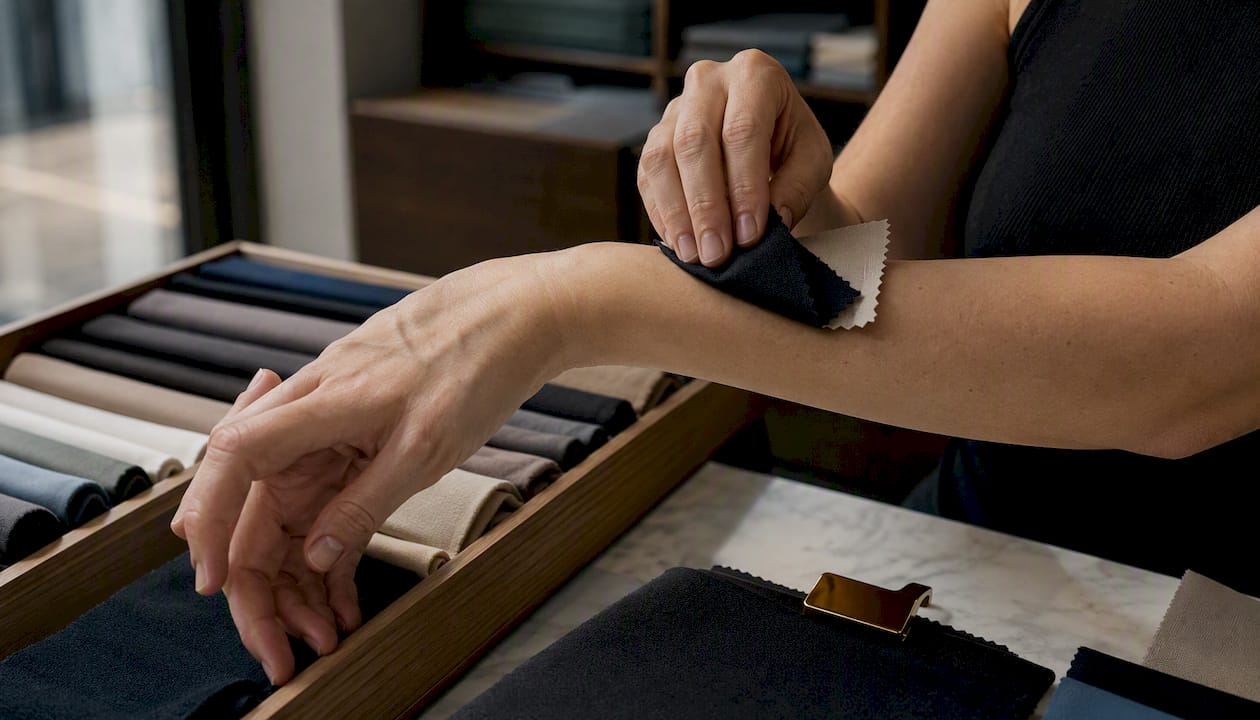
Two swatch tests catch this before you cut a single yard:
Pro Tip: Run the recovery test after a quick soak in warm water. Heat and moisture mimic pool conditions, and a fabric that recovers fine dry but sluggishly wet is telling you something real about how it’ll perform on a beach vacation.
GSM (grams per square meter) tells you how heavy and how opaque a fabric will be, and guessing wrong here is the most common mistake first-time sewists make. Lighter fabrics move beautifully but risk see-through moments; heavier fabrics sculpt and support but can feel stiff if overdone.
Most swimwear construction uses two layers: a shell in the 180 to 250 GSM range and a separate lining, often power mesh or tricot, and that lining needs comparable stretch to the shell or the finished garment will distort.
Rough guidelines by weight:
Double-layering the shell fabric itself, rather than adding a separate lining, is common in lighter-weight swimwear when a brand wants opacity without changing the outer texture. Separate linings like power mesh come into play when a garment needs compression that the shell alone can’t provide, such as tummy-control one-pieces. Whichever route you choose, the lining’s stretch direction has to run with the shell’s, not against it, or seams will pull and pucker exactly where you don’t want them to.
Spandex, not the base fiber, is usually the first thing to fail in a well-loved swimsuit. Chlorine breaks down spandex’s molecular structure over repeated exposure, which is why a suit can look fine in the closet but lose its snap after a season of daily laps.
Chlorine-resistant spandex variants such as LYCRA XTRA LIFE® extend garment life meaningfully compared to standard spandex, which is why brands making durability claims for frequent-use swimwear should be sourcing a named, chlorine-resistant spandex ingredient rather than generic elastane.
If you’re buying or making a suit for daily pool use, ask the supplier by name whether the spandex is a chlorine-resistant type. Standard spandex in a daily-swim suit will show fading and stretched-out elastic well before a chlorine-resistant equivalent does, even with identical care.
UV resistance runs on a related but separate track. Polyester and PBT naturally resist fading better than nylon, and certain dye and finishing methods widen that gap further. Sublimation printing, where dye is heat-transferred directly into polyester fibers rather than sitting on top of the fabric, tends to hold color longer under sun exposure than surface-printed nylon. If a fabric’s colorfastness matters as much as its stretch, ask what printing or dyeing method was used, not just what fiber it is.
For anyone comparing options for a suit that’ll see the pool five days a week, Lanimal’s own breakdown of what makes a fabric genuinely chlorine resistant walks through the practical signs to look for beyond the marketing copy.
Recycled fabric performing as well as virgin fabric isn’t a given. It’s a result of proper certification and processing, and that distinction is where a lot of “sustainable swimwear” marketing quietly falls apart.
Econyl and rPET can match virgin nylon and polyester performance when properly certified, which means the certificate is doing real work, not just decorating a hangtag. Two certifications are worth asking for by name:
Durability is itself a sustainability metric, and it’s the one shoppers skip most often. Extending a garment’s usable life by nine months can cut its carbon and water footprint by up to 20%, which means a recycled suit that falls apart in one season is arguably less sustainable than a well-made virgin-fiber suit worn for five years. Ask any brand claiming sustainability credentials how long their fabric is actually built to last, not just what percentage is recycled. Lanimal’s own approach to sourcing recycled fabrics for swimwear treats longevity as part of the sustainability case, not separate from it.
There’s no single “best” swimsuit fabric because the fabric has to match the job the garment is doing. A bikini and a rash guard are solving completely different problems, and the fabric choice should reflect that.
The pattern across all four is worth noticing: garments meant to be worn briefly and looked at (bikinis, resortwear) lean toward nylon’s softness, while garments meant to be worn hard and often (training suits, boardshorts) lean toward polyester and PBT’s resilience.
Ordering a full bolt of fabric based on a product photo is how a lot of small swimwear brands lose money in their first year. A swatch costs a few dollars; a bad bulk order costs hundreds.
Run through this before committing to any supplier:
Once a swatch passes, verify the supplier’s datasheet actually lists the fields that matter: GSM, exact blend percentages, any UPF rating claimed, chlorine resistance data, and certification numbers for OEKO-TEX or GRS rather than just the logos.
Pro Tip: Ask about dye-lot consistency before placing a bulk order, not after. A fabric that matched perfectly on your swatch can shift shade slightly between dye lots, which is a real problem if you’re producing multiple sizes of the same style over several months.
Swimwear fabric wholesale pricing generally runs $3 to $16 per yard depending on fiber and performance features, and MOQs plus custom dye lead times should factor into any production timeline from the start.
Fabric quality only gets you halfway. Care habits decide whether a well-made suit lasts three seasons or thirty swims.
Clear care labeling helps here more than most brands realize. A tag that says “rinse after each wear” sets an expectation the fabric can actually meet, which matters more for repeat customers than a vague “handle with care.”
Every fabric that ends up in a Lanimal collection goes through a fast, hands-on check before it’s approved, not just a spec sheet review. The process draws on our own two-minute fabric vetting checklist built from working directly with Italian mills.
Balancing a luxury hand-feel with real chlorine and sun durability is the actual design problem behind every Lanimal piece, not a marketing line. Softness and longevity pull in opposite directions more often than shoppers assume, and getting both right is where the fabric selection work actually happens.
Swimwear fabric absorbs far less water than everyday clothing fabric by design, which is exactly why a wet suit feels manageable instead of waterlogged. Nylon and polyester are both synthetic fibers with low moisture absorption compared to cotton, meaning the fibers themselves don’t swell up and hold water the way natural fibers do.
Polyester generally edges out nylon on quick-dry performance. Its lower moisture retention means a polyester-spandex suit will typically feel dry to the touch faster after a swim than an equivalent nylon blend, even though both dry far faster than cotton ever could. That’s part of why polyester dominates in rash guards and training suits, where a swimmer might be in and out of the water multiple times in a session and doesn’t want a soggy garment weighing them down between sets.
PBT blends perform similarly well on quick-dry, benefiting from the same low-absorption synthetic structure. The practical difference shoppers notice isn’t usually about which fiber dries fastest in a lab test. It’s about fabric weight: a heavier 250 GSM suit holds more water in its fibers than a light 170 GSM piece, so a lighter fashion bikini will often feel dry sooner than a heavy sculpting one-piece, regardless of fiber.
The lining matters too. A power mesh lining, being more open in structure, tends to release water faster than a denser tricot lining, which is worth knowing if quick turnaround between swim and dry-off matters for how you use the suit.
Breathability and softness come down to fiber choice, knit structure, and weight working together, not any single spec. A fabric can have great stretch and still feel clammy or scratchy if the knit is too dense or the fiber is a poor match for the wearer’s skin.
Nylon generally wins on softness. Its fibers are finer and take dye without the slight stiffness polyester can carry, which is a real reason nylon dominates bikinis and everyday swimwear where all-day comfort against skin matters more than chlorine resilience. Polyester and PBT blends have closed the softness gap considerably in recent years through finer yarn weights and better knitting techniques, but a side-by-side hand-feel test still usually favors nylon for pure comfort.
Breathability is largely a function of knit openness rather than fiber type alone. A tighter, denser knit built for opacity and support traps more heat and moisture against skin than a more open knit at the same GSM. This is where power mesh linings offer a real comfort advantage over solid tricot linings; the mesh structure allows more airflow, which matters most in warm-climate wear or activewear-adjacent swim pieces worn for extended periods.
Seam placement and elastic quality round out the comfort picture in ways fiber choice alone can’t fix. A soft, breathable fabric ruined by a scratchy elastic edge or a poorly placed seam will still feel uncomfortable regardless of what’s written on the fabric spec sheet, which is why swatch testing against actual skin, not just visual inspection, catches problems a datasheet never will.
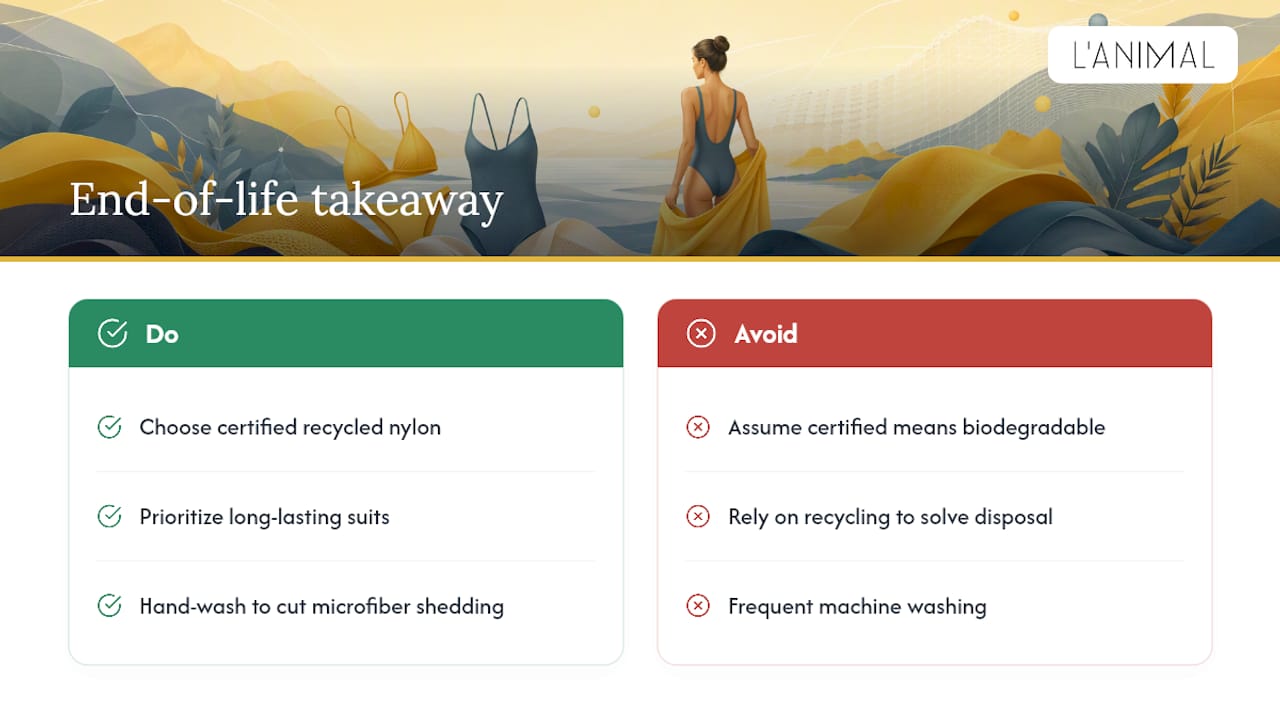
Certifications like GRS and OEKO-TEX tell you about sourcing and chemical safety, but they don’t answer a separate question shoppers increasingly ask: what happens to this fabric at the end of its life? Nylon and polyester, recycled or not, are still synthetic polymers, and neither breaks down in a landfill or ocean environment the way a natural fiber does.
This is a genuine limitation of synthetic swimwear that certification labels don’t solve. A GRS-certified recycled nylon suit is a meaningfully better sourcing choice than a virgin nylon suit, but it will still persist in the environment for a very long time after disposal, since recycling addresses the input side of the lifecycle, not the end-of-life side.
Microfiber shedding during washing is the other environmental consideration that certifications don’t capture. Synthetic swim fabrics can release tiny plastic fibers during machine washing, which is one more practical reason hand washing swimwear, already recommended for fabric longevity, also reduces one source of environmental shedding. This is a case where the care instructions that extend a garment’s life and the ones that reduce its environmental footprint happen to point in the exact same direction.
The honest takeaway is that no current swimwear fabric, including certified recycled ones, is truly biodegradable in a practical sense. Durability and responsible sourcing remain the two most meaningful levers available right now. A fabric that lasts five seasons instead of one, regardless of end-of-life biodegradability, still represents less total material produced and discarded over time.
The honest answer is that softness and chlorine resilience will always pull against each other to some degree, and pretending otherwise does customers a disservice. A silky nylon fashion piece worn a handful of times a summer doesn’t need the same chlorine-resistant spandex a daily lap-swimmer requires, and forcing that durability into a piece designed for the beach, not the pool, adds cost without adding value.
Being upfront about that distinction, on the label and at checkout, builds more trust than a vague durability promise ever could. A customer who knows exactly what their suit is built for takes better care of it and expects the right lifespan from the start.
— Lital
Every fabric decision covered in this guide plays out in real garments, not just spec sheets, and that’s where Lanimal’s collections come in. Each piece is chosen for fit, lining structure, and durability first, hand-feel and print second, which is the order that actually protects a customer’s investment.

The Bikini collection showcases the nylon-spandex blends and medium-GSM construction this guide recommends for fashion-forward pieces meant to move and drape well. The One-Piece Swimsuits collection demonstrates the heavier GSM, higher-recovery blends, and power-mesh lining combinations that sculpting suits need to hold their shape through a full day at the pool or beach. If you’re shopping rather than sourcing yardage, the fastest way to see these fabric principles in action is to try a piece on and feel the difference between a properly lined shell and a cheaper single-layer alternative. Browse either collection now and look for the lining details called out on each product page.
For readers who want to go deeper into the technical specs covered here, Seamwork’s fabric shopping guide breaks down stretch and recovery testing in more detail, while Lycra’s sustainable fiber research covers chlorine-resistant spandex chemistry. Lanimal’s own blog offers practical follow-ups, including why double-layered fabrics improve fit and what defines premium swimwear.
A bikini typically needs about half a yard to one yard of fabric plus lining, while a one-piece usually requires one to one and a half yards depending on size and design details like ruching or cutouts.
Polyester alone, without spandex, won’t stretch or recover properly for a fitted swimsuit, but polyester-spandex blends are excellent for swimming thanks to strong chlorine and UV resistance.
Polyester-spandex blends generally dry fastest among common swimwear fabrics due to low moisture absorption, though lighter-weight fabrics of any fiber type will feel dry sooner than heavier ones regardless of fiber choice.
The brand selects fabrics for fit, lining structure, and durability, drawing on certified recycled options where they meet the same performance standard as virgin fibers; current fabric details are listed on each product page.


