Free Shipping on US orders over $150
-
Collections
-
Bikini
- One Pieces
- Cover-Ups
- Men's
- Sale
- MODA GLAM x L'ANIMAL
- Nice Breed
-


Textured bikini fabric is defined as swimwear material with a raised or patterned surface created through specialized knitting, weaving, or embossing techniques. Unlike flat, smooth fabrics, textured swimwear fabric features three-dimensional surface patterns including ribs, waffle grids, smocking, and jacquard designs that add visual depth and functional benefits. These fabrics typically use nylon and elastane blends, delivering multi-directional stretch and shape retention. Understanding what makes these materials different helps you choose a bikini that fits your body, suits your lifestyle, and holds up over time.
Textured swimwear fabric is defined by its three-dimensional surface, which includes ribs, waffle grids, smocking, or jacquard patterns created through knitting, weaving, or embossing. Each texture type looks and behaves differently on the body. Knowing the differences helps you pick the right style for your shape and the occasion.
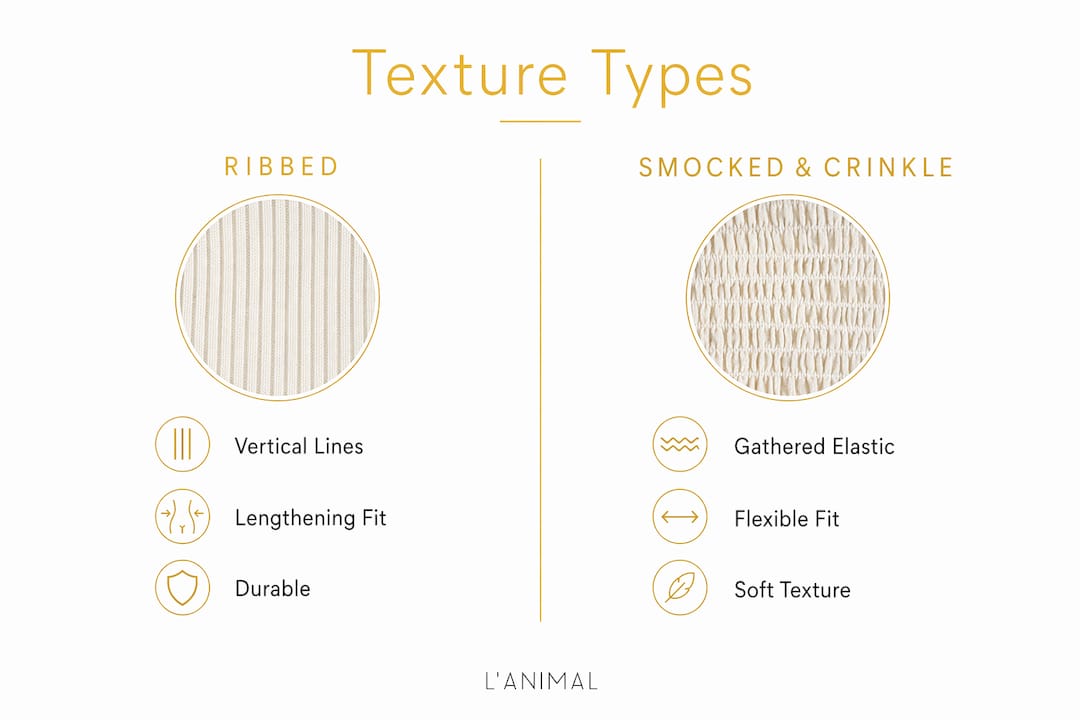
Ribbed fabric features vertical raised lines running along the fabric surface. These lines create a lengthening optical effect that elongates the silhouette and gives a flattering, cozy fit. Ribbed bikinis are among the most popular textured styles because they work well on a wide range of body types. They hold their shape firmly and look polished at both the pool and the beach.
Crinkle and smocked fabrics are the most forgiving options in textured swimwear. Smocking uses gathered, elasticized stitching to create a ruched surface that allows flexible sizing and masks skin imperfections effectively. Crinkle fabric has a casual, relaxed texture that stretches easily and recovers well. Both styles suit women who want comfort and coverage without sacrificing style.
Waffle fabric has a grid-like surface that creates a tactile, geometric pattern. Jacquard fabric integrates patterns directly into the weave itself, rather than printing or embossing them onto the surface. This makes jacquard one of the most durable textured options available. Both waffle and jacquard fabrics carry a premium, resort-wear aesthetic that reads as elevated and intentional.
Here is a quick comparison of the four main texture types:
| Texture Type | Surface Pattern | Best For | Fit Style |
|---|---|---|---|
| Ribbed | Vertical raised lines | Elongating silhouette | Firm, structured |
| Smocked | Gathered, elasticized | Flexible sizing, coverage | Soft, forgiving |
| Waffle | Grid-like squares | Geometric, casual look | Relaxed, stretchy |
| Jacquard | Woven-in pattern | Premium, resort wear | Structured, durable |
Pro Tip: If you are shopping for a textured bikini online, zoom into product photos and look for how the texture behaves at the seams. A quality piece keeps its pattern definition right up to the edge.
The composition of a textured bikini fabric determines how it stretches, holds its shape, and survives repeated exposure to chlorine and saltwater. Not all textured fabrics perform equally. The fiber blend and fabric weight are the two biggest factors that separate a premium piece from one that loses its shape after a few wears.
Optimal textured fabrics contain 18%–22% elastane, commonly in an 80% nylon and 20% spandex blend. This level of elastane keeps the texture from flattening under stretch. Lower elastane content causes ribs and waffle grids to distort when the fabric is pulled, which ruins both the look and the fit. High elastane content also helps the fabric snap back to its original shape after each wear.
Fabric weight is measured in grams per square meter, or GSM. A standard textured swimwear fabric sits around 210 GSM, which balances durability with a reasonable drying time. Jacquard fabrics run heavier, typically between 240–280 GSM, making them ideal for resort wear but slower to dry. Heavier fabrics also require adjusted seam techniques during construction to avoid bulk at the joins.
Jacquard textures are woven directly into the fabric structure, which gives them superior durability without flattening or degrading after many wears. Embossed textures, by contrast, are created by pressing a pattern onto the fabric surface using heat. Heat-press embossing physically alters the fibers, making the texture highly durable. Surface coatings, however, wear off faster and are a sign of lower quality construction.
High-quality linings like power-mesh are critical for supporting textured swimwear shapes, especially after repeated chlorine and saltwater exposure. A poor lining causes the outer fabric to sag and lose definition. Power-mesh lining adds structure without adding bulk, which keeps the bikini looking sharp wear after wear.
| Fabric Feature | Standard Range | Effect on Performance |
|---|---|---|
| Elastane content | 18%–22% | Prevents rib flattening, maintains stretch |
| Fabric weight (GSM) | 210 GSM (standard) | Balances durability and drying time |
| Jacquard weight (GSM) | 240–280 GSM | Premium durability, slower drying |
| Lining type | Power-mesh | Shape retention after chlorine/saltwater |
Pro Tip: Before buying, check whether the product listing specifies the fabric composition. A listed elastane percentage of 18% or higher is a reliable indicator of quality textured swimwear.
Textured bikinis require slightly more attention than smooth swimwear because their surface structure traps water, detergent, and debris. The right care routine keeps the texture defined and the fabric performing well for multiple seasons.
Rinse immediately after use. Rinse your bikini in cool, fresh water right after leaving the pool or ocean. Chlorine and salt both degrade elastane over time, and rinsing removes them before they can set into the fabric.
Hand wash with a gentle detergent. Machine washing pulls at the raised texture and can flatten ribs or distort smocking. Use a mild detergent and gently squeeze the fabric rather than wringing or twisting it.
Dry flat in the shade. Textured fabrics retain more water and dry slower than flat tricot fabrics because their surface traps water in peaks and valleys. Laying the bikini flat prevents the fabric from stretching under its own weight while wet. Direct sunlight fades color and weakens elastane fibers.
Store loosely, not folded tightly. Folding a textured bikini tightly along the same crease repeatedly can permanently flatten the texture at that point. Store it loosely in a drawer or lay it flat.
Match the texture to your activity. Smocked and crinkle fabrics suit leisure swimming and beach days. For lap swimming or active water sports, ribbed fabrics with higher elastane content hold up better under repeated movement. Jacquard fabrics are best reserved for resort wear and low-impact activities given their weight and slower drying time.
Pro Tip: A wet-stretch test is the fastest way to assess fabric quality before committing to a purchase. Gently stretch the fabric when wet and watch whether the texture holds its definition or distorts. Quality textured swimwear maintains pattern definition under stretch.
Texture does more than add visual interest. It changes how a bikini fits, how it photographs, and how long it stays looking new. These are the concrete reasons why textured swimwear consistently outperforms flat styles across style, fit, and perceived quality.
Visual depth and light interaction. Textured surfaces interact with light to create shifting shadows and consistent visual interest that flat prints cannot achieve. This is why textured bikinis photograph so well and look richer in person.
Flattering fit for more body types. Textured swimwear suits a wider range of body types because materials like smocking and crinkle fabric are naturally forgiving. Ribbed fabrics elongate the silhouette. Smocked fabrics flex to fit without requiring a precise size match.
Higher perceived value. Textured swimwear outperforms flat fabrics in e-commerce due to its premium, tactile appearance. Shoppers perceive textured pieces as higher quality, which drives stronger engagement and purchase decisions. This is why premium swimwear brands consistently feature textured styles in their collections.
Resistance to visible aging. Flat fabrics show wear through fading and surface pilling. Textured fabrics mask minor surface wear within their pattern, which means they maintain their appearance longer under regular use.
Confidence through structure. Ribbed and smocked fabrics provide gentle compression and coverage that smooth fabrics do not. That structure translates directly into how a bikini feels and how confidently you wear it. Understanding why swimwear quality matters starts with recognizing that fabric construction is the foundation of both fit and longevity.
After years of designing and styling swimwear, I have come to one clear conclusion: texture is the single most underrated factor in how a bikini actually performs on the body. Most shoppers focus on color and cut, which matter, but texture is what determines whether a piece looks expensive or cheap, whether it fits a range of sizes, and whether it holds up past one season.
The fabrics I return to most are ribbed and smocked. Ribbed pieces photograph beautifully and feel structured without being stiff. Smocked fabrics are genuinely forgiving. I have seen them fit women across multiple sizes in the same piece, which is something no flat fabric can do. For resort and vacation wear, jacquard is worth the investment. The weight feels luxurious, and the pattern stays sharp even after repeated wears.
My practical advice: match the texture to how you actually use the piece. If you swim laps or move a lot in the water, go ribbed with high elastane. If you want a beach cover-up feel with flexibility, smocked is your answer. And if you are buying for a special trip, jacquard delivers a look that reads as genuinely premium. Texture is not a trend. It is a construction choice that pays off every time you wear it.
— Lital
Lanimal designs textured swimwear with the same attention to fabric quality and fit that this guide describes. Each piece uses carefully selected fabric blends that keep texture defined through repeated wear, sun, and saltwater.

The Sportif Bikini Bottom delivers a textured style built for both performance and poolside wear. For a full-coverage option, Lanimal’s luxury one-piece collection features sculpting fits in premium textured fabrics. Both collections reflect the design philosophy behind Lanimal: quality construction, timeless style, and fabrics that look as good on day twenty as they do on day one. Browse the full range at lanimal.co.
Textured bikini fabrics outperform flat fabrics in fit, durability, and visual appeal because their three-dimensional surface structure is built into the fabric construction itself.
| Point | Details |
|---|---|
| Texture is structural, not decorative | Ribs, smocking, and jacquard patterns are created through knitting, weaving, or embossing, not printing. |
| Elastane content drives performance | Look for 18%–22% elastane to keep texture defined and prevent flattening under stretch. |
| Fabric weight affects drying time | Standard textured fabrics sit around 210 GSM; jacquard runs 240–280 GSM and dries slower. |
| Care routine preserves texture | Hand wash, dry flat in shade, and store loosely to maintain pattern definition over time. |
| Texture flatters more body types | Smocked and ribbed fabrics accommodate flexible sizing and elongate the silhouette. |
A textured bikini fabric is swimwear material with a three-dimensional surface pattern, such as ribs, waffle grids, smocking, or jacquard, created through knitting, weaving, or embossing. These raised or recessed patterns add visual depth and improve fit compared to flat, smooth fabrics.
The four main types are ribbed, smocked, waffle, and jacquard. Ribbed and smocked fabrics are the most widely used because they flatter a range of body types and offer flexible sizing.
Jacquard and ribbed fabrics with high elastane content are highly durable and resist visible aging better than flat fabrics. Surface-embossed textures created with coatings wear faster than woven or knitted textures.
Textured fabrics trap water in their peaks and valleys, which extends drying time compared to flat tricot fabrics. Laying the piece flat in the shade rather than hanging it speeds up drying and prevents the fabric from stretching while wet.
Ribbed fabrics with 18%–22% elastane content are the best textured option for active swimming. Jacquard and smocked fabrics are better suited to leisure and resort wear due to their weight and construction.


