Free Shipping on US orders over $150
-
Collections
-
Bikini
- One Pieces
- Cover-Ups
- Men's
- Sale
- MODA GLAM x L'ANIMAL
- Nice Breed
-


The most flattering approach for broad or athletic shoulders pairs a narrowing top, a V-neck, halter, one-shoulder, or wide-strap style, with bottoms that add visual weight at the hip, think ruffles, side-ties, prints, or a high waist. That contrast pulls the eye downward and softens the shoulder line. Shop separates when possible, and always test support and strap adjustability before you commit.
TL;DR:
- Choosing tops with vertical necklines, asymmetric cuts, or halters can effectively break the horizontal shoulder line and create a slimming visual effect.
- Bottoms with ruffles, high-waists, or bold prints add volume at the hips, balancing broader shoulders without relying on bandeau or straight-across styles.
- Dark, matte colors on top and brighter, patterned bottoms help draw attention downward, preventing wider shoulders from appearing overly prominent.
- Separates are essential, as women with broad shoulders typically need different sizes for top and bottom and should test support and adjustability before purchasing.
- Avoid styles with horizontal lines or embellishments across the shoulders, such as boat necks or spaghetti straps, which tend to emphasize shoulder width.
The right top does one job: it interrupts the straight horizontal line running across your collarbone. Every style below tackles that differently, so the one you pick depends on how much coverage and support you actually need.
V-necks and deep scoop necks cut a vertical line down the chest, which narrows the upper body visually the same way a V-neck sweater does on land. Asymmetrical necklines and V-necks are consistently recommended for this exact reason: they break the straight shoulder line instead of tracing it.
One-shoulder and asymmetric tops go a step further by removing the second strap entirely, which throws off the horizontal symmetry that makes shoulders look wider. If you like the look but aren’t sure how it wears day to day, this breakdown of asymmetric bikini tops covers fit and styling in more depth.
Halters and wide-set straps work by shifting visual weight inward and down, rather than out toward the shoulder tips. Halter necks and thick straps create that diagonal or vertical pull, though they can dig into the neck on long beach days, so look for padded or adjustable versions if you’re sensitive there.
Construction matters as much as neckline. Look for:
Pro Tip: Try lifting your arms overhead in the fitting room or living room mirror. If the cups shift or the band rides up, that top will fail you the second you dive into the water, not just when you’re posing for a photo.
If your top’s job is to narrow, your bottom’s job is to widen, at least visually. The goal is hip volume that balances what your shoulders are doing up top.
High-cut legs, ruffles, side-ties, and patterned bottoms show up again and again in style guidance for this exact shape, and for good reason: they’re doing real visual work, not just decoration. A high-waisted bottom in particular tends to read as more intentional than a basic cut, which matters if you want the outfit to look styled rather than accidental.
Color does more heavy lifting than most women realize when shopping for two-piece swimwear. Dark, matte colors recede visually. Bright colors and busy patterns advance and draw the eye toward them.
That single fact is why darker solids on top paired with brighter patterns on the bottom is one of the most repeated rules in styling guidance for athletic frames. Put the quiet color where you want less attention (your shoulders) and the loud color where you want more (your hips).
A few rules to shop by:
Combinations like a matte top with a patterned bottom, or an asymmetric top with a bright hip tie, show up across nearly every style guide built for inverted-triangle proportions. That consistency isn’t a coincidence, it’s what actually reads as balanced on camera and in person.
Buying a matched two-piece set almost never works for broad shoulders, because your top size and bottom size are usually not the same number. Separates let you fix that mismatch instead of settling for a top that gaps or a bottom that’s loose.
Before you check out, run through this:
Buying separates and testing support and adjustability consistently comes up in fit guidance for athletic frames, and it’s the single biggest shift most women make once they stop shopping matched sets. If you’re also navigating a fuller bust on top of broad shoulders, this fit guide walks through sizing for that combination specifically.
Pro Tip: Always check a brand’s return policy and, when shopping online, look at customer-submitted photos rather than just the model shots. Broad shoulders read very differently on a 5’9" model than they will on you.
Some popular bikini styles do the opposite of what you want, and it’s worth knowing why before you buy one on trend alone.
Boat necks and bandeau styles are two of the most consistently flagged pitfalls in style guidance for this shape, and the reasoning holds up: horizontal lines at the shoulder always read as width, no matter how flattering the fabric is otherwise.
Strap placement changes more than comfort, it changes how wide your shoulders read from across the pool. Moving straps even half an inch inward toward the neck, rather than out toward the shoulder tip, narrows the visual frame without changing the top’s actual coverage.
Most women with athletic shoulders end up buying one size for the top and a different size for the bottom. That’s not a fit failure, it’s just how these proportions work. Fabrics with strong recovery hold their shape through that mismatch far better than a basic blend.
A tailor is worth the visit when a top’s straps sit at a fixed width you can’t adjust, or when the band gaps no matter how tight you pull it. Otherwise, look for pieces built with adjustable hardware from the start.
Pro Tip: If you’re between sizes, size up on the top and size down on the bottom, then use the strap adjusters to close any remaining gap. That’s a smaller fix than any resize job you’d take to a tailor.
Fabric choice determines whether all that careful styling actually holds up once you’re moving, swimming, or spending six hours in the sun. A top with the right neckline in the wrong fabric will still let you down.
Look for blends with strong stretch recovery, typically nylon or polyester with a healthy percentage of spandex or elastane. These hold their shape against the pull of wider-set straps instead of stretching out and sagging by midafternoon. Lower-recovery cotton blends might feel soft in the store, but they lose structure fast in salt water or chlorine, which is exactly the moment your carefully chosen halter needs to keep doing its job.
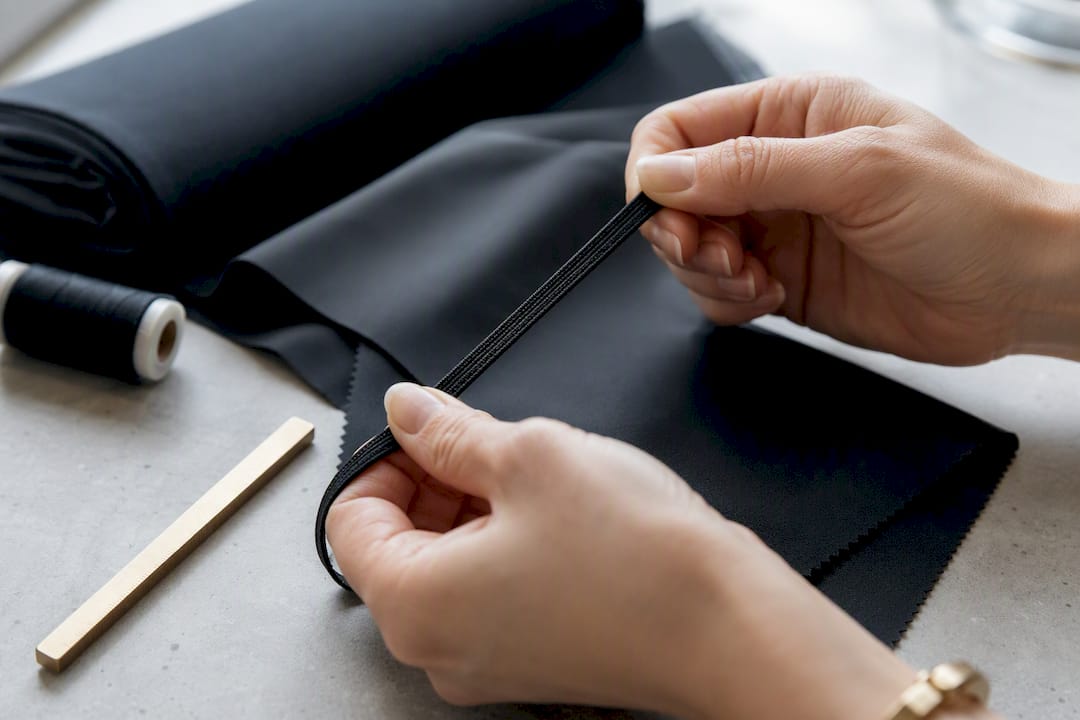
Thicker straps, the kind recommended throughout this guide for narrowing broad shoulders, also need firmer fabric underneath to avoid digging in. A wide strap in a flimsy material can actually feel worse against the skin than a well-padded thinner one, so pay attention to how the strap edge is finished, not just how wide it looks.
Matte finishes tend to hold their color and shape better under sun exposure than shiny, coated fabrics, which matters if you’re building a wardrobe of solid dark tops meant to recede visually. A faded, patchy matte top does the opposite of what you bought it for.
If you’re prone to irritation at the neck or shoulder from halter ties, look for tops with soft-lined straps or removable padding at the tie point. Comfort and proportion aren’t separate concerns, a top you keep adjusting because it’s uncomfortable stops doing any visual work at all.
The styling work doesn’t stop at the swimsuit. What you layer over it either reinforces the narrowing effect you built with your top, or undoes it entirely.
A cover-up with a plunging V or wrap-front neckline extends that same vertical line your bikini top is already creating. Avoid boxy kaftans with straight, boxy necklines, they reintroduce the horizontal shoulder line you spent time avoiding underneath. A sarong tied at the hip, meanwhile, adds the same lower-body volume your ruffled or side-tie bottom is providing, which doubles down on the balance rather than fighting it.
Jewelry follows the same logic. Long pendant necklaces draw the eye down the center of the body, extending that narrowing vertical line even further. Avoid statement earrings or wide chokers that sit right at shoulder height, they add visual weight exactly where you’re trying to subtract it.
Hats deserve a mention too: a wide-brim sun hat actually helps here, since it draws the eye upward and outward at a totally different point on the body, away from the shoulder line rather than competing with it. A structured, high-crown hat can look sharp with a narrowing top instead of clashing with it. For more general styling angles on working with a broader shoulder line, this guide to broad-shoulder dressing applies the same core logic to eveningwear, and the overlap is worth noting.
Most ready-to-wear bikini tops are built for average shoulder width, which means broad-shouldered women are almost always making small adjustments, whether they realize it or not.
Start with strap placement itself. If your top has removable or convertible straps, try moving the anchor point slightly inward toward the center of the chest rather than out at the shoulder edge. That small shift narrows how the top reads without sacrificing support, and it’s the single easiest adjustment most women skip because they assume the strap position is fixed.
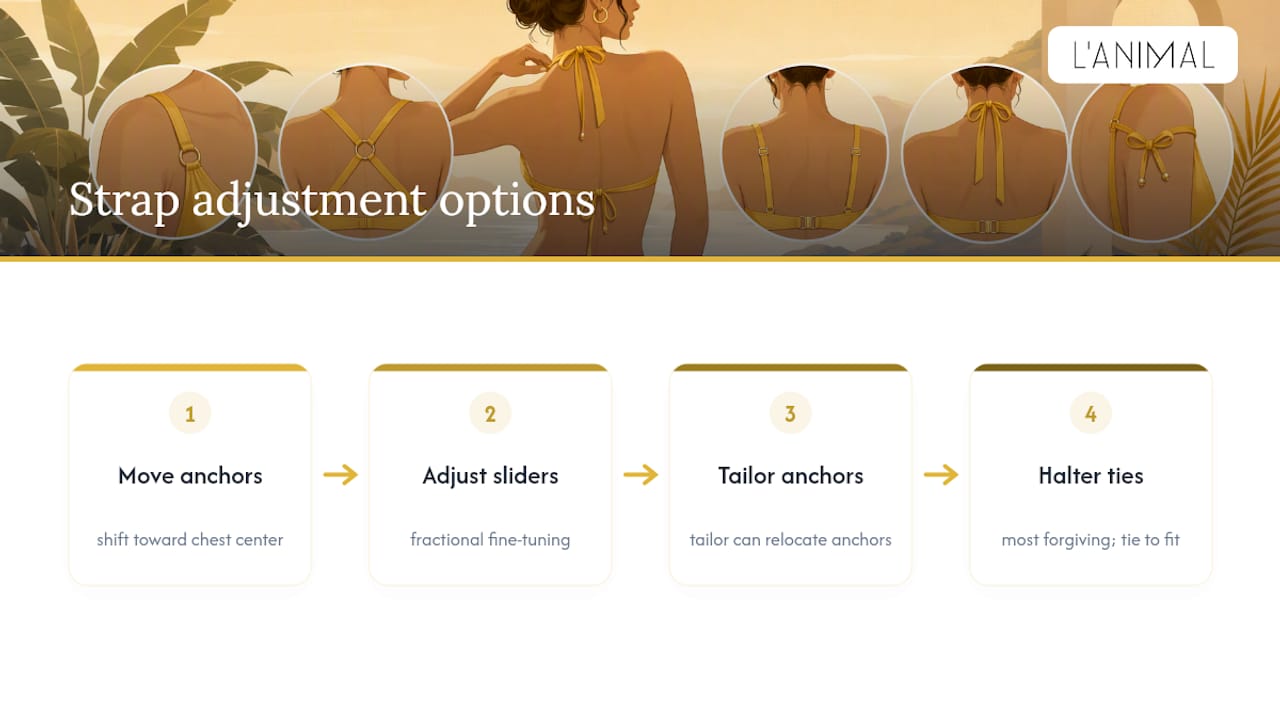
Adjustable sliders matter more than they get credit for. A strap that only has two or three fixed lengths will rarely land in the sweet spot for broad shoulders, you need incremental adjustment to dial in a fit that sits snug at the base of the neck without pulling. Look for hardware that lets you fine-tune by fractions of an inch, not just “loose” or “tight.”
If a top’s straps are sewn in place with no adjustment at all, a tailor can move the anchor points for a modest fee, and it’s often worth it for a piece you plan to wear season after season. Halter ties, by contrast, are naturally more forgiving since you’re tying the fit yourself each time you put the suit on.
Every fit note in this guide comes from the same place: designing for real proportions, not a single sample size. Broad shoulders aren’t a flaw to disguise, they’re a shape to design around, and the right cut should make you feel sharper in the water, not smaller. If you want more of this kind of fit-first thinking, our stylist tips for every body go deeper into the specifics.
— Lital
One bikini bottom closely follows the hip-balancing logic covered above: a shape and coverage designed to add visual weight at the hip rather than disappear into a thin strip of fabric. The fit sits at a supportive high-cut leg line, and some fabrics hold their structure through swimming, not just posing.

Pair it with a dark, matte halter or V-neck top from Lanimal’s bikini top collection for the full narrowing-top, widening-bottom formula this guide has walked through. If you’re ready to build that pairing, start with the Sportif Bikini Bottom and work upward from there.


