Free Shipping on US orders over $150
-
Collections
-
Bikini
- One Pieces
- Cover-Ups
- Men's
- Sale
- MODA GLAM x L'ANIMAL
- Nice Breed
-


The best bikinis for big bust shapes come down to three things: a balconette or underwire top for lift, a halter with wide straps for weight distribution, or a longline top for extra band stability. The real support comes from bra-like construction, underwire, adjustable straps, and a secure back closure. If your usual top size and bottom size don’t match, buy separates instead of a matching set.
TL;DR:
- Support from bra-like features such as underwire, molded cups, and wide straps is essential for large bust bikinis, especially during active water activities.
- Buying separates is strongly recommended if your rib cage size and bust size do not scale proportionally, typically for DD cups and larger.
- Proper fit requires measuring your band and bust with a swim-specific chart, ensuring the band sits snug and level without riding, and checking for a flat center gore.
- Fabric and construction quality, including reinforced seams, multi-layer linings, and encased underwires, matter more for support than style or print.
- Regular maintenance like rinsing after exposure to salt or chlorine and avoiding the dryer prolongs support and shape of a bikini top.
Not every silhouette treats a fuller bust the same way, and choosing the wrong one is usually the reason a bikini top fails halfway through the day. The most dependable options borrow directly from bra construction rather than pretending fabric alone can do the job.
Balconette and underwire tops give lift and a defined shape by working the way a demi-cup bra does: they cup from below and use a rigid wire to hold structure. Choose this style when you want your bust to look lifted and separated rather than compressed into one shelf.
Full-coverage halters with wide straps spread weight across the shoulders instead of concentrating it on two thin strings. This is the silhouette worth reaching for if you have a heavier bust and plan to be active in the water, not just posing poolside.
Longline tops and tankinis add a wider band that sits lower on the ribcage, which increases stability the same way a longer-band bra does. More surface area means less shifting when you move.
Structured triangle designs differ from flimsy ones in a few specific ways:
Editorial testing on swimsuits for large busts consistently finds that the strongest performers combine real structure with a cut that still feels feminine, not clinical.
Mixing sizes is often the missing piece. Guides that test large bust swimsuits repeatedly recommend buying separates when your rib cage and cup size don’t scale together, which they rarely do for DD cup and up.
Shopping for supportive swimwear works best as a sequence, not a scramble. Follow this order and you’ll skip most of the trial-and-error that wastes time and money.
When shopping online, always check the model’s measurements against the size chart, confirm whether the top is bra-sized or S/M/L, and read the return policy before you buy. A suit you can’t try on is a suit you need an easy exchange window for.
Watch for these red flags: thin shelf bras with no real structure, tie straps thinner than a shoelace, and cups that look more decorative than functional. If a listing photo shows visible spillage on a model with a similar frame to yours, that’s not going to fit better on you.
Pro Tip: Once you find a brand whose balconette or halter cut actually fits, try its other silhouettes before starting over with a new label. Stylists who fit fuller busts regularly note that a brand’s sizing logic tends to carry across its whole line.
Swim sizing and bra sizing rarely line up, mostly because swim fabric has more stretch and less recovery than everyday bra fabric. A bra that fits perfectly dry can feel completely different once wet and stretched, which is why swim brands build their own charts instead of borrowing lingerie sizing outright.
The center gore and underwire tell you almost everything you need to know about fit. If the gore gaps off your sternum, the cup shape is wrong. If the underwire digs into your side or armpit, the cup is too small even if the band feels fine. Editors who test swimwear for larger busts treat a flat center gore as the clearest sign of correct fit, though comfort still gets the final vote.
A few sister-sizing basics help when your usual size isn’t available:
Fabric claims are easy to print on a tag; real support comes from construction most shoppers never think to check. Molded cups with multi-layer linings hold their shape wash after wash, while single-layer stretch cups collapse and lose structure within a season.
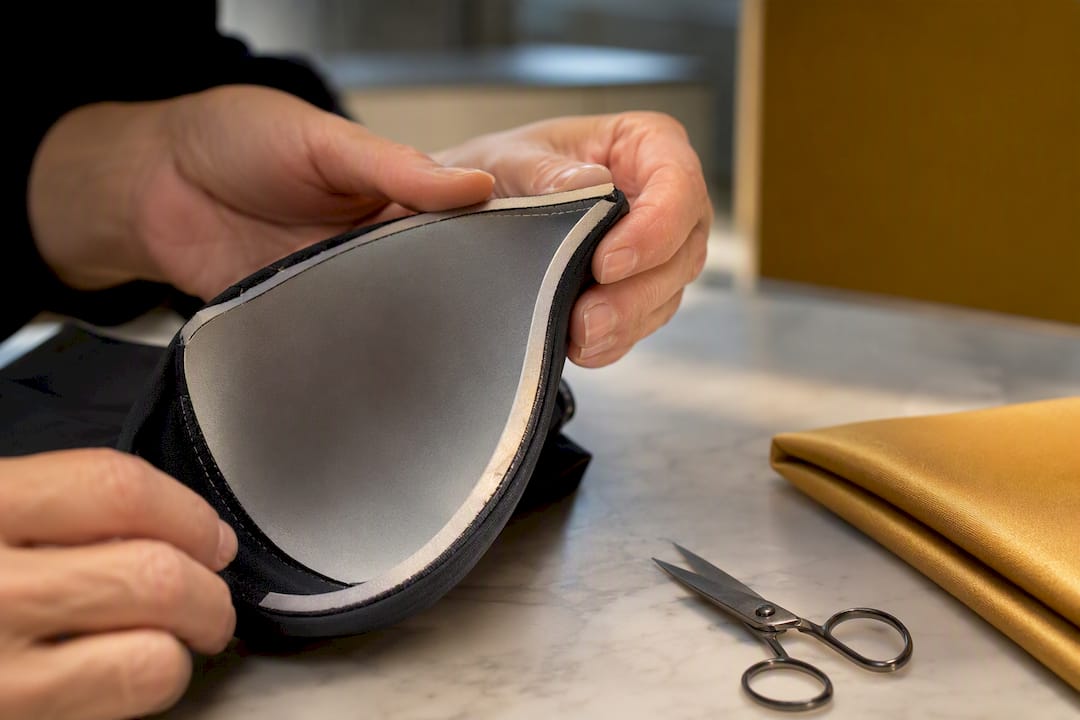
Underwire quality matters more than most buyers realize. Look for a hidden fabric channel that fully encases the wire, not exposed elastic that will fray and eventually poke through.
Other construction details worth prioritizing:
Retailers building full-bust swimwear collections for DD+ cups lean on exactly these features rather than marketing language, because bra-like construction is what actually holds up against repeated pool and ocean exposure.
A well-built bikini top loses its support fast if you skip basic care. Rinse it in cool water immediately after chlorine or salt water exposure, since both break down elastic fibers quickly.
L’ANIMAL builds tops around bra-like construction on purpose. Underwire placement, band structure, and strap width get treated as design decisions, not afterthoughts bolted onto a pretty print.
Founder and stylist Lital Simel-Rhedrick approaches proportion the way a bra fitter would: get the structural foundation right first, then let the silhouette do the styling work. A balconette cut with the correct band tension needs far less “fixing” through tailoring or extra ties than a flimsy triangle top stretched past its limit.
That philosophy lines up directly with the underwire construction and separates approach covered throughout this guide: support first, styling second.
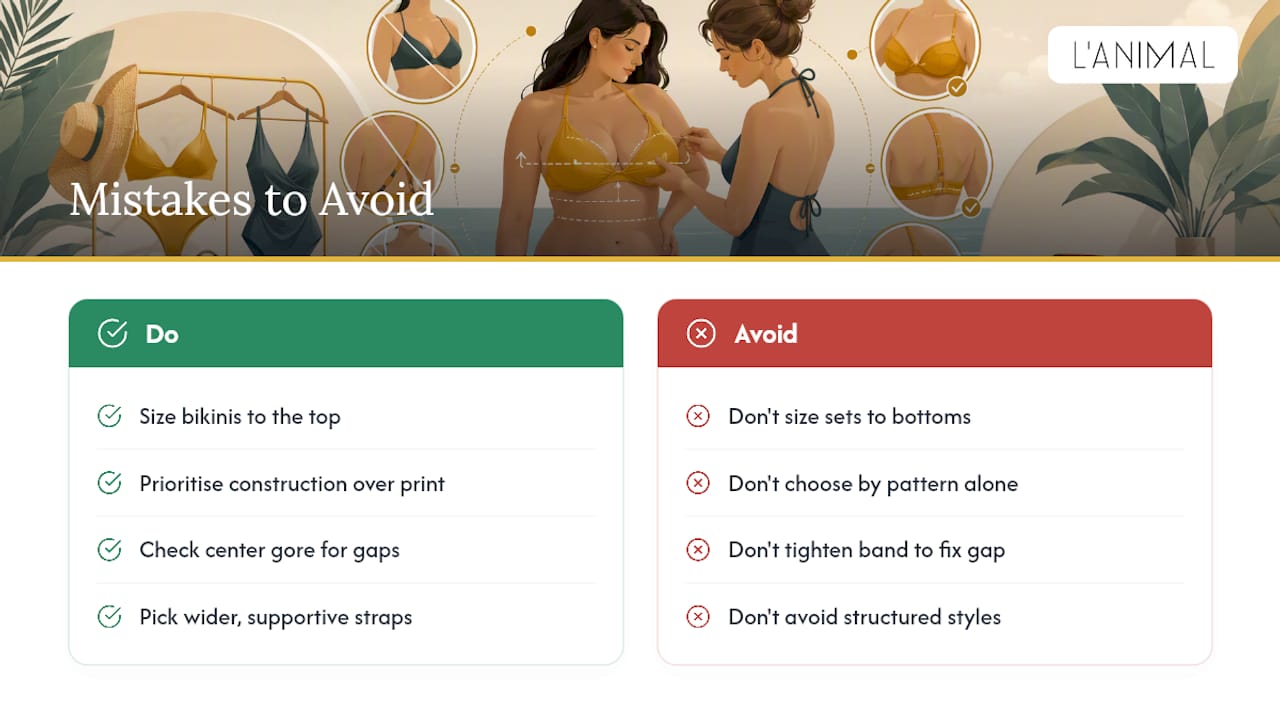
The most common mistake is buying a matching bikini set sized to the bottoms instead of the top. Your hips and your bust rarely scale together, and forcing one size across both pieces almost guarantees one half doesn’t fit.
A close second: choosing a top based on the print or color instead of the construction underneath. A gorgeous pattern on a shelf-bra triangle top won’t hold a DD cup any better than a plain one will.
Skipping the center gore check is another frequent error. Shoppers tighten the band when a top gaps at the sternum, assuming it’s a sizing issue, when it’s actually a cup shape problem. Tightening the band just adds discomfort without fixing the gap.
Ignoring strap width is a quieter mistake with a bigger cost. Thin ties look sleek in photos but concentrate all the weight into two narrow lines across your shoulders, which adds up over a full beach day.
Finally, some shoppers avoid structured styles entirely, assuming underwire or molded cups will look stiff or unflattering. In practice, structural details are increasingly engineered into triangle and string styles specifically so they don’t sacrifice style for support.
Weight distribution is the real comfort issue for anyone with a fuller bust, and it’s solved with a handful of specific adjustments rather than a full wardrobe overhaul.
Wide straps, at least an inch across, spread pressure over more shoulder surface area instead of digging in at one point. Padded or cushioned strap options add another layer of relief for all-day wear.
Halter styles that cross behind the neck distribute weight between the shoulders and the neckline instead of relying on shoulders alone, which matters most during active swimming rather than lounging.
A well-fitted band does more comfort work than people expect. If the band sits snug and level, it carries a share of the weight that would otherwise land entirely on the straps. Bounce and shoulder strain both drop once band tension is doing its share of the job.
For anyone spending real time in the water rather than just sunbathing, swimwear built for athletic movement is worth a look, since reinforced construction handles motion better than delicate ties ever will.
Most advice on this topic treats fit like a math problem: get the band number and cup letter right and you’re done. That’s incomplete. A technically perfect fit that still feels wrong on your body isn’t a win, and a slightly imperfect fit that makes you feel confident and secure often beats it in practice.
Where conventional advice really falls short is treating triangle tops as a lost cause for fuller busts. Some are. But structured versions with real cups and wider straps can work, and dismissing the whole category means missing options that fit.
If you take one thing from this guide, prioritize the center gore and band fit before you even glance at style or print. Everything else, straps, coverage, color, is easy to adjust once the foundation is right. Get the structure correct first, and the styling takes care of itself.
— Lital
L’ANIMAL designs bikini tops around the same structural priorities covered throughout this guide: bra-like construction, real strap width, and secure back closures instead of decorative ties standing in for support. That’s the difference between a top you have to adjust every ten minutes and one you forget about until it’s time to reapply sunscreen.
You can shop the current collection and separates directly on the L’ANIMAL site, where mixing top and bottom sizes is treated as the norm rather than an inconvenience. If your usual size runs differently between pieces, order the top and bottom separately and check the fit notes on each product page before you buy. Browse the current styles, find the silhouette that matches the support features you now know to look for, and place your order with a clear sense of what you’re getting.


