Free Shipping on US orders over $150
-
Collections
-
Bikini
- One Pieces
- Cover-Ups
- Men's
- Sale
- MODA GLAM x L'ANIMAL
- Nice Breed
-


Choose one hero piece, stagger necklace lengths in standard increments, and stick to water-resistant metals. That single rule covers the core of beach jewelry layering. Everything else is refinement.
TL;DR checklist:
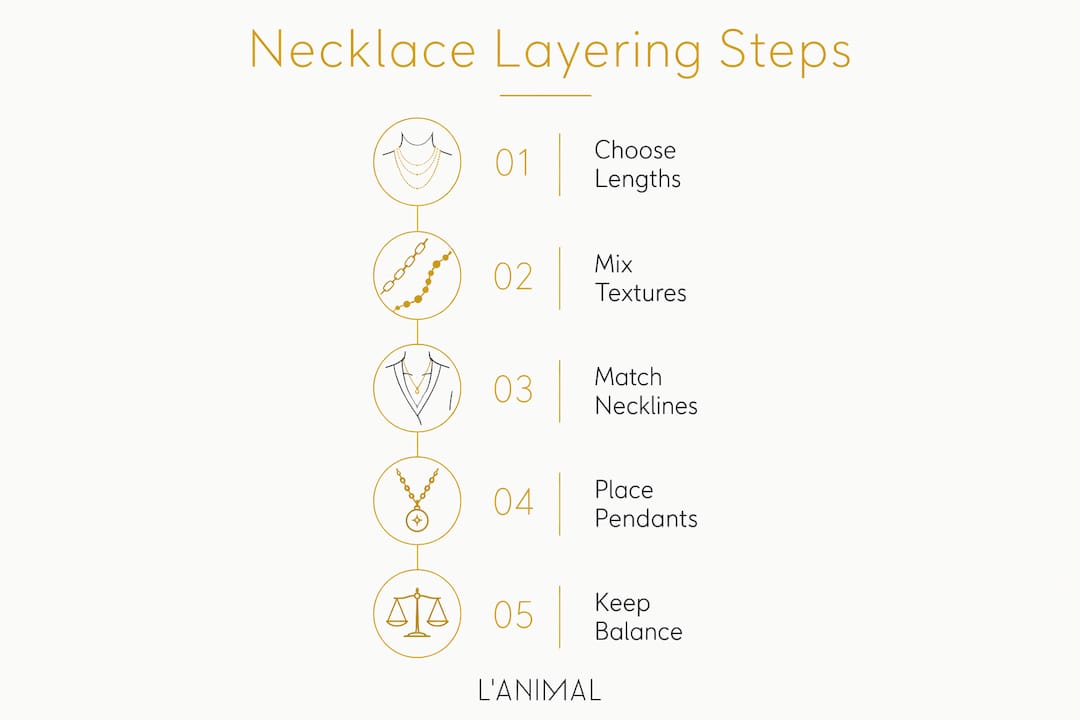
The foundation of any good beach stack is chain length. Staggered lengths create a cascading silhouette because each layer sits visibly below the last. Spacing layers less than 2 inches apart causes them to collapse into a single mass at the collarbone, which defeats the purpose.
For swimwear, the most wearable stacks use three staggered lengths that complement various neckline styles, allowing the longest pendant to fall naturally.
Texture mixing is where the look gets interesting. Pair one fine cable or box chain with one slightly chunkier link, then add a single organic pendant — a small baroque pearl, a hammered gold disc, or a shell charm. That contrast between refined metal and one coastal element is what separates an elevated beach stack from a souvenir-shop pile. Mixing minimal high-end staples with one organic accent keeps the aesthetic refined rather than costume-like.
Chain-length guide by neckline:
| Chain Length | Body Position | Best Swimwear Neckline |
|---|---|---|
| 14 inches | Collarbone | High neck, halter |
| 16 inches | Upper chest | Scoop, bandeau, triangle |
| 18 inches | Mid-chest | V-neck, plunge, off-shoulder |
| 20 inches | Lower chest | Deep V, one-shoulder |
Three starter stack recipes:
Pro Tip: A layering clasp attaches to the ends of multiple chains at once, keeping them separated and tangle-free even when you move. It is the single most practical tool for a beach necklace stack.
Chain-length callout: Using 2–4 inch increments between necklace layers is the standard spacing rule that prevents stacks from merging at the collarbone. A 14/16/18 or 16/18/20 combination gives each chain its own visible tier.
The neckline of your swimsuit is the frame. The jewelry fills it. Choosing lengths that fight the neckline creates visual clutter; choosing lengths that follow it creates cohesion.
The core rule: let the neckline define where your stack starts. High necklines need shorter chains that sit above the suit fabric. Open necklines invite longer drops that use the exposed skin as a canvas. For a full breakdown of how swimwear silhouettes interact with accessories, the beachwear vs swimwear style guide on Lanimal’s blog covers the outfit hierarchy in detail.
Neckline-to-jewelry pairing guide:
Pendant placement matters. The drop of a pendant should land at least half an inch above any suit seam or strap. When a pendant rests directly on a seam, it catches fabric and shifts constantly. For halter tops, tuck any long pendant inside the suit’s center panel if it keeps sliding.
Necklaces get the most attention, but the rest of your stack determines whether the look reads as intentional or thrown together.

Keep bracelets light and smooth-surfaced. A slim metal cuff, one cord or beaded strand, and a waterproof slider bracelet is a complete wrist stack that handles movement without snagging on towels or swimwear. Avoid chunky bangles that clack together and create noise; at the beach, that gets old fast. Secure clasps and adjustable sliders are worth prioritizing because they reduce the chance of losing a piece in the water.
One standout anklet or two delicate chains is the right amount. More than two layers at the ankle reads as cluttered and collects sand aggressively. Choose smooth, fine chains with secure lobster clasps or adjustable sliders. Avoid anklets with large charms or dangling elements that snag on towel fibers or rough sand.
Statement earrings photograph beautifully, but for active beach days, studs or small smooth hoops are more practical. Large drop earrings catch wind, tangle in hair, and snag on cover-up fabric. If you want the statement earring for photos, put them on for the shot and swap back to studs for the rest of the afternoon.
Leave investment rings at the hotel. Cold water causes fingers to shrink, which increases the risk of losing a ring in the ocean. For active beach days, a simple stainless steel band or a silicone ring gives you the look without the risk. Reserve your good rings for evening when you are away from water.
Beach jewelry checklist by body area:
Salt water, sunscreen, and UV exposure degrade most jewelry faster than everyday wear. The materials that hold up share two traits: corrosion resistance and a protective surface layer.
Recommended materials:
What to avoid: Thin gold or silver plating wears off within weeks of regular salt exposure. Porous stones like turquoise, opal, and malachite absorb salt and sunscreen, which causes discoloration and cracking over time. Delicate heirloom pieces with prong settings risk losing stones in sand or surf. Water-resistant materials like PVD stainless and gold-filled are the practical standard for beach use.
Durability checklist:
Post-beach care routine:
Reserve fine jewelry and investment pieces for evening dinners and sunset cocktails. For daytime water activities, carry travel-grade replacements that you would not mind losing.
Rules give you a repeatable framework. These six work specifically for swimwear and beach contexts.
Named formulas:
Two ready-to-copy recipes:
Dos and don’ts for mixing materials:
For additional trend context on what combinations are working in 2026, current jewelry trends from Trinity Carter covers the styling directions worth knowing.
Body chains belong in specific moments, not all-day beach sessions. They work for rooftop dinners, editorial photos, cover-up layering, and sunset cocktails. They do not work for long swims, rough beach play, or hours of direct sun exposure.
Use cases where body chains make sense:
Practical cautions:
Making statement pieces more wearable:
For a full breakdown of beach-to-bar transitions, including how to shift jewelry from daytime to evening, Lanimal’s styling blog covers the transition in detail.
These five outfit recipes cover the main beach occasions. Each one specifies activity level so you know what you can actually do while wearing it.
Sunrise Swim (active, water-ready) Swimwear: minimal triangle bikini. Necklace: single 16-inch gold-filled chain. Wrist: one slim cord bracelet. Ears: small gold studs. Rings: none. Pack tip: everything fits in one small zip pouch. Suitable for swimming.
Pool Day (lounging, minimal activity) Swimwear: bandeau or scoop one-piece. Necklace: 16/18-inch two-chain stack with a small disc pendant. Wrist: one beaded bracelet + one slim cuff. Ears: small hoops. Rings: silicone band. Pack tip: keep the stack pre-assembled on a layering clasp. Lounging only; remove before swimming.
Beach Brunch (social, light activity) Swimwear: triangle bikini with a linen cover-up. Necklace: 16/18/20 shell-and-pearl coastal stack. Wrist: two fine chain bracelets. Ears: small shell drop earrings. Rings: one simple stainless band. Pack tip: store the shell pendant separately to avoid scratching. Suitable for walking and dining; avoid water.
Bracelet-Forward Afternoon (lounging, social) Swimwear: high-cut one-piece or bikini bottom with a cropped cover-up. Necklace: single 18-inch fine chain. Wrist: three-piece stack (cuff + cord + slider bracelet). Anklet: one delicate chain. Ears: studs. Rings: none. The wrist stack is the hero here. Lounging and light activity only.
Sunset Cocktails (evening, no water) Swimwear: one-piece with a sheer cover-up or sarong. Body chain: worn over the cover-up. Necklace: 18/20-inch mixed-metal stack. Ears: statement drop earrings. Wrist: one slim cuff. Rings: investment ring back on. Pack tip: body chain and statement earrings travel in padded pouches. Evening only; no active beach time. For more summer outfit ideas that pair with these looks, Lanimal’s blog has additional outfit recipes by occasion.
Lital Simel-Rhedrick, the designer and stylist behind Lanimal, approaches beach jewelry the same way she approaches swimwear design: edit ruthlessly, then stop.
Packing tips from Lital:
Pro Tip: Thread all your necklace chains through a drinking straw before coiling them in a pouch. The straw keeps the chains from knotting around each other during transit, a trick that works especially well for fine chains under 18 inches.
For more on how Lanimal’s design philosophy connects to beach styling confidence, the brand’s blog covers the relationship between outfit choices and how you carry yourself on the beach.
Layering beach jewelry well comes down to three things: choosing water-resistant metals, applying the one-hero rule, and rinsing pieces immediately after salt exposure.
| Point | Details |
|---|---|
| Use water-resistant metals | PVD stainless steel, gold-filled, and titanium hold up to salt, sweat, and sunscreen. |
| Apply the one-hero rule | Choose one statement piece per look; keep all other layers minimal and supporting. |
| Stagger chain lengths | Use 14, 16, 18, and 20-inch increments with at least 2 inches between each layer. |
| Rinse and store after every beach session | Fresh water rinse, pat dry, open clasps, and pack each piece separately. |
| Lanimal swimwear as the starting point | Lanimal’s swimwear silhouettes are designed with the kind of clean lines that make layered jewelry stacks read clearly and photograph well. |
Most women pack too much jewelry for the beach and wear too little of it well. The instinct to bring options is understandable, but options without a framework produce cluttered looks that photograph badly and wear uncomfortably.
The practical philosophy behind this guide is the same one that drives Lanimal’s design approach: restraint is not minimalism for its own sake. It is the recognition that your skin, your suit, and the light around you are already doing significant visual work. Jewelry that competes with those elements does not add to the look; it subtracts from it.
Choosing beach-proof staples over impulse pieces also has a longer-term payoff. A gold-filled chain that survives three summers of salt exposure is a better investment than four plated pieces that tarnish after one trip. Fewer, better pieces that you actually wear consistently is the practical version of a curated wardrobe, applied to accessories.
The jewelry layering techniques in this guide work best when the swimwear underneath gives them room to land. Lanimal’s swimwear is designed with clean lines and considered silhouettes that create exactly that kind of canvas: structured enough to anchor a jewelry stack, minimal enough not to compete with it.

The Sportif Bikini Bottom pairs with the triangle and bandeau tops that work best for the 16/18/20 necklace stacks covered in this guide. For a broader look at what Lanimal carries across cuts and styles, browse the full swimwear collections to find the silhouette that fits your beach itinerary. Each piece is designed with the kind of detail and quality that makes the whole outfit, jewelry included, look intentional.
External sources used in this guide:
Lanimal blog posts for further reading:


