Free Shipping on US orders over $150
-
Collections
-
Bikini
- One Pieces
- Cover-Ups
- Men's
- Sale
- MODA GLAM x L'ANIMAL
- Nice Breed
-


If you have an athletic build, start with a supportive one-piece or a bralette-style top and patterned, fuller bottoms. Prioritize adjustable straps, double lining, and UPF or chlorine-resistant fabric before anything else. These are the details that separate a suit that stays put through a workout from one that needs constant tugging.
Two moves make the biggest difference right away. First, try a high-neck or racerback style if you swim laps, surf, or train regularly; the wider back panel keeps straps from sliding and adds real bust support. Second, when you shop online, filter for suits labeled double-lined and rated UPF 30 to 50+, since those two specs tell you more about how a suit will actually perform than the marketing copy around it.
The best swimsuits for athletic builds combine structural support (shelf bras, wide adjustable straps) with styling choices (patterned bottoms, color-blocking) that create visual balance without sacrificing performance.
| Point | Details |
|---|---|
| Start with silhouette | A supportive one-piece or bralette top with fuller, patterned bottoms suits most athletic frames. |
| Prioritize two specs | Look for double lining and a UPF 30 to 50+ rating before checking style details. |
| Fit test before buying | Raise your arms, sit down, and check bottom coverage to confirm support and torso length. |
| Match fabric to frequency | Chlorine-resistant Endurance-style fabric is worth the cost for anyone swimming more than twice weekly. |
| Shop Lanimal for adjustable fit | The Sportif Bikini Bottom and Sail One-Piece offer adjustable, sculpting details designed for athletic proportions. |
An athletic build typically means shoulders and hips fall close to the same width, with a waist that doesn’t narrow dramatically between them. Add visible muscle definition through the shoulders, back, or legs, and you get a frame that a lot of mass-market swimwear simply wasn’t cut for.
Muscularity changes fit in ways that surprise a lot of shoppers. A well-developed back or shoulders can make a standard bikini top gap at the sides or dig into the muscle at the strap line, while a longer torso pulls a one-piece’s crotch panel tighter than it’s designed to sit. Torso length matters just as much as bra size here.
Before you buy anything, take three quick measurements: shoulder width against hip width, torso length from shoulder to hip bone, and how much bust support you actually need for the activity. Those three numbers do more to narrow down the right silhouette than any size chart alone.
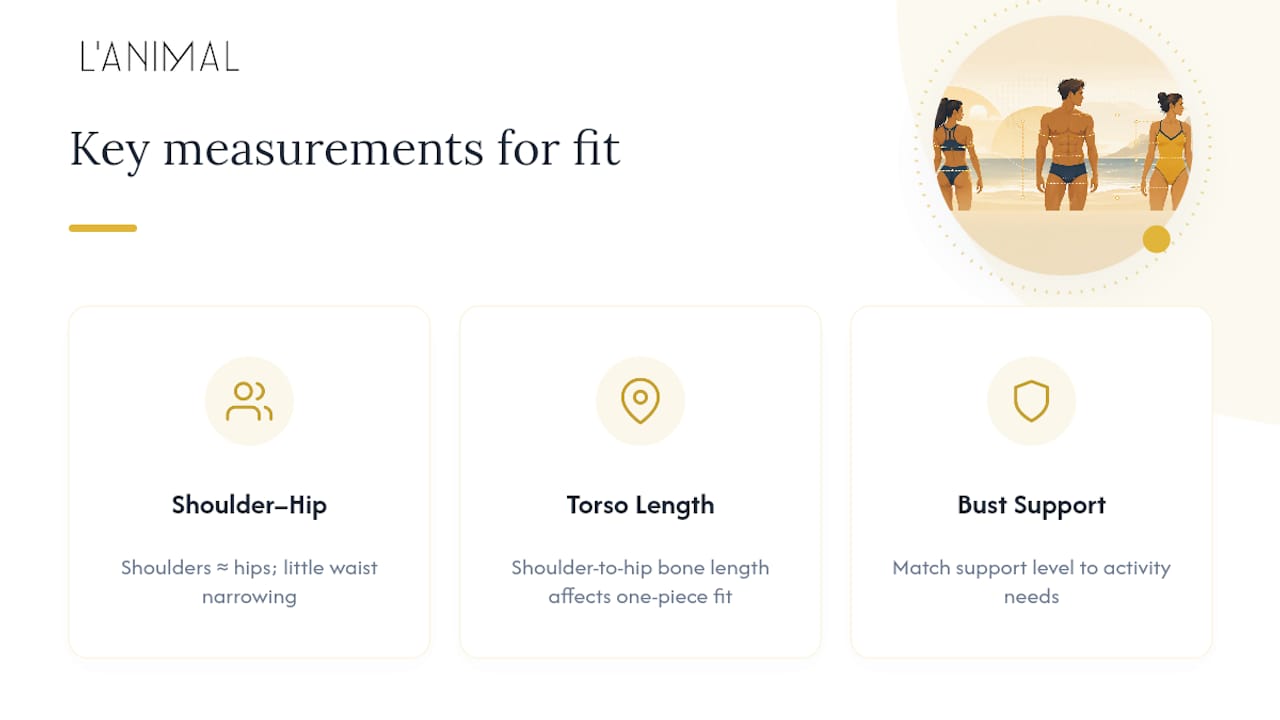
The goal with swimsuits for athletic build shoppers isn’t to hide the shoulders or add fake curves. It’s to create visual balance and lock in support where you need it most. A few silhouette choices do most of that work.
One-pieces built for movement are the safest starting point. Look for high-neck cuts, racerback or crisscross straps, a built-in shelf bra, and side panels or tummy mesh that add shape without restricting the torso. Editorial wear-testing on active swimmers found that compressive one-pieces with shelf bras and wide straps provide the most security for laps and open-water swimming.
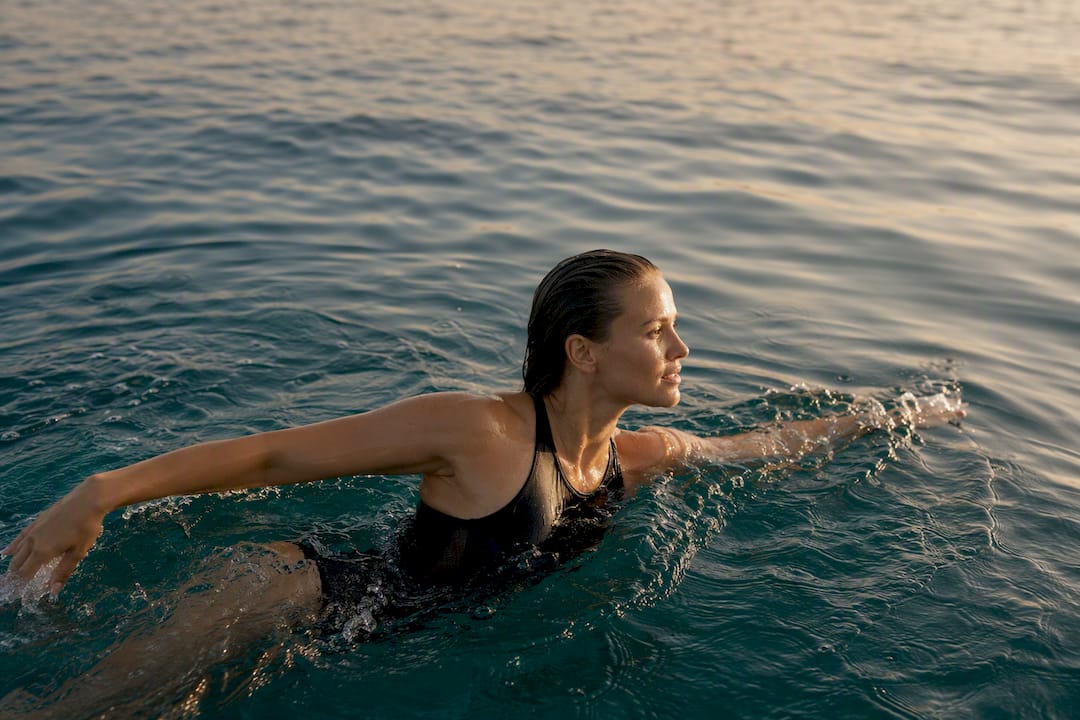
Bikinis for athletic body shapes work best when the top and bottom aren’t fighting each other. A padded bralette, a ruched triangle, or a one-shoulder top adds softness up top, while a full-coverage or higher-cut bottom in a bold print pulls the eye downward. Styling guidance from surf brands backs this up directly: simple dark tops paired with patterned or bright bottoms shift visual weight away from the shoulders.
Tankinis and sport bikinis are the right call when you want coverage without sacrificing mobility, especially for beach volleyball, kayaking, or all-day pool days where you’re in and out of the water.
Quick swaps worth trying:
Not every swimsuit spec matters. These four do.
UPF ratings measure how much ultraviolet light a fabric blocks. A suit with a high UPF rating is worth seeking out if you spend real time outdoors, whether that’s open-water swimming, beach volleyball, or standing poolside coaching a meet. It’s the same logic as sunscreen, just woven into the fabric instead of reapplied every two hours.
Chlorine-resistant fabric, sometimes marketed as Endurance or MaxLife blends, holds its shape and color through repeated exposure to pool chemicals. Fully lined, chlorine-resistant suits last measurably longer than standard nylon-spandex blends, which is the difference between a suit that survives a swim season and one that fades and sags after a few weeks of laps.
Pro Tip: If you swim more than twice a week, chlorine-resistant fabric isn’t optional. Standard suits lose stretch and color fast under that kind of exposure.
Construction details to check before you buy:
Fabric choice also affects hand-feel and care. Compressive Endurance blends feel firmer and slightly thicker than fashion-fabric suits, and that firmness is exactly what holds a shelf bra in place during a flip turn.
Run through this in the dressing room, or before you keep an online order.
Pro Tip: Take a photo in the suit before you cut the tags. If you need to exchange it, that photo helps you (and customer service) pinpoint exactly what didn’t work.
Match the suit to the activity, not just the aesthetic.
If you’re only in the water a few times a month, prioritize style and comfort. If you’re training three or more times a week, spend the extra money on chlorine-resistant, double-lined performance fabric; it holds up longer and saves you from replacing suits every season.
Lital Simel-Rhedrick, designer and stylist behind Lanimal, builds every cut around where an athletic frame actually needs help: shoulders, bust, and waistline.
Seam placement does more visual work than fabric print ever could. A hip-level seam or a horizontal color panel across the waist can visually widen hips or narrow shoulders without adding a single inch of fabric. Ruching at the side and strategic cutouts along the ribcage soften a straight torso in a way that a plain cut never will.
That thinking is why Lanimal’s performance swimwear leans on adjustable straps and sculpting panels rather than one-size-fits-all cuts. Fit is the design brief, not an afterthought.
Athletic builds aren’t all identical, and the fix depends on which proportion is throwing off your balance.
Inverted triangle (broad shoulders, narrower hips) benefits most from tops that minimize shoulder width: a plunge neckline, halter, or thin straps instead of a wide racerback for casual wear. Pair with a fuller-coverage or ruffled bottom to add width at the hip.
Straight or rectangular frames, where shoulders and hips are close in width with little waist definition, respond well to color-blocking or a cinched tie-front top that creates a visual waistline. A high-waisted bottom does similar work from below.
Muscular, defined shoulders call for softer strap details, like a crisscross back or a wider band that spreads pressure instead of a thin strap that digs in.
For one-pieces specifically, a scoop or sweetheart neckline reads softer than a high-neck cut if your priority is beach style over lap performance. Cutouts at the waist or side create the illusion of a narrower midsection on straighter torsos.
For bikini bottoms, a higher-cut leg elongates the leg line and draws the eye upward and outward, away from a straight waist. A low-rise, wider-band bottom does the opposite, adding visual width at the hip to balance broader shoulders.
None of these are rules carved in stone. They’re starting points that work with your proportions instead of against them.
Color and pattern do real work on an athletic frame, often more than cut alone.
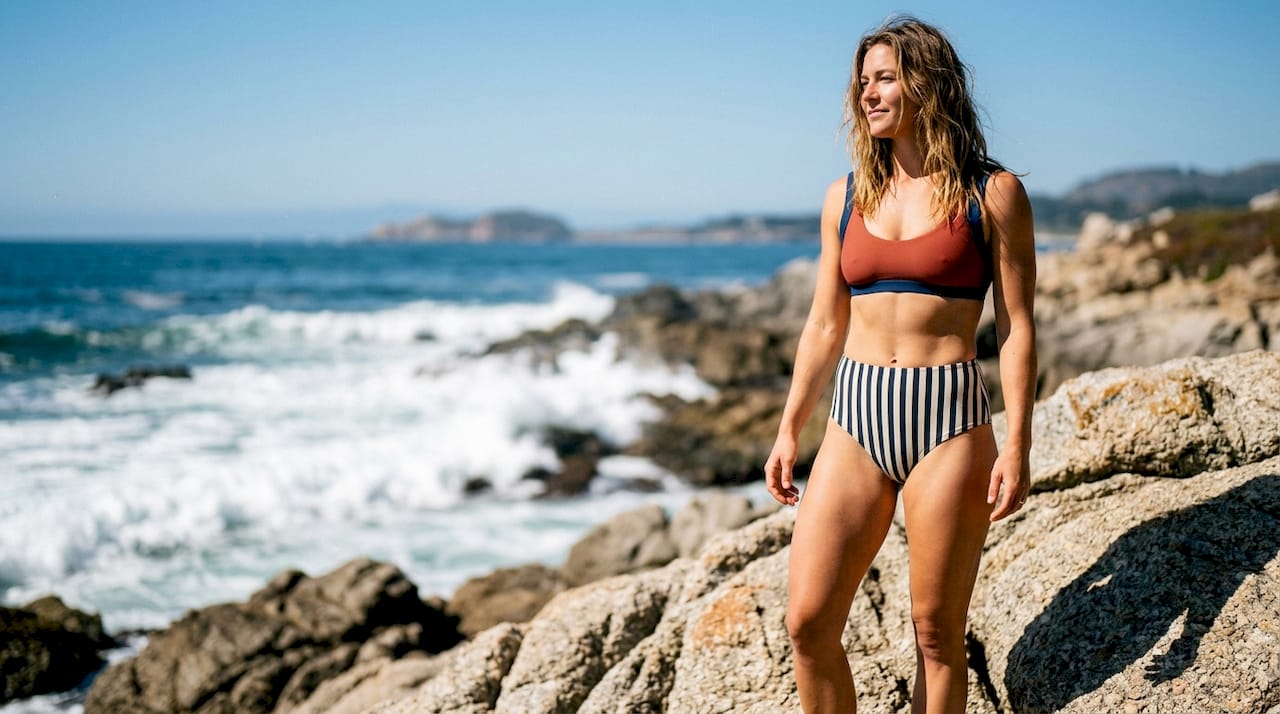
Bold or busy prints on the bottom and a solid, darker top create the classic hourglass illusion by drawing attention down and out. This is the same logic behind the top-and-bottom contrast styling recommended for inverted-triangle shapes.
Horizontal stripes across the hips widen that area visually, while vertical stripes or a single center seam down a one-piece elongate the torso and soften a straight waistline. Diagonal patterns, like a wrap-style print or an asymmetrical color block, tend to be the most versatile since they can narrow shoulders and widen hips at the same time depending on placement.
Warmer, richer tones like a rust, olive, or deep burgundy tend to read as more sculpted on camera and in person than stark white or pale pastels, which flatten shape under direct sun. If you want a print, choose one with some contrast and movement rather than an all-over micro-pattern that reads as flat from a distance.
For one-pieces, a color-blocked side panel in a contrasting shade does more to create waist definition than any cut alone. Keep the busier pattern below the waist and the calmer tone up top, and the eye naturally travels toward curve rather than shoulder width.
The suit is the foundation, but a few accessories change how the whole look reads, both in the water and out.
A structured cover-up, like a linen shirt dress or a wrap skirt, adds curve at the hip the same way a patterned bottom does, which makes it a smart pairing rather than just a throw-on. Choose one that hits above the knee if you want to keep the leg line long.
For anyone training regularly, a silicone swim cap protects hair from chlorine and reduces drag, and a well-fitted pair of goggles with an adjustable strap matters more for comfort than most people expect. Ill-fitting goggles that leave marks or fog constantly are almost always a strap or seal problem, not a fit-to-face problem.
Layer in a wide-brim hat or rash guard for extra UPF coverage on long beach days, especially if your swimsuit’s UPF rating tops out around 30. Gold-toned jewelry, a simple pair of hoops or a chain anklet, adds a finishing touch without competing with a patterned bottom or color-blocked one-piece.
Keep the accessories functional first. A cover-up that snags on wet skin or a cap that pulls hair defeats the purpose no matter how good it looks on the hanger.
The most common mistake is buying based on cup size alone and ignoring strap width and back structure entirely. A suit can technically fit the bust and still fail during activity if the straps aren’t wide enough to distribute weight across broader shoulders.
Choosing a suit only because it looks good on a hanger, without checking torso length, is a close second. A short-torso cut on a long-torso body means constant readjusting, no matter how flattering the print.
Skipping the fabric spec is another frequent misstep. A suit without chlorine resistance or UPF protection might look identical to one that has both, but it won’t hold up the same way after a season of real use.
Sizing down to “smooth” the fabric usually backfires, too, since compressive suits already account for stretch, and going a size smaller than measured often means the suit stops functioning as intended within a few wears. Trust the size chart’s actual measurements over instinct.
Finally, avoiding pattern or color out of a false belief that “busy” prints don’t work on athletic frames leaves a lot of styling potential on the table. As covered earlier, the opposite is usually true.
Performance swimwear rewards a little discipline in the laundry routine, and it’s simpler than most people assume.
Rinse the suit in cool water immediately after wearing it, whether that’s chlorine, salt water, or sunscreen residue. Chemicals left to sit in the fabric break down elastane fibers faster than normal wear ever will.
Hand wash with a gentle, chlorine-neutralizing detergent rather than regular laundry soap, and skip the washing machine entirely. Never wring the suit; press water out gently and lay it flat to dry, away from direct sun, which degrades color and elasticity over time.
Rotate between two suits if you swim often. Giving elastane fibers a full day to recover between wears extends the life of the compression significantly compared to wearing the same suit daily. For a deeper look at what chlorine resistance actually means at the fabric level, Lanimal’s guide to chlorine-resistant swimwear breaks down which blends hold up best.
Activity-ready and poolside style don’t have to be separate wardrobes. A compressive one-piece with a shelf bra earns its place for training days, while a bralette top with a patterned bottom is the better call for a Saturday at the pool.
Quality matters here beyond looks. A suit built with genuinely chlorine-resistant fabric simply lasts longer, which makes it the better purchase whether you’re training weekly or wearing it twice a summer.
— Lital
The right suit shouldn’t force a choice between support and style, and Lanimal’s designs are cut with athletic proportions in mind from the first seam.
The Sportif Bikini Bottom was built around the stay-put design principles that active swimmers actually need: a secure, supportive cut with adjustable side details that hold through movement instead of shifting with every wave or lap. Pair it with a structured top for training days or a softer bralette for the beach, and it moves with you either way.
The Sail One-Piece uses Italian sculpting fabric with mesh detailing at the sides, giving it shape-defining structure without sacrificing the flexibility a broader-shouldered frame needs. Both pieces run true to size with adjustable elements built in, so torso length and bust support are less of a guessing game than with standard cuts.
Not sure where to start? Browse the full Lanimal collection to compare silhouettes side by side, and check the size guide before you order if you’re between sizes. Exchanges are straightforward if the fit isn’t quite right on the first try, so there’s little downside to ordering the style that actually matches how you swim.
This guide draws on wear-testing and styling research from The Strategist, Runner’s World, and Title Nine. For more on fabric and fit, see Lanimal’s guides on UPF swimwear and adjustable swimwear features.


