Free Shipping on US orders over $150
-
Collections
-
Bikini
- One Pieces
- Cover-Ups
- Men's
- Sale
- MODA GLAM x L'ANIMAL
- Nice Breed
-


When a finished designer swimsuit is labeled “Italian swimwear fabric,” expect a softer hand, precise finishing, and often a branded elastane built for a longer wear life, not just a country name on a tag. The one thing to do on any product page before buying: look for the specific yarn or elastane brand named alongside the fiber content, not just the word “Italian” on its own.
TL;DR:
- Branded elastane such as LYCRA® XTRA LIFE™ or CREORA® is essential for prolonging the shape and stretch recovery of designer swimsuits, especially when exposed to chlorine.
- Polyester and PBT blends generally provide longer-lasting color and shape retention compared to nylon/spandex, making them better for frequent pool use.
- “Italian fabric” alone does not guarantee high quality; detailed information about yarn brands, UPF ratings, and specific testing results are necessary to verify performance claims.
- Checking fiber content, elastane brands, lining quality, and customer reviews helps ensure the swimsuit’s fabric will hold up over multiple seasons with proper care.
- Proper care involves rinsing with cool water after each wear, avoiding heat from washing machines and dryers, and handling fabric gently to maintain elasticity and appearance.
Every finished swimsuit is built from a base fiber and a stretch fiber, and that pairing decides almost everything about how the piece feels and how long it lasts. Designer swimwear draws from a handful of fabric families, each with its own tradeoffs between luxury and durability.
Nylon (polyamide) blended with elastane is the classic choice for fashion-forward silhouettes. It has a soft, second-skin hand that drapes well and molds to the body, which is why so many premium swimwear lines lean on it for sculpting cuts and plunge necklines. The tradeoff: nylon breaks down faster under chlorine exposure than its polyester cousin.
Polyester or PBT (polybutylene terephthalate) blended with elastane trades a little softness for serious resilience. These blends hold their color and shape through repeated pool sessions far better than nylon, which is why swimwear built for durability leans on PBT for anything that touches chlorinated water regularly.
Branded elastane matters more than most shoppers realize. LYCRA® XTRA LIFE™ and CREORA® are engineered specifically to resist the breakdown that chlorine, sunscreen oils, and body heat cause in generic spandex, and that resistance is what separates a suit that holds its shape for a shorter period from one that lasts longer.
Recycled yarns have also earned a real place in premium swimwear. ECONYL® (regenerated nylon) and similar recycled fibers can perform close to virgin nylon while giving the brand a legitimate sustainability story worth mentioning on the label.
A quick breakdown of what each family delivers:
Textured and jacquard fabrics deserve a separate note. These weaves create the ribbed, dimensional, or sculpting effects you see on statement one-pieces, and they add real shaping power to a silhouette. They also tend to be less forgiving with rough handling, so care instructions matter more with these pieces than with a simple matte tricot.
Provenance claims on finished swimwear are shorthand for a set of manufacturing standards, not a guarantee by themselves. Italian mills have built a reputation around rigorous dyeing, finishing, and testing processes that affect three things a shopper can actually feel and see: hand, color stability, and shape recovery after stretching.
Established mills like Carvico describe multi-stage testing on their beachwear fabrics that checks for chlorine resistance, UV stability, and pilling resistance before a fabric ever reaches a cutting table. That testing is why a well-sourced suit tends to keep its color through a season of pool days instead of fading to a chalky version of itself by August.
The problem is that “Italian fabric” alone, printed on a hangtag with nothing else, tells you very little. A credible provenance claim usually comes with supporting detail you can actually verify:
A quick gut check: if a product page names the country but not the yarn, treat “Italian” as a nice detail, not proof of performance. If it names both the country and a specific branded elastane or yarn, that’s a far stronger signal that the fabric was chosen for how it performs, not just where it was woven.
Provenance is a real and credible signal in luxury swimwear, and it’s part of why certain fabrics cost more to produce. But it works as a shortcut for quality only when the brand backs it up with the specifics that actually determine performance.
Checking a product page for real fabric substance takes about two minutes once you know what to scan for. Run through this sequence before adding anything to your cart:
If a listing is thin on detail, don’t hesitate to message customer service and ask directly whether the suit uses branded elastane and how it holds up against chlorine and sunscreen. A brand confident in its materials will usually have that answer ready. The Sail One-Piece Swimsuit is a useful example of what a well-documented product page looks like, with fabric origin, fit, and lining spelled out rather than implied.
Pro Tip: Screenshot the fiber content and elastane brand from any suit you’re comparing across sites. Ten minutes later, when you’re deciding between three near-identical black one-pieces, that screenshot will settle the argument fast.
Chlorine, sunscreen, and salt water are the three fastest ways to age a swimsuit, and all three attack the elastane fibers that give a suit its stretch and recovery. Rinse the suit in cool, fresh water immediately after wearing it, before the chlorine or salt has time to sit against the fibers and start breaking down the spandex bonds.
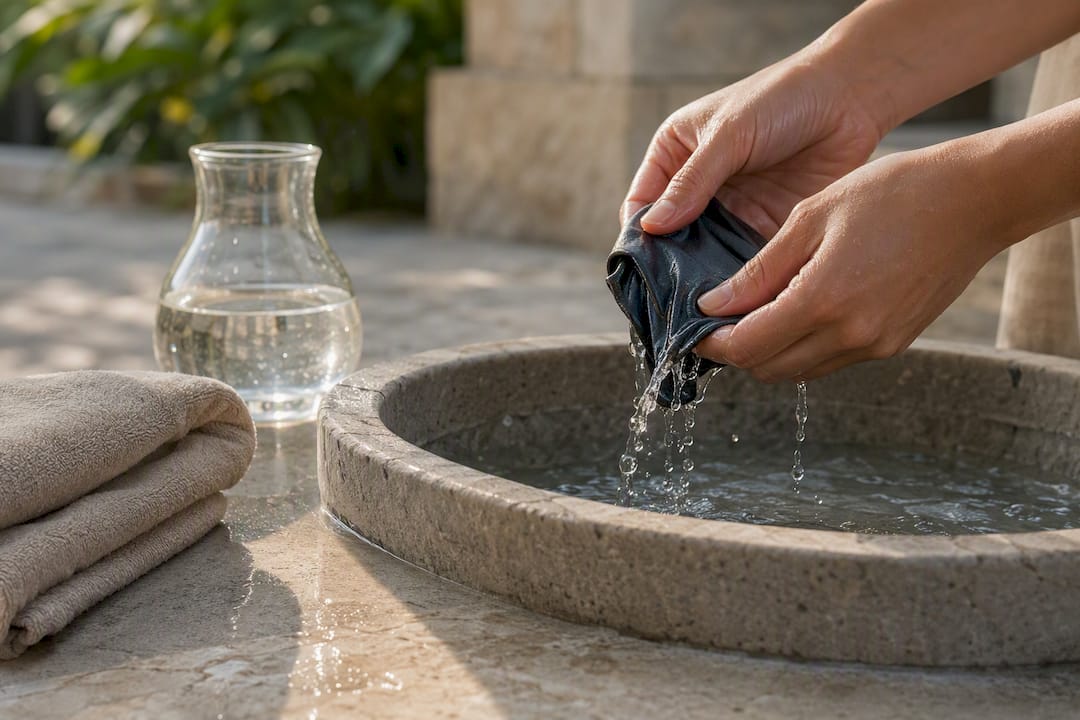
Skip the washing machine and the dryer entirely. Heat is the enemy of elastane, and a hot dryer cycle can undo in twenty minutes what careful hand washing preserves for years. Hand wash in cool water with a mild detergent, lay flat to dry away from direct sun, and never wring the fabric, since twisting stretches the elastane past its recovery point.
Fabric choice changes how forgiving your suit is with this routine. PBT and polyester blends show markedly less elastic fatigue than standard nylon/spandex after repeated chlorine exposure, so a polyester-based suit tolerates a slightly less perfect care routine than a nylon one. If you swim regularly, understanding chlorine resistant swimwear before you buy will save you from a suit that looks tired by midsummer.
For a genuinely high-value piece, a snagged seam or loosened hardware is worth a professional repair rather than a trip to the donation bin. Suits built with quality lining and branded elastane are engineered to survive that kind of small fix and keep going for another season.
Lital Simel-Rhedrick built L’ANIMAL around one belief: a swimsuit should feel as good as it looks, and that comes down to fabric decisions made before a single stitch happens. Fit and hand come first in every selection, then durability gets weighed against it, never the other way around.
That means checking the elastane brand behind a fabric, not just the fiber content percentage, and inspecting lining weight and hardware quality the same way a shopper would if they had the swatch in hand. A suit that sculpts beautifully but pills after three wears isn’t a design win. Pieces like the Nuit One-Piece Swimsuit show what that balance looks like when hardware, lining, and fabric are chosen to work together instead of competing.
— Lital
L’ANIMAL designs swimwear where the fabric decision comes first, not last, so every bikini, one-piece, and cover-up is built to hold its shape, its color, and its fit season after season.
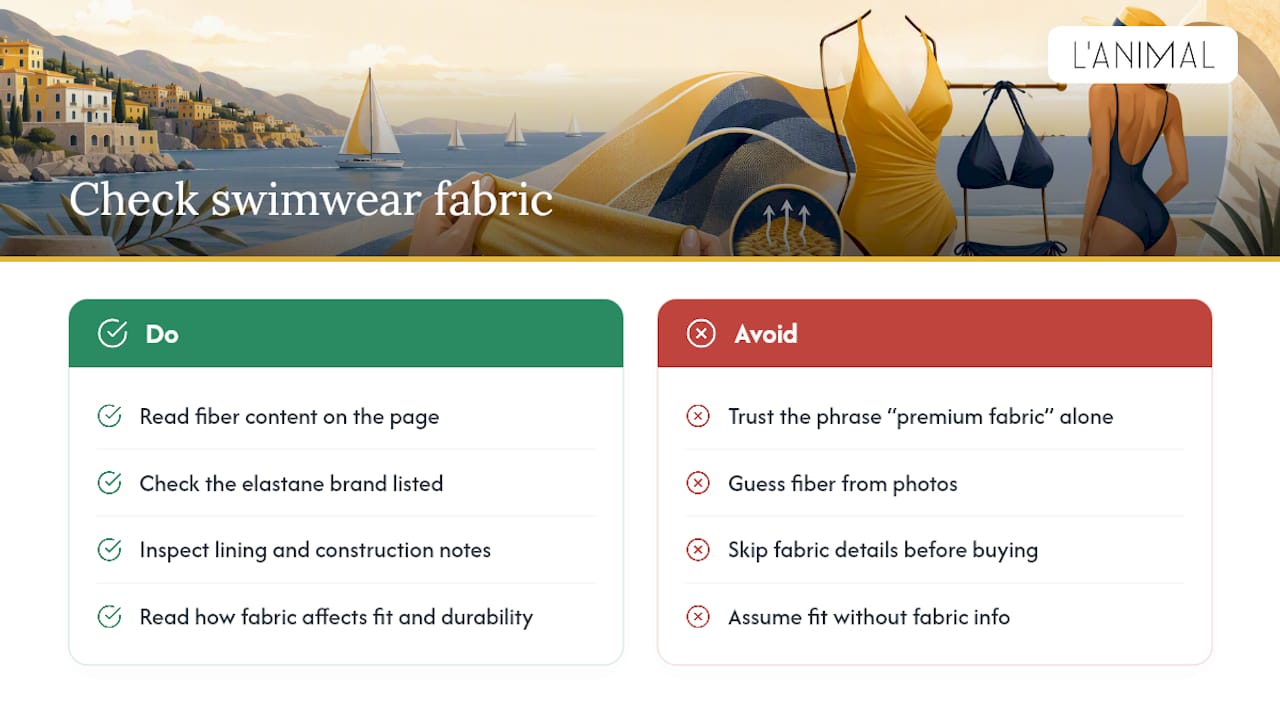
Every product page spells out the details that actually matter, fiber content, elastane brand, lining, and construction notes, instead of leaving you to guess what “premium fabric” means. If sustainability matters to your closet as much as fit does, it’s also worth reading why custom bikini construction ties directly to fabric choice before you shop. For swimwear built around performance fibers day to day, polyester-based trunks show the same durability logic applied to men’s styles.
Browse the current collection at L’ANIMAL and check the fabric details on any piece you’re considering before it sells out for the season.
For readers who want to check the technical claims themselves: Sportek’s fabric guide covers material tradeoffs broadly, Swimsuit Custom’s durability breakdown details PBT versus nylon performance, Spandex by Yard explains branded elastane differences, and Carvico’s beachwear fabric page outlines mill-level testing standards.
Not automatically. Quality comes from the specific yarn, elastane brand, and finishing process used, and Italian mills have a strong reputation for those standards, but the country name alone doesn’t guarantee it without supporting details on the label.
Nylon blends offer a softer hand and better drape for fashion silhouettes, while polyester and PBT blends resist chlorine and UV damage far better, making them the stronger pick for frequent pool use.
Branded elastane formulations are engineered specifically to resist breakdown from chlorine, sunscreen, and oils, which means the suit holds its shape and stretch recovery far longer than one made with generic spandex.
Look for named yarns or elastane brands, specific fiber percentages, and any stated UPF or chlorine resistance detail. A vague “Italian fabric” line with no other specifics is a weaker signal than one paired with concrete material details, like the ones shown on the Sail One-Piece Swimsuit page.
Lifespan depends heavily on fabric choice and care habits, but rinsing after every wear, hand washing, and avoiding heat can extend a well-made suit through multiple seasons rather than one.


