Free Shipping on US orders over $150
-
Collections
-
Bikini
- One Pieces
- Cover-Ups
- Men's
- Sale
- MODA GLAM x L'ANIMAL
- Nice Breed
-


Quality swimwear is defined by its fabric engineering, construction precision, and lifespan. When you invest in swimwear built from premium materials, you get a garment that outlasts budget alternatives by years, performs better in chlorine and saltwater, and delivers real confidence through superior fit. The swimwear market grew 15% in transaction volume over the last 12 months, with average price points rising 13%. That shift reflects a clear consumer signal: people are choosing fewer, better pieces over disposable seasonal buys.
The difference between a $20 swimsuit and a $100 one is not just price. It is fabric composition, construction method, and how long the garment actually holds up.
Budget swimwear typically uses single-layer polyester with minimal elastane content. Premium swimwear uses polyamide and elastane blends, often in multiple layers, which provide shape retention, UV resistance, and a more supportive fit. Luxury swimwear features engineering comparable to high-end lingerie, including shaping panels and multi-layer construction that lifts and sculpts different body types. That level of construction is not possible at a $20 price point.

High-end swimsuits last 5 to 7 years compared to one season for budget alternatives. That changes the math entirely. A $100 suit worn across five beach vacations costs $20 per trip. A $25 suit replaced every year costs $125 over the same period. The premium option is the cheaper long-term choice.
| Feature | Quality swimwear | Budget swimwear |
|---|---|---|
| Fabric | Polyamide/elastane multi-layer | Single-layer polyester |
| Lifespan | 5 to 7 years | One season |
| Shaping panels | Yes | Rarely |
| Color retention | High | Fades quickly |
| Typical price range | $80 to $150+ | $15 to $35 |
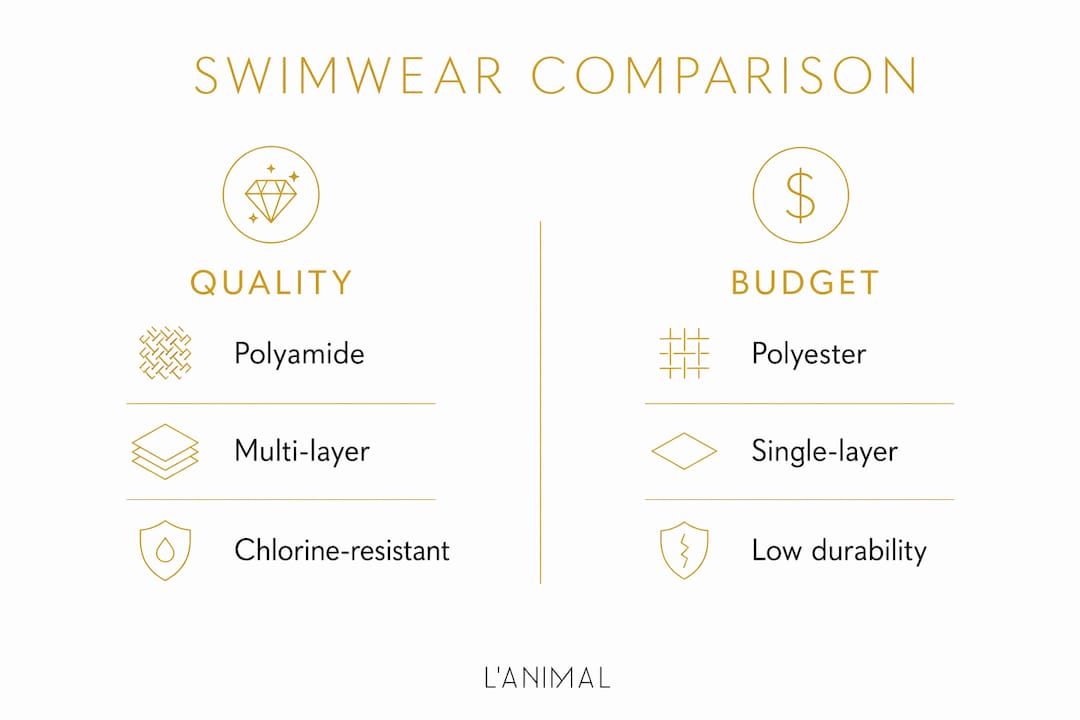
Pro Tip: When comparing swimwear prices, calculate cost per wear rather than sticker price. A $120 suit worn 30 times costs $4 per wear. A $30 suit worn 5 times costs $6 per wear.
Fabric degradation is the primary reason cheap swimwear fails fast. Understanding what breaks down fibers helps you choose and care for your swimwear more effectively.
Chlorine and UV radiation are the two biggest threats to swimwear fabric. Swimsuit fabrics lose up to 65% tensile strength after 300 hours of chlorine and sun exposure, which equals roughly 35 days of summer use. That means a budget suit worn daily through a summer is structurally compromised before fall arrives. Premium fabrics with chlorine-resistant and UV-resistant treatments degrade far more slowly under the same conditions.
Elastane is the fiber responsible for stretch and shape recovery. When chlorine or UV radiation breaks down elastane, the suit loses its fit. Heat and direct sunlight accelerate this breakdown, which is why drying practices matter as much as fabric quality. Saltwater adds a third degradation factor, drawing moisture from fibers and leaving salt crystals that abrade fabric from the inside.
Here is a practical care sequence to protect your investment:
Pro Tip: If you swim in a pool regularly, ask about the water’s pH level. Maintaining pool pH between 7.0 and 7.2 significantly slows polyamide fiber degradation, extending the life of your swimwear noticeably.
The reasons to buy swimwear at a premium price extend well beyond the pool. Swimwear is evolving into multifunctional crossover pieces worn beyond swimming, styled with linen shirts, wide-leg trousers, and casual layers for everyday outings. A well-cut one-piece functions as a bodysuit. A structured bikini top works under an open blazer. This versatility multiplies the value of each piece you own.
Current design trends in 2026 favor architectural minimalism and sculptural fits, which translate well outside beach settings. Brands producing limited edition swimwear create pieces with stronger design identity and better construction, since lower production volumes allow for more attention per garment. These suits hold their visual appeal longer than trend-driven fast fashion alternatives.
Key style benefits of premium swimwear include:
Sustainability is no longer a niche selling point in swimwear. It is a baseline expectation among informed buyers, and it directly connects to the durability and quality arguments already made.
Premium swimwear brands increasingly use regenerated nylon, most notably Econyl, which is produced from reclaimed fishing nets, fabric scraps, and industrial plastic. Econyl performs at the same level as virgin nylon in terms of stretch and chlorine resistance, but its production generates significantly less waste. Brands demonstrating ethical production and sustainable materials gain measurable market share and consumer loyalty. That loyalty translates into brand longevity, which supports consistent quality standards over time.
The sustainability argument also reinforces the investment case directly. A swimsuit made from recycled fibers with chlorine-resistant treatment lasts longer than a conventionally produced budget suit. You replace it less often, which means less textile waste and lower total spending. Consumer expectations now center around sustainability and ethical production as core value components, not optional extras. Choosing a sustainably made suit is both an environmental and a financial decision.
Body inclusivity also connects to this shift. Brands investing in ethical production tend to invest in broader size ranges and more thoughtful construction for different body types. That combination of sustainability, inclusivity, and quality is what defines the premium swimwear category in 2026.
Choosing the right suit and caring for it correctly are the two factors most within your control. Both directly affect how long your investment holds its value.
Follow these steps to get the most from every swimwear purchase:
Pro Tip: Sunscreen and tanning oils are among the most damaging substances for swimwear fabric. Apply sunscreen at least 15 minutes before putting on your suit, and rinse the suit thoroughly after every wear to remove oil residue.
For travel and leisure wardrobes, premium swimwear that doubles as casualwear reduces the total number of garments you need to pack. One well-chosen suit worn three ways across a beach vacation delivers more value per item than three single-purpose pieces.
Quality swimwear built from premium fabrics, engineered construction, and sustainable materials delivers superior durability, style versatility, and long-term cost value compared to budget alternatives.
| Point | Details |
|---|---|
| Cost per wear advantage | A $100 suit lasting 5 to 7 years costs far less per use than a $25 suit replaced annually. |
| Fabric degradation is real | Swimsuit fabrics lose up to 65% tensile strength after 300 hours of chlorine and UV exposure. |
| Care extends lifespan | Rinsing in cold water, hand washing, and air-drying in shade preserve elastane and color significantly. |
| Versatility multiplies value | Premium suits styled as bodysuits or casualwear reduce total wardrobe needs for travel and leisure. |
| Sustainability aligns with durability | Econyl and chlorine-resistant fabrics last longer and reduce replacement frequency and textile waste. |
I have spent years working with fabrics, fits, and the women and men who wear what I design. The single most consistent observation I have made is this: people who buy cheap swimwear spend more money over time and feel less confident wearing it. That is not a sales argument. It is what I see repeatedly.
The fit difference between a well-engineered suit and a budget one is immediate and physical. Shaping panels hold the body differently. Multi-layer fabric moves with you rather than against you. When a suit fits correctly, you stop thinking about it, and that freedom is the whole point of being at the beach or pool.
I also see the sustainability conversation shifting from marketing language to genuine purchasing criteria. Buyers at Lanimal ask about materials and production more than they did three years ago. That tells me the investment mindset around swimwear is maturing. People are thinking in terms of years, not seasons, and they are choosing pieces that reflect their values as well as their style.
My practical advice: buy two suits you love rather than five suits you tolerate. Rotate them, care for them properly, and they will serve you across years of beach vacations and leisure. That is what a real swimwear investment looks like.
— Lital
Lanimal designs swimwear built for exactly the kind of investment described in this article. Every piece in the collection reflects Lital Simel-Rhedrick’s commitment to quality construction, thoughtful fit, and timeless style.
The luxury one-piece collection features sculpting fits with multi-layer construction, designed to perform in the water and style effortlessly outside it. Pieces are built from quality fabrics selected for durability and color retention across seasons of use. Whether you are planning a beach vacation, a resort stay, or simply want swimwear that works as hard as you do, Lanimal offers pieces worth owning for years. You can also explore the full range of Lanimal collections for versatile and limited-edition options. For complementary beach styling, resort cover-up sets pair well with any one-piece for a complete poolside look.
Quality swimwear uses polyamide and elastane blends with chlorine-resistant and UV-resistant treatments that slow fiber degradation. Budget suits use single-layer polyester that loses shape and color within one season of regular use.
A well-made swimsuit cared for properly lasts 5 to 7 years. Replacing it is necessary when the fabric loses elasticity, the color fades significantly, or the shaping panels no longer hold their structure.
Look for polyamide and elastane blends, ideally with Econyl regenerated nylon for sustainability. These fabrics offer the best combination of stretch recovery, chlorine resistance, and UV protection.
Sustainable swimwear made from materials like Econyl performs at the same level as virgin nylon while reducing environmental impact. The longer lifespan of these fabrics also means fewer replacements and lower total cost over time.
Premium one-pieces and structured bikini tops are increasingly styled as bodysuits and casualwear, paired with trousers, skirts, or open layers. This crossover versatility is a recognized trend in 2026 and adds direct value to your purchase.


