Free Shipping on US orders over $150
-
Collections
-
Bikini
- One Pieces
- Cover-Ups
- Men's
- Sale
- MODA GLAM x L'ANIMAL
- Nice Breed
-


Most travelers pack in one of two ways: throwing everything in at midnight before a flight, or hauling an overstuffed bag that costs extra fees and breaks their back through three airports. Neither is good. Step by step vacation packing gives you a repeatable system that prevents both problems, cuts decision fatigue on the road, and gets you from closet to gate without the usual chaos. This guide breaks that system down into clear phases, from research to final zipper.
| Point | Details |
|---|---|
| Start before you think you need to | Begin your gear audit 6-8 weeks out to avoid panic buying at the airport. |
| Build a capsule wardrobe | Select interchangeable pieces in a neutral color palette to multiply outfit combinations without extra volume. |
| Use packing formulas | The 5-7-2 formula covers most 7-day trips within carry-on weight limits and eliminates guessing. |
| Pack tools, not just clothes | Packing cubes, compression bags, and a foldable tote are not optional extras. They change how much fits. |
| Leave room intentionally | Plan for souvenirs and return-trip additions by leaving at least 20% of bag space free before you depart. |
Good packing starts before you touch a single item of clothing. The research phase is where most travelers lose the game before it begins.
Know your trip specifics. Before building any packing list, you need four pieces of information: your destination’s weather forecast for the exact dates you are traveling, your full activity itinerary, your trip length, and your airline’s baggage size and weight rules. A week in coastal Mexico looks nothing like a week in Iceland, even if both trips are seven days long.
Build a category-based packing list. Once you have trip specifics, organize your list into these five categories:
Using a packing checklist app or a simple spreadsheet keeps your list visible and editable. The goal is a living document, not a scrap of paper you lose in your carry-on.
Start packing 1-2 days before departure to reduce errors and give yourself time to course-correct. A digital “morning of” checklist handles last-minute items like chargers and medications that cannot go in the bag days in advance.
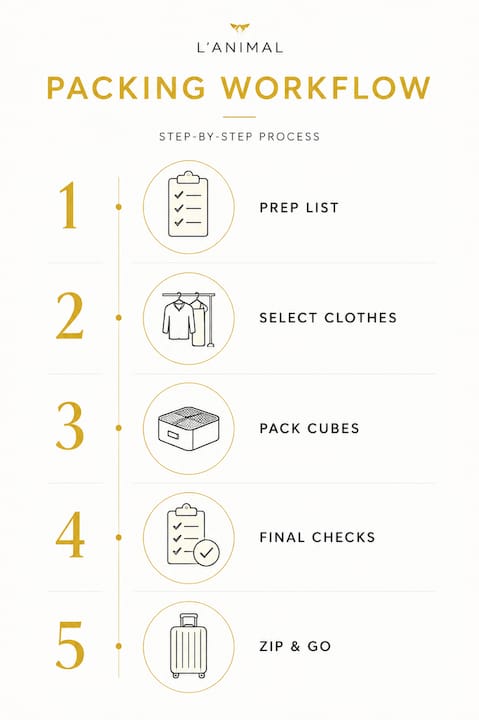
Here is a simple planning table to keep things clear:
| Trip element | Action to take |
|---|---|
| Weather forecast | Check 10-day forecast; note temperature range |
| Activity schedule | List every planned event and its clothing needs |
| Baggage rules | Confirm carry-on dimensions and weight limits |
| Documents | Gather passport, tickets, and insurance details |
| Toiletries | Note any items that need travel-size replacements |
Pro Tip: Keep a permanent toiletries pouch that never gets unpacked at home. Stock it with travel-sized versions of everything you use daily. When a trip comes up, it goes straight into the bag.
This is where most people overcomplicate things. The goal is a cohesive capsule wardrobe where every piece works with multiple others. When you shift to a system mindset with versatile, interchangeable pieces, you carry less and wear more.
Follow these three steps in order:
Start with shoes. Shoes are the bulkiest items and should anchor all your clothing choices. Pick footwear based strictly on your planned activities, not wishful ones. Two pairs cover most trips: one comfortable walking shoe and one dressier option. If you are going to a beach destination, sandals replace the dressy option.
Choose your bottoms. Select bottoms that work with the shoes you just chose. Aim for two to three bottoms maximum. Neutral colors like black, navy, tan, and white give you the most flexibility. Each bottom should pair naturally with at least two of your tops.
Select tops using the cross-mix test. Lay out your chosen bottoms and hold each top against every bottom. If a top does not work with at least two bottoms, it does not make the cut. Apply the 3-wear rule here: only pack items you can style in at least three different ways.
Build your color palette around mostly neutrals with one or two accent colors. A palette of black, white, and olive with a pop of terracotta gives you more combinations than a bag full of unrelated prints. Plan layers based on your weather research. A lightweight cardigan or packable jacket covers cold restaurants, evening walks, and cool travel days without adding significant weight.
Avoid aspirational items. You will not need that formal blazer unless your itinerary actually includes a formal event. Packing for imaginary scenarios is the biggest packing mistake experienced travelers consistently point to.
Pro Tip: Photograph each planned outfit head-to-toe before packing it. The visual record reveals duplicates and gaps instantly, and it speeds up getting dressed each morning on the trip.
Once your clothing selections are finalized, it is time to get everything into the bag efficiently.
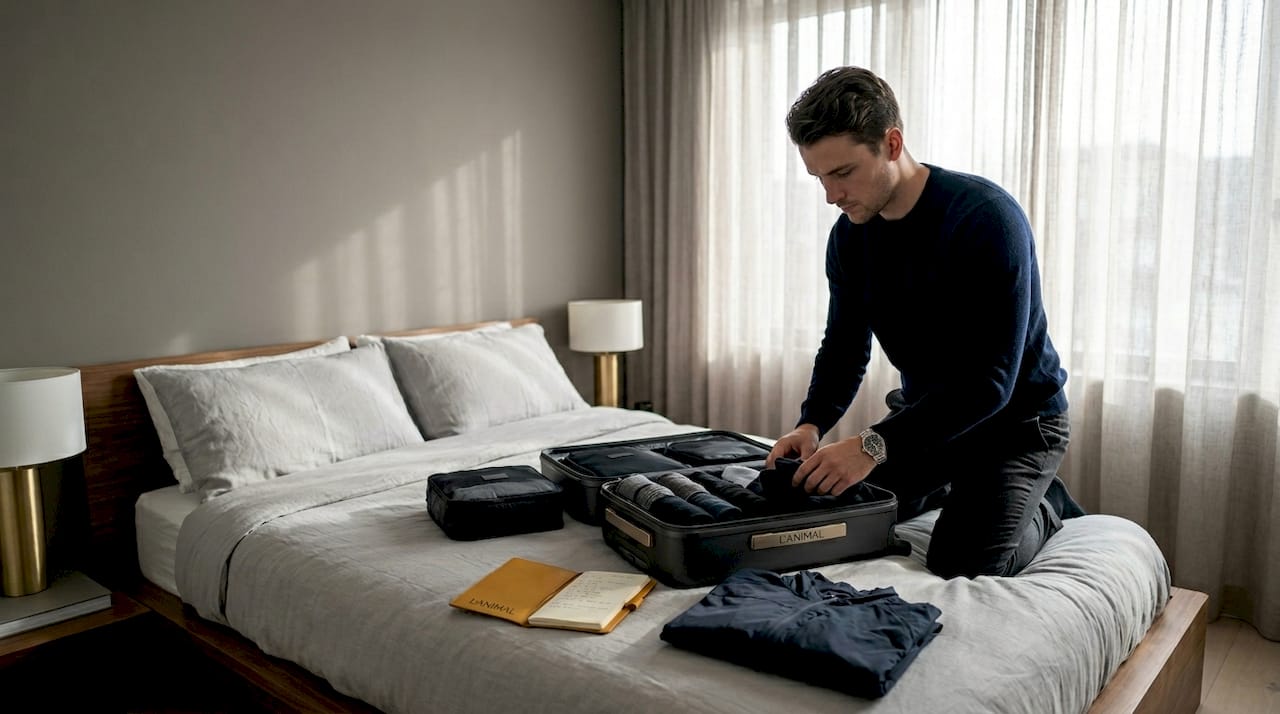
Packing cubes with color-coding are the single biggest upgrade most travelers can make. Assign one cube color per category: blue for tops, gray for bottoms, green for workout gear. Rolling casual clothes saves roughly 23% more space compared to folding, so roll your T-shirts, jeans, and casual dresses. Fold structured pieces like blazers or dress shirts to prevent creases.
Toiletries require real strategy. TSA rules cap liquids in carry-on bags at 100ml per container. Solid toiletries bypass this restriction entirely. Solid shampoo bars, conditioner bars, and toothpaste tablets are worth the switch. They save space and eliminate the plastic bag juggling at security. Here is a quick toiletries reference:
| Item | Carry-on compliant | Space-saving alternative |
|---|---|---|
| Shampoo | Only if 100ml or less | Solid shampoo bar |
| Conditioner | Only if 100ml or less | Solid conditioner bar |
| Toothpaste | Only if 100ml or less | Toothpaste tablets |
| Sunscreen | Only if 100ml or less | Sunscreen stick |
| Razors | Cartridge only | Safety razor (blade in checked) |
Tech packing follows one rule: every cable needs a home. Use a small zip pouch for all cords, adapters, and power banks. Keep this pouch in the top or outer pocket for quick access at security and during the flight.
For documents, keep your passport, printed tickets, travel insurance details, and any reservation confirmations in one dedicated folder or clear sleeve. If you are assuming checked luggage could be lost, keep at least one change of clothes, all medications, and your charger in your carry-on regardless of how you are flying.
Pro Tip: Use the “Zip and Flip” method after packing. Close your suitcase and flip it over onto its wheels side. Any items that shift dramatically are not packed tightly enough. Rearrange until the bag feels solid.
These last steps separate travelers who arrive calm from those who arrive missing something.
Weigh your bag the day before departure. Never leave this to the airport. Most carry-ons must stay under 22 pounds (10kg) for budget carriers. Checked bags typically allow 50 pounds (23kg). Knowing your bag weight early means you can remove items without rushing.
Here are the final checks to run through:
Wear your bulkiest items on travel day. Boots, heavy jackets, and thick jeans free up 2-3 liters of luggage space when worn instead of packed. This single habit regularly saves travelers from checked bag fees.
Pack a foldable tote. A lightweight foldable day bag takes up almost no space and solves two problems: it handles souvenirs on the return trip and works as a beach bag or grocery tote during the trip.
Leave intentional space. Aim to depart with at least 15-20% of your bag empty. That space fills itself on the return journey.
Run your “morning of” checklist. This is the moment for items that cannot be packed in advance: phone charger, medications, sunglasses, snacks, and your wallet.
Pro Tip: For trips longer than 10 days, plan one laundry day into the middle of the trip. It cuts your clothing load in half and keeps your bag from becoming a compressed disaster by day four.
The 5-7-2 packing formula works reliably for week-long trips: 5 tops, 2 bottoms, and 7 pairs of underwear and socks. This fits a standard 22x14x9 inch carry-on and covers the full week without repeating outfits back-to-back.
Even experienced travelers fall into these traps. Recognizing them in advance saves you from repeating them.
Packing for unlikely scenarios. The hiking boots for a trip with no hike planned. The cocktail dress for a beach resort with no dinner reservations. Stick strictly to your confirmed itinerary.
Bringing multiples of the same item. Three black T-shirts do not give you three options. They give you one option repeated. Use that space for something that adds actual variety.
Ignoring baggage limits until the airport. Airline fees for overweight bags can exceed the cost of the items you packed. Check limits when you book your ticket, not when you check in.
Skipping a trial pack. Put everything in the bag and carry it around the house before travel day. You will immediately feel what is too heavy and notice what you forgot.
Forgetting critical items. Chargers, medications, and travel adapters are the three most commonly forgotten items. They go on the checklist first, not last.
Packing less is not about sacrifice. It is about only bringing what you will actually use, which turns out to be much less than most people think.
Pro Tip: Try the reverse packing approach. Start from your bag’s capacity and subtract only what you genuinely need, rather than adding items until the bag is full. The mental shift alone cuts overpacking significantly.
I have packed for enough trips to know that the biggest gap is not between light packers and heavy packers. It is between people who have a system and people who wing it every time.
What actually changed my packing was photographing outfits before putting them in the bag. I thought I knew what coordinated until I saw it on camera. You spot the gaps immediately: a top with no bottom that works, a shoe that does not go with anything else you brought.
Wearing bulkier pieces on the plane sounds minor until you realize it has saved me a checked bag fee on at least four trips. The first time I tried it, I wore boots, jeans, and a chunky knit onto a winter flight and gained what felt like a full extra packing cube of space.
Packing cubes genuinely changed how I travel. The “Zip and Flip” test sounds like overkill until your shampoo bottle shifts and pops open inside a linen shirt. Structure inside the bag matters.
The carry-on-only approach is not right for every trip, but for anything under 10 days, it is almost always possible with the right system. The peace of mind from walking off a plane and going directly to your destination, with no baggage carousel wait, no lost luggage risk, is worth the discipline it takes to pack light.
— Lital
When swimwear takes up half your packing decisions, choose pieces that do more with less. Lanimal designs swimwear built for versatility, which means fewer items in your bag without fewer options in the water.

The Amazon Reversible Bikini Top gives you two looks in one piece, cutting your swimwear volume without limiting your wardrobe. Pair it with the Sportif Bikini Bottom for a mix-and-match set that handles beach days, pool lounging, and resort dining in one compact combination. For travelers who prefer a one-piece, the luxury one-piece collection packs flat and takes up a fraction of the space of bulkier resort wear. For a full approach to building your vacation wardrobe around what fits and what works, the Lanimal guide to building a vacation wardrobe covers exactly that.
The 5-7-2 formula works for most week-long trips: 5 tops, 2 bottoms, and 7 pairs of underwear and socks. It fits a standard carry-on and covers seven days without repeating the same outfit two days in a row.
Start your gear audit and trial pack at least 6-8 weeks before departure for longer trips, and 1-2 days before for shorter ones. Early preparation prevents last-minute panic buys at inflated airport prices.
Wear your bulkiest items on travel day, switch to solid toiletries to bypass TSA liquid limits, and use the 3-wear rule so every item in your bag earns its place with at least three outfit combinations.
Keep medications, chargers, at least one change of clothes, and all travel documents in your carry-on. If checked luggage is delayed or lost, these are the items that keep your trip on track.
Packing cubes create fixed zones inside your bag, which prevents items from shifting and makes repacking at each destination fast. Color-coding by category means you always know exactly where everything is.


