Free Shipping on US orders over $150
-
Collections
-
Bikini
- One Pieces
- Cover-Ups
- Men's
- Sale
- MODA GLAM x L'ANIMAL
- Nice Breed
-


The best beach bikini pics are defined by four elements working together: pose, lighting, styling, and location. When these align, a single photo tells a complete visual story and stops the scroll. In 2026, the most-shared bikini beach photos lean toward natural textures, confident posing, and swimwear that reflects a clear aesthetic identity. Whether you shoot on a phone or a mirrorless camera, the principles are the same. This guide covers every practical layer, from the most flattering poses to golden hour scheduling, so your summer bikini shots perform on Instagram, TikTok, and beyond.
Posing is the single biggest variable in beachwear photography. A great swimsuit photographed with a stiff, flat stance loses half its impact. The most effective bikini poses include one-leg-forward standing, side-lying with leg crosses, and lying back with the head tilted to create natural curves and depth.
Standing poses work best when you pop one hip, step one foot slightly forward, and keep arms slightly away from your torso. Arms pressed flat against your sides compress the silhouette and remove definition. Placing one hand on your hip or running fingers through your hair creates separation and movement.
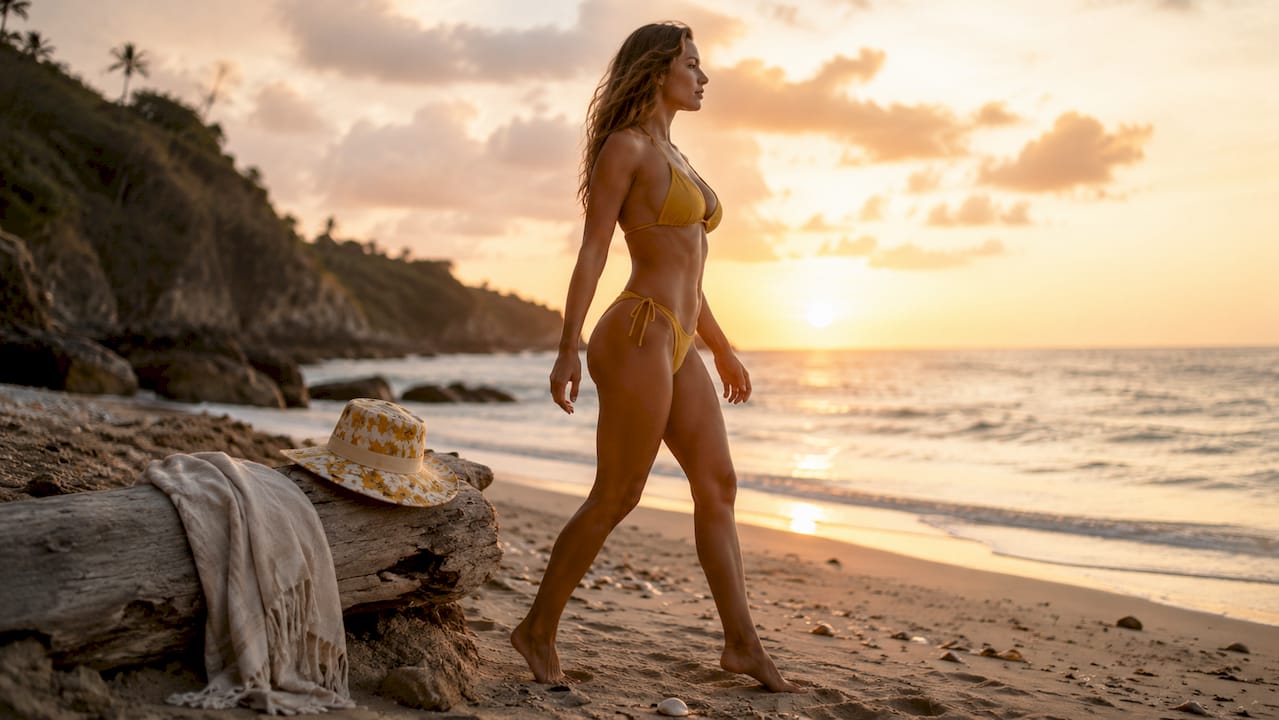
Lying poses are among the most forgiving for any body type. Side-lying with one leg crossed over the other lengthens the body and creates a natural S-curve. Lying back with a slight arch and the head tilted away from the camera elongates the neck and flatters the torso. Elizabeth Hurley’s widely cited advice is to lie down and avoid overhead sunlight entirely, and it works because it solves two problems at once: harsh light and posing anxiety.
Sitting poses give you control over coverage and shape. Knees bent to one side creates a relaxed, editorial look. Legs extended forward with toes pointed reads clean and graphic. Sitting with knees pulled to the chest works well for a candid, lifestyle feel.
Back and over-the-shoulder shots add variety to any set. A straight-on back shot with a glance over one shoulder creates allure without full frontal exposure, making it a strong option for influencers who want range in their content.
Pro Tip: Shoot a sequence of 10 to 15 frames per pose rather than stopping after one click. Movement between frames produces natural micro-expressions and body positions that planned poses rarely achieve.
Lighting is not a background condition. It is an active styling tool. Golden hour is defined as the 45 to 60 minutes before sunset, and it produces warm, directional light that flatters skin tones and creates soft shadows without effort. Scheduling your shoot inside this window reduces the amount of editing required afterward.
Overhead midday sun is the most common mistake in beach swimsuit pictures. It creates harsh shadows under the eyes, nose, and chin, and it washes out lighter swimwear fabrics. Shiny or reflective swimsuit fabric compounds this problem by catching direct light and creating white hotspots that obscure the design entirely.
“Lie down and avoid overhead sunlight. Shoot at sunrise or sunset.” — Elizabeth Hurley on getting the perfect bikini photo, even with a phone camera.
For midday shoots, move into open shade. The light under a beach umbrella or near a shaded wall is diffuse and even, which reads well on camera. If shade is unavailable, sunglasses serve double duty: they protect against squinting and add a styling element.
The Sports Illustrated 2026 Montauk shoot is a precise reference point for what cohesive beach bikini styling looks like in practice. Surf-culture-inspired styling with natural hair texture, minimal makeup, and location-matched swimwear produced images that felt authentic rather than produced. That alignment between subject and setting is what separates a strong photo from a generic one.
Swimwear color and cut should match the story you want to tell. Bold prints and high-cut silhouettes read editorial and high-energy. Neutral tones and minimal cuts read luxury and calm. Rocky coastlines suit darker, more structured swimwear. Turquoise water and white sand favor bright colors and lighter fabrics. Matching the swimwear to the setting is not a style rule. It is a visual logic that makes the whole image feel intentional.
Accessories sharpen the story without overcomplicating it. A wide-brim hat, simple gold jewelry, and a linen cover-up add layers to the image while keeping the focus on the swimwear. Avoid accessories that compete with the suit for attention.
| Styling Element | Best Practice |
|---|---|
| Swimwear color | Match to location tone: bold for tropical, neutral for rocky or moody settings |
| Hair texture | Natural waves and air-dried styles read authentic and photograph well outdoors |
| Makeup | Minimal and waterproof: tinted SPF, mascara, and a lip balm |
| Accessories | One statement piece maximum: hat, sunglasses, or jewelry, not all three |
| Cover-up | Linen or mesh adds dimension without hiding the swimwear |
Planning removes the guesswork and lets you focus on the shoot itself. Step-by-step planning that covers location, timing, styling, posing sequences, and accessories produces more usable content per session than an unplanned shoot of twice the length.
Pro Tip: Shoot in burst mode during movement shots, like walking toward the camera or shaking out wet hair. The best frame from a burst is almost always more natural than any posed shot.
Strong beach bikini pics require deliberate choices in posing, lighting, styling, and location working together as a single visual system.
| Point | Details |
|---|---|
| Pose with intention | Use one-leg-forward standing, side-lying, and over-the-shoulder shots for variety and flattery. |
| Shoot at golden hour | Arrive 30 to 45 minutes before sunset for warm, flattering light that requires minimal editing. |
| Match styling to setting | Align swimwear color, hair texture, and accessories to the beach location for visual cohesion. |
| Plan your shoot sequence | Prepare five to seven poses and two to three swimwear looks before arriving on location. |
| Control reflective fabric | Use angled, diffuse light for shiny or metallic swimwear to prevent glare and hotspots. |
Most people focus on the swimsuit and forget everything else. I have seen beautifully designed pieces disappear in photos because the light was wrong or the pose was stiff. The image is not just the swimwear. It is the whole frame.
The advice I give most often is this: stop treating posing as a performance. The shots that get saved and shared are the ones where the person looks like they forgot the camera was there. That does not happen by accident. It happens because you have done enough poses that your body relaxes into something real. Shoot more frames than you think you need. Delete aggressively afterward.
Lighting is the one variable most people underestimate until they shoot at golden hour for the first time. The difference is not subtle. Warm, directional late-day light does more for a photo than any filter or editing app. If you take nothing else from this, schedule your next shoot for 45 minutes before sunset and see what happens.
Styling coherence is what separates a photo that looks like a vacation snapshot from one that looks like it belongs in a magazine. When the swimwear, the hair, the accessories, and the location all speak the same visual language, the image has authority. That is not about expensive gear or a professional photographer. It is about making deliberate choices before you press the shutter.
— Lital
Your photos are only as strong as the swimwear you wear in them. Lanimal designs swimwear built for both visual impact and real wear, with sculpting fits and distinctive details that photograph well in any light.

The luxury one-piece collection features sculpting silhouettes designed by Lital Simel-Rhedrick that hold their shape and color across a full shoot session. For bikini separates, the Sportif Bikini Bottom delivers a sporty, high-cut line that reads clean in photos, while the Watercolor Bikini Top adds an artistic print that stands out against sand and water. Every piece is designed with the detail and quality that makes the difference between a photo you post and one you keep.
The most flattering bikini poses include one-leg-forward standing, side-lying with crossed legs, and over-the-shoulder back shots. Effective beach poses combine natural body angles with slight movement to avoid stiffness.
Golden hour, the 45 to 60 minutes before sunset, produces the most flattering light for beach swimsuit pictures. Arriving 30 minutes early and shooting through golden hour into post-sunset gives you the widest range of usable light.
Reflective swimsuit fabric requires diffuse, angled light rather than direct overhead sun. Position the subject so light hits at an angle, or shoot in open shade to eliminate hotspots on metallic or glossy materials.
Two to three swimwear looks per session is the standard for social media content creation. Multiple looks multiply your post options without requiring a second shoot day, and they let you match different swimwear styles to different lighting conditions as the session progresses.
Align your swimwear color, hair texture, accessories, and beach location to a single visual tone before you shoot. The 2026 Sports Illustrated Montauk shoot demonstrates how surf-culture styling, natural textures, and location-matched swimwear produce images that feel intentional rather than assembled.


