Free Shipping on US orders over $150
-
Collections
-
Bikini
- One Pieces
- Cover-Ups
- Men's
- Sale
- MODA GLAM x L'ANIMAL
- Nice Breed
-


Resort chic runs on one formula: a swimsuit worth being seen in, a cover-up that photographs as well as it functions, and accessories that signal you meant to look this good. A structured one-piece or high-waist bikini from Lanimal, paired with linen or a flowing kaftan, moves from lounger to lunch without a wardrobe change. Adaptable fabrics and a couple of gold-tone pieces do the rest.
TL;DR:
- The ideal beach club outfit combines a versatile swimsuit with a stylish cover-up, layered with accessories like hats and jewelry for a polished look.
- Packing should include multiple swimsuits, a convertible cover-up, and dressier shoes to transition smoothly from poolside to dinner.
- Fabrics like linen, crochet, silk, and quick-dry cotton are best suited for heat, photos, and comfort across different seasons and climates.
- Cultural expectations and local dress norms influence cover-up styles, so observe other guests and adjust coverage accordingly.
- Lanimal designs resort pieces that multi-task, allowing a small wardrobe to cover all-day transitions from pool to evening without overpacking.
Beach club dress code sits somewhere between “swimwear” and “restaurant reservation,” which is why the best outfits do double duty. Here are seven looks built around that idea, each one working from a swim base up.
Age-inclusive variants: For a 40+ silhouette, swap the sheer kaftan for a midi-length linen dress with a built-in shelf bra, and choose a one-piece with ruching at the waist instead of a structured underwire top. Both keep the resort-chic look intact while adjusting coverage and support.
Think in three layers: swim base, cover-up, evening adjustment. The swim base carries you through morning and pool time. The cover-up takes you into lunch and shaded lounging. The evening adjustment, usually a shoe swap or one added accessory, carries you into sunset and dinner without a full outfit change.
A beach-club day generally breaks down like this:
Packing checklist for the day:
Editors covering beach packing strategy consistently recommend items that pull double duty, like a shirt that works as both a cover-up and a dinner top, to avoid overpacking. Coverage of Le Sirenuse Mare backs this up, noting that regulars there travel with two or three swimsuits, a caftan, a sarong, and water shoes to move easily between boat, cabana, and restaurant.
Pro Tip: Roll your cover-up instead of folding it. It cuts wrinkles and frees up space for a second pair of shoes.
For a deeper breakdown of moving from pool to dinner without a full outfit change, our beach-to-bar dressing guide covers the mechanics in more detail.
Accessories are the fastest way to turn swimwear into a finished outfit. A wide-brim straw hat, oversized sunglasses, and a raffia or woven tote hit the three things that matter: shape, material, and scale. Oversized pieces read as styled; small, fussy accessories tend to disappear against sand and water.
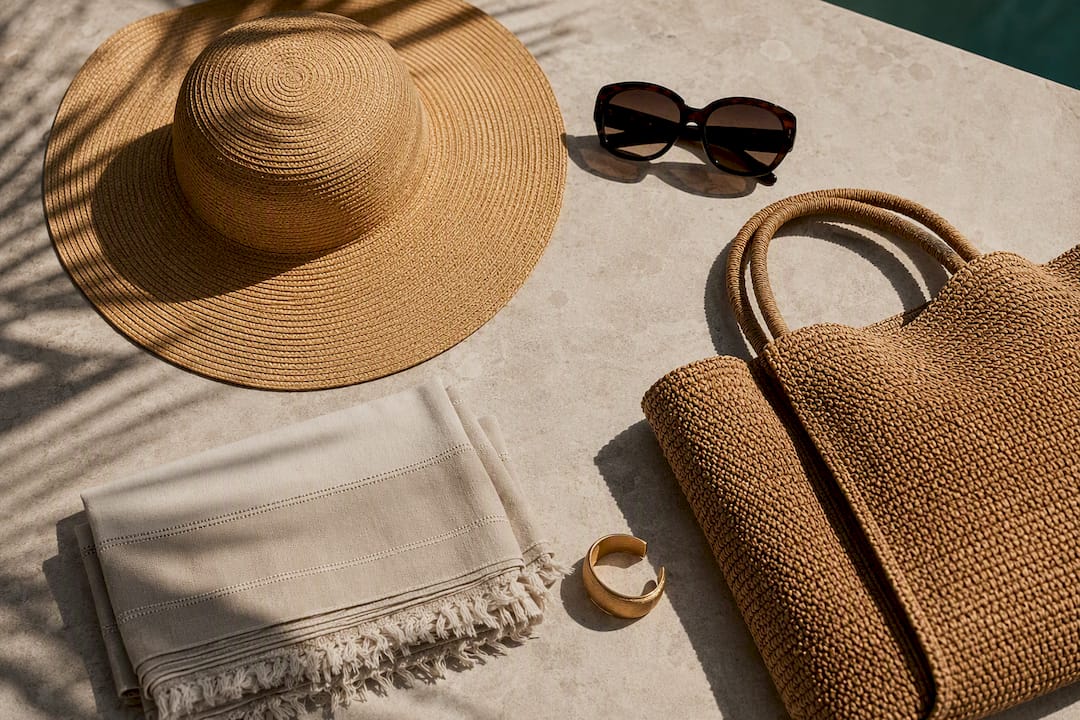
Jewelry should be functional first. Water-resistant, gold-tone pieces hold up against pool chemicals and salt water without tarnishing, which matters more over a multi-day trip than most people expect. Anklets and layered thin necklaces add polish without weight.
Footwear depends on where you are standing:
Vogue’s coverage of beach essentials singles out the wide-brim hat, raffia tote, and flat chic sandal as the three props that do the most visual work, and packing a second, slightly dressier sandal avoids an awkward transition when the day shifts from pool to patio.
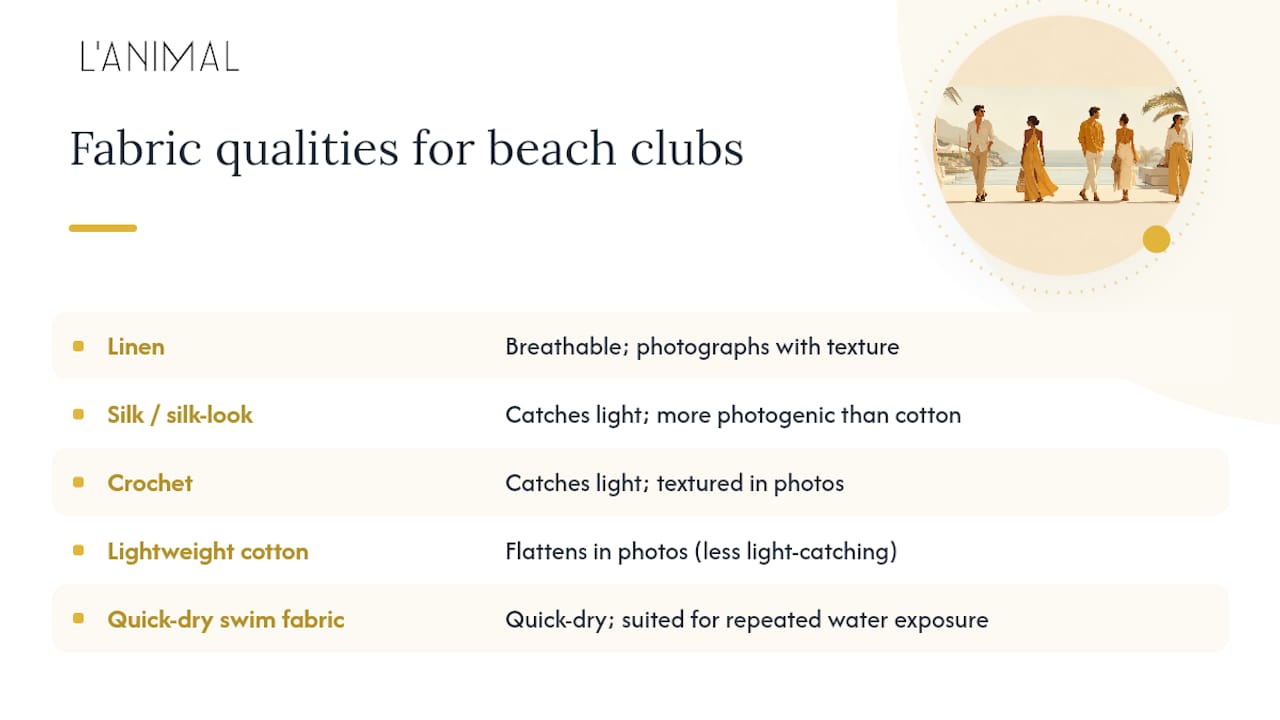
Fabric choice determines whether an outfit survives a full day of heat and photos. Linen, silk or silk-look fabrics, crochet, lightweight cotton, and quick-dry swim fabric are the five materials that consistently work at beach clubs. Linen breathes and photographs with texture. Crochet and silk both catch light in a way that flatlines cotton usually cannot.
Silhouette matters as much as fabric. High-waist bottoms flatter more body types than low-rise cuts and hold up better through a day of sitting, swimming, and standing. A structured one-piece with built-in support does the work of a bra without adding a layer. Midi and maxi cover-ups suit warmer climates better than minis, since they offer shade without extra sunscreen application, and tailored linen co-ords give the same polish as a dress with more flexibility for mixing pieces.
For fuller busts, look for one-pieces with underwire or shelf support built in rather than relying on the cover-up to compensate. For petite frames, a midi length (rather than full maxi) keeps proportions balanced. Reference our beachwear versus swimwear guide for a closer look at how fabric weight affects fit across body types.
Three things decide whether a piece earns its spot in your suitcase: versatility, fabric behavior, and how fast it dries. A cover-up that only works with one swimsuit is dead weight. A fabric that wrinkles the moment you sit down will look tired by lunch. Quick-dry materials matter more than most shoppers realize, since a beach club day usually means multiple in-and-out-of-water moments.
Where to spend and where to save:
For outfit inspiration built around this shopping logic, our step-by-step beach outfit guide and summer outfit ideas for women both walk through building a small rotation of pieces that stretch across an entire trip.
A swimsuit is not an outfit by itself at a beach club. Add one layer and one accessory, and you have solved 90 percent of the dress code question before you even walk in.
Lital, a designer and stylist, works from three non-negotiables: a swimsuit that fits without adjusting, a cover-up that can be belted or opened depending on the moment, and one metal-tone accessory that ties the whole look together.
Her quick fixes: belt a loose kaftan at the waist instead of leaving it open, swap flat sandals for a low heel the moment lunch turns into dinner, and layer two thin necklaces instead of wearing one thick statement piece that competes with a swimsuit neckline.
Pro Tip: Keep one gold cuff in your bag at all times. It works over a bare wrist or a wrist already wearing a watch, and it fixes an unfinished-looking outfit in seconds.
Not every beach club enforces the same rules, and knowing the difference before you arrive saves you from either overdressing or underdressing.
Casual day clubs, common at hotel pools and public beach lounges, rarely enforce a strict code. Swimwear alone is fine poolside, though a cover-up is expected the moment you step into a restaurant or bar area on-site.
Upscale resort beach clubs treat the dining and lounge areas as an extension of the restaurant, not the pool. Cover-ups are effectively mandatory once you leave your lounger, and bare swimwear at a table is generally considered a faux pas rather than a style choice. Style coverage of beach club dressing frames this as an unwritten but firmly enforced expectation, and a dedicated kaftan or shirtdress solves it without requiring a second outfit.
Members-only or event-based clubs, the kind that host DJ sets or brand takeovers, often skew dressier by evening. These crowds tend to favor tailored co-ords or a structured dress over a purely beachy cover-up once the sun starts setting.
The safest approach across all three: keep a cover-up within reach at all times, and treat “am I dressed for a restaurant” as your mental checkpoint before walking past the pool deck.
Bold prints and high-contrast palettes photograph better in beach-club lighting than muted, low-contrast pieces, which is part of why so many resort-chic outfits lean toward color rather than away from it. Editors covering what to wear to a beach club point to this repeatedly: flat, matte neutrals tend to wash out in direct sun, while saturated color and pattern hold their shape in photos.
That said, three palettes consistently work across destinations and skin tones:
Patterns worth packing include tropical florals, abstract watercolor prints, and crochet in a single solid color, since crochet’s texture already provides visual interest without needing a busy print underneath. Where patterns get risky is in over-layering, pairing a printed swimsuit with a printed cover-up rarely works unless the two share a color family.
If you are unsure which direction to go, a solid-color swimsuit with a printed cover-up is the most forgiving combination for a first beach-club trip to a new destination.
Peak summer months call for the lightest possible fabrics: quick-dry swim material, thin cotton, and sheer linen that will not cling once you have been in and out of water repeatedly. Bright colors and minimal layering make sense here, since the goal is comfort in direct heat as much as style.
Off-season beach club visits, whether that means a shoulder-season trip to a warmer climate or a beach club that stays open into cooler months, call for a different approach. A slightly heavier cover-up, like a structured linen blazer over a swimsuit, holds up better against wind and cooler evening air than a sheer kaftan. Long sarongs that double as light wraps also earn their space in a suitcase during shoulder-season travel.
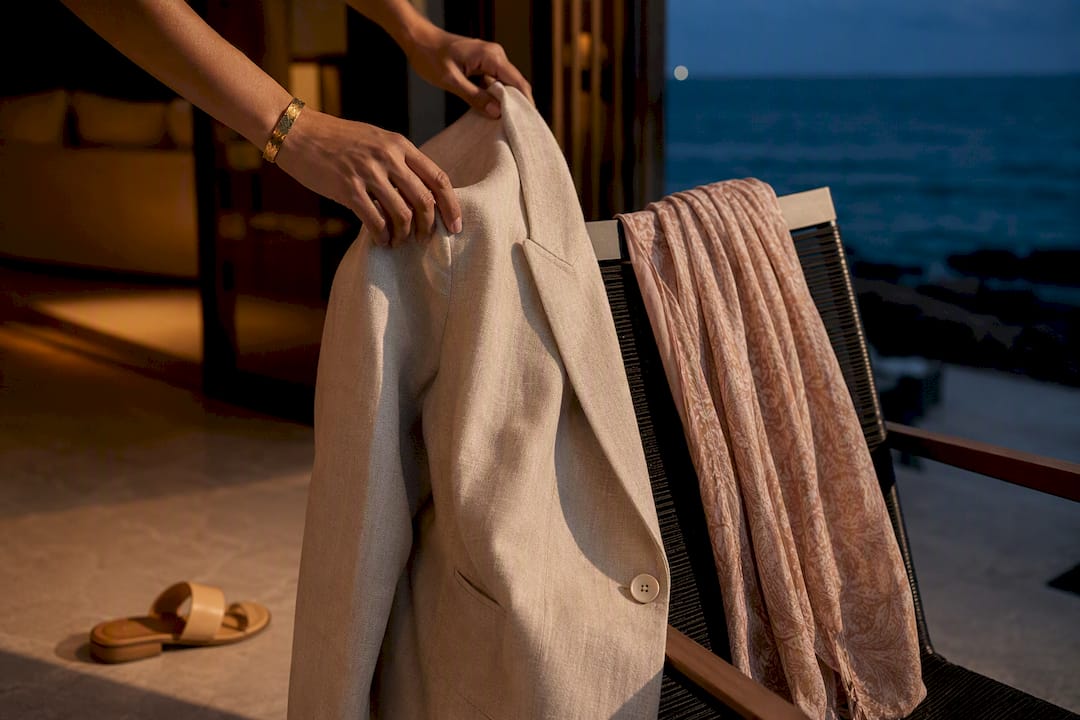
The biggest seasonal mistake is packing a single-weight wardrobe for a trip that spans both. A beach club day in early June can swing from hot midday sun to a genuinely cool evening breeze, and one mid-weight layering piece, tucked into an otherwise lightweight suitcase, solves that swing without adding real bulk. Our guide on why layering works at beach resorts breaks down which fabrics handle that temperature swing best.
What works at a beach club in one destination does not always translate to another, and climate is only half the equation. Culture shapes dress codes just as much, particularly around coverage expectations in dining areas.
In destinations like the Greek islands or the Italian coast, cover-ups tend to be loose, flowing, and lightweight, matching both the heat and a relatively relaxed local dress culture. Beach clubs in more traditional coastal regions, by contrast, often expect a bit more coverage once you leave the pool deck, even in peak summer heat, so a midi-length cover-up plays it safer than a sheer mini.
In hotter, drier climates, breathable natural fibers matter more than style alone. Linen and cotton outperform synthetic blends in direct heat, both in comfort and in how they hold up over a full day. In humid coastal climates, quick-dry fabrics prevent the clingy, damp look that heavier natural fibers can develop by mid-afternoon.
The simplest rule for any new destination: check how covered up other guests are in dining and bar areas before assuming your home country’s beach club norms apply. A quick scan of the room when you arrive tells you more than any packing list.
Lital designs every Lanimal piece to solve the beach-to-bar problem directly. A structured one-piece works alone by the pool and under a sheer layer at dinner. A handful of studio pieces, mixed and rematched, can carry an entire trip’s worth of looks without a suitcase full of single-use items.
— Lital
Swimwear and resortwear built around the formula this guide covers: a structured swimsuit base, a cover-up that photographs well, and pieces you can wear on repeat without looking repetitive. A common combination is a high-waist bikini paired with a flowing kaftan and finished with layered gold-tone jewelry, a look that carries from pool chair to lunch table without a wardrobe change.

Where a hotel boutique might charge resort prices for a single-use piece, Lanimal pieces are designed to mix across multiple looks, so a smaller shopping trip covers a longer trip. Browse the Lanimal collection to build a rotation of swimwear and cover-ups before your next beach club trip, or check the latest arrivals for new resortwear drops before you pack.


