Free Shipping on US orders over $150
-
Collections
-
Bikini
- One Pieces
- Cover-Ups
- Men's
- Sale
- MODA GLAM x L'ANIMAL
- Nice Breed
-


For most pregnant swimmers, a well-structured one-piece or adjustable tankini with generous ruching and a supportive underband is the best all-around choice. Support for your bust comes first on the priority list, belly accommodation comes second, and most women find a dedicated maternity suit worth buying by the second trimester rather than sooner.
TL;DR:
- Ruching and over-bump panels provide the best belly accommodation for growth across multiple trimesters.
- Supportive features like reinforced underbands and wide, adjustable straps are essential from the first trimester onward.
- Fabrics with 15 to 20 percent elastane maintain shape, while UPF 50+ fabrics protect against pregnancy-related skin discoloration.
- Ease of entry, such as zippers or wrap designs, becomes increasingly important in the third trimester.
- Buying suits with proper fit, support, and recovery in mind is crucial, especially after the second trimester, to ensure long-lasting wear.
Shopping for swimwear during pregnancy is different from ordinary swimsuit shopping in one key way: your body is changing on a timeline, and the suit has to keep up. Before you look at colors or cuts, run any candidate through these six checks.
Belly accommodation. Look for full front ruching, side panels, or dedicated over-bump panels. Ruched fabric stretches and gathers as your bump grows, which is why a suit built around ruching can often carry you across two or three trimesters instead of one. Belly panels, by contrast, sit as a separate stretch insert. Both work; ruching tends to be more forgiving if your growth pattern is hard to predict.
Bust support. Breast volume and sensitivity typically increase early, sometimes before the belly shows at all, which is why a reinforced underband and structured cup construction matter from the first trimester onward. Wide straps and adjustable multi-point strap systems distribute weight better than thin string ties.
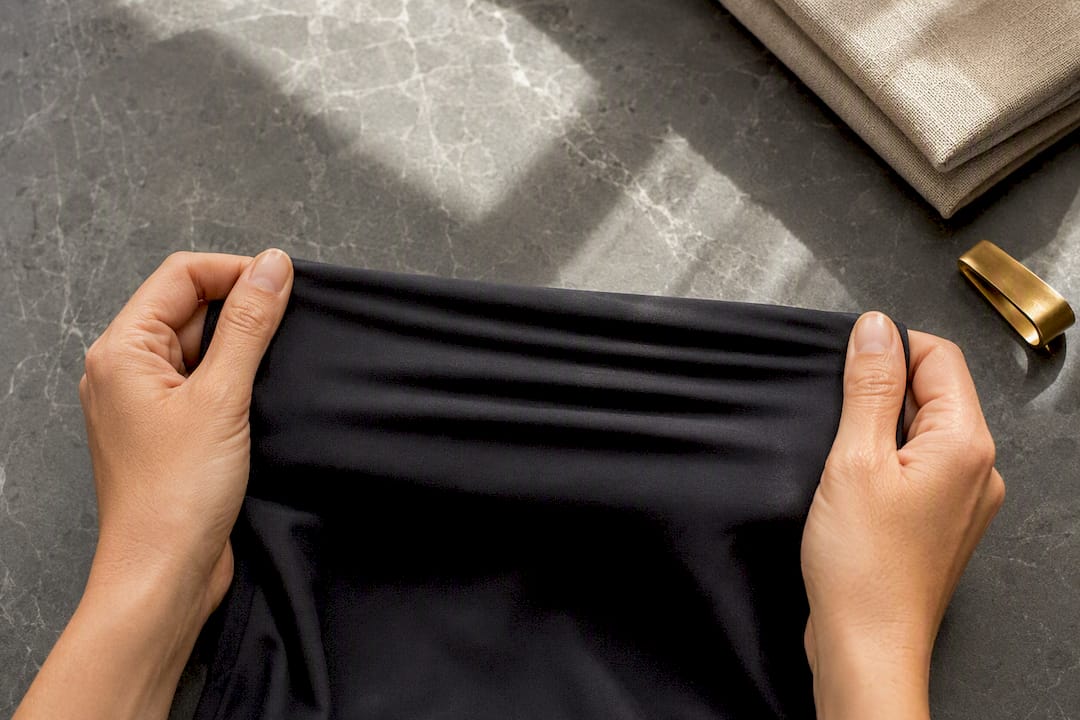
Fabric and recovery. A blend with roughly 15 to 20 percent elastane holds its shape through repeated stretching. Anything lower tends to sag by week four of regular wear.
UPF protection. Pregnancy hormones raise your risk of melasma, the patchy dark discoloration sometimes called the “mask of pregnancy.” Dermatology guidance from the American Academy of Dermatology recommends UPF clothing alongside sunscreen, not instead of it. A UPF 50+ suit or rashguard covers skin sunscreen often misses at the shoulders and neckline.
Waistband and seam finishing. Rolled or bound edges resist curling. Flat-lock seams prevent the chafing that raw overlock stitching causes against a sensitive, expanding midsection.
Ease of entry. Front zips, wrap closures, and drop-seat designs matter more than they sound. By the third trimester, wrestling a snug tank top over your head loses its appeal fast.
Pro Tip: Stretch the fabric across your knuckles before buying. If it snaps back instantly, recovery is good. If it stays stretched even slightly, that suit will sag within weeks.
Silhouette choice comes down to how you swim, how often you need a restroom, and how much coverage you want. Here’s how the three main categories stack up.
A rashguard layered over any of these adds sun coverage and extends your comfortable time in the water. For style, deep V necklines and vertical patterns tend to read as elongating, while bold prints and color-blocking let you make a statement rather than hide.
Fiber content on the tag tells you more than any marketing copy. Nylon/elastane blends generally recover their shape better and resist chlorine breakdown longer than polyester/elastane, which is why nylon blends dominate higher-end maternity lines. Polyester/elastane holds up better against saltwater and sun fading, making it a reasonable pick for beach-heavy vacations rather than daily pool laps.
Poor recovery shows up fast if you know where to look: try the suit on, sit down, stand up, and check whether the bust and waistband snap back or stay loose. A suit that gaps after one sit test will only get worse in the water.
Your priorities shift as pregnancy progresses, and buying too early or too late for your stage is the most common maternity swimwear mistake.
Buy for the stage you plan to swim through, not just the stage you’re in today. If you’re shopping in month four and plan to swim through month eight, size for the growth you expect, not the body you have this week.
Skip the temptation to size up “just in case.” Measure your current bust, underbust, and hip circumference, then match those numbers against the brand’s own size chart rather than your pre-pregnancy size. Manufacturers design maternity cuts to accommodate the growth ahead of you, so buying your current measurements, with a little room in the band, usually beats guessing a size larger.
When you try a suit on, check five things: does the band sit flat without digging in, do the cups fully contain your bust without spilling, are the straps comfortable at the shoulder, does the leg opening avoid pinching at the hip crease, and can you raise your arms overhead without the whole suit riding up? For fuller busts or larger frames, look specifically for wider bands and reinforced straps. Brands with a size-inclusive fit range tend to solve this better than one-size-stretches-all designs.
Pro Tip: Try suits on sitting down, not just standing. A lot of gapping and pinching only shows up once you bend at the hip, which is exactly the position you’ll be in half the time at the pool.
Balance shifts as your center of gravity moves forward, and a snug wet suit makes climbing pool steps trickier than it used to be. A few practical habits help.
ACOG guidance supports continued moderate swimming through pregnancy, and the suit itself should never be the thing limiting your range of motion. If a design restricts how far you can step or reach, it’s the wrong design for this stage.
L’ANIMAL was founded by designer and stylist Lital Simel-Rhedrick, whose swimwear line was built around solving exactly the fit problems this guide covers: seam placement that avoids chafing, deep ruching that expands without losing shape, and strap widths engineered for real support rather than decoration.
Fit problems in maternity swimwear almost always trace back to three decisions: where the seams sit, how deep the ruching goes, and how wide the straps are. Get those three right, and the suit does the work instead of the wearer.
L’ANIMAL’s own posts on adjustable swimwear and postpartum-friendly design go deeper into how strap mechanics and nursing-access necklines extend a suit’s usable life well past delivery. For styling, a single bold print in a vertical orientation reads as confident rather than concealing, and a scoop neckline tends to balance a fuller bust without drawing extra attention to it.
If you swim regularly or you’re past the first trimester, a dedicated maternity suit earns its price through fit alone. If you’re early, occasional, and your current suit still stretches comfortably, save the money and revisit the decision by month five. The best purchase is the one you’ll still wear postpartum, so weigh nursing-friendly features against the sticker price before deciding.
— Lital
Collections are built around priorities such as adjustable straps, quality fabric blends chosen for recovery, and fit ranges designed to include diverse body shapes.
If ruching, underband support, and easy on/off design are on your checklist, they’re already built into the pieces waiting in L’ANIMAL’s collections. Browse by silhouette, check the fit notes on each style, and pick the piece that matches the trimester you’re shopping for today. When you’re ready, add your size to the cart and let the suit do the work for the rest of your swim season.


