Free Shipping on US orders over $150
-
Collections
-
Bikini
- One Pieces
- Cover-Ups
- Men's
- Sale
- MODA GLAM x L'ANIMAL
- Nice Breed
-


Quick dry swimwear is clothing made from synthetic, low-absorbency fibers engineered to shed water fast and dry in a fraction of the time traditional swimwear takes. If you have ever stood around in a soaked suit waiting to feel human again, you already understand why this category exists. The fabrics behind quick dry swimwear, primarily polyester, nylon, and spandex blends, are treated with Durable Water Repellent coatings that cause water to bead and roll off rather than soak in. Premium garments dry in 15–30 minutes, compared to several hours for cotton or standard woven suits. That speed matters whether you are packing light for a beach trip or moving from the pool to a rooftop lunch.
Quick dry swimwear works by combining two properties: low water absorption at the fiber level and surface treatments that repel water before it penetrates the fabric. Understanding both is the key to buying smart.
Hydrophobic synthetic fibers like polyester and nylon resist water at the molecular level. Polyester absorbs less than 1% of its weight in moisture, which is why it dries so much faster than natural fibers like cotton. Nylon absorbs slightly more but still performs far better than any natural textile.
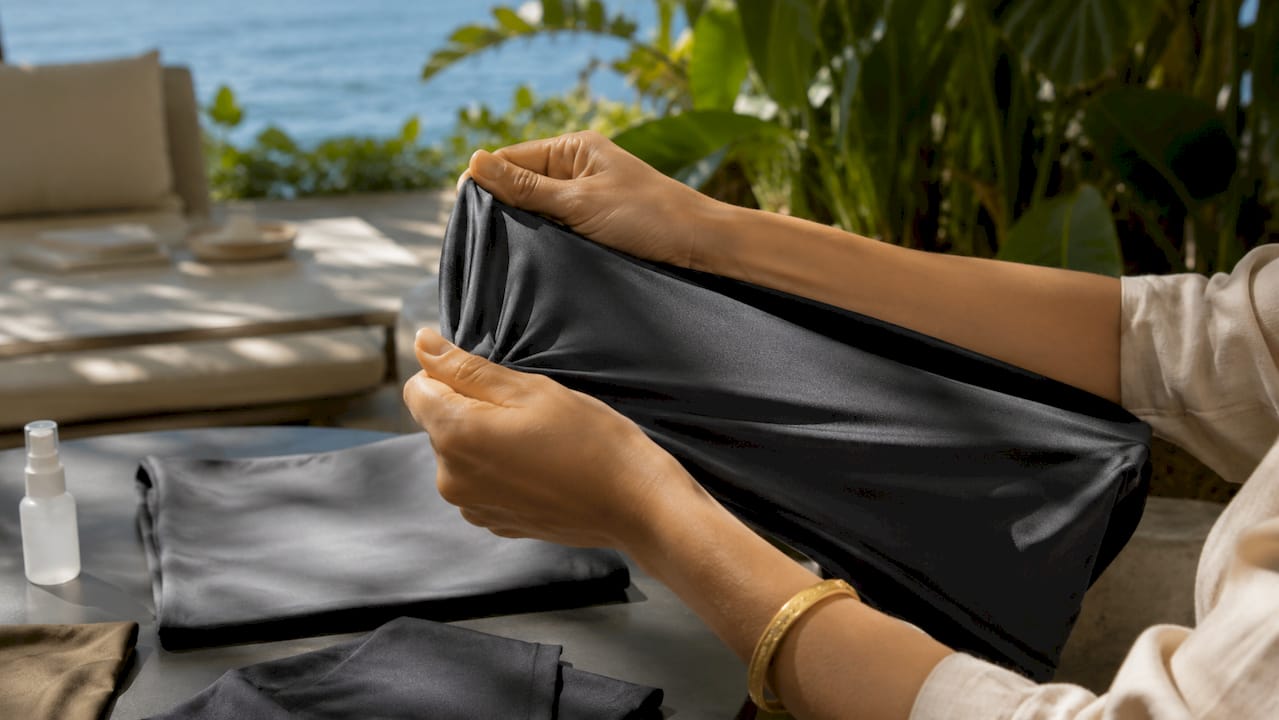
DWR coatings add a second layer of defense. PFC-free DWR treatments create a lotus effect on the fabric surface, causing water droplets to bead up and roll off instead of spreading into the weave. The result is a garment that sheds the bulk of water before it even has a chance to be absorbed.
Quick dry fabric is not the same as waterproof fabric. Quick dry relies on capillary action to move moisture away from the skin for rapid evaporation. Waterproof fabric blocks water entirely. Quick dry fabric also differs from moisture-wicking fabric. Moisture-wicking manages sweat once the fabric is already damp, while quick dry focuses on shedding water fast after full submersion.
Fabric structure also plays a role. Microfiber weaves with smooth, tight surfaces allow better airflow across the fabric, which speeds evaporation. High moisture vapor transmission rate, or MVTR, is the technical measure of how efficiently a fabric passes water vapor through it. Swimwear with a high MVTR dries faster because moisture escapes the fabric quickly rather than sitting trapped in the weave.
Pro Tip: Look for the term “MVTR” or “moisture vapor transmission” in brand descriptions. It signals the brand is measuring actual drying performance, not just using marketing language.
Material choice is the single biggest factor in how fast your swimwear dries. Polyester and nylon dominate the market, but they perform differently in practice.
Polyester is the superior quick dry fiber because of its natural hydrophobicity. It requires no additional treatment to repel water, holds its shape after repeated use, and resists chlorine degradation better than nylon. The tradeoff is a slightly stiffer hand-feel compared to nylon.

Nylon is softer against the skin and drapes more naturally, which makes it a favorite for fashion-forward cuts and women’s swimwear. It absorbs more moisture than polyester by default, so quality nylon swimwear relies on DWR treatments to reach competitive drying times. When treated correctly, nylon suits perform nearly as well as polyester in real-world conditions.
Fabric weight and weave construction affect drying speed beyond fiber type alone. Lightweight, smooth-weave fabrics allow better airflow and faster evaporation. Heavy or textured fabrics trap more water even when made from synthetic fibers. Mesh linings and drainage ports in pocket construction also matter. A well-placed mesh lining lets water escape the garment rather than pooling inside.
| Material | Water absorption | Hand-feel | DWR needed | Best for |
|---|---|---|---|---|
| Polyester | Less than 1% | Firm | Optional | Performance, durability |
| Nylon | Moderate | Soft | Yes | Fashion cuts, comfort |
| Spandex blend | Low | Stretchy | Optional | Fit, flexibility |
| Recycled polyester | Less than 1% | Firm | Optional | Sustainability focus |
DWR treatments are not permanent. Chlorine exposure and repeated laundering degrade DWR coatings over time. You may need to reapply a DWR spray after heavy use to restore water-beading performance. Washing in cold water and air drying instead of machine drying extends the life of the treatment significantly.
Pro Tip: Spray a DWR restorer like Nikwax TX.Direct onto your swimwear every season. It takes two minutes and adds months of performance back to the fabric.
Quick dry swimwear is one of the most practical upgrades a traveler can make. The benefits go well beyond just drying faster.
Sustainability trends are pushing brands toward recycled polyester in quick dry construction. Recycled polyester performs identically to virgin polyester for drying speed while reducing reliance on new petroleum-based materials. If environmental impact matters to you, checking for recycled fabric content is a straightforward way to align your purchase with your values without sacrificing performance.
The versatility angle is real. A well-cut quick dry suit in a solid color or clean print reads as casual daywear. Paired with a linen shirt or a light jacket, it works beyond the beach. That dual function is why performance swimwear features have migrated into fashion-forward designs over the past several years.
Choosing the right quick dry suit comes down to five factors. Work through each one before you buy.
Style and brand reputation round out the decision. A suit that performs well but looks dated will sit in a drawer. Lanimal designs quick dry swimwear that balances technical fabric performance with current silhouettes, so you get both. Check swimwear style trends for 2026 to match your purchase to what is current without chasing trends that fade in a season.
Quick dry swimwear outperforms traditional suits because synthetic fibers absorb minimal water and DWR coatings shed the rest, cutting drying time to 15–60 minutes.
| Point | Details |
|---|---|
| Fiber type drives drying speed | Polyester absorbs less than 1% moisture by weight, making it the fastest-drying base material. |
| DWR coatings require maintenance | Chlorine and laundering degrade DWR over time; reapply a spray treatment each season to restore performance. |
| Fabric weight matters as much as fiber | Lightweight smooth-weave construction dries faster than heavy synthetics, regardless of fiber type. |
| Quick dry is not waterproof | Quick dry fabric moves moisture away from skin for evaporation; it does not block water entry. |
| Travel benefits are practical | Overnight drying, UPF 50+ protection, and 4-way stretch make quick dry suits ideal for packing light. |
When I started Lanimal, I was obsessed with silhouette and color. Fabric technology felt like an engineering problem, not a design problem. That changed the first time I wore a recycled polyester suit on a trip and realized I had packed one suit for five days without thinking twice about it. The suit dried overnight on a towel rack. I wore it to the beach, rinsed it, and it was ready again by morning.
What I have learned since is that quick dry construction is not just a performance feature. It is a design constraint that forces better decisions. When you commit to lightweight, smooth-weave fabrics, you end up with cleaner lines and less bulk. The suits look better because the fabric behaves better.
The sustainability shift toward recycled polyester has made this even more interesting. Recycled fibers now match virgin polyester in drying performance. That means there is no technical reason to use virgin materials in quick dry swimwear anymore. The brands still doing so are behind the curve.
My honest advice: ignore the marketing labels and read the fabric content. A suit listed as 80% recycled polyester with a PFC-free DWR treatment will outperform a “premium” suit in a heavy nylon blend every single time. Function and fashion are not in conflict here. The best quick dry suits prove that.
— Lital
Lanimal designs swimwear built for real use, not just the photoshoot. Every piece in the collection uses performance fabrics selected for drying speed, UV protection, and long-term durability.

The Sportif Bikini Bottom is a strong starting point if you want quick dry performance in a clean, modern cut. It uses a lightweight synthetic blend with a smooth-weave finish that sheds water fast and holds its shape across seasons. For a broader look at what is available, the full swimwear collections cover styles for both women and men, including pieces built around recycled fabrics and current silhouettes. Quality and function are the baseline. Style is the point.
Quick dry swimwear is made primarily from polyester, nylon, and spandex blends. These synthetic fibers absorb very little water and are often treated with DWR coatings to further speed drying.
Premium quick dry garments dry in 15–30 minutes. Standard quick dry suits take up to 60 minutes, still far faster than traditional swimwear, which can take several hours.
No. Quick dry swimwear moves moisture away from the skin for fast evaporation but does not block water from entering the fabric. Waterproof fabric prevents water penetration entirely.
Yes. DWR coatings degrade with chlorine exposure and repeated washing. Reapplying a DWR spray treatment periodically restores water-beading performance and extends the suit’s quick dry function.
Quick dry swimwear is one of the most practical choices for travel. Overnight drying means you can pack fewer suits, and hybrid designs with UPF 50+ and 4-way stretch work across multiple activities without a wardrobe change.


