Free Shipping on US orders over $150
-
Collections
-
Bikini
- One Pieces
- Cover-Ups
- Men's
- Sale
- MODA GLAM x L'ANIMAL
- Nice Breed
-


Ruching looks like a simple design choice, but it does far more than add visual texture to a bikini. Many shoppers scroll past ruched styles thinking it’s purely decorative, a little extra fabric gathered for effect. The reality is that ruching directly shapes how a bikini fits, how it moves with your body, and how confident you feel wearing it. Understanding what ruching actually does gives you a real advantage when choosing swimwear that works for your shape, your comfort level, and your personal style.
| Point | Details |
|---|---|
| Ruching explained | Ruching gathers fabric in swimsuits for ripples that enhance style and fit. |
| Fit and comfort | The technique offers stretch, flexibility, and body-flattering effects when done right. |
| Visual impact | Strategic ruching highlights curves, adds interest, and boosts confidence. |
| Smart shopping | Choose placement and sizing carefully to get the most flattering result for your body. |
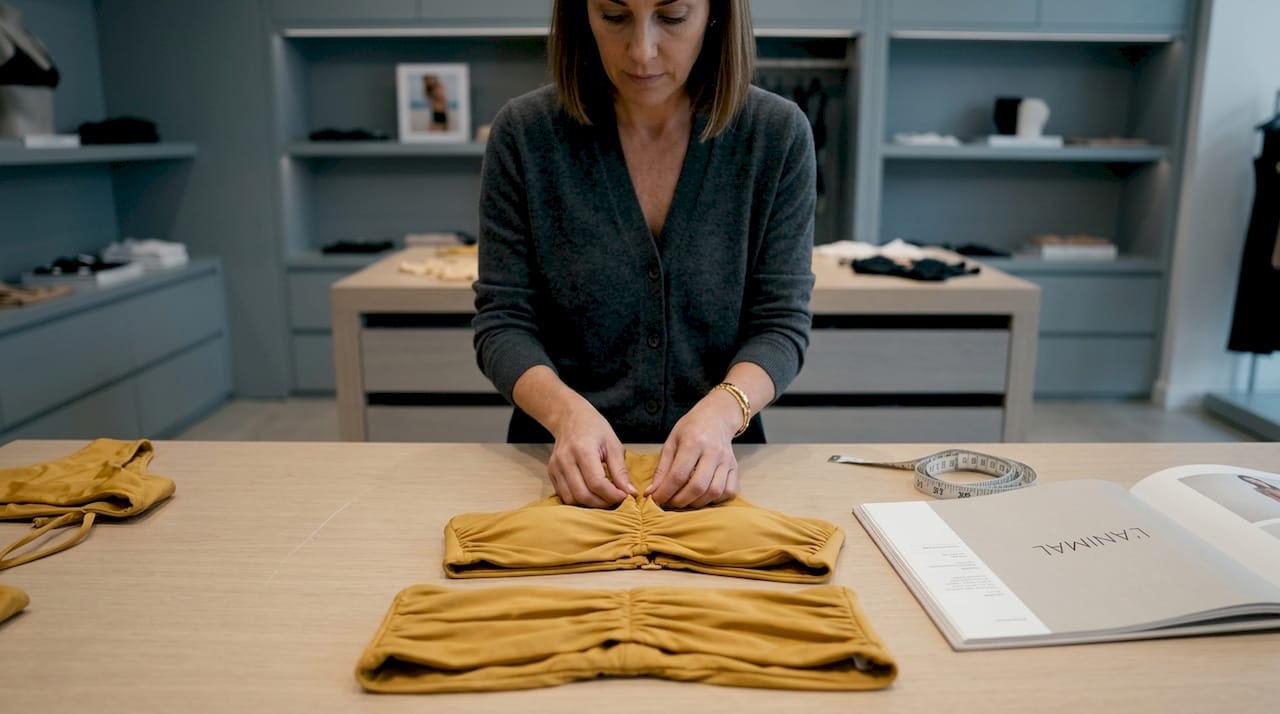
Ruching is a sewing method that gathers fabric into ripples, folds, or pleats along a seam or panel. The word comes from the French “ruche,” meaning a strip of gathered fabric used as a trim. In swimwear, the technique is applied strategically to create texture, add shaping, and improve how the suit conforms to the body.
In bikinis specifically, ruching appears in several key locations:
The mechanics are straightforward. Extra fabric is stitched down at intervals, causing the material between those stitches to bunch and fold. This creates elasticity in the gathered area, which means the fabric can stretch and move more naturally with your body. It also means ruching can accommodate slight size variations, which is why ruched styles are considered both stylish and functionally comfortable, but the placement and fit are key to these benefits.
Ruching also visually adjusts proportions without adding bulk. Because the gathered fabric creates shadow and depth, it draws attention to specific areas and softens others. The Jungle reversible bikini bottom uses this technique effectively, while the Lacer bikini bottom shows how ruching can be integrated into a more structured design.
Pro Tip: Always check the positioning and depth of ruching before buying. Ruching placed too high, too low, or too densely can work against your silhouette rather than for it. Look for styles where the gathering is centered and proportional to the overall cut.
Understanding how ruching works sets the stage for why it’s so beloved. Here’s what makes it a top pick for both designers and wearers:
Style: Ruching creates movement and visual interest that flat fabric simply can’t achieve. The rippled texture catches light differently depending on the angle, which makes a ruched bikini look dynamic and intentional. It’s a detail that reads as fashion-forward without being over-the-top.
Comfort: Because the gathered fabric has built-in stretch, ruched areas flex with your body rather than pulling or restricting. This is especially noticeable when you’re active in the water, sitting, or moving between positions. The fabric gives where it needs to, which reduces the common problem of a bikini bottom riding up or a top pulling across the chest.
Confidence: This is where ruching earns its reputation. The shaping effect of a well-placed gather can accentuate curves, smooth out areas you’re less focused on, and create a more balanced silhouette overall. It’s not about hiding anything. It’s about framing your body in a way that feels intentional and flattering.
“Ruched swimwear offers both visual intrigue and functional flexibility, but proper fit is everything.”
Here’s a quick breakdown of what ruching delivers across three key areas:
| Benefit | What it does | Why it matters |
|---|---|---|
| Style | Adds texture and visual depth | Creates a polished, fashion-forward look |
| Comfort | Allows stretch and movement | Reduces pulling, riding up, and restriction |
| Confidence | Shapes and accentuates curves | Flatters a wide range of body types |
| Versatility | Works on tops and bottoms | Adaptable across different swimwear styles |
| Fit flexibility | Accommodates minor size variation | More forgiving than flat-cut styles |
Ruched styles are framed as both style-forward and functional for fit/comfort, but fit balance still matters. This means you can’t rely on ruching alone to fix a poorly sized bikini. The foundation of a good fit still comes from choosing the right size and cut for your body.
The Safari reversible bikini bottom and the Serengeti reversible bikini bottom are strong examples of how ruching can be used to create both comfort and a defined silhouette in reversible designs.
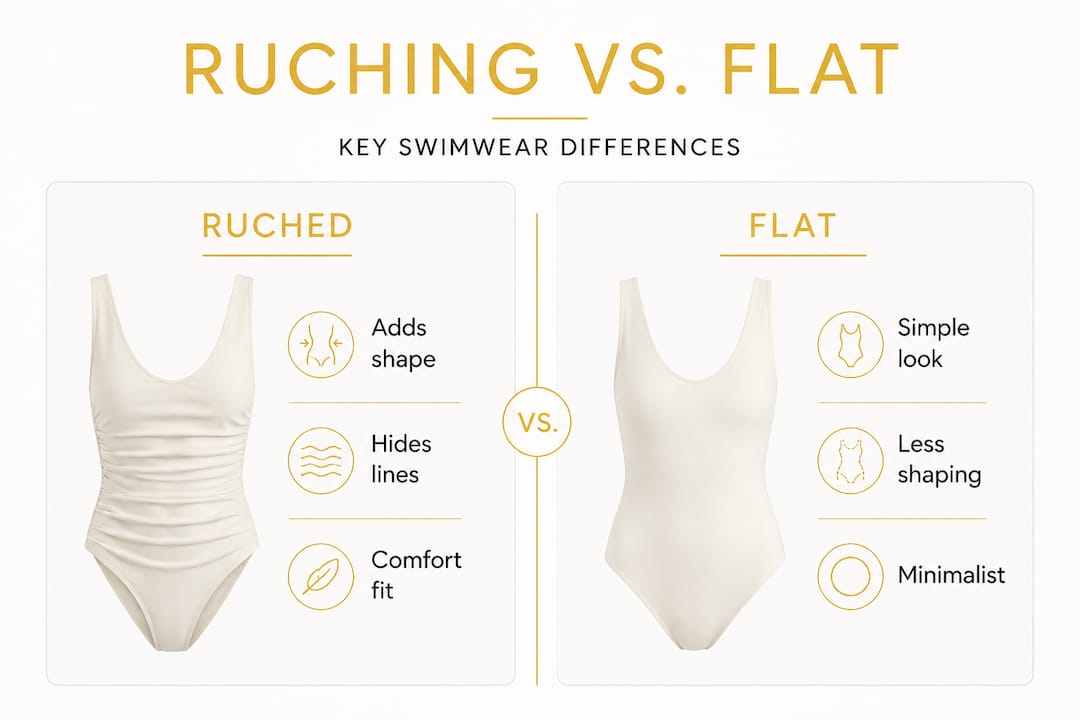
So how does ruching really perform compared to non-ruched options? Let’s look at a clear, practical comparison:
| Feature | Ruched bikini | Non-ruched bikini |
|---|---|---|
| Look | Textured, dimensional, dynamic | Sleek, smooth, minimal |
| Comfort | More stretch, adapts to movement | Depends entirely on fabric type |
| Coverage | Soft, forgiving coverage | Precise, structured coverage |
| Versatility | Works for casual and fashion-forward looks | Better for athletic or minimalist styles |
| Body shaping | Adds contouring and visual curves | Flat, no added shaping |
| Maintenance | Requires gentle care to preserve gathers | Generally easier to care for |
When to choose a ruched style:
When to choose a non-ruched style:
As noted in trend analysis for 2026, poor placement or incorrect sizing can affect how the ruched area sits on the body. This is worth keeping in mind when shopping online. Always cross-reference the size guide and look at how the ruching is positioned in product photos.
The Amazon reversible bikini bottom offers a great example of a ruched style that balances structure with flexibility, while the Sportif bikini bottom shows how a cleaner cut performs for those who prefer less texture.
Pro Tip: Try both styles if you’re unsure. Many women find that ruched bottoms work better for lounging and casual beach days, while non-ruched styles suit more active water activities. Having both in your rotation gives you the most options.
If you’re sold on the benefits of ruching, here’s how to choose the style that complements you best:
Consider ruching placement based on your silhouette:
Look for adjustable styles:
Ties, drawstrings, and adjustable straps give you control over how tight or loose the ruching sits. This is particularly useful for bikini tops, where fit across the chest and back varies significantly between body types.
Prioritize fabric quality:
Soft, stretchy fabrics like nylon-spandex blends hold ruching well and maintain their shape over time. Stiff or low-quality fabrics can cause ruching to pull unevenly, which defeats the purpose entirely. Placement and sizing are crucial because poor placement or incorrect sizing can affect how the ruched area sits on the body.
Match placement to your goals:
The Jungle reversible bikini top and the On the prowl bikini top both demonstrate how ruching on a top can be used to create shape and definition that flatters a range of bust sizes.
Most people think of ruching as a trend. Something that cycles in and out of fashion, appears on the runway for a season, and then disappears. That framing misses the point entirely.
Ruching is a construction technique, not a trend. It’s been used in garment making for centuries because it solves a real problem: fabric is flat and bodies are not. Gathering fabric creates dimension, and dimension creates fit. When you apply that principle to swimwear, which needs to stay in place, move with the body, and look good doing it, ruching becomes one of the most practical tools a designer has.
The reason so many women stick with plain bikinis isn’t because they prefer them. It’s because they haven’t experienced what a well-placed ruched detail can do. A center-gathered bottom that sits smoothly and stays put through an entire beach day is a genuinely different experience from a flat-cut style that shifts and pulls. The difference is subtle in photos but significant in practice.
Ruched styles are often framed as both style-forward and functional for fit/comfort, and that framing is accurate. But it undersells the confidence factor. When a bikini fits well and moves well, you stop thinking about it. That’s the goal. Swimwear that disappears into the background because it just works.
The Amazon reversible bikini top is a good example of a design where ruching is used with intention, creating a top that shapes and holds without relying on hardware or padding.
The takeaway: don’t overlook the details. In swimwear, small construction choices like ruching have an outsized impact on how a piece performs and how you feel wearing it.
Ready to try ruching for yourself? Here are some striking and comfortable options to get you started:
At L’ANIMAL, designer Lital Simel-Rhedrick has built a collection where details like ruching are used with clear intention. Each piece is designed to balance style with wearability, so you get a bikini that looks great and holds up through real beach use.

The Watercolor bikini top brings ruching into a painterly, artistic design that works as well poolside as it does on the beach. The Méduse bikini bottom uses gathering to create a soft, flattering silhouette that suits a range of body types. And the Sportif bikini bottom offers a cleaner take for those who want the fit benefits of a structured cut. Browse the full collection at L’ANIMAL and use what you’ve learned here to find the style that fits your shape and your style instincts.
Hand wash in cold water and lay flat to dry to preserve the gathered fabric and elasticity. Avoid wringing or machine washing, which can distort the ruched seams over time.
Ruching is designed to enhance all silhouettes by adding soft shaping and accommodating movement, but proper placement and sizing matter most for the best result.
Ruching can make a bikini bottom look more shapely and can visually minimize or maximize depending on placement and coverage. Placement and fit are key to how the gathered fabric reads on the body.
Yes, ruching is commonly used on both tops and bottoms for shaping and style. On tops, it adds lift and definition; on bottoms, it creates a contoured, flattering silhouette.
Ruched gathers fabric into ripples or pleats; shirring uses elasticized threads for a smocked effect, so ruching is about texture while shirring adds stretch. Both techniques improve fit, but they create different visual and tactile results.


