Free Shipping on US orders over $150
-
Collections
-
Bikini
- One Pieces
- Cover-Ups
- Men's
- Sale
- MODA GLAM x L'ANIMAL
- Nice Breed
-


Lift the excess sunscreen with a spoon or dull knife, then rinse the fabric under cold water immediately. Greasy stains need liquid dish soap worked in before laundering, while orange or rust-colored marks call for a mild acid like vinegar or lemon juice. Never use chlorine bleach, and don’t run the dryer until the stain is completely gone; heat sets what’s left permanently.
TL;DR:
- Fresh sunscreen stains respond best to immediate removal by scraping excess and applying dish soap before cold water rinsing, ideally within the first hour.
- Orange or rust-colored stains caused by avobenzone reactions require a mild acid treatment like vinegar, lemon juice, or a rust remover, not regular detergent or bleach.
- Mineral sunscreen residue appears as a white chalky film that needs gentle brushing and warm water, avoiding acids that can react with zinc or titanium particles.
- Swimwear treated with acids should be rinsed immediately and handled gently to prevent fiber damage, with professional cleaning recommended for delicate fabrics.
- Preventative habits include applying sunscreen before dressing, using mineral formulations, and blotting spills promptly to avoid permanent stains.
Fresh stains are the easiest kind to beat, because the oils haven’t had time to bond with the fabric fibers yet. Most sunscreens (mineral or chemical) leave behind an oily base, and that base responds well to grease-cutting dish soap long before you reach for anything stronger, as Tide’s own stain guide points out.
Here’s the order that works:
Pro Tip: Keep a small bottle of dish soap in your beach bag. Treating a sunscreen spill within the first hour cuts your cleanup time roughly in half compared to letting it dry into the fabric overnight.
If any shadow of the stain remains after washing, air-dry the item and repeat the treatment. Putting a partially stained garment in the dryer is the single most common mistake people make, and it’s the one that turns a fixable mark into a permanent one.
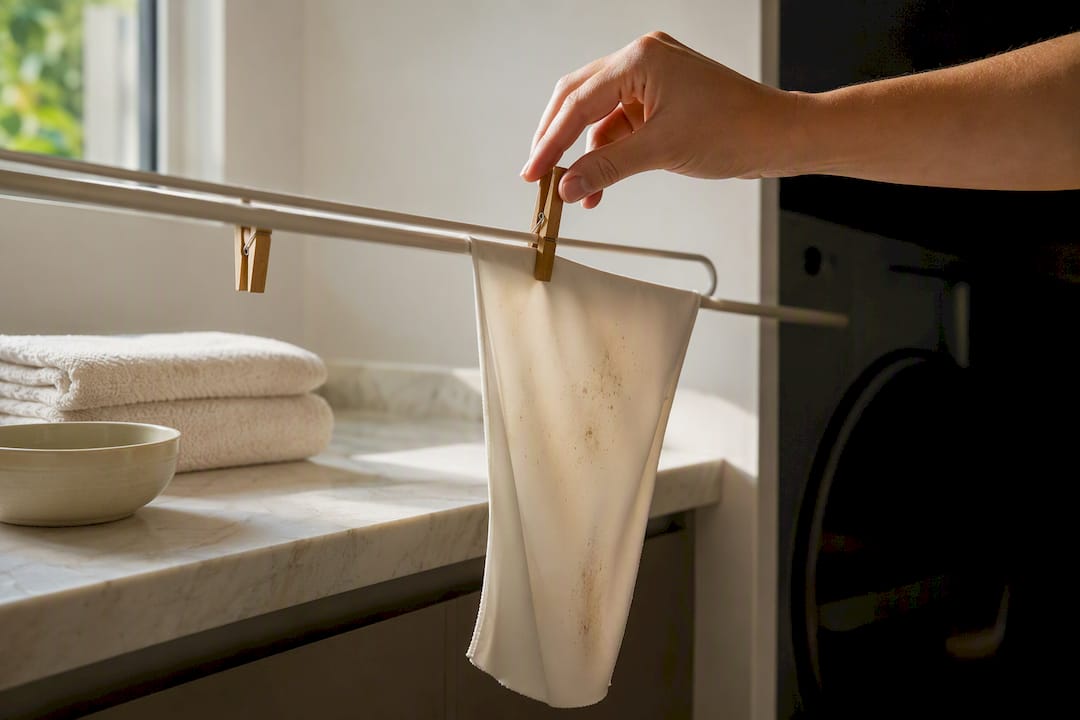
Orange or rust-colored stains have a different cause entirely, and dish soap alone won’t touch them. Chemical sunscreens containing avobenzone can react with metal ions in tap water, iron, copper, even trace minerals in hard water, and that reaction produces a stain that looks disturbingly like rust. Regular detergent often can’t break that bond, which is why so many people assume the stain is permanent.
It usually isn’t. You just need a mild acid instead of soap.
Avobenzone stains on nylon and spandex tend to appear faster than on natural fibers, since synthetic blends attract metal ions more readily. That’s one more reason to rinse swimwear the moment you notice orange discoloration rather than waiting until laundry day.
Once the acid treatment lifts the color, launder on the hottest setting the fabric allows and check the spot in good light before drying. Chlorine bleach is off the table here. It can react with the remaining avobenzone and darken the stain instead of removing it, per BHG.
Mineral sunscreens built on zinc oxide or titanium dioxide behave nothing like their chemical counterparts. Instead of an oily or rust-colored mark, they leave a white, chalky film that sits on top of the fibers rather than soaking into them. Laundry experts consulted by Wirecutter note that this residue responds best to warm water and gentle brushing, not acid.
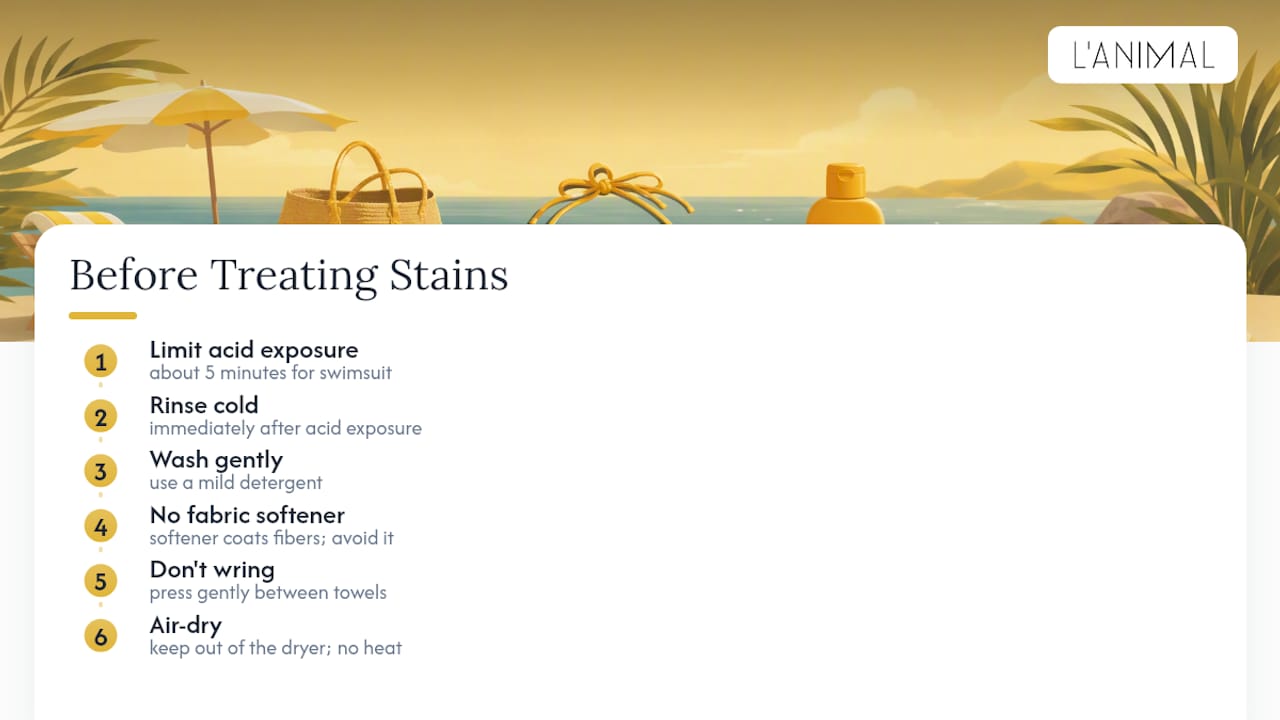
Swimwear fabric behaves differently under stain treatment than a cotton T-shirt does, and that difference matters more than most home remedies acknowledge. Spandex and elastane lose their stretch when exposed to strong acids or high heat for too long, so the same vinegar soak that’s safe for 30 minutes on denim needs to be cut down to about 5 minutes on a swimsuit.
Rinse in cold water immediately after any acid exposure, use a mild detergent for the wash itself, and skip fabric softener entirely since it coats fibers and can trap remaining residue. Never wring swimwear to remove excess water. Press it gently between towels instead. And keep it out of the dryer no matter how tempting that is, since heat permanently sets whatever discoloration is left.
Pro Tip: If a suit is labeled dry-clean-only or made from a delicate lace or mesh panel, skip the home treatment altogether and take it to a professional cleaner who works with swimwear specifically.
The easiest stain to remove is the one that never happens. A few small habit changes cut your risk dramatically:
Fabric-first thinking changes how you approach every stain. A gentler, repeated treatment protects elasticity and color far better than one aggressive chemical soak, which is exactly the kind of nuance that matters more on a well-made suit than on a basic cotton tee. For the steps that come after stain removal, our guide on drying swimsuits without losing their fit and our breakdown of UPF swimwear both cover follow-up care worth knowing. Sometimes preserving the fit of a piece you love matters more than erasing every last trace of discoloration.
Two or three careful attempts is the limit. Beyond that, especially on anything marked dry-clean-only, you risk the fabric more than you help the stain. On designer swimwear, protecting the fit and stretch is worth more than chasing a faint mark that refuses to budge.
— Lital
Stain removal only gets you so far when the fabric itself wasn’t built to handle sun, salt, and chlorine in the first place. Some swimwear brands design their pieces with fabric performance in mind from the start, which can mean fewer chemical showdowns in your laundry room and more time actually wearing the piece.

If avobenzone rings and chalky residue are a recurring headache in your swim drawer, it’s worth looking at how your suits are built, not just how you wash them. Our guide to chlorine-resistant swimwear explains what fabric durability actually looks like, and our tips on packing bikinis wrinkle-free round out the care routine between wears. Browse the current collection at Lanimal and pick a suit built to handle real beach days, not just survive one wash cycle.
Yellow tinting usually comes from a combination of oils and body sweat mixed with sunscreen, so treat it the same way you’d treat a fresh grease stain: dish soap worked in gently, then a cold rinse, then a hot wash cycle where the fabric allows it.
Not usually, as long as you treat it before it goes through a hot dryer cycle; heat is what locks avobenzone and oil stains into the fibers permanently, according to Good Housekeeping.
Yes, diluted white vinegar works well on orange, avobenzone-related stains because its mild acid breaks the metal-ion bond causing the discoloration, though it won’t do much for the greasy or chalky mineral residue that fresh sunscreen leaves behind.
Lift excess product, rinse cold, pretreat greasy marks with dish soap, and use a diluted vinegar or lemon soak for orange rust-like stains, then wash on the hottest safe setting and check the fabric before it ever touches a dryer.


