Free Shipping on US orders over $150
-
Collections
-
Bikini
- One Pieces
- Cover-Ups
- Men's
- Sale
- MODA GLAM x L'ANIMAL
- Nice Breed
-


Summer 2026 swimwear splits into two clear camps: quiet-luxury minimalism and jewelry-like maximalism, and the strongest wardrobes borrow from both. The must-know trends worth shopping now:
Buy one quietly luxurious neutral for longevity. Buy one beaded or textured piece for impact.
Designer swimwear in 2026 rewards shoppers who invest in fabrication and construction quality over logos, and who treat one embellished piece as a styling accent rather than a wardrobe rule.
| Point | Details |
|---|---|
| Two dominant directions | Quiet-luxury minimalism and beaded maximalism define 2026; most closets need both. |
| Color palette to shop | Lagoon blue, moss and emerald green, and butter yellow lead the season’s neutrals and statement shades. |
| Fabric signals quality | Crinkle, ribbed, and UPF-rated fabrics travel well and hold shape longer than flat nylon. |
| Style swim as occasion wear | Pair textured or beaded pieces with cover-ups and minimal jewelry for beach-to-bar transitions. |
| L’Animal fits both directions | The brand’s textured maillots and minimalist one-pieces cover quiet-luxury and embellished trends without extra pieces. |
Trend forecasting for swim used to mean guessing at print cycles. Not anymore. This season’s list reads more like an editorial thesis than a moodboard, and each entry below tells you exactly what to buy, what to skip, and why.
Logos are out. Fabrication is in. Industry insiders describe this shift as an “if you know you know” aesthetic, where luxury reads through material and detail rather than branding. Think proprietary stretch knits, clean seam placement, and edge finishing that holds its shape after a season of pool days. Buy or skip: invest here. A well-cut, solid-hued one-piece or bikini in this category outlasts every micro-trend on this list.
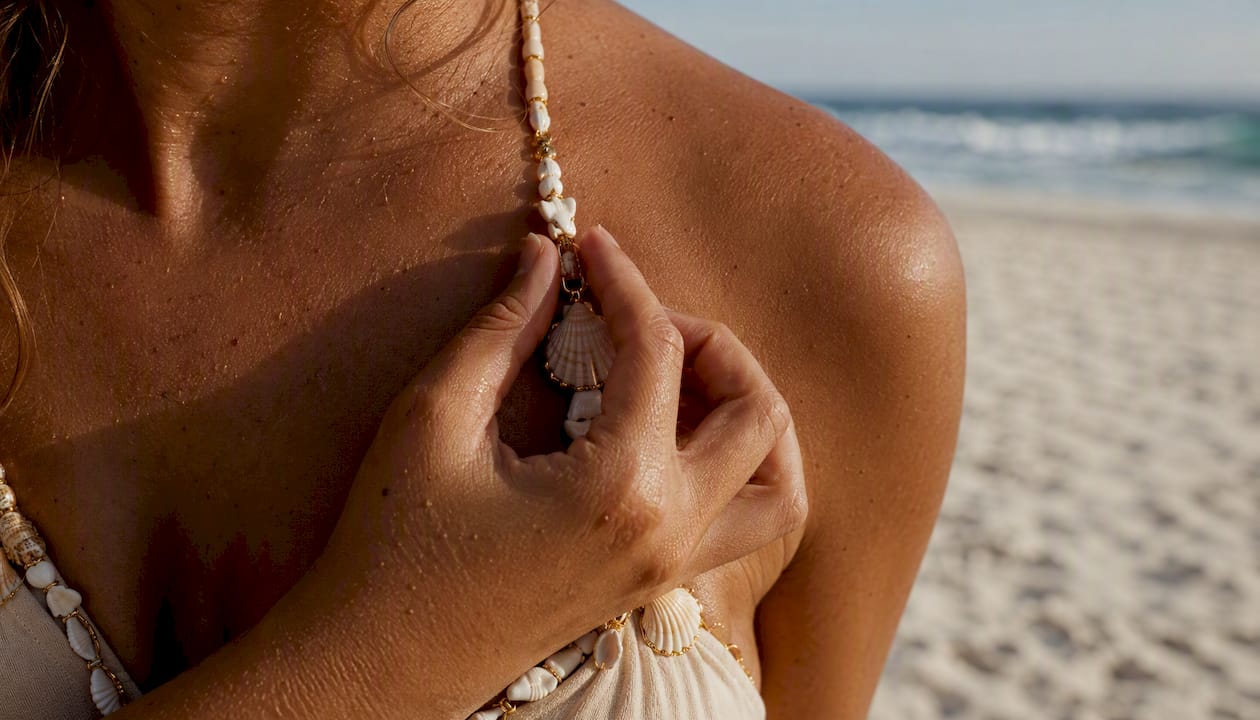
Organic beads, shell hardware, and gold connectors turn a swimsuit into jewelry for the beach, a story that dominates the 2026 trend forecast. The appeal is practical as much as decorative: a beaded strap or shell-trimmed bandeau means you can skip packing a necklace entirely. Buy or skip: pick one statement piece. This trend loses its punch when overdone across an entire wardrobe.
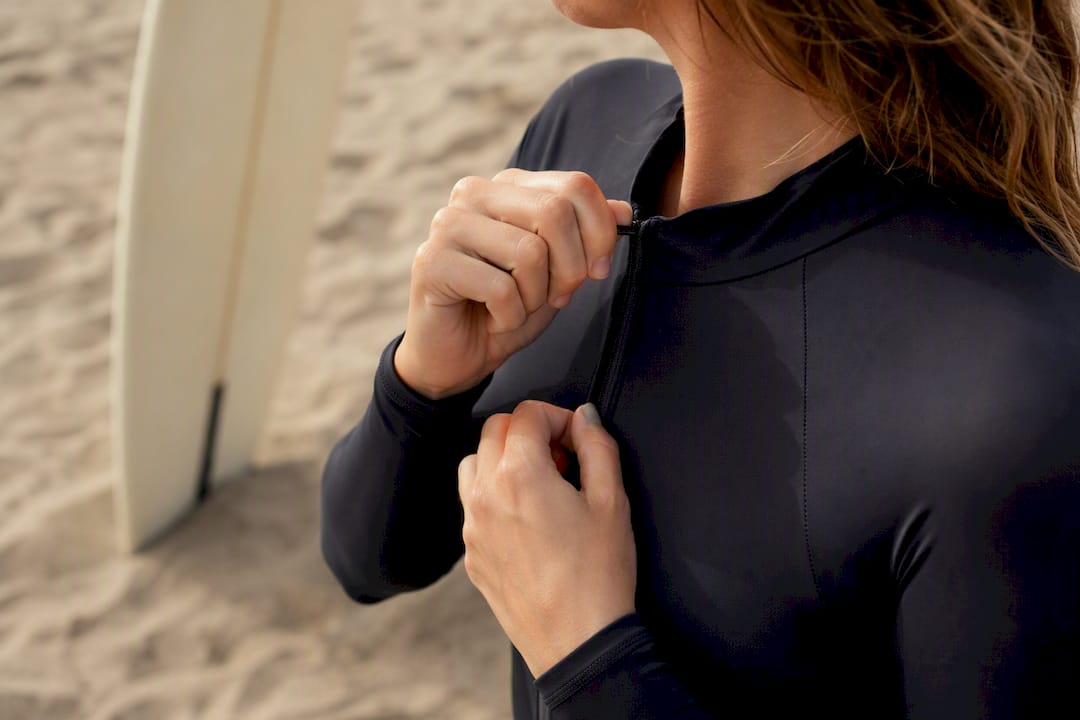
Rash guards, zip-front tops, and racerback cuts have moved fully into mainstream swim fashion, often built from UPF 50+ fabrics that protect skin without sacrificing shape. Buy or skip: worth owning if you spend real hours in the sun. Skip it if your swim wardrobe is strictly poolside lounging.
Crinkle, ribbing, and crochet-effect fabrics give solid colors dimension that flat nylon can’t match, a texture story called out repeatedly in 2026 swimsuit coverage. These fabrics also travel well, since the texture resists the flattening that happens when a suit gets rolled into a suitcase. Buy or skip: a smart investment for frequent travelers.
High-waist bottoms, halter necks, cabana stripes, and polka dots are back, but reframed in cleaner, more modern cuts rather than costume-like throwbacks. Buy or skip: great for anyone who wants nostalgic shapes without looking dated. The trick is picking one retro detail per suit, not three.
A single line of contrasting color along a neckline or side seam gives a plain suit visual interest without going full print. Buy or skip: a low-commitment way to test the season’s energy if you’re not ready for beading or bold graphics.
Saturated gradients and oversized florals sit at the opposite end of the spectrum from quiet luxury, and they photograph well against water. Buy or skip: treat as a seasonal purchase. This category moves fast and rarely carries over cleanly into next year.
Sheer mesh panels and cover-up-integrated pieces let you layer sun protection into the suit itself rather than adding it after the fact. Buy or skip: genuinely useful, especially paired with the UPF fabrics driving the sporty trend.
Editorial consensus lands on lagoon blue, moss and emerald greens, and butter yellow as the defining palette, alongside quiet neutrals like sand and chocolate brown for minimalist pieces. Buy or skip: these colors work equally well in a minimalist one-piece or a maximalist bikini, which makes them the safest color investment of the season.
A trend list only helps if you know how to translate it into something that fits. Start with silhouette. One-piece shaping should follow your torso length, not a size chart: underwire works for structure and lift, while a halter neck shifts weight to the shoulders and a bandeau relies entirely on the band’s grip. High-leg cuts elongate but expose more hip, so proportion matters more than trend allegiance here.
Fabric tells you how long a suit will last. Crinkle and ribbed textures forgive minor fit inconsistencies and pack without creasing, a real advantage for vacation-focused shoppers. UPF-rated fabrics cost more upfront but hold color and shape through repeated sun exposure better than untreated nylon.
Hardware separates designer from gimmicky fast. Real shell and bead trims sit flush against the fabric with reinforced stitching at the connection points. Loose threads or hardware that shifts when you tug gently on the strap is a sign the embellishment was glued rather than sewn.
Pro Tip: Test stretch recovery before buying online by checking customer photos for how the fabric sits after multiple wears, not just in the first-use product shot.
For styling, buyers increasingly treat swimwear as occasion dressing, pairing a textured one-piece with wide-leg linen pants for dinner or a beaded bikini top under an unbuttoned shirt for drinks. Budget your closet the same way: one neutral, quietly luxurious silhouette for repeat wear, one decorative piece for the photos you’ll actually want to look back at.
Lital Simel-Rhedrick founded L’Animal on the belief that swimwear deserves the same construction standards as ready-to-wear, and that philosophy lines up closely with where 2026 is headed. When fabrication carries the luxury signal instead of a logo, details like seam placement and finish quality stop being background choices and become the entire pitch.
L’Animal’s collections lean into that shift with categories built for both sides of the season’s split:
Readers can browse how these categories translate into full collections later in this piece.
Sustainable materials have stopped being a niche add-on line and started shaping how designer swim brands talk about quality at all. Recycled nylon and regenerated polyester now show up across both minimalist and embellished categories, partly because those fibers hold stretch recovery well enough to support the season’s clean, second-skin silhouettes.
Ethical production gets more scrutiny too. Shoppers researching a suit before buying increasingly ask where hardware and trims are sourced, not just what fabric the body is cut from, which pushes brands to be specific about bead and shell sourcing rather than vague about “eco-friendly” claims.
The overlap with quiet luxury is not a coincidence. A suit built to last multiple seasons, with fabrication that holds up under repeated sun and chlorine exposure, is inherently a more sustainable purchase than a trend piece bought for one trip. That framing gives shoppers a useful filter: a swimsuit’s durability is itself a sustainability signal, even when a brand doesn’t lead with the word. Buying one well-made neutral instead of three seasonal graphics does more for a closet’s footprint than any single fiber choice.
Quick-dry finishes and chlorine-resistant fibers have moved from performance-swim category into mainstream designer collections, closing a gap that used to separate fashion swim from functional swim. That matters most for the sporty and UPF-driven silhouettes defining part of this season, since a suit that holds shape after repeated pool exposure is far more useful than one that looks sharp for a single wear.
Comfort engineering shows up in less obvious places too. Ribbed and crinkle textures aren’t purely aesthetic. Their construction often relies on stretch technology that recovers shape faster than flat nylon, which is part of why those fabrics pack and travel so well. Underwire and structured bandeau pieces have also benefited from lighter-weight boning and molded cups that hold support without the bulk older structured swimwear relied on.
None of this technology is visible at a glance, which is exactly the point of quiet luxury. A suit that dries faster, resists fading, and holds its shape season after season telegraphs quality through performance rather than a visible logo or gimmick. For shoppers comparing similar-looking suits, asking about fiber content and construction details is a better filter than trusting a product photo alone.
Cross-category collaborations, where a swimwear label partners with a jewelry designer or an accessories brand, are driving much of the embellishment trend forward. That pairing explains why bead and shell hardware on 2026 suits often reads like fine jewelry rather than a decorative add-on: the hardware is frequently designed by people who normally work outside swim entirely.
Independent, designer-founder labels are also gaining ground against mass-market swim in a way that mirrors what’s happening in ready-to-wear. Shoppers researching quiet-luxury swim increasingly look for a named designer behind the label, not just a brand name, because construction quality tends to track more closely with a designer’s direct involvement than with a large label’s seasonal output. That shift favors labels where the person cutting the pattern and the person marketing the collection are the same, since fit consistency is easier to maintain at that scale.
The result is a season where the standout names aren’t necessarily the biggest ones. They’re the labels willing to commit fully to one of the two 2026 directions, quiet luxury or maximalist embellishment, rather than splitting a collection thin across both.
A great swimsuit gets undercut fast by the wrong accessories, and this season rewards restraint more than most. Since beaded and shell hardware are already styled like jewelry, the smartest accessory strategy is subtraction: skip the extra necklace and let the suit’s hardware carry that role.
Cover-ups matter more than usual this year because swimwear is increasingly styled as occasion dressing that moves straight from sand to bar. A lightweight, structured cover-up in one of the season’s neutral tones, sand or chocolate brown, works over both a minimalist one-piece and a beaded bikini without competing with either. For evening, a partner in resort styling suggests treating swim as a foundation layer under occasion-ready pieces rather than something to change out of entirely.
Hats and bags round out the formula but should stay simple. A woven wide-brim hat in a neutral shade works across every trend on this list, and a structured raffia or canvas tote does more for a beach-to-bar outfit than a decorative one. The rule holds across categories: when the swimsuit itself carries visual interest through texture or beading, everything layered on top should recede.
Retail fashion directors now frame swimwear as functional, multi-occasion pieces rather than shoreline-only garments, and that shift traces directly back to what’s shown at Miami Swim Week and on resort runways each season. When a design shows up on a runway styled with tailored trousers or a blazer, retailers take that as a signal to buy swim that photographs and wears well beyond the pool.
That runway-to-retail pipeline is part of why the sporty and UPF trend crossed into mainstream fashion so quickly. Once performance-driven silhouettes started appearing in editorial swim week coverage instead of just technical swimwear catalogs, buyers had cover to stock them as fashion pieces, not just functional ones. The same logic applies to beaded embellishment: what started as a runway styling choice, pairing swim with statement jewelry, has been absorbed directly into the swimsuit’s construction, so the beading is now built in rather than accessorized on top.
For shoppers, that pipeline is useful information. A trend that shows up consistently across multiple swim week seasons, rather than a single collection, tends to have staying power worth building a wardrobe investment around.
The conventional trend list treats every 2026 story as equally worth chasing, and that’s where most shopping guides go wrong. Beaded embellishment gets the most editorial attention because it photographs well, but it’s the quiet-luxury fabrication story that actually determines whether a suit survives past one vacation. A crinkle-textured neutral with strong stretch recovery will outlast three seasons of trend pieces bought purely for a single trip.
Where most guidance falls short is treating fit and hardware quality as an afterthought to color and print. Neither matters if the suit loses shape by the third wear or the beading pulls loose in salt water. Prioritize construction first, trend second. A shopper who buys one well-made, quietly luxurious piece and one decorative accent piece this season will get more wear, and more compliments, than someone who chases every trend on this list at once.
— Lital
Reading a trend list is one thing. Finding pieces that actually hold their shape after the fifth beach day is another, and that gap is exactly what L’Animal was built to close. Instead of chasing every micro-trend across a season, L’Animal designs around the two directions that are actually worth investing in: fabrication-first minimalism and hand-finished embellishment that reads like jewelry, not costume.
Whether you’re building toward one quietly luxurious neutral or hunting for a single beaded statement piece, the current collections are organized around exactly the trends covered here, textured maillots, clean one-piece silhouettes, and crafted trim details, so you’re not cross-referencing five different brands to build one cohesive summer wardrobe. Browse the current edit and add your next vacation piece to cart before the styles you want sell through.


