Free Shipping on US orders over $150
-
Collections
-
Bikini
- One Pieces
- Cover-Ups
- Men's
- Sale
- MODA GLAM x L'ANIMAL
- Nice Breed
-


Rinse your suit in cool water right after you leave the pool or ocean, then handwash it with a mild detergent as soon as you can. Air-dry it flat in the shade. Skip hot water, bleach, and the dryer entirely, since heat and harsh chemicals are what actually wreck elastic and fade color. The steps below cover exactly how to do each part, plus what to do about sunscreen, sand, and chlorine buildup.
TL;DR:
- Rinse your suit with cool water immediately after swimming to remove chlorine, salt, and sunscreen residues that can damage fibers and fade colors.
- Handwashing with a small amount of mild detergent in cool water is safest for suits with delicate details or high value, and should be done promptly after swimming.
- If machine washing is permitted, use a mesh bag, cold water, a gentle cycle, and avoid drying to prevent heat damage to elastic fibers.
- Lay suits flat in shade to dry, reshape cups and straps while damp, and never wring or expose to direct sunlight or heat sources.
- Store swimwear only when completely dry, folded flat, and rotate between multiple suits to prolong their shape and elasticity.
Chlorine, salt water, and sunscreen start breaking down swim fabric the moment your suit dries on your skin. Expert fabric-care guidance points out that prompt rinsing preserves both color and elasticity, because chlorine especially acts as an oxidizer that keeps working on fibers until it’s rinsed out. The longer that residue sits, the more damage it does to the stretch you paid for.
Rinsing takes under a minute and makes every later step easier.
If a sink isn’t available, don’t stuff a wetsuit into a sealed plastic bag. Trapped moisture breeds mildew and odor fast. Shake out loose sand, let the suit air out in your bag or on a towel, and handwash it the moment you’re home.
Handwashing is the safest default for anything with underwire, molded cups, delicate trim, or a price tag that makes you wince. It’s gentler than any machine, and it takes about ten minutes.
Handwash any suit with boning, molded padding, embellishment, or a high price point every single time, even if the tag technically allows machine washing.
Pro Tip: Keep a travel-size bottle of gentle detergent in your beach bag. Washing a suit within an hour of swimming, even in a hotel sink, does more for its lifespan than any product you could buy later.
Check the care label first. Some suits are machine-washable; plenty of structured or embellished pieces are hand-wash only, and ignoring that label voids any real chance of the suit keeping its shape.
If your label allows it, machine washing swimwear can work without damage as long as you follow a few strict settings. Guidance on delicate-cycle washing confirms this is safe specifically for machine-washable suits, not a workaround for delicate ones.
Heat is the real enemy here, more than chlorine or salt combined. Synthetic swim fabrics like nylon and elastane are thermoplastic, meaning a single hot wash or dryer cycle can permanently damage their elasticity. There’s no reversing that kind of stretch loss once it happens.
Full drying usually takes several hours indoors. Resist the urge to speed things up with a fan heater or direct sunlight, both of which fade color and dry out fibers.
Sunscreen and body oil leave a greasy film that stains and speeds up fiber breakdown if it sits too long. Fabric-care specialists note that oily residue and chlorine’s oxidizing effect are two of the biggest culprits behind premature swimwear wear.
Pro Tip: If a suit smells like chlorine even after washing, it usually means the chlorine reacted with body oils rather than just sitting on the surface. A short soak in cool water with a drop of dish soap breaks that combination up better than a stronger detergent dose would.
Store suits only once they’re completely dry. A damp suit folded into a drawer or bag is exactly how mildew and odor take hold.
A few habits do more damage in one cycle than a whole season of normal wear.
Construction details change how a suit should be cared for. Double-layered fabric, reinforced seams, and interior linings hold their shape differently than a single-layer suit, which is part of why double-layered swim fabric tends to tolerate a normal care routine better than thinner materials that stretch out faster.
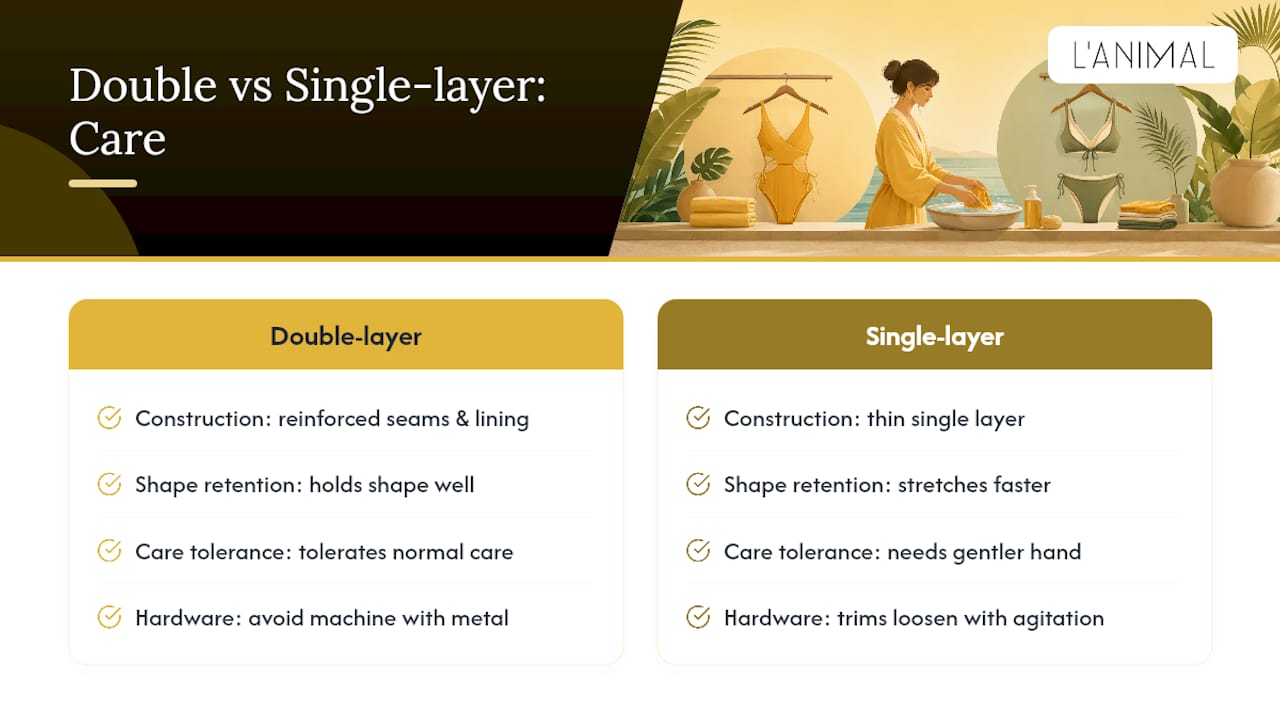
Pieces with hardware, ties, or embellishment need a slower hand. Metal rings and clasps can snag on mesh bags, and decorative trims often loosen with vigorous agitation, so those suits belong in the sink, not the machine, regardless of what the label technically permits.
Pro Tip: Rotating between suits and rinsing within minutes of getting out of the water are small habits, but they’re the two that most directly extend the life of a well-made piece, more than any single product you buy. Quality construction rewards consistent care, which is part of the reasoning behind investing in well-made swimwear in the first place.
— Lital
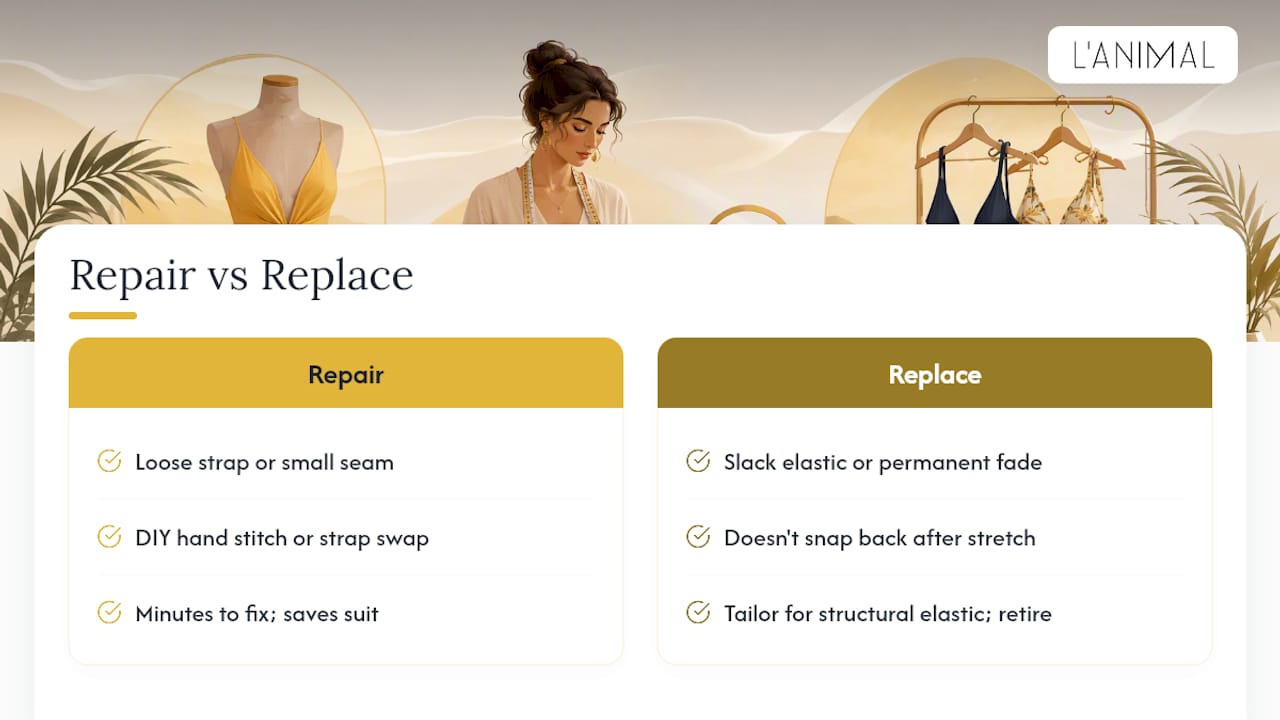
A loose strap or a small seam pulling apart is worth fixing. A quick hand stitch or a strap swap takes minutes and saves a suit you already love. Elastic that’s gone slack across the whole band, though, or color that’s shifted permanently from chlorine exposure, signals it’s time to let the suit go.
DIY fixes work fine for straps and minor seams. Anything involving structural elastic or bonded padding is better handled by a tailor experienced with swimwear. The clearest replacement signal is measurable: if the suit no longer snaps back to shape after a stretch test, or the fade is visible in regular light, no amount of gentle washing brings that back.
The care steps above draw on fabric-care and swimwear-design expertise, not guesswork.
Ready to build a rotation that actually lasts a few seasons instead of one summer? Browse Lanimal’s swimwear collections for pieces designed with the double-layer construction and reinforced seams that make every step above pay off.
Yes, if the care label allows it. Use a mesh laundry bag, cold water, the delicate cycle, and skip the dryer, since heat permanently damages elastane and nylon fibers.
Handwashing in cool water with a small amount of mild detergent is gentlest, especially for suits with padding, underwire, or delicate trim. Soak 5 to 10 minutes, rinse thoroughly, and lay flat to dry in the shade.
Rinse it every time, since chlorine and salt keep breaking down fibers until they’re washed out. A full handwash with detergent isn’t always necessary after every wear, but a quick cool-water rinse is.
Yes. Wash swimwear alone or with other lightweight suits, never with towels, jeans, or zippered clothing, which cause pilling and snagging that wear down the fabric faster.


