Free Shipping on US orders over $150
-
Collections
-
Bikini
- One Pieces
- Cover-Ups
- Men's
- Sale
- MODA GLAM x L'ANIMAL
- Nice Breed
-


For most swim-to-street outfits, choose a mid-length kimono in linen, cotton, or a quick-dry blend. Wear it open over your swimsuit by day, then belt it or layer it over a slip dress once the sun goes down. That single piece covers more ground, and more occasions, than almost anything else in your beach bag. This length and fabric combination appears across several collections designed for this kind of transition.
TL;DR:
- A well-chosen kimono can replace multiple cover-ups, with fabric type and length guiding its versatility from poolside to evening wear.
- Short kimonos are best for active days, while mid-length styles suit transitional outfits, and long kimonos are ideal for evening or layered looks.
- Breathable fabrics like linen and cotton are suitable for casual wear, whereas chiffon or mesh add a luxurious touch for nighttime occasions.
- Layering techniques such as belting, twisting, and pairing with structured basics transform a kimono from beach to street effortlessly.
- Investing in a mid-length, multiuse kimono in a versatile fabric often offers better value than multiple single-purpose pieces.
A kimono cover-up outfit only earns its spot in your suitcase if it works for more than one moment in your day. Here are five combinations that stretch a single piece across an entire vacation, based on how kimonos actually get worn from morning to night.
Notice that none of these outfits require buying five different cover-ups. One well-chosen kimono, styled five ways, does the job.
Pro Tip: Pack a short kimono for daytime and a long sheer kimono for evenings. This simple system covers nearly every outfit above without doubling your luggage.
Fabric decides more about a kimono’s performance than color or print ever will. Linen and cotton breathe well and suit casual daytime wear, while muslin and lightweight chiffon or mesh drape better for evening use. Turkish cotton and muslin dry noticeably faster than heavier weaves, which matters if you plan to wear yours straight out of the water.
Length should follow how you actually plan to use the piece, not just how it photographs on a hanger.
Fit matters just as much as length. Look for wide, open sleeves that slide easily over a wet swimsuit strap without snagging, and a front that stays open rather than pulling tight across the shoulders. Sun protection is a real trade-off here: a tighter weave blocks more UV rays but breathes less, so decide whether you need coverage or airflow more on a given day.
Traditional summer kimono guidance frames fabric choice around time, place, and occasion, often shortened to TPO. That same logic works well as a buying filter: ask where and when you will wear the piece before you check the price tag.
Care instructions affect packability as much as comfort. A cotton or linen kimono can be folded flat and steamed on arrival, while sheer synthetic blends resist wrinkling altogether, which makes them a smarter pick if you are limited to a carry-on.
A single kimono can pull double or triple duty if you know a few simple tricks. Modern styling treats the kimono the way you would treat a blazer: keep the outfit underneath simple so the pattern or texture becomes the focal point.
Pro Tip: Belt the kimono slightly below your natural waist rather than right at it. It creates a longer, more flattering line in photos and works whether you’re in a bikini or jeans underneath.
Lital Simel-Rhedrick, the designer and stylist behind Lanimal, builds cover-ups around fabrics that hold up on both sides of the pool.
A kimono cover-up should never feel like a compromise piece. If it can move from wet swimsuit to dinner table without a wardrobe change, it earns its place in a suitcase. That is the standard we design toward.
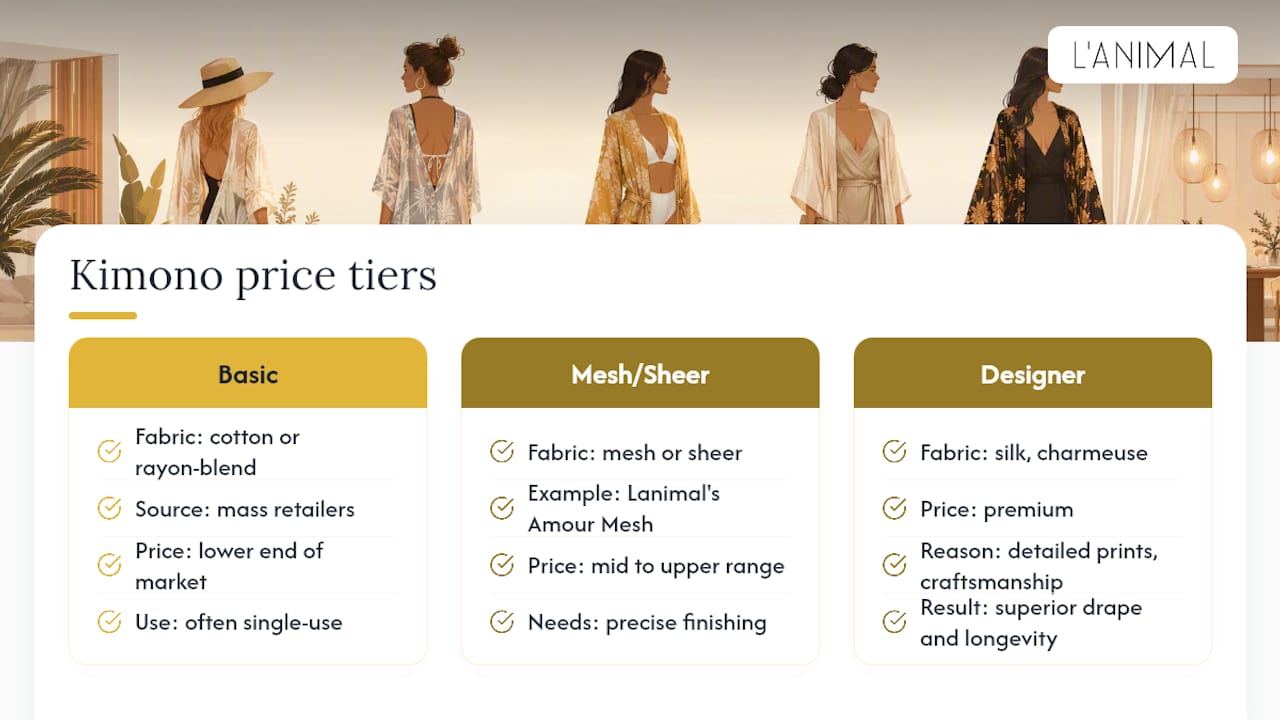
Prices for kimono cover-ups run wide depending on fabric weight, print exclusivity, and construction. Basic cotton or rayon-blend short kimonos from mass retailers often sit at the lower end of the market, while designer pieces in silk, charmeuse, or mesh with detailed prints command a premium for both material and craftsmanship.
Budget-minded shoppers should prioritize versatility over volume. One well-made mid-length kimono in a breathable blend that works for both pool and dinner outperforms three cheaper, single-use pieces sitting unused in a drawer. A higher price on a single garment often works out cheaper per wear than buying multiple throwaway cover-ups each season.
Mesh and sheer styles, including options like Lanimal’s Amour Mesh Dress Cover-Up, tend to sit in the mid to upper range because the fabric and finishing require more precision than a basic woven cotton wrap. That price difference usually shows up in how the piece drapes and how long it holds its shape after repeated washing.
If budget is tight, look for cover-ups labeled as multiuse or transitional pieces rather than “beach only.” Retailers increasingly group these by fabric and length rather than price point, which makes it easier to compare value across a category page instead of hunting through unrelated racks.
The right accessories decide whether a kimono cover-up outfit reads as beachwear or a finished look. A wide woven belt or a simple fabric sash cinched at the waist turns an open kimono into a defined silhouette in seconds, and it costs far less than buying a second garment to get the same effect.
Hats do double duty here. A wide-brim straw hat protects your face and shoulders from sun exposure while photographing beautifully against a flowing kimono sleeve, making it the single most useful accessory for a pool day look. For evening, swap the straw hat out entirely and let simple gold hoops or a delicate layered necklace draw attention to the neckline instead.
Bags matter more than most shoppers expect. A structured straw tote signals daytime and beach, while a small crossbody or clutch instantly shifts the same kimono outfit toward dinner or an evening walk. Keep jewelry minimal when the kimono itself has a bold print or embellishment. Simple styling advice treats the kimono as the statement piece, so accessories should support the look rather than compete with it.
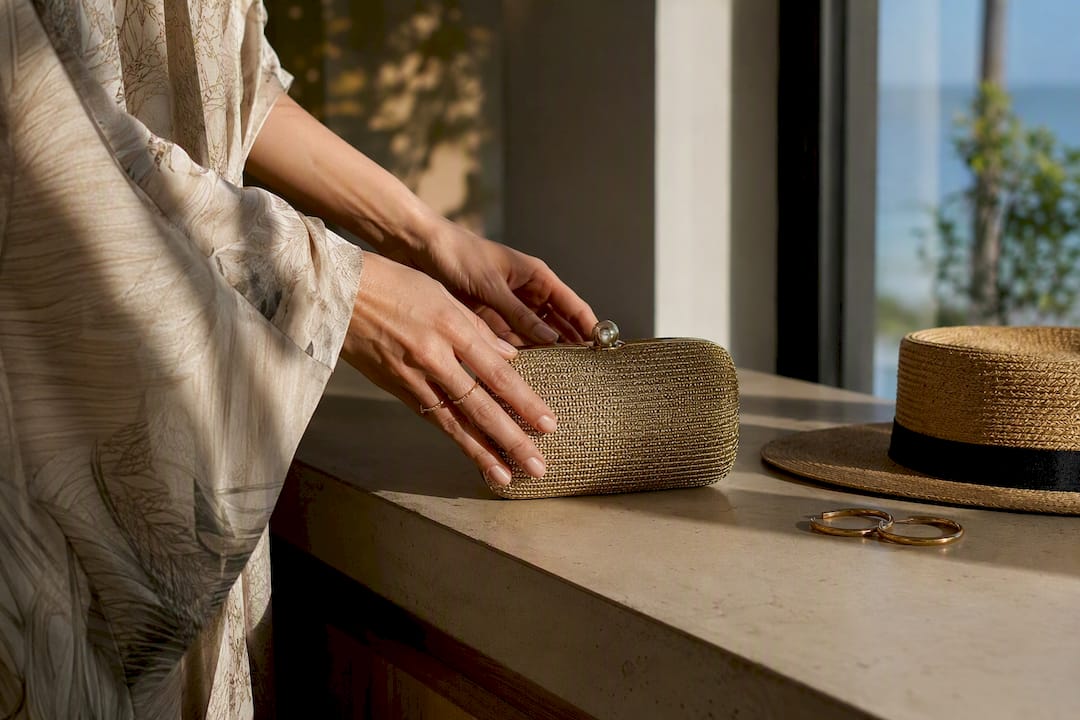
Footwear closes the loop. Slide sandals or flip-flops keep the pool day version casual, while a low block heel or leather sandal upgrades the exact same kimono for a restaurant reservation without changing a single other piece.
Sheer and mesh kimonos have moved from niche to mainstream for beach and resort wear, driven partly by their ability to double as evening layers. Mid-length silhouettes are outpacing very short or very long cuts in popularity, largely because they solve the versatility problem shoppers face when packing for multi-activity trips.
Quick-dry Turkish cotton and muslin remain a steady favorite for active beach days, prized for how fast they dry and how little space they take up in a suitcase. Bold, oversized prints continue to dominate short and mid-length kimonos, while solid jewel tones and muted neutrals are gaining ground in longer, evening-oriented sheer styles.
Kimonos are increasingly marketed and shopped as travel pieces rather than strictly beach items, a shift that reflects how shoppers actually use them: as a lightweight layer that replaces a jacket on vacation while adding visual interest without bulk. Retail category pages have adjusted accordingly, grouping beach kimonos by style, length, and fabric rather than treating them as a single catch-all category.
Expect this trend toward multiuse, fabric-first shopping to continue. Shoppers are no longer buying a kimono just for the beach; they are buying one piece expected to work across an entire trip.
Most advice on kimono cover-ups treats them as a single-use beach accessory, something you throw over a swimsuit and forget about once you’re back at the hotel. That framing undersells the piece and pushes shoppers toward buying too many cheap, single-purpose kimonos instead of one that earns its price tag through repeated wear.
The research on this is consistent: kimonos function best as a wardrobe layer, not a beach-only prop. A well-chosen kimono can replace a lightweight jacket entirely on a warm-weather trip, cutting what you pack while increasing how many outfits you can build. That is the real value proposition, and it is the one most product pages fail to mention.
My advice: prioritize fabric and length over print when you’re choosing your first kimono cover-up. A pattern you love in a fabric that wrinkles badly or traps heat will get worn once and shelved. A breathable, well-cut piece in a color you like less will get worn all summer.
— Lital
Lanimal is the direct route to a kimono cover-up built for exactly the swim-to-street styling covered above, without hunting across a dozen retailers for pieces that actually match in fabric and length.
The shop carries cover-ups across short, mid, and long lengths, plus mesh and sheer options for shoppers seeking versatile pieces that work from pool to dinner. The Amour Mesh Dress Cover-Up is a strong example of that versatility: sheer enough for an evening layer, sturdy enough for daytime wear over a swimsuit. Browse the full range of cover-up lengths and fabrics on the Lanimal collections page, or check the full product catalog if you’re comparing cuts before you commit. Pick your length, check the fabric against how you plan to use it, and add it to your cart before your next trip.
Fabric and occasion pairings for summer kimonos come from Kimono Muse’s TPO guide. Styling and wrap techniques draw on KIM + ONO’s styling advice and Seven Styling’s kimono techniques guide. Traditional wrap etiquette comes from Metropolis Japan’s yukata guide.
For daytime, a swimsuit or a simple tank and shorts underneath works best, letting the kimono act as the outer layer rather than something layered under another piece. For evening, wear it over a slip dress or belted over a fitted midi for a more finished silhouette.
No. Sheer and mesh styles have gained ground as multiuse travel pieces, and mid-length kimonos remain one of the most popular resortwear categories for their ability to move between beach and evening wear.
A kimono wrap is an open-front cover-up with wide sleeves that hangs loose or ties at the waist rather than buttoning closed. In beachwear, it typically refers to a flowing silhouette in lightweight fabric worn over swimwear or casual clothing.
Most shoppers wear a swimsuit underneath, since the kimono functions as an open cover-up rather than a closed garment. If you plan to wear the same kimono to dinner, a slip dress or fitted tank works well underneath instead.
Traditional etiquette calls for the left side to close over the right. The reverse, right over left, is traditionally reserved for funerals and should be avoided in everyday or resort styling.


