Free Shipping on US orders over $150
-
Collections
-
Bikini
- One Pieces
- Cover-Ups
- Men's
- Sale
- MODA GLAM x L'ANIMAL
- Nice Breed
-


A travel fashion checklist is a curated packing plan that covers every clothing and accessory need for a trip without overpacking. The concept draws from the capsule wardrobe philosophy, which prioritizes versatile, mix-and-match pieces over single-use outfits. Done right, your checklist covers multiple climates, activities, and occasions with fewer than 20 total items. That efficiency is the whole point.
A solid travel fashion checklist starts with a defined item count tied to your trip length. For a one-week trip, the core clothing count runs roughly 8–10 garments excluding shoes and outerwear. That breaks down to 3–5 tops, 2–3 bottoms, one dressier outfit, and daily socks and underwear plus one spare set.
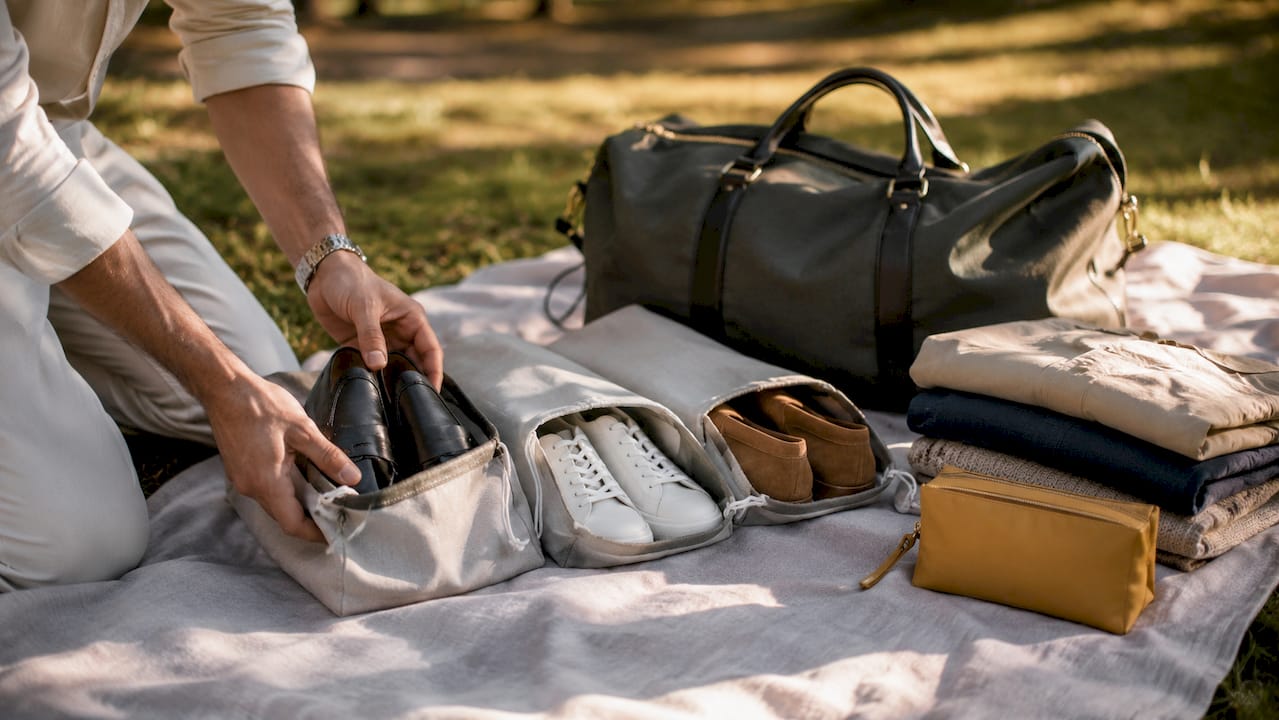
The checklist also covers shoes, bags, and accessories. Shoes get capped at three pairs to protect carry-on space. Accessories like scarves, belts, and one bag round out the list. Every item on the checklist should serve at least two purposes.
The capsule wardrobe method works because each piece coordinates with the others. Color-coordinated palettes like navy, gray, and white make mix-and-match easier and reduce the total number of items you need. A minimal color scheme means every top works with every bottom.
Here are the core clothing categories:
Pull-on trousers function as comfortable sweatpant-jean hybrids and roll tightly to minimize carry-on footprint. They work for long transit days and sightseeing without looking sloppy. That dual function makes them one of the highest-value items on any packing list for travels.
Pro Tip: Pack “plane pants” with a lightweight, pull-on waist. They combine comfort and polish so you step off the flight looking put together without changing clothes.
| Category | Recommended count | Key function |
|---|---|---|
| Tops | 3–5 | Mix-and-match base layers |
| Bottoms | 2–3 | Versatile day-to-night wear |
| Shoes | Max 3 pairs | Casual, walking, and dressy |
| Outerwear | 1 | Climate and weather coverage |
| Dressier outfit | 1 | Dinners, events, upgrades |
Accessories multiply outfit options without adding bulk. A single scarf can work as a wrap, a beach cover-up, a blanket on a cold flight, or a hair accessory. That one item covers four scenarios. The same logic applies to belts, minimal jewelry, and a packable hat.
The hoodie deserves its own mention. Fashion editors highlight hoodies as indispensable multi-use travel tools because they serve as an extra layer, a makeshift blanket, and an eye mask aid during flights. One hoodie replaces three separate items. That is the kind of math that makes a vacation clothing guide actually useful.
Bag selection matters more than most travelers realize. Experienced travelers avoid obvious anti-theft cross-body bags and prefer stylish totes that work for both travel days and sightseeing. A low-profile bag reduces tourist visibility and doubles as a day bag at your destination.
Pro Tip: Breathable pajama tops can double as casual base layers for daytime outings. Pack one set and get two uses out of it.
The 5-4-3-2-1 method is the most practical minimalist packing framework available. It calls for 5 tops, 4 bottoms, 3 accessories, 2 pairs of shoes, and 1 swimsuit to cover various activities with fewer than 20 total items. That structure forces you to choose versatile pieces and skip anything that only works once.
Two packing techniques compete for space efficiency: rolling and bundling. Rolling works best for knits, t-shirts, and casual pants because it reduces wrinkles and compresses volume. Bundling, where you wrap garments around a core item, works better for structured pieces like blazers and dress shirts. Most travelers get the best results combining both methods by category.
Packing cubes and compression bags are proven tools for organizing a suitcase and reclaiming space. Cubes separate categories so you never unpack everything to find one item. Compression bags work best for bulky items like hoodies and outerwear.
| Method | Best for | Space saved |
|---|---|---|
| Rolling | Knits, tees, casual pants | High |
| Bundling | Blazers, dress shirts | Medium |
| Compression bags | Outerwear, hoodies | Very high |
| Packing cubes | All categories | Medium (organization) |
Pro Tip: For a step-by-step breakdown of efficient vacation packing, Lanimal’s packing guide covers the full process from sorting to closing the bag.
Your base checklist stays the same. What changes are the swaps and additions based on your destination and planned activities. A beach trip needs a swimsuit and a cover-up. A cold-weather trip needs thermal underlayers and a heavier jacket. A business trip needs one extra polished outfit and dress shoes.
For tropical and beach destinations, the beach trip packing checklist approach works well. Swap one casual top for a swimsuit cover-up. Add a one-piece or bikini set. Replace closed-toe walking shoes with sandals. For packing swimwear efficiently, roll suits tightly and tuck them into shoe cavities to save space.
For adventure or active trips, fabric choice matters. Moisture-wicking fabrics dry faster and resist odor, which matters when you are hiking or cycling between cities. Merino wool is the gold standard for travel because it regulates temperature, resists wrinkles, and stays fresh for multiple wears.
Style writers warn that each item should coordinate with at least three others before it earns a spot in your bag. That rule applies to climate-specific additions too. A rain shell in a neutral color works over every outfit. A neon windbreaker does not.
For tropical destinations with a casual, resort feel, Hawaiian shirts styled for multiple occasions can serve as a beach cover-up, a dinner layer, or a travel day top. One statement piece that works across three settings earns its place in the bag.
| Destination type | Key additions | Items to swap out |
|---|---|---|
| Beach / tropical | Swimsuit, cover-up, sandals | Heavy pants, closed-toe shoes |
| Cold weather | Thermal layer, heavy jacket, waterproof boots | Sandals, lightweight tops |
| Business travel | Polished outfit, dress shoes | Casual shorts, flip-flops |
| Adventure / active | Moisture-wicking layers, trail shoes | Dress items, heavy denim |
A travel fashion checklist built on the capsule wardrobe method covers every trip type with fewer than 20 items when each piece coordinates with at least three others.
| Point | Details |
|---|---|
| Start with a defined item count | Cap clothing at 8–10 garments for a one-week trip, plus max 3 pairs of shoes. |
| Use the 5-4-3-2-1 method | Five tops, four bottoms, three accessories, two shoes, and one swimsuit covers most trips. |
| Choose multi-use items | A hoodie, scarf, and pajama top each serve two or more functions to cut total items. |
| Match a neutral color palette | Navy, gray, and white coordinate across all pieces and reduce what you need to pack. |
| Adapt by destination type | Swap and add items by climate category rather than rebuilding your checklist from scratch. |
Most travelers pack for the trip they imagine, not the trip they take. They bring the silk blouse for the “nice dinner” that never happens and leave behind the one versatile layer they needed every single day. I have made that mistake enough times to stop making it.
The shift that changed how I pack was treating each item as a capsule wardrobe piece rather than an outfit. When you think in outfits, you overpack. When you think in pieces, you build combinations. Stylist Samantha Dawn puts it plainly: versatile pieces that dress up or down prevent the trap of packing specific outfits for specific moments that may never arrive.
My personal non-negotiables are a neutral-toned hoodie, one pair of pull-on trousers, and a swimsuit that works as a top. Those three items alone cover flights, beach days, casual dinners, and cold hotel lobbies. Everything else on my checklist supports those anchors.
The other thing I stopped doing is packing trendy items. A trend piece earns exactly one wear before it feels wrong for the context. A classic white tee earns ten. Your checklist should reflect your actual style, not your aspirational one.
— Lital
Swimwear is the one category where style and function have to work together perfectly. A piece that looks great but takes up half your bag or only works at the pool is not a travel piece.

Lanimal’s F is for Fendi Bikini Top and coordinating bikini bottom are designed with exactly that mix-and-match potential in mind. The top pairs with shorts or a skirt for a beach-to-lunch transition without a wardrobe change. Both pieces pack flat and take up minimal space in a packing cube. For travelers building a vacation wardrobe around versatile, quality pieces, Lanimal’s swimwear fits the checklist without compromise.
A travel fashion checklist is a curated packing plan that lists clothing, shoes, and accessories needed for a trip based on destination, climate, and activities. It uses the capsule wardrobe method to maximize outfit combinations with the fewest items.
A one-week trip calls for 3–5 tops, 2–3 bottoms, one dressier outfit, and daily underwear and socks plus one spare set, totaling roughly 8–10 garments. Shoes should be capped at three pairs to save space.
The 5-4-3-2-1 method covers a trip with 5 tops, 4 bottoms, 3 accessories, 2 pairs of shoes, and 1 swimsuit, keeping the total under 20 items. It forces versatile choices and prevents single-use outfit packing.
A hoodie, a large scarf, and pull-on trousers each serve multiple functions on a trip. A hoodie works as a layer, blanket, and sleep aid; a scarf covers beach, cold, and style needs; pull-on trousers move from transit to sightseeing without a change.
Keep a neutral base checklist and swap or add items by destination type. Beach trips add a swimsuit and cover-up; cold-weather trips add thermal layers and waterproof boots; business trips add one polished outfit and dress shoes.


