Free Shipping on US orders over $150
-
Collections
-
Bikini
- One Pieces
- Cover-Ups
- Men's
- Sale
- MODA GLAM x L'ANIMAL
- Nice Breed
-


Chlorine-resistant swimwear is swimwear made from fabrics and constructions engineered to slow chemical damage from chlorinated pools, keeping the suit’s shape, color, and stretch intact far longer than standard nylon/spandex blends. If you swim regularly in a pool, the fabric your suit is made from directly determines how long it stays wearable.
Chlorine-resistant swimwear, made from polyester, PBT, or nylon with treated elastane, can last 3–4 times longer in chlorinated pools than standard nylon/spandex blends, making it the practical choice for any swimmer logging regular pool hours.
| Point | Details |
|---|---|
| Material is the foundation | Look for polyester/PBT or nylon with named treated elastane (Creora HighClo, LYCRA® XTRA LIFE™) in the fabric composition. |
| Care routine extends lifespan | Rinse immediately after every swim, hand-wash with mild detergent, and rotate between two suits to preserve elasticity. |
| Cost-per-use favors the premium | A chlorine-resistant suit at $100 lasting 200 hours costs less per pool session than a $50 standard suit lasting 40 hours. |
| Read labels critically | “Chlorine-proof” is marketing language; composition percentages and named elastane brands are the reliable indicators. |
| Lanimal’s construction adds durability | Double-layered linings and flatlock seams reduce stress points, extending fit and shape retention beyond fabric alone. |
Chlorine in pool water forms hypochlorous acid (HOCl), a reactive oxidizer that breaks polymer bonds in swim fabrics. Elastane/spandex is attacked first, because its polyurethane-based polymer chains are more vulnerable to oxidation than polyester or nylon. Once those bonds weaken, the fabric loses its ability to snap back.
The damage is cumulative and often invisible at first. A suit that feels fine after ten pool sessions may start sagging noticeably by session twenty. The signs are specific: loss of stretch and recovery, fabric thinning at the seat and thighs, color fading (especially in darker shades), and a persistent chemical odor that rinsing no longer removes.
Chlorine forms hypochlorous acid in pool water, which oxidizes the polymer bonds in swim fabrics. Elastane degrades first, leading to loss of elasticity, thinning, and color fade — often before the suit looks visibly worn.
Pool chemistry compounds the problem. Pools with higher free chlorine levels, lower pH, or warmer water accelerate fiber breakdown. Sunscreen and body oils left on the fabric before entering the pool add another layer of chemical stress.
Polyester and PBT (polybutylene terephthalate) are the industry standard for chlorine resistance. Both are polyester-family fibers with tightly bonded polymer structures that HOCl struggles to penetrate. Polyester/PBT blends last notably longer in chlorinated water than Lycra/spandex blends, and manufacturers consistently rate them as more colorfast and shape-stable.
Nylon-based fabrics can also perform well, but only when paired with a treated, chlorine-resistant elastane rather than standard spandex. Specialized elastanes — such as Creora HighClo or LYCRA® XTRA LIFE™ — are chemically modified to resist chlorination, retaining stretch longer than ordinary spandex in the same conditions.
Two technical approaches dominate the market: polyester/PBT knit (which achieves stretch mechanically through the knit structure, reducing reliance on spandex) or nylon with a named chlorine-resistant spandex. Fabric weight in the 170–230 GSM range generally signals adequate support and construction quality.
| Material | Chlorine resistance | Feel/hand | Stretch/recovery | Colorfastness | Best use case |
|---|---|---|---|---|---|
| 100% polyester | High | Firmer, less soft | Moderate (knit-dependent) | Excellent | Lap swimming, training |
| Polyester/PBT blend | Very high | Firm, smooth | Good, shape-stable | Excellent | Daily training, competitive |
| Nylon + chlorine-resistant spandex | High | Soft, comfortable | Very good | Good | Fitness classes, recreational |
| Standard nylon/spandex | Low | Soft | Excellent initially | Poor | Occasional pool use, fashion |
Polyester holds dye tightly and resists HOCl effectively. PBT adds mechanical stretch and exceptional shape stability. The tradeoff is a firmer hand feel compared to nylon blends. For daily lap swimmers or competitive training, this is the preferred combination.
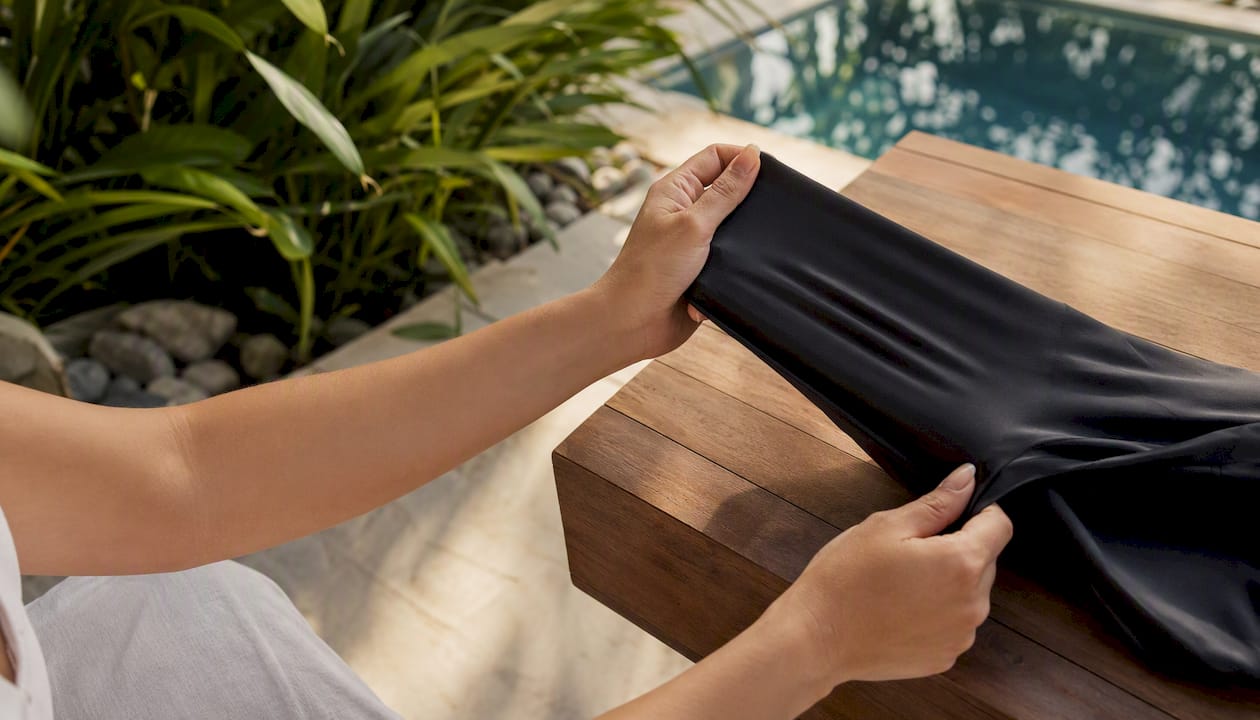
Softer against the skin than polyester, and stretch recovery is noticeably better than polyester alone. The key is the elastane: standard spandex degrades quickly in chlorine; a named treated elastane (check the product page for Creora HighClo or LYCRA® XTRA LIFE™) changes the durability picture significantly.
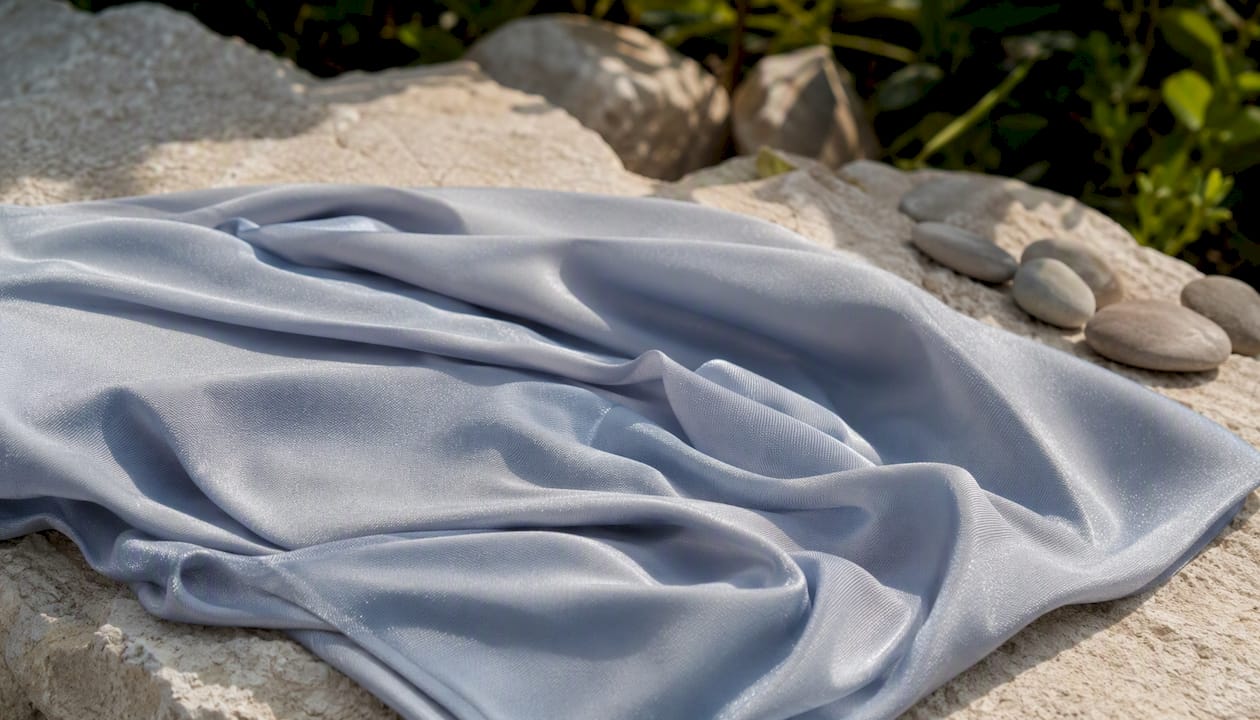
Comfortable and stretchy, but the spandex content makes it vulnerable. Fine for occasional pool use or beach days, but not a practical choice for anyone swimming more than once or twice a week in a chlorinated pool.
What to look for on product pages: percent polyester or PBT listed in the fabric composition, a named chlorine-resistant elastane brand, fabric weight (GSM) if disclosed, and secondary certifications like UPF rating or OEKO-TEX where relevant.
The core benefit is straightforward: the suit lasts longer and looks better for more of its life. For anyone swimming more than casually, that translates directly into money and convenience.
The value-for-money case is clearest for swimmers who train or exercise in pools regularly. A suit that costs more upfront but lasts through an entire season beats replacing a cheaper suit two or three times in the same period.
Regular pool users benefit most. The more hours per month a suit spends in chlorinated water, the faster the material difference shows up.
A simple decision prompt: if you spend more than four to six hours per month in a chlorinated pool, a chlorine-resistant suit is likely to cost less per pool hour over a season than a standard nylon/spandex alternative.
Rinse immediately, wash gently, rotate suits, and avoid heat. That covers most of what determines how long a chlorine-resistant suit stays in good condition.
Step-by-step routine:
Do not:
Pro Tip: Rotating between two suits rather than wearing the same one every session gives each suit time to recover its elasticity between uses. Lanimal’s double-layered construction and flatlock seam finishes reduce stress points further, so the suit holds its shape even with frequent wear. See the double-layered fabric guide for the construction details that matter.
Lifespan varies considerably by fabric type, use frequency, and care. A rough framework:
Industry guides report that chlorine-resistant suits can survive hundreds of pool hours compared to 30–40 hours for standard spandex-heavy suits, depending on quality and care.
Factors that shorten lifespan:
The cost-per-pool-hour math favors chlorine-resistant fabric clearly for frequent swimmers. A suit lasting 200 hours costs less per session than one lasting 40 hours, even at twice the purchase price.
No fabric is fully immune to chlorine given enough exposure. “Chlorine-resistant” is an accurate term for fabrics engineered to slow degradation.
Label items that meaningfully support a durability claim:
What to treat skeptically:
Lab-hour claims are useful but should be paired with clear fabric composition on the product page. A “200+ hours tested” claim means little if the underlying fabric is standard nylon/spandex. Composition transparency is the most reliable indicator.
Yes, chlorine-resistant fabrics generally perform well across water environments. The specific considerations:
One consistent rule across all water types: sunscreen and body oils accelerate fabric degradation regardless of the water chemistry. Apply sunscreen before putting on the suit, and rinse the suit promptly after every session.
Typically yes, but the premium is modest relative to the lifespan difference. Price ranges vary by construction and brand positioning:
The value-for-money case is clearest with a simple comparison: a $100 chlorine-resistant suit lasting 200 pool hours costs $0.50 per pool hour. A $50 standard nylon/spandex suit lasting 40 hours costs $1.25 per pool hour. For a swimmer logging six hours per month, the chlorine-resistant suit pays for itself within a single season and continues delivering value well into the next.
Chlorine-resistant suits can survive hundreds of pool hours versus 30–40 hours for standard spandex-heavy alternatives, making the cost-per-use math straightforward for frequent swimmers.
Buy where fabric composition is transparent and the return policy is fair. A product page that lists only “polyester blend” without percentages or elastane details is not giving you enough information to assess durability.
Checklist:
Lanimal lists fabric composition and construction details on product pages. The Sportif Bikini Bottom is a good example of how to read those details against this checklist before purchasing.
The fabric is where chlorine resistance starts, but construction is where fit and longevity are decided. A well-constructed suit in a good fabric outlasts a poorly constructed suit in a great fabric.
Double-layered linings reduce stress on the shell fabric by distributing tension across two layers rather than one. Flatlock seams lie flat against the skin and eliminate the raised seam edges that abrade both the fabric and the wearer over time. Measured compression zones, placed where the suit needs to hold its shape rather than uniformly throughout, preserve elasticity in the areas that matter most.
Pro Tip: When evaluating a suit, check whether the lining is cut separately and sewn in, or simply folded from the shell fabric. A separately cut lining with its own seam allowance is a construction detail that signals quality and adds meaningful durability.
These construction choices are design decisions, not incidental. At Lanimal, designer Lital Simel-Rhedrick builds double-layered construction and considered seam finishes into the collection as standard, not as an upgrade. The result is a suit that holds its shape through repeated pool sessions and maintains coverage and compression where the original fit intended it. See the double-layered fabric guide for a detailed breakdown of how these choices affect fit and support.
Most guides on this topic stop at fabric type. Polyester good, spandex bad, rinse and repeat. That framing is accurate as far as it goes, but it misses the more interesting question: why do two suits made from the same polyester/PBT blend perform so differently after a season of use?
Construction is the answer, and it is consistently underweighted in buyer advice. A suit with a separately cut double lining, flatlock seams, and compression zones placed where the body actually moves will outlast a suit in identical fabric that was cut and sewn to a lower standard. The fabric sets the ceiling; the construction determines how close to that ceiling the suit actually performs.
The second thing buyers underestimate is the rinse. Not the wash, the rinse. Chlorine continues oxidizing fibers after you leave the pool. A suit left in a wet bag for three hours after swimming has absorbed more cumulative damage than one rinsed immediately, regardless of fabric quality. The rinse is free and takes thirty seconds. It is the highest-return maintenance habit available.
The conventional advice to “buy chlorine-resistant fabric” is correct. The more useful advice is to buy chlorine-resistant fabric in a well-constructed suit, rinse it immediately every time, and rotate it with a second suit. That combination extends lifespan more reliably than any single factor alone.
Lanimal designs swimwear for people who want both performance and considered style. Every piece in the collection is built with fabric composition and construction transparency in mind: polyester-based fabrics, double-layered linings, and flatlock seam finishes that hold their shape through regular pool use.

If you have read this guide and know what to look for, the Lanimal collections page is the right next step. Fabric composition is listed on each product page so you can apply the buyer checklist directly. For a specific starting point, the Sportif Bikini Bottom shows how construction details and fabric specs are presented. Browse the full range and check the composition details before you buy.


