Free Shipping on US orders over $150
-
Collections
-
Bikini
- One Pieces
- Cover-Ups
- Men's
- Sale
- MODA GLAM x L'ANIMAL
- Nice Breed
-


Performance swimwear is defined as specialized swimwear engineered to reduce drag, support muscles, and withstand rigorous pool use, giving competitive and fitness swimmers a measurable edge over standard suits. Brands like Speedo and TYR have built entire product lines around three core principles: muscle compression, hydrodynamic design, and chlorine-resistant materials. Switching from a regular training suit to a tech suit can improve race performance by approximately 3.2%, a margin that decides podium finishes at every level of competition. Whether you train five days a week or race once a season, understanding what performance swimwear is and how it works will help you spend smarter and swim faster.
Performance swimwear is the category of swimwear built specifically to improve how a swimmer moves through water. It sits between fashion swimwear and elite racing suits on the spectrum, covering everything from durable training suits to full-compression tech suits used at championship meets. The industry term for the top tier of this category is “tech suit,” though “performance swimwear” correctly describes the broader range of suits designed with speed and endurance in mind.
The engineering behind these suits targets three physical problems every swimmer faces: drag, muscle fatigue, and suit degradation from chlorine. Each feature in a performance suit exists to address at least one of those problems directly. That focus on function is what separates this category from everything else on the rack.
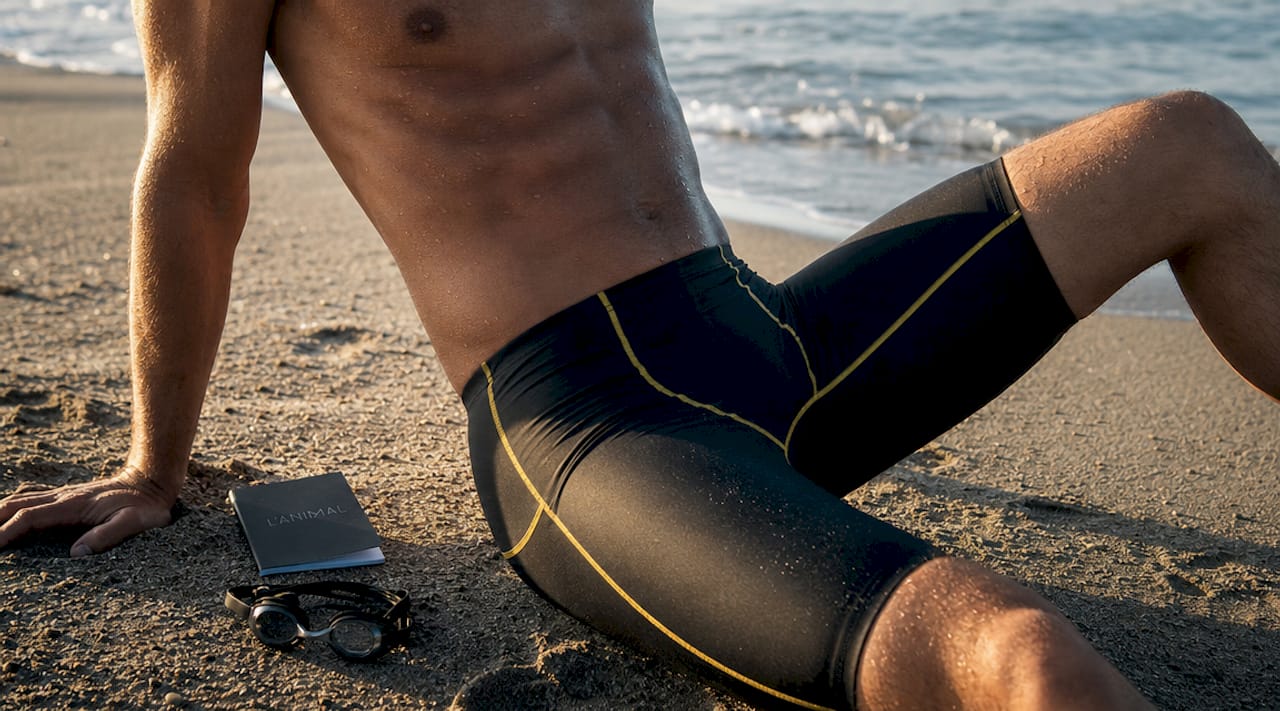
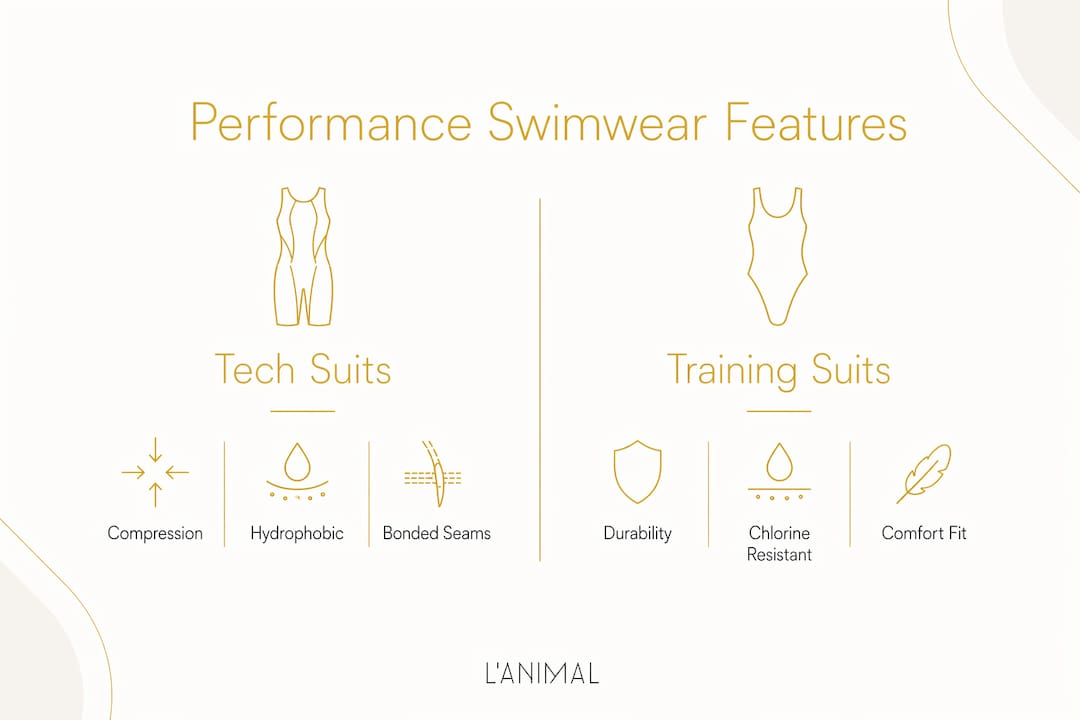
Graduated compression applies targeted pressure to key muscle groups, helping maintain body position and reduce drag during high-intensity swimming. This matters because uncontrolled muscle oscillation, the micro-vibrations muscles produce under load, accelerates fatigue and disrupts streamline. A well-fitted performance suit stabilizes the core, glutes, and thighs, keeping the body in a flatter, faster position for longer.
Hydrophobic fabric finishes prevent water absorption, maintaining a fast, light feel from start to finish. A waterlogged suit adds weight and increases surface drag. Performance fabrics shed water on contact, so the suit stays close to its dry weight throughout a race or training session.
Standard sewn seams create ridges that generate friction against water. Bonded seams eliminate ridges and bumps that cause friction, helping swimmers shave seconds off race times. High-end performance suits use ultrasonic bonding or heat-taped seams to produce a surface as smooth as the fabric itself.
Chlorine-resistant fabrics like polyester-PBT blends maintain shape and color through extensive pool use. PBT (polybutylene terephthalate) is the gold standard for training suits because it resists chlorine degradation far better than nylon alone. Nylon blends appear more often in racing suits where short-term performance outweighs long-term durability.
Pro Tip: When trying on a tech suit, wear it for at least 10 minutes before deciding on size. The fabric relaxes slightly with body heat, and a suit that feels impossibly tight in the first two minutes may settle into the correct compression level. If it restricts your breathing while standing still, size up.
The three categories of swimwear serve completely different purposes, and using the wrong one for your activity costs you either performance or money, sometimes both.
Training suits are engineered to endure over 500 hours of pool time using thicker, chlorine-resistant, polyester and PBT blended fabrics. They offer moderate compression and consistent fit across hundreds of sessions. Tech suits, by contrast, are fragile. Tech suits last only a handful of races and are not intended for more than a few competition days. Using a tech suit in daily training destroys the fabric within weeks and wastes an investment that can run from $150 to over $600.
Fashion swimwear sits at the opposite end. Performance suits offer a smoother, more compressive fit than fashion swimwear and are built to last, unlike suits intended for casual beach use. Fashion suits use lighter, less resistant fabrics that stretch out quickly in chlorinated water and provide no meaningful compression or drag reduction.
| Feature | Tech suit | Training suit | Fashion swimwear |
|---|---|---|---|
| Primary material | Nylon/elastane blend | Polyester-PBT blend | Nylon or polyester |
| Compression level | High | Moderate | None |
| Chlorine resistance | Low | High | Low to moderate |
| Hydrodynamic design | Yes (bonded seams, hydrophobic coating) | Partial | No |
| Intended lifespan | 5 to 10 races | 500+ hours | Casual seasonal use |
| Typical cost | $150 to $600+ | $40 to $120 | $30 to $100 |
The practical rule: train in a durable performance training suit, race in a tech suit, and keep fashion swimwear for the beach. That separation protects your gear and your budget.
The types of competitive swimwear break down by purpose, body coverage, and swimmer profile. Knowing which type fits your event and experience level prevents costly mistakes.
For guidance on swimwear style and fit trends beyond the competitive pool, Lanimal covers the broader market in detail.
Choosing the right suit requires matching compression level, event type, and budget before you ever look at brand or color.
Pro Tip: Donning a tech suit correctly takes practice. Tech suits typically take 15 to 20 minutes for first-time users. Use plastic bags over your feet and hands to slide the suit on without snagging the fabric on fingernails or rough skin. Never pull the suit by the straps.
For packing and storing your suits between sessions or travel, Lanimal’s guide on swimwear storage and travel covers practical techniques that extend suit life.
Performance swimwear works because it combines compression, hydrophobic fabrics, and bonded seams to reduce drag and delay fatigue, giving swimmers a measurable speed advantage over standard suits.
| Point | Details |
|---|---|
| Core function | Performance suits reduce drag and muscle fatigue through compression and hydrophobic fabric technology. |
| Tech suit vs. training suit | Tech suits are for racing only; training suits handle 500+ hours of pool use without degrading. |
| Compliance matters | Suits must meet World Aquatics regulations or risk disqualification in licensed competitions. |
| Fit is non-negotiable | A suit too tight restricts breathing; proper compression balance is the single most important fit factor. |
| Care extends lifespan | Cold rinse after every session and flat drying preserves fabric performance and suit shape. |
Swimmers often ask me which brand they should buy, and my honest answer is that brand is the last thing to consider. I have seen swimmers in $500 tech suits get out-touched by competitors in $80 training suits, simply because the expensive suit was the wrong size or the wrong compression profile for that swimmer’s body type.
The performance swimwear market has matured to the point where mid-tier suits from reputable manufacturers perform very close to flagship models. What separates a good race from a bad one is almost always fit, not the logo. A suit that compresses your core without restricting your stroke is worth more than a suit with a famous name that sits half an inch too loose across the hips.
The other misconception I encounter regularly is that performance swimwear is only for elite or near-elite swimmers. Performance swimwear benefits swimmers at all levels looking for durability, efficient movement, and support. A masters swimmer doing four sessions a week gets real value from a chlorine-resistant training suit with moderate compression. The durability alone justifies the cost over a fashion suit that degrades in two months.
My practical advice: buy the best training suit your budget allows, treat it well, and invest in a tech suit only when you have a specific competition that warrants it. That approach protects your money and keeps your race-day suit feeling genuinely fast when it counts.
— Lital
Lanimal designs swimwear that takes quality of construction seriously, whether you are training regularly or looking for a suit that holds its shape and color through consistent pool use.

The luxury one-piece collection at Lanimal combines sculpting fits with high-quality fabrics built to last. Each piece reflects Lital Simel-Rhedrick’s attention to detail and timeless design, giving you a suit that performs in the water and looks exceptional out of it. If you want swimwear that does not compromise on construction or style, Lanimal’s one-piece range is the place to start.
Performance swimwear is specialized swimwear designed to reduce drag, support muscles through compression, and resist chlorine degradation. It covers a range from durable training suits to high-compression tech suits used in competition.
Switching from a regular training suit to a tech suit can improve race performance by approximately 3.2%, which translates to meaningful time savings in competitive events where fractions of a second determine results.
Training performance suits are built to endure over 500 hours of pool use. Tech suits, by contrast, last only a handful of races and degrade quickly if used for daily training.
A mid-range polyester-PBT training suit provides enough compression and chlorine resistance for regular lap swimming without the cost of a full tech suit. Tech suits are designed for competition, not daily training.
Verify that the suit appears on the World Aquatics approved list before purchasing. Non-compliant suits with non-textile fabrics, buoyancy aids, or zippers result in disqualification from official competitions.


