Free Shipping on US orders over $150
-
Collections
-
Bikini
- One Pieces
- Cover-Ups
- Men's
- Sale
- MODA GLAM x L'ANIMAL
- Nice Breed
-


Slow fashion is an approach that prioritizes quality, fairness, and longevity over speed and disposable trends. The three highest-impact actions you can take today: buy less and buy with intention, repair and maintain what you own, and choose brands that publish clear information about their materials and labor practices.
Slow fashion is not:
Slow fashion reduces environmental and social harm by prioritizing quality, transparency, and longevity over speed and volume, and consumers can participate immediately through secondhand shopping, repair, and deliberate purchasing.
| Point | Details |
|---|---|
| Core definition | Slow fashion emphasizes quality, fair labor, transparency, and longevity over trend-driven, high-volume production. |
| Top consumer actions | Buy less, repair what you own, and shop secondhand before buying new. |
| Vetting brands | Check for named fiber content, factory disclosure, certifications, and a repair or resale program. |
| Cost reality | Higher upfront price often costs less per wear over time; secondhand and swaps make it accessible at any budget. |
| Swimwear application | Construction quality (fabric weight, lining, hardware) determines whether a suit lasts one season or several. |
Slow fashion is defined in direct opposition to fast fashion. Where fast fashion compresses production cycles to deliver trend-driven clothing at the lowest possible price, slow fashion emphasizes quality manufacturing, longer garment life, eco-friendly materials, local artisanship, and reduced consumption. The goal is a system where each garment is made well, used fully, and disposed of responsibly.
Five principles consistently define the movement:
Quality and durability. A slow-fashion piece is constructed to last years, not seasons. Fabric weight, seam reinforcement, and hardware quality are all deliberate choices. A well-made swimsuit, for example, uses chlorine-resistant fabric and double-stitched seams rather than the lightest available material to hit a price point.
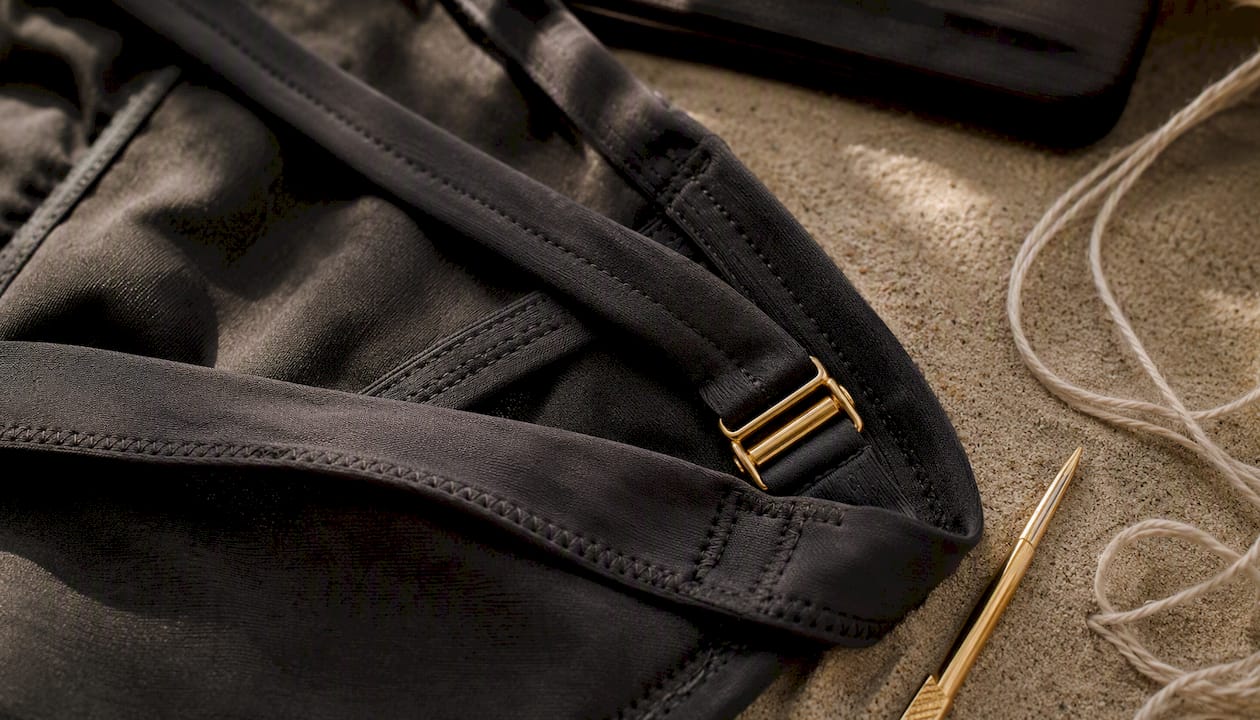
Transparency. Slow-fashion brands publish where their fabrics are sourced, which factories produce their garments, and what certifications those facilities hold. Opacity is a red flag; specificity is the standard.
Slower production. Fewer collections per year, smaller production runs, and longer lead times are structural features of slow fashion. Speed, as academic research frames it, is a tool that drives overconsumption and harms both people and the environment.
Fair labor. Slow fashion requires that workers throughout the supply chain earn fair wages and work in safe conditions. This is not optional or aspirational; it is a core requirement of the definition.
Timeless design and localism. Pieces are designed to remain wearable across multiple seasons, and production often supports local or regional artisans rather than the lowest-cost global supplier.
Practitioners also frame slow fashion across five dimensions: equity (producer welfare), authenticity (product story and values), functionality (longevity), localism (supporting local economies), and exclusivity (diverse, non-trend-driven design).
The term “slow fashion” is credited to Kate Fletcher, a sustainability consultant and researcher associated with the Centre for Sustainable Fashion at the London College of Fashion. Fletcher drew directly from the slow food movement, which emerged in Italy in the late 1980s as a response to fast food’s homogenization of culture and agriculture.
A brief timeline of how the movement developed:
Research published in MDPI frames slow fashion as a direct response to fast fashion’s environmental footprint and human-rights concerns, positioning it as a practice that reconnects producers and consumers to improve sustainability across the supply chain.
Genuine slow-fashion signals differ from greenwashing in one key way: they are specific and verifiable. A brand that says “we care about the planet” without naming a factory, a fiber source, or a certification is not practicing slow fashion. A brand that publishes its supplier list, uses named certifications, and offers a repair program is.
Characteristics to look for:
Pro Tip: Go directly to a brand’s “About” or “Sustainability” page and search for a supplier list or factory disclosure. If none exists, check whether the brand is a member of or audited by Fair Wear, which publishes brand performance data independently.
The apparel sector’s environmental footprint is substantial. Statista’s industry data tracks sector-level CO2e emissions that place fashion among the more carbon-intensive global industries. Reducing garment turnover directly reduces the production volume driving those emissions.
Two impact categories define the case for slow fashion:
Environmental. Textile production consumes significant water, uses chemical dyes that can contaminate waterways, and generates textile waste at scale. Synthetic fibers shed microplastics during washing, which enter water systems and accumulate in marine environments. Choosing natural fibers or durable recycled options reduces that shedding. Buying fewer garments and keeping them longer reduces production demand at the source.
Social. Fast fashion’s price compression depends on suppressing labor costs. Workers in garment-producing countries frequently earn below living wages and work in unsafe conditions. Slow fashion’s fair-labor principle addresses this directly by requiring that brands verify and disclose factory conditions rather than simply contracting at the lowest available rate.
Speed is the structural driver behind both problems. Research on fashion systems change argues that the pace of production is not a neutral business decision; it is a mechanism that generates overconsumption and externalizes costs onto workers and ecosystems. Slowing down is not just an aesthetic preference. It is a demand-side strategy that reshapes supplier incentives when enough consumers shift their behavior.
The prioritized rule is simple: buy less, buy better, care and repair. Applied in that order, these three actions produce the largest reduction in your fashion footprint.
Audit your closet. Pull out everything you own and identify what you actually wear. Items worn fewer than five times per year are candidates for donation, resale, or swap before you buy anything new.
Set a replacement plan. Replace items only when they wear out, not when trends shift. When a replacement is needed, define what you need before you shop so you buy with intention rather than impulse.
Shop secondhand first. Secondhand platforms, consignment stores, and clothing swaps extend garment life without new production. For swimwear specifically, look for secondhand pieces in unworn or lightly worn condition and check elastic integrity before purchasing.
Invest in seasonless essentials. The New York Times identifies high-quality, seasonless pieces as a core slow-fashion practice. A well-made swimsuit or cover-up that works across multiple trips costs less per wear than three cheaper replacements bought over the same period.
Learn basic repairs. Replacing a snap, re-stitching a seam, or reinforcing a strap extends a garment’s life by months or years. Online tutorials cover most common repairs in under ten minutes.
Use proper care routines. Cold water, gentle cycles, and air-drying extend fabric life across almost every fiber type. Heat is the primary cause of elastic degradation in swimwear and accelerated fiber breakdown in knitwear.
Join clothing swaps. Community swaps, local Facebook groups, and organized swap events let you refresh your wardrobe without new production or spending.
Pro Tip: Track wear-per-item for one month. A simple tally in your phone’s notes app reveals which pieces carry your wardrobe and which are taking up space. Use that data to guide your next purchase rather than trend coverage.
The single-sentence framework: a genuine slow-fashion brand demonstrates transparency about materials and labor, designs for longevity, and offers pathways for a garment’s life beyond the original sale.
Use this checklist on any product page:
Red flags to watch for:
Fair Wear’s brand performance data is one of the most reliable independent checks for labor practices. Slow Fashion in a Fast Fashion World notes a persistent gap between consumer awareness and actual buying behavior; using a checklist like this closes that gap by making vetting a habit rather than an afterthought.
Caring for materials correctly increases lifespan and lowers the lifetime environmental cost of each garment. The fiber you choose determines both the environmental trade-offs at production and the care it needs to last.
| Fiber | Key concern | Care notes |
|---|---|---|
| Organic cotton | Shrinkage; color fading | Cold wash, air-dry, avoid bleach |
| Linen | Wrinkling; initial stiffness | Cold or lukewarm wash, line-dry, improves with use |
| Wool | Felting; pilling | Hand wash or wool cycle, lay flat to dry |
| Recycled polyester | Microplastic shedding during wash | Use a microplastic-catching laundry bag; cold wash |
| Conventional polyester | Microplastic shedding; heat sensitivity | Cold wash, air-dry; avoid tumble drying |
For more on how recycled fabrics perform in swimwear specifically, Lanimal’s guide on recycled fabrics in swimwear covers durability and environmental trade-offs in practical detail.
Short care habits that apply across all fiber types:
Slow fashion often carries a higher upfront price, but durability changes the math over time. A single well-made piece that lasts multiple years can cost less per wear than repeated cheap replacements bought across the same period. The calculation shifts when you factor in total cost of ownership rather than sticker price.
Where to invest versus where to save:
Invest in items you wear most frequently and that require construction quality to function well: swimwear, outerwear, footwear, and workwear. These categories reward quality because wear frequency is high and construction failures are costly. Lanimal’s guide on why to invest in swimwear breaks down the value case for quality construction in practical terms.
Save by buying secondhand in categories where condition matters less: casual basics, seasonal accessories, and trend-driven pieces you know you will wear only briefly.
Practical tactics to lower the cost of practicing slow fashion:
Durability, material transparency, and care guidance are as relevant in a swimsuit as in any other garment category.
Design choices directly affect swimwear longevity. Fabric weight determines resistance to chlorine and UV degradation. Lining quality affects shape retention over time. Hardware (clasps, rings, sliders) made from corrosion-resistant materials outlasts cheaper alternatives by years. These are not luxury details; they are construction decisions that determine whether a suit lasts one season or five.
Lanimal applies these principles through material selection, small production runs, and published care guidance. The brand’s ethical swimwear guide maps slow-fashion values directly to swimwear buying decisions, covering fiber choices, construction standards, and what to look for on a product page.
Practical swimwear care to extend garment life:
For a specific example of a durable, well-constructed swimwear piece built with these principles, the Sportif Bikini Bottom from Lanimal demonstrates how construction quality and material choices translate into a longer-wearing garment.
Slow fashion is both a consumer practice and a systems-change movement. These two dimensions are frequently separated in popular coverage, which produces several persistent misconceptions.
Is thrifting the same as slow fashion? Secondhand shopping aligns with slow-fashion values because it extends garment life and reduces demand for new production. But thrifting alone does not constitute slow fashion if the underlying habit is still high-volume, trend-driven consumption. Buying fifty secondhand pieces a month is not slow fashion; buying three with intention is.
Are mainstream brands’ “sustainable” lines slow fashion? Rarely. A single organic-cotton collection within a brand that otherwise produces thousands of styles per year does not restructure the production model. Slow fashion requires systemic change in how a brand operates, not a product-line addition.
Is slow fashion just about materials? No. Materials matter, but slow fashion also requires fair labor, transparent sourcing, slower production, and design for longevity. A brand using organic cotton while paying below-living wages and releasing weekly drops is not practicing slow fashion.
Is slow fashion only for high earners? No. Secondhand shopping, clothing swaps, and repair practices are all low-cost or free. The price premium of new slow-fashion goods is real, but the movement does not require buying new at all.
The distinction between genuine slow-fashion traits and marketing: a brand that names its factory, publishes its fiber sourcing, and offers a repair program is demonstrating slow fashion. A brand that uses the word “conscious” on its homepage without supporting specifics is not.
The dominant advice in slow-fashion coverage is to “buy better.” That is correct but incomplete, and in practice it functions as permission to keep shopping, just at a higher price point. The actual lever is buying less. Frequency of purchase is the variable that most directly determines your fashion footprint, and no amount of certified-organic fabric changes that if the volume stays the same.
The second thing most guides underweight is repair. Repair is not a last resort or a niche skill. It is the single highest-return action available to most consumers because it costs almost nothing, extends garment life significantly, and requires no new production at all. A replaced elastic, a re-stitched seam, a new snap: these are ten-minute interventions that add months or years to a garment’s useful life. The slow-fashion movement’s most practical contribution is normalizing repair as a first response rather than a fallback.
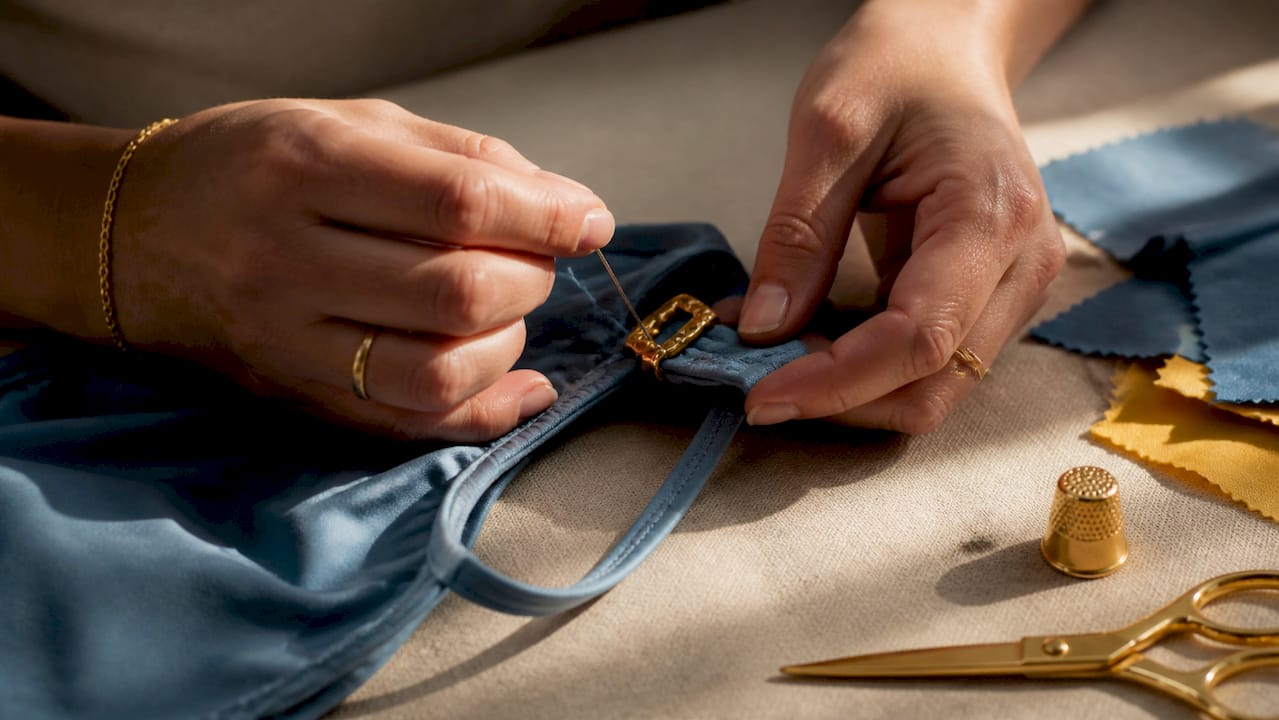
The third gap is community. Slow fashion is framed almost entirely as an individual consumer choice in popular coverage. The more durable version of the movement is collective: clothing swaps, local repair cafes, co-ops, and advocacy for extended producer responsibility legislation. Individual purchasing decisions matter, but they matter more when they are part of a visible, organized shift in demand that suppliers and brands can read and respond to.
For swimwear specifically, the slow-fashion calculus is straightforward. A suit built with quality materials and construction, cared for correctly, and repaired when needed will outlast three cheaper alternatives bought over the same period. That is not a luxury argument. It is a cost-per-wear argument that holds across most budgets when secondhand options are included.
Authoritative sources for readers who want to go deeper:
Lanimal editorial content for applied swimwear context:


