Free Shipping on US orders over $150
-
Collections
-
Bikini
- One Pieces
- Cover-Ups
- Men's
- Sale
- MODA GLAM x L'ANIMAL
- Nice Breed
-


Three swimsuits is the right number for most week-long trips: one to wear, one drying, one as backup if plans change. Shorter trips need less, cruises and daily swimmers need more, and the real driver is how fast your suits dry between wears, not some arbitrary shopping goal.
TL;DR:
- Most travelers should bring three swimsuits for a week-long trip to allow for rotation, drying, and backup, rather than packing more suits than necessary.
- For trips with frequent swimming or multiple activities, four or more suits are recommended, especially if laundry options are limited or slow.
- A swimsuit’s drying time, fabric type, and climate significantly influence how many suits you need; quick-dry fabrics reduce packing needs considerably.
- Proper care, including rinsing after every swim and air-drying suits in shade, extends suit longevity and reduces the total number of suits required.
- Building a versatile swimsuit capsule with a one-piece, a bikini, and a backup piece allows for multiple looks with fewer items, especially when choosing fast-drying, well-fitting designs.
The math changes with trip length, but the logic stays the same: you need enough suits to rotate while one dries.
For a long weekend of two to three days, one to two swimsuits covers it. Wear one, rinse it out overnight, and pack a backup only if you’re swimming twice a day or the forecast looks unreliable.
A seven-day vacation is where the drying time matrix really earns its reputation. Three suits is the comfortable baseline: one on your body, one drying on the balcony rail, one in reserve. Bump that to four if you want more variety for photos or you’re swimming more than once a day.
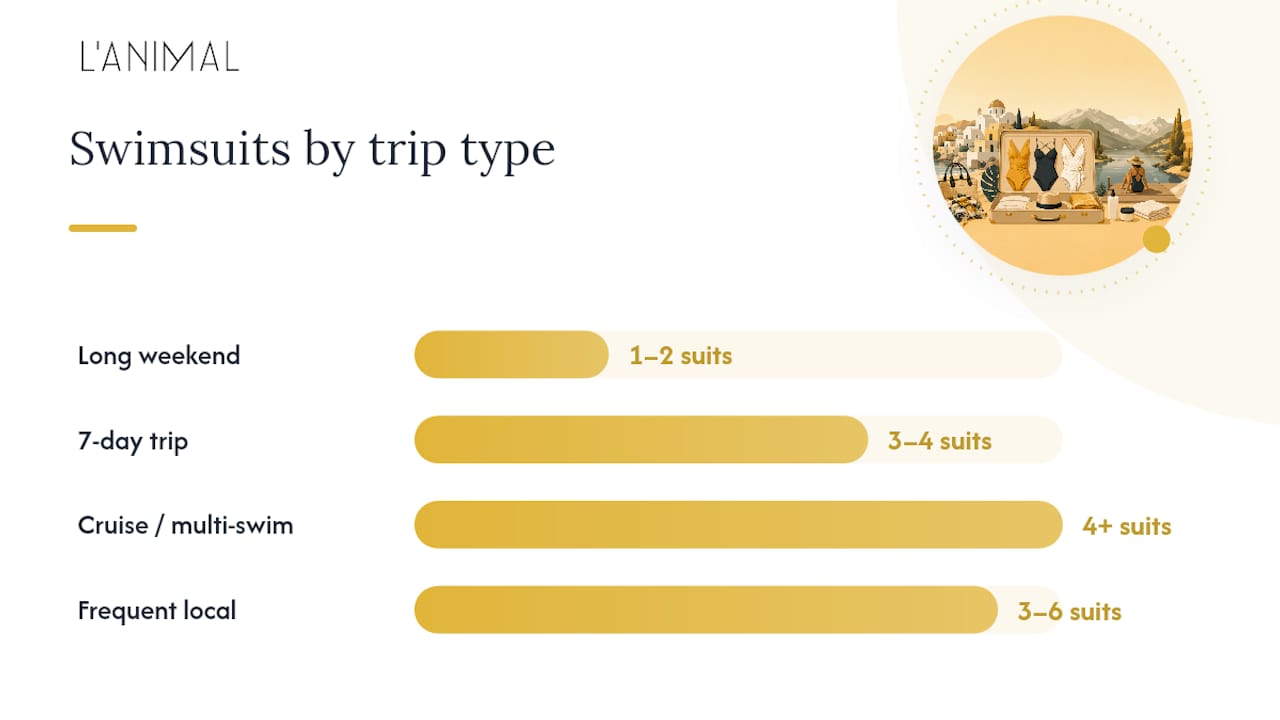
Cruises and multi-activity trips push the number higher. Between pool time, snorkeling excursions, and evening deck parties, four or more suits makes sense, especially since ship laundry service can be slow or costly. If you plan to use onboard laundry, three still works.
Frequent local swimmers, lap swimmers, beach regulars, weekend lake trips, are managing a different problem: garment longevity, not travel logistics. A rotation of three to six suits spreads out chlorine and salt exposure so no single suit takes daily damage, which extends how long each one lasts.
Quick reference:
Lifestyle surveys tend to land in a similar range for personal collections. Attire Project found many women prefer keeping just 2 to 3 “beloved” suits in steady rotation rather than a closet full of options they never reach for.
Trip-type guidance gets you close, but your actual number depends on four things: how often you swim, how fast your suits dry, your climate, and your fabric.
Here’s the simple version of the drying time matrix:
A humid beach house with no washer and two swims a day needs more suits than a dry desert resort with laundry service every other day. Watersports like surfing or paddleboarding also wear suits harder and leave them wetter longer than a quick pool dip, so factor that into your count.
Fabric matters more than most people realize. A suit made from quick-dry swimwear technology can be ready to wear again in a few hours instead of overnight, which can shave a full suit off your packing list. Chlorine tends to break down elastane faster than saltwater, so pool regulars may need to rotate suits more aggressively than ocean swimmers.
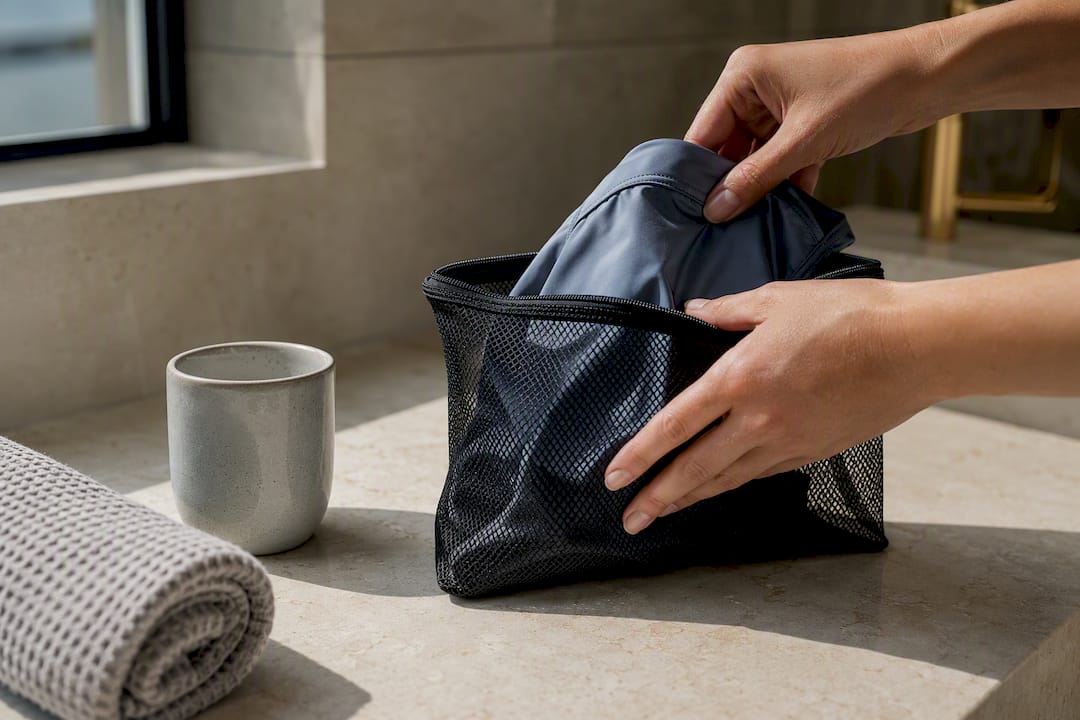
Pro Tip: Keep a small mesh dry bag in your suitcase. Damp suits go straight in, away from your clothes, and the mesh lets air circulate so they actually dry instead of sitting in a wet ball until laundry day.
A three-piece capsule handles a full week without repeating a look twice in a row. Pick one versatile one-piece that can pass for daytime or dinner, one bikini in a print or bold color for beach days, and one simple solid as backup or evening wear. That’s your entire rotation covered, with room to mix accessories for variety.
Want more range? Add a fourth piece, a statement cut or a sport-ready suit for watersports, and you’ve built a seven-day swim capsule that photographs differently every day without adding real bulk to your suitcase.
Separates stretch this even further. Two tops paired with two bottoms give you four distinct combinations from just four pieces, which is the same math swimwear stylists use to justify buying bikini tops and bikini bottoms separately instead of matched sets only.
Packing technique protects the capsule you just built:
Every suit you keep wearable is one you don’t have to repurchase, and care is the difference. Rinse your suit in fresh water immediately after every swim, whether it’s chlorine or salt water sitting on the fabric. Chlorine and salt both degrade elastane fibers over time, and a quick rinse slows that breakdown considerably.
Wash with a gentle detergent, or even shampoo, every few wears instead of every single time. Skip the washing machine and dryer entirely; heat and agitation are what stretch out linings and fade colors fastest. Lay suits flat or hang them in shade rather than direct sun, since UV exposure weakens fabric the same way it affects skin.
The Skin Cancer Foundation recommends limiting prolonged sun exposure and changing out of a wet or contaminated suit promptly, guidance that applies as much to fabric longevity as it does to skin health.
A swimwear designer built her collections around a simple idea: the right cut does more work than a bigger closet. A well-fitted one-piece with a sculpting silhouette can move from a beach afternoon to a resort dinner without a wardrobe change, cutting your packing list without cutting your options.
Choosing neutral separates that mix freely, paired with one statement piece, gets you the most mileage from the fewest garments. Fabric performance matters just as much as fit here. A quick-dry lining or chlorine-resistant material means your suit is ready to wear again sooner, which is the real lever behind owning fewer suits overall.
Most swimwear advice treats the number of suits you own as the whole problem, and that’s the wrong frame. The real constraint is drying time, not closet space. A traveler with two well-made, quick-dry suits and a smart rotation schedule is often better equipped than someone hauling many suits that all take a full day to air out.
Conventional packing lists also overcorrect toward “one suit per day,” which ignores how much a single rinse and an overnight hang can restore a suit for its next wear. That habit fills suitcases with pieces that barely get worn and fabric that degrades faster from being packed damp, not from actual use.
If you take one thing from this, prioritize fabric and fit before quantity. A designer one-piece that dries fast and flatters in multiple settings will outperform a pile of fast-fashion bikinis every time, on a trip and in your closet.
— Lital
Building a smart rotation starts with pieces that actually pull double duty. Some designers focus on original silhouettes and durable fabrics meant to cover more occasions with fewer pieces in your bag.

Start your capsule with a versatile one-piece swimsuit that transitions from pool to dinner, then round it out with a mix-and-match bikini for beach days that call for more color. Looking for a fit that sculpts and holds up to daily wear? The luxury one-piece collection is built for exactly that kind of rotation. Pair either with a cover-up for the walk between the pool and lunch, and you’ve got a full week handled in three or four pieces. Browse the current collections and build your own three-piece or four-piece capsule before your next trip.
Sun-safety guidance in this article draws from the Skin Cancer Foundation. Market context on multiple-suit ownership comes from an IndexBox analysis of the U.S. women’s swimwear market. Ownership norms and personal variance are referenced from Attire Project and a Glamour retrospective on personal swimwear collections.
There’s no single official count, but lifestyle surveys suggest many women settle around 2 to 3 favorite suits in active rotation, according to Attire Project. Personal collections vary widely beyond that core rotation, as a Glamour retrospective on swimwear habits shows.
For most travelers, three suits covers a full week comfortably: one worn, one drying, one backup. Shorter trips need only one or two, while cruises or daily heavy swimming often call for four or more.
The rule of three means packing enough suits to always have one drying while another is in use, plus a spare. It comes from the drying time matrix, which calculates suits needed based on swim sessions and laundry access.
Yes, as long as you rinse it in fresh water and let it fully air-dry between wears. Wearing a still-damp or unrinsed suit again speeds up fabric breakdown and, per sun protection guidance, isn’t ideal if the suit was exposed to prolonged sun and chemicals without a rinse.
Lanimal’s collections include fabric built for faster drying and better resilience against chlorine and salt, detailed in its quick-dry swimwear guide. Current prices and available styles are listed directly on the site.


