Free Shipping on US orders over $150
-
Collections
-
Bikini
- One Pieces
- Cover-Ups
- Men's
- Sale
- MODA GLAM x L'ANIMAL
- Nice Breed
-


Stuffing wet swimwear between clean clothes, forgetting a backup suit, or arriving at the beach with a misshapen one-piece are problems every traveler knows. Limited luggage space makes bad packing decisions costly, especially on beach trips where swimwear is the core of your wardrobe. This guide walks you through every step of packing swimwear efficiently, from choosing the right tools and deciding how many suits to bring, to handling wet items mid-trip without ruining everything else in your bag.
| Point | Details |
|---|---|
| Pack 2-3 swimsuits | Bring enough to rotate and allow drying time, with one packed in your carry-on to avoid lost luggage headaches. |
| Use waterproof bags | Separate wet from dry clothing in your suitcase to prevent odors and fabric damage. |
| Combine folding and rolling | Folding preserves shape for padded suits while rolling maximizes suitcase space, especially for bikinis. |
| Choose versatile swimwear | Multi-use pieces like rash guards and reversible bikinis help you pack lighter without sacrificing options. |
| Only pack clean and dry | Rinse swimsuits after use and use breathable pouches to keep everything fresh during your trip. |
With a clear sense of the packing problem, let’s start by getting your supplies ready.
The right tools make the difference between a chaotic suitcase and one you can repack in minutes. Before you even think about folding, you need to gather a few key items. Waterproof wet/dry bags separate wet swimwear from dry clothes, preventing odor and damage throughout your trip. These bags are available in small, medium, and large sizes, so you can match the bag to your swimsuit count.
Compression cubes and mesh bags are both useful for organization and space-saving, and they work especially well for wet items that need drainage. The difference matters: compression cubes squeeze out air and are better for dry suits you want to save space on, while mesh bags allow airflow and are better for damp or recently rinsed swimwear.
Here is a quick comparison to help you decide:
| Tool | Best for | Space saving | Airflow |
|---|---|---|---|
| Compression packing cube | Dry swimsuits, folded items | High | Low |
| Mesh bag | Damp suits, quick access | Medium | High |
| Waterproof wet/dry bag | Wet suits, end-of-day swims | Medium | None |
| Ziplock bag (plastic) | Emergency only | Low | None |
Packing tools checklist:
Before packing, run through your swimwear shopping checklist to make sure you have the right pieces before you leave. If you are still deciding what to bring, a quick review of picking beachwear by style, function, and fit can save you from overpacking. For event-specific needs, check out pool party outfit ideas to plan what suits actually work for your itinerary.
Pro Tip: Always pack an extra wet/dry bag specifically for last-day swims. You will almost always take a final dip and need somewhere clean to store a soaking suit for the flight or drive home.
Now that you have your tools, let’s figure out how many swimsuits you actually need.
Most travelers either overpack or underestimate. Bringing six swimsuits for a five-day trip wastes valuable luggage space. Bringing one is a recipe for wearing a damp, potentially smelly suit on day two. The practical answer falls in the middle.
Pack two to three swimsuits to allow rotation and drying time, with one kept in your carry-on luggage at all times. This approach covers the basics: one suit in use, one drying, and one clean backup. It also protects you in the event your checked bag is delayed or lost, which happens more often than airlines admit.
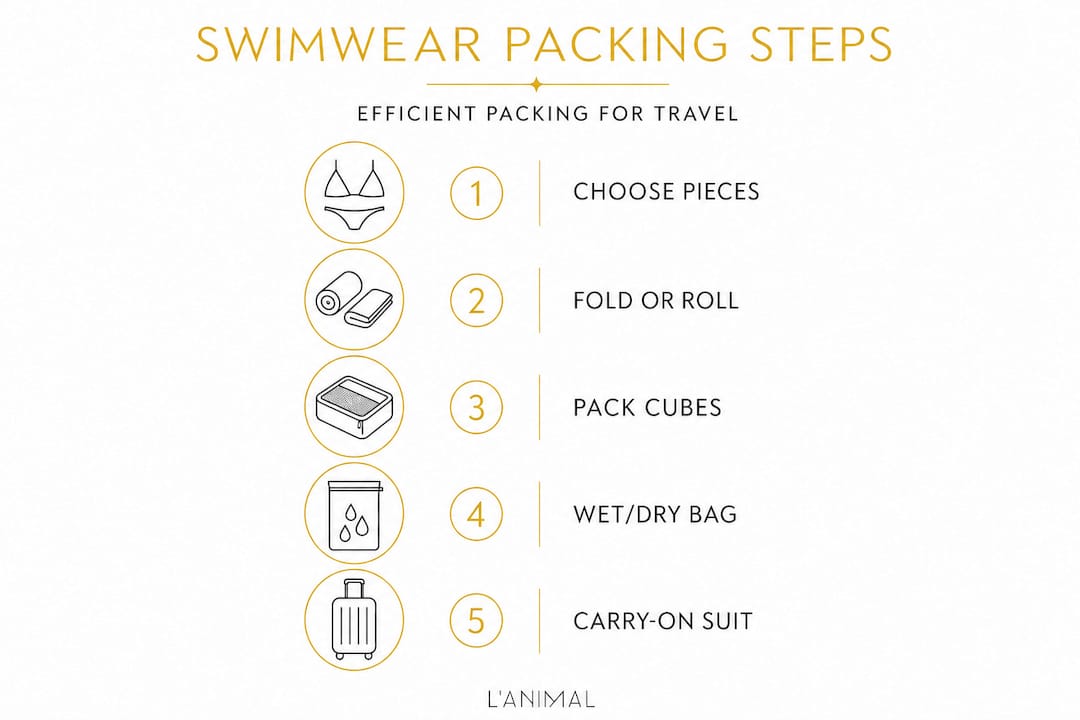
Here is a breakdown by trip length:
| Trip length | Recommended swimsuits | Notes |
|---|---|---|
| 1 to 3 days | 1 to 2 | One is enough with a rinse cycle |
| 4 to 7 days | 2 to 3 | Standard rotation works well |
| 8 to 14 days | 3 | Laundry access helps extend this |
| 15+ days | 3 + laundry plan | More suits add bulk, laundry solves it |
Factors that affect how many to bring:
For inspiration on what styles work best for vacation days, browse vacation bathing suit styles before making your final selection.
Quick stat: Lost luggage affects roughly 5 to 6 bags per 1,000 passengers on U.S. flights each year. Keeping at least one swimsuit in your carry-on is a simple, low-effort insurance policy.
With your swimwear chosen, let’s make sure it fits efficiently and stays looking fresh.

How you fold and organize your swimwear directly affects how much space you save and whether your suits keep their shape. There is real debate between folding and rolling, and the answer depends on what you are packing.
Step-by-step folding guide for swimwear:
Fold swimsuits flat for one-pieces: fold vertically then horizontally, tuck straps, and stack bikini pieces together while removing padding if needed. This method keeps suits compact without distorting the lining.
On the rolling versus folding debate, rolling maximizes space but folding preserves shape better for padded items, and a hybrid approach is recommended. In practice, this means rolling unstructured pieces like shorts, rash guards, and non-padded bikini bottoms, while folding anything with cups, boning, or structured panels.
“Do not compress padded swimsuit tops too tightly inside cubes. The foam padding can warp and lose its shape permanently, which no amount of re-stuffing will fix.”
Here is how the two methods compare side by side:
| Method | Space efficiency | Shape preservation | Best for |
|---|---|---|---|
| Rolling | High | Low to medium | Board shorts, rash guards, non-padded bottoms |
| Folding | Medium | High | Padded tops, one-pieces with structure |
| Hybrid | High | High | Mixed swimwear collections |
For suits with textured details like ruching in bikinis, folding flat is the safer method. Compression can flatten the gathered fabric and reduce the visual effect of the ruching once you unpack.
Pro Tip: Place folded padded tops on top of your pile inside the cube, never at the bottom where heavier items can press down on them.
Next, let’s maximize your suitcase by choosing swimwear that does double duty.
Versatility is the smartest packing strategy available. When a single piece of swimwear can serve two or three outfit functions, you bring fewer items overall. Quick-dry, multi-use swimwear like rash guards or pieces that double as cover-ups improve efficiency significantly, especially on longer trips.
Versatile swimwear types worth packing:
Using compression cubes to fit multiple sets compactly works especially well when layering a rash guard with leggings and a wrap skirt for versatile, space-efficient packing. This approach is practical for destinations where modesty or sun coverage is a priority, but it works equally well for anyone trying to get more outfit variety from fewer pieces.
Pro Tip: Prioritize quick-dry fabrics when buying swimwear for travel. A suit that dries in one to two hours can be rinsed and reworn the next day, effectively doubling your swimwear options without adding any weight to your bag.
Outfit planning framework:
Efficient packing does not end at home — here is how to handle your swimwear mid-trip.
Wet swimwear is the single biggest threat to an otherwise well-organized suitcase. A soaking suit pressed against dry clothes leaves everything damp and can create conditions for mildew and odor within hours. Managing wet suits correctly is a non-negotiable skill for any beach traveler.
Step-by-step guide for packing wet swimwear:
“Breathable mesh or fabric pouches allow moisture to escape slowly, while sealed plastic bags create a warm, wet environment that breeds bacteria overnight.”
For suits with functional design elements, a product like the Safari reversible bikini bottom packs compactly and rinses quickly, making it an easy item to manage mid-trip.
Pro Tip: Always rinse before packing. Never place a suit that still has sunscreen or salt residue directly into a storage bag. Both substances break down fabric fibers over time and shorten the lifespan of your swimwear significantly.
Having mastered the practical steps, let’s step back and consider what truly separates efficient packers from the rest.
Most packing guides focus on folding techniques and bag types. Those details matter, but the bigger mistakes are strategic. The travelers who consistently pack best are not the ones who own the most gear. They are the ones who make a few key decisions correctly from the start.
The carry-on rule is one of the most underrated strategies in swimwear packing. For carry-on only travel, prioritizing hand luggage for swimsuits protects you in case a checked bag is lost, and it helps you avoid compressing padded suits too tightly in larger, harder-to-access checked luggage.
Most travelers stash swimwear at the bottom of a checked bag as an afterthought. Then the bag gets delayed and they spend their first beach day in street clothes, or worse, spend money on an overpriced resort swimsuit they did not need. Keeping at least one suit in your carry-on costs you nothing and prevents a genuinely bad start to a trip.
Shape preservation is the second overlooked factor. Padded swimsuit cups are not indestructible. Repeated heavy compression deforms the padding and creates a fit problem that cannot be corrected without replacing the suit. Folding padded tops correctly and positioning them at the top of your packing cube takes thirty seconds and extends the life of the garment significantly.
The hybrid folding and rolling method deserves more attention than it gets. Treating all swimwear the same, whether padded or unstructured, is a common mistake that leads to either wasted space or damaged suits. Rolling board shorts and flat bikini bottoms while folding anything with structured cups gives you the best of both approaches.
Finally, most travelers pack too many suits. Three suits is almost always enough. Beyond that, you are trading luggage space for a false sense of security. Use the swimwear shopping insights to build a curated, travel-ready collection rather than packing your entire drawer.
To put your packing strategies to use, explore these travel-friendly swimwear solutions.
At L’ANIMAL, every piece is designed with quality, detail, and timeless style in mind, making your selection process straightforward whether you are packing for three days or three weeks.

Our luxury one-piece swimsuits are designed to fold flat and travel well without losing their shape. For those who want maximum outfit flexibility, our watercolor bikini tops pair with multiple bottoms to stretch your packing further. The Amazon reversible bikini bottoms are a practical travel staple, giving you two color options in a single compact piece. Designed by Lital Simel-Rhedrick with both style and function in mind, these are the pieces that make packing easier without compromising your look at the beach or pool.
Rinse each suit after use, let it air dry fully, and pack it in a breathable fabric pouch rather than a sealed plastic bag. Breathable pouches over plastic stop odor-causing bacteria from developing during transit.
Rolling saves space but can distort padded cups, while folding protects structure but uses slightly more room. Combining both methods gives you the best outcome depending on the suit type.
Waterproof wet/dry bags are the most reliable option for separating wet suits from dry clothes. Mesh cubes with drainage also work well for items that are damp rather than fully soaked.
Three suits cover a week-long trip: one in use, one drying, and one in your carry-on as a backup. Two to three suits with a rotation schedule eliminates both overpacking and the risk of wearing a damp suit twice.


