Free Shipping on US orders over $150
-
Collections
-
Bikini
- One Pieces
- Cover-Ups
- Men's
- Sale
- MODA GLAM x L'ANIMAL
- Nice Breed
-


A resort dress code runs on three tiers: Resort Casual, Resort Evening, and Resort Formal. Pack at least one polished outfit for evening dining even if you plan to live in swimwear all day. Rules shift by venue, time of day, and property, and staff have final say on the floor.
TL;DR:
- Most resorts shift from Resort Casual to Resort Evening or Resort Formal based on venue, time, and whether reservations are required, not the entire property’s standard.
- Packing three versatile pieces per category, like a swimsuit, a cover-up, and a dressy outfit, allows effective dressing across all tiers without overpacking.
- Dress codes become stricter at night, especially in signature restaurants, requiring jackets, cocktail dresses, or gowns for women and collared shirts with tailored trousers for men.
- Wet swimwear and flip-flops are generally prohibited indoors, so travelers should carry a dry outfit and dress shoes when moving from pool areas to indoor venues.
- Check each resort’s specific dress code online before packing, as climate and property type significantly influence what is acceptable at different venues.
Resort wear isn’t one outfit category. It’s a sliding scale of formality that changes depending on where you’re standing and what time your watch reads. A pool deck at noon and a specialty restaurant at 8 p.m. exist inside the same property, but they run on completely different rules.
Resorts set these standards for a practical reason: they’re managing hundreds of guests moving between wildly different spaces in a single day. The Sea Pines Resort policies apply per venue rather than as one blanket rule, meaning swimwear is fine at the pool but off limits the moment you step into an air-conditioned dining room. Golf clubs, spas, tennis courts, and fine dining rooms each carry their own baseline, and that baseline usually tightens as the sun goes down.
Here’s the rough mapping most properties follow:
Once you see the pattern, the venue’s clock does most of the work. You just need one dressier outfit ready before dinner.
Nearly every property, from beach clubs to mountain lodges, organizes its expectations around the same three tiers, according to a breakdown of resort dining dress codes. Knowing the labels lets you scan any resort’s policy page and immediately understand what’s expected.
Resort Casual. This is daytime default wear: think shorts, sundresses, polos, and breathable fabrics built for heat. Men typically wear swim trunks or chino shorts with a T-shirt or short-sleeve button-down; sandals are fine. Women wear sundresses, linen shorts with a tank, or a swimsuit paired with a cover-up. This tier covers pools, casual buffets, and daytime bars almost everywhere.
Resort Evening (sometimes called Resort Elegant). This is the tier that catches people off guard, because it’s dressier than “vacation clothes” but still short of a suit. For men, that usually means collared shirts, long pants or tailored shorts, and closed-toe shoes or loafers. Women can wear a cocktail dress, a jumpsuit, a linen dress with heels or dressy sandals, or elevated separates like a silk top with tailored trousers. Dark, well-kept jeans sometimes pass here, though distressed or ripped denim generally does not, based on the Greenbrier’s venue-by-venue dress code. At Sea Island, casual or fitness attire works before 5 p.m., but after that hour, gentlemen need a collared shirt and closed-toe shoes to enter the dining room.
Resort Formal. Reserved for signature restaurants, gala nights, and holiday dinners. Men need a jacket, sometimes a tie, dress trousers, and leather shoes. Women wear a cocktail or evening gown, a formal jumpsuit, or a tailored suit with heels. At traditional properties like The Greenbrier, this tier isn’t optional after dark in certain dining rooms, and children age 10 and up are typically expected to follow the same standard as adults.
The trigger that moves you from one tier to the next is almost always the venue and the clock, not the resort as a whole. A single property can run Resort Casual at breakfast, Resort Evening at its main restaurant, and Resort Formal at its signature steakhouse, all in the same twelve hours.
Daytime dressing at a resort is forgiving, but it has two blind spots that trip up first-time guests: wet fabric and bare feet indoors. Almost every property bans swimwear and dripping clothing in dining areas, according to policy language from Garden of the Gods Resort & Club. That rule exists for hygiene and furniture reasons, not fashion ones, but it still catches people who wander from the pool straight into a restaurant in a wet bikini.
Solid daytime choices include:
Skip anything visibly wet, distressed athletic gear, or flip-flops if you’re heading somewhere with a host stand. Fabric choice matters more at a resort than it does at home, since you’re moving between humid outdoor air and air-conditioned interiors all day. Linen and cotton breathe; heavy synthetics trap heat and show sweat marks fast.
The easiest transition trick is to build your daytime outfit around a base you can dress up in under two minutes. A swimsuit under a structured cover-up works for the pool, then reads as a legitimate outfit the moment you add sandals and sunglasses for a casual lunch. That’s the whole logic behind a good beach club outfit built to go from pool to dinner: one foundation piece, multiple contexts.
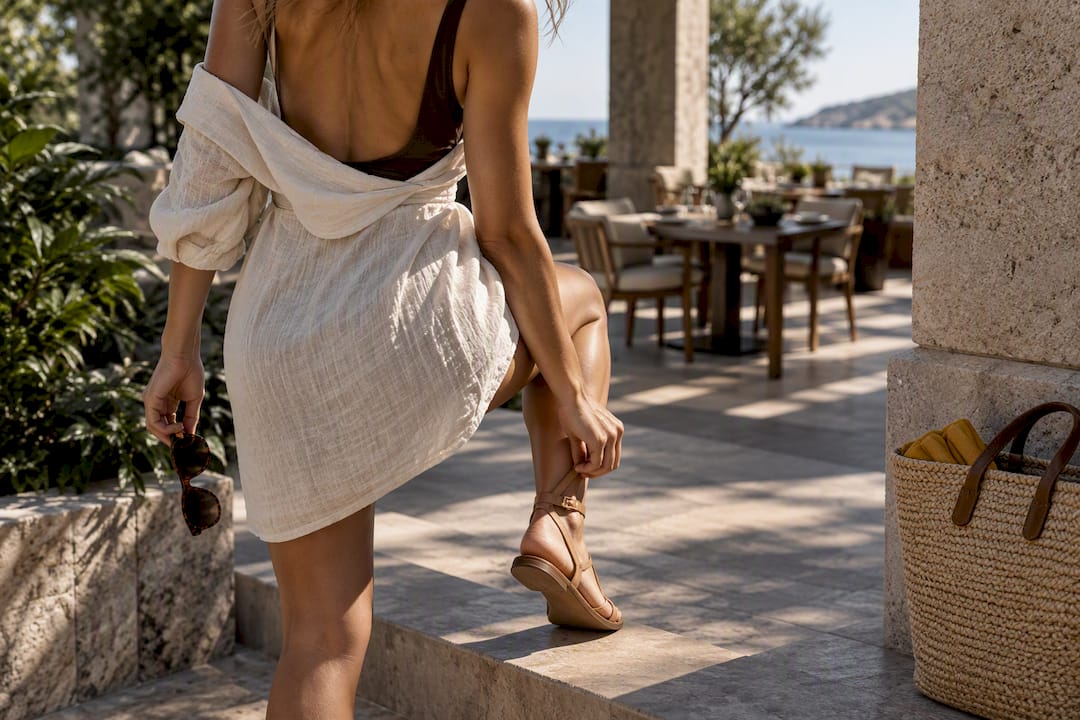
If you’re headed indoors for a spa treatment, a shopping arcade, or an air-conditioned lounge, swap wet swimwear for dry clothes first. Staff at most resorts will ask you to change rather than let you sit down soaking, and it’s faster to plan for that than to argue about it.
Evening dressing is where guests most often underpack, showing up with beach clothes and one “nice” outfit that turns out not to be nice enough. Specialty and fine-dining restaurants tighten their standards almost universally after dark, and that shift is the single most common reason travelers get turned away or asked to wait for a table.
For men, a safe evening formula is a collared shirt, tailored trousers or dark chinos, and closed-toe shoes or loafers. Add a light blazer if the property leans upscale, since a stylish traveler’s guide to men’s resort wear is built almost entirely around versions of this combination. For women, options that work across most Resort Evening settings include:
Footwear separates a passable evening look from a rejected one. Closed-toe dress shoes and heeled sandals clear almost every Resort Evening dining room; flip-flops, athletic sneakers, and pool shoes generally don’t, even if the rest of the outfit is dressy.
Resort Formal raises the stakes further. Men typically need a jacket and sometimes a tie; women need a cocktail dress, gown, or formal separates. If your itinerary includes a signature restaurant, a holiday gala, or a property known for tradition, pack one true formal outfit even if you never wear it anywhere else on the trip. It’s cheap insurance against being turned away from the one dinner you actually booked in advance.
Clothing gets most of the attention, but footwear and accessories decide more borderline cases than people expect. A comparison of resort dining dress standards notes that clean, dressy sneakers sometimes pass at Resort Evening but almost never at Resort Formal, where closed-toe dress shoes are the only reliable choice.
Quick guidance by category:
Pro Tip: Keep one pair of dressy, closed-toe shoes in your carry-on rather than your checked bag. Lost luggage on travel day shouldn’t mean skipping your first resort dinner in flip-flops.
Visibly beach-worn clothing, meaning anything faded, sun-bleached, or still carrying sand, reads as a mismatch even when the silhouette itself would otherwise pass. Evening dining is where guests get the most scrutiny, so save your crispest pieces for after dark rather than wearing them out at the pool first.
The 3-3-3 rule (three tops, three bottoms, three pairs of shoes) is a popular shorthand for keeping resort luggage light while still covering multiple formality levels. It works well as a starting framework, though most travelers stretch it slightly once they factor in swimwear, a cover-up, and one true evening outfit, which the rule doesn’t explicitly count.
A workable resort capsule for a 7-day stay:
Building a wardrobe around a handful of pieces that pack light and move from runway inspiration to actual suitcase space means fewer decisions each morning and more room in your bag for souvenirs. A structured cover-up worn over a one-piece swimsuit can double as a casual dinner outfit, cutting one full outfit slot out of your bag entirely.
Dress codes aren’t decorative. Front-of-house staff and management have real discretion over who gets seated, and Greenbrier’s own dress-code guidance recommends erring toward dressing up rather than down whenever a guest is unsure of a venue’s standard. At Sea Island’s dining rooms, the rule is explicit by clock time: casual before 5 p.m., collared shirt and closed-toe shoes after.
If you’re stopped at the door, the fastest fix is usually a quick swap rather than an argument. Most resorts sell or loan basic cover pieces, such as a collared shirt or a wrap, specifically for guests caught in this spot. Ask the host directly what’s missing rather than guessing.
As a rule of thumb: overdress slightly for any restaurant you had to book in advance, and treat casual buffets and pool bars as the safe, low-stakes zones where Resort Casual is almost always fine. When a property’s reputation leans traditional or its restaurant requires reservations, that’s your cue to bring the nicer outfit.
Fabric choice does more work in a hot climate than almost any other styling decision. Breathable, well-constructed pieces hold their shape through humidity and air conditioning swings, which is the practical case for investing in quality resortwear rather than fast-fashion basics that wilt by dinner.
Three outfit recipes that move across the tiers with minimal extra packing:
Pro Tip: Swap flat sandals for a low block heel and add one piece of jewelry. That single change usually moves an outfit from Resort Casual to Resort Evening without repacking anything new.
Men can run the same logic with resort wear built for the stylish traveler: swap trunks for tailored shorts, add a collared shirt, and the same base outfit covers two tiers.
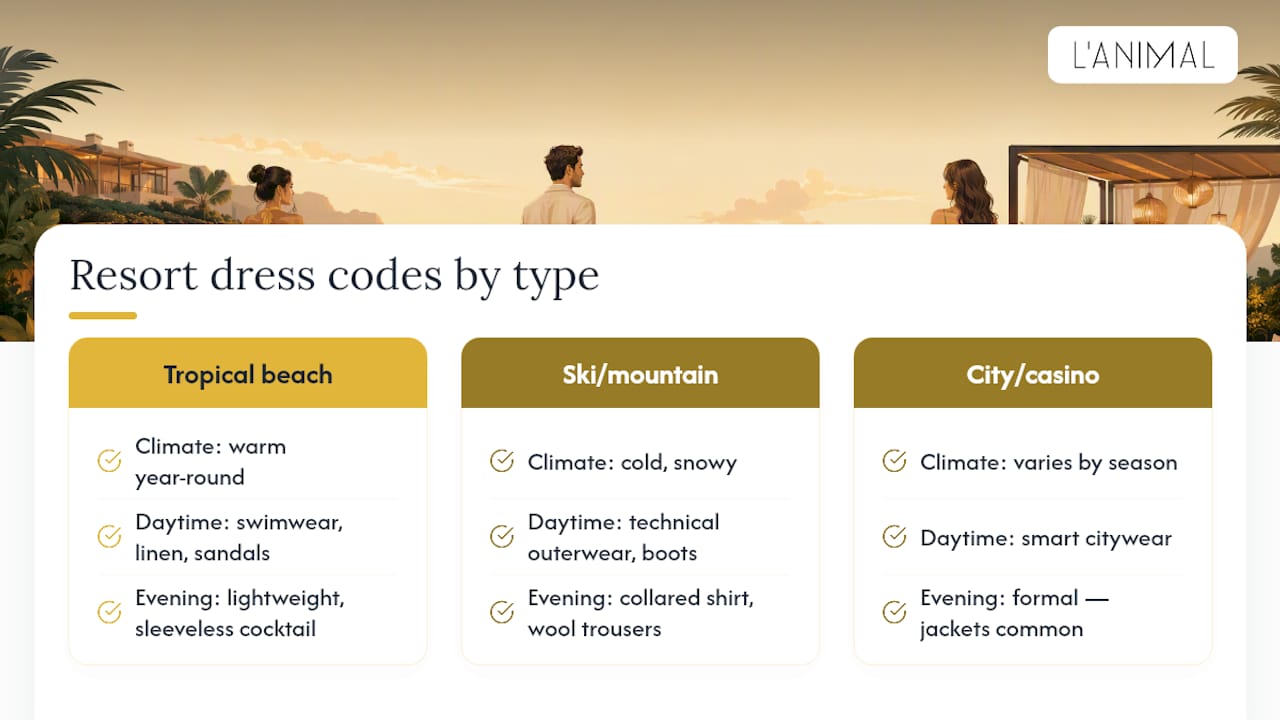
Yes, and the differences are bigger than most first-time guests expect. Tropical beach resorts run warm year-round, so their Resort Casual tier leans heavily on swimwear, linen, and open sandals, while their Resort Evening tier still assumes breathable fabrics even in a dressier silhouette. A cocktail dress at a Caribbean property is far more likely to be sleeveless and lightweight than one at a mountain lodge.
Ski and mountain resorts flip that logic. Daytime “casual” often means technical outerwear and boots rather than shorts, and evening dress codes account for the fact that guests are coming in from cold weather. A collared shirt paired with wool trousers and boots reads as appropriately dressed at a lodge restaurant in a way that wouldn’t work at a beach club.
City-adjacent resort hotels and casino resorts tend to run the most formal end of the spectrum, sometimes requiring jackets for men at signature restaurants regardless of season, closer to the Resort Formal tier described in The Greenbrier’s dress code by venue. All-inclusive beach properties, by contrast, usually keep even their nicest restaurants closer to Resort Evening, prioritizing guest comfort over strict formality.
The takeaway: don’t pack the same capsule for a desert resort and a ski lodge. Check your specific property’s venue-by-venue policy before you build your suitcase, since climate and resort type shift the baseline more than most general packing guides admit.
Seasonal shifts affect resort dress codes in two ways: fabric weight and evening temperature swings. Summer at almost any resort means lighter fabrics across all three tiers, cotton and linen for Resort Casual, chiffon or crepe for Resort Evening, and breathable tuxedo or gown fabrics for Resort Formal nights.
Shoulder seasons (spring and fall) introduce a temperature gap between afternoon heat and evening chill, especially at properties with outdoor dining. A light layer, wrap, or blazer becomes a functional necessity rather than a style choice, since many outdoor Resort Evening venues don’t adjust their dress code just because the temperature drops after sunset.
Winter resort stays, particularly at properties in warmer climates that see seasonal visitors, often see dressier baseline expectations simply because guests are traveling for holidays and special occasions. Expect more Resort Formal nights around major holidays, even at properties that run Resort Casual the rest of the year.
Practical seasonal packing adjustment: add one layering piece per trip, regardless of destination. A wrap, cardigan, or light blazer solves the summer evening chill, the shoulder-season temperature swing, and the winter holiday dinner all with a single extra item.
The single most common mistake is assuming one outfit covers the whole trip. Guests pack heavily for the pool and lightly for dinner, then discover the specialty restaurant they booked months ago runs Resort Formal, not Resort Casual.
A close second is misjudging denim. Guests often assume any jeans are fine for evening, when in practice, distressed or ripped denim frequently fails Resort Evening standards even when dark, clean jeans would have passed.
Wet swimwear indoors ranks high too. Guests walk from pool to lobby restaurant in a damp swimsuit assuming a quick stop doesn’t count, and get stopped at the host stand anyway. The fix is carrying one dry outfit in a bag by the pool, not just a towel.
Footwear mistakes round out the list: flip-flops at dinner, athletic sneakers at a Resort Formal event, or open sandals at a venue that specifically requires closed-toe shoes. None of these mistakes require a full second suitcase to avoid. They require one dry, dressy outfit and one pair of closed-toe shoes packed on purpose, not as an afterthought.
Every resort trip comes down to the same packing problem: too many possible occasions, not enough suitcase space. The fix isn’t more clothes. It’s fewer pieces that each do more than one job.
A structured cover-up that reads as a dress at lunch, a one-piece that layers under trousers at dinner, one pair of shoes that photographs as dressy but walks comfortably on stone paths. That’s the whole philosophy behind L’ANIMAL’s approach to resortwear: pieces designed with enough detail and construction quality to move from pool to dinner table without a costume change in between.
My packing advice hasn’t changed in years: pick pieces that work in two settings before you buy anything that only works in one. If a swimsuit can’t double as a base layer under something dressier, it’s taking up space that a more versatile piece could use instead.
— Lital
Building a resort wardrobe around versatile pieces means you pack less and still show up ready for the pool at noon and the restaurant at eight. That’s the whole idea behind L’ANIMAL: designer swimwear and resortwear built with enough polish to move between tiers without a separate outfit for each one.

A one-piece swimsuit works as a base layer under trousers or a skirt for Resort Evening, while a structured cover-up turns swimwear into a legitimate lunch outfit in seconds. For men, designer swim shorts hold up from pool day into a casual dinner setting without looking like beachwear that wandered indoors. Every piece reflects detailed and careful construction quality, suitable for wear from the pool bar to a resort’s signature restaurant.
Start building your resort capsule now by browsing the bikini collection and pairing it with a cover-up you’ll actually wear twice a day.
Every property sets its own final rules, so confirm details directly before you pack. Useful references include the Greenbrier’s venue-by-venue dress code, Sea Island’s dining dress codes, and Garden of the Gods Resort & Club’s dress policy. For general packing structure, the Elite Traveler’s luxury packing checklist is a solid outside reference. Always check your specific resort’s page for current rules before departure.
Most resorts use a three-tier system: Resort Casual for pools and daytime dining, Resort Evening for restaurants after a certain hour, and Resort Formal for signature restaurants and special events. The tier structure applies per venue and time of day, not to the whole resort at once.
The 3-3-3 packing rule means packing three tops, three bottoms, and three pairs of shoes to cover a trip with minimal luggage. Most resort travelers stretch it slightly to add swimwear, a cover-up, and one dedicated evening outfit, since the base rule doesn’t account for those separately.
Clean, well-kept jeans are usually fine for Resort Casual and often pass for Resort Evening too. Distressed, ripped, or heavily faded denim, however, typically fails dress-code standards even in the Resort Evening tier.
Daytime calls for swimwear, cover-ups, shorts, and sundresses in breathable fabrics like linen or cotton. Evenings call for at least one dressier outfit, a collared shirt and closed-toe shoes for men, a dress or dressy separates and heels for women, since specialty restaurants tighten standards after dark.
No. Swimwear and wet clothing are prohibited in nearly every indoor dining venue, according to Garden of the Gods Resort & Club’s policy. Change into dry Resort Casual clothing, like a sundress or shorts with a shirt, before heading to lunch or dinner indoors.


