Free Shipping on US orders over $150
-
Collections
-
Bikini
- One Pieces
- Cover-Ups
- Men's
- Sale
- MODA GLAM x L'ANIMAL
- Nice Breed
-


Most women approach buying a maillot de bains with one assumption already locked in: you either get style or you get comfort. That trade-off is outdated. Today’s swimwear market offers cuts, fabrics, and construction techniques that deliver both without apology. Whether you’re shopping for a beach vacation, daily laps, or a resort week, the choices available in 2026 are sharper and more functional than ever. This guide covers everything you need: style types, fabric technology, care advice, and the trend details that actually matter when you’re making a decision.
| Point | Details |
|---|---|
| Style and function coexist | Modern maillots de bain use engineered cuts and technical fabrics to offer both flattering design and active-wear performance. |
| Fabric composition matters | Look for roughly 82% polyamide and 18% elastane for the best mix of stretch, chlorine resistance, and shape retention. |
| Versatility is the 2026 trend | Mix-and-match separates and cover-ups let one swimwear purchase work across beach, sport, and city settings. |
| Care extends lifespan | Cold-water hand washing without bleach keeps color and fabric integrity intact through repeated seasons of use. |
| Fit features flatter every shape | V-neck cuts, ruching, and padded linings sculpt the silhouette without sacrificing comfort or freedom of movement. |
The first decision you make when buying a bathing suit is style, and that choice has more impact on how you look and feel than almost any other factor. In 2026, the three dominant categories remain the one-piece, the bikini, and the tankini. Each serves a different purpose and flatters different body types in distinct ways.
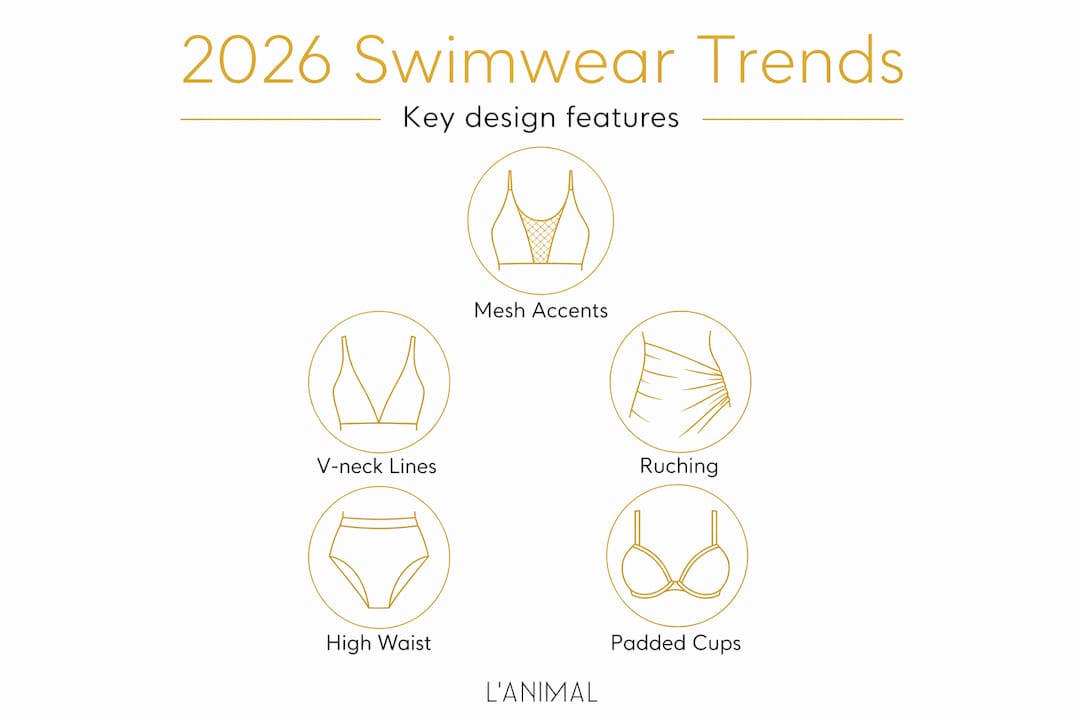
One-piece bathing suits have made a strong return at every price point. Design elements like V-necks, ruching, and padded linings are now standard even in mid-range options, and they genuinely work to highlight curves while creating clean visual lines. A V-neck draws the eye upward and elongates the torso, particularly useful for petite frames. Ruching at the midsection adds dimension and camouflages areas many women feel self-conscious about.
Bikinis remain the most versatile category when it comes to mixing prints, colors, and silhouettes. High-waisted bottoms continue to perform well for women who want midriff coverage without giving up a two-piece look. Balconette and underwire tops suit fuller busts by offering lift and shape. Triangle tops work cleanly on smaller cup sizes where structure is less critical.
Tankinis sit between the two. They offer the coverage of a one-piece with the convenience of a two-piece for changing. They work especially well for women who prefer more coverage over the midsection but want the flexibility of separates.
Here is a quick reference for matching style features to body type:
| Style feature | Best suited for |
|---|---|
| V-neck one-piece | Petite frames, shorter torsos |
| High-waisted bikini bottom | Curvy figures, hourglass shapes |
| Ruched midsection | Apple shapes, postpartum bodies |
| Bandeau or triangle top | Smaller busts, athletic builds |
| Underwire or balconette top | Fuller busts, D cup and above |
| Mesh insert one-piece | All shapes, adds visual interest |
The standout detail for 2026 across all three categories is mesh. Mesh inserts at the waist, neckline, or back add texture and depth without adding fabric weight. Bold color blocking and tropical prints are also prominent this season, with cobalt blue, terracotta, and warm ivory leading the palette.
Fabric is what separates a swimsuit that looks good on a hanger from one that still looks good after a full day in the water. The most practical and widely used blend in quality women’s swimsuits today is 82% polyamide and 18% elastane. That ratio exists for specific reasons, not marketing.
Polyamide, often labeled as nylon, provides the structural integrity of the suit. It holds its shape under tension, resists abrasion from rough pool edges or sandy beaches, and dries faster than cotton or polyester blends. Elastane, also sold under the brand name Lycra, gives the suit its stretch and recovery. When you move, swim, or bend, the fabric moves with you. When you stop, it snaps back.
The combination also handles chlorine and salt exposure better than cheaper fabric blends. Swimwear fabric with this composition retains fit and elasticity after repeated use through a full season, which matters if you swim regularly or travel to multiple destinations. Chlorine degrades polyester faster than polyamide, which is why pool-use swimwear specifically benefits from this blend.
For active water sports, look for an additional feature called flat-lock seaming. This stitching technique lies flat against the skin rather than standing up like a ridge, which prevents chafing during paddleboarding, surfing, or open-water swimming. Some designer swimwear labels now source Italian performance fabrics, which offer a noticeably softer hand feel while maintaining technical durability. You can see this in sculpting Italian-fabric designs that combine technical performance with high-fashion finishing.
Pro Tip: When buying swimwear online, check the fabric tag for elastane content above 15%. Anything below that threshold will stretch out faster and lose its shape more quickly, especially in chlorinated water.
Fabric elasticity from elastane is critical for long-term comfort and shape retention, particularly across multiple seasons. A suit that loses its elasticity sags, gaps at the chest, and rides up in the back. That is not a fit problem. It is a fabric problem.
The 2026 swimwear consumer is not buying for one scenario. Stylish swimwear this season functions as part of a capsule vacation wardrobe, moving from pool to lunch to the beach without a full outfit change. Choosing a maillot de bains with that versatility in mind changes what features you prioritize.
Here is how to select for versatility from the start:
Pro Tip: Pack two bikini tops and one bottom, or two bottoms and one top. Mixing separates across days cuts down on luggage while giving you more variety in actual looks.
Consumers increasingly expect swimwear to bridge active sports function with stylish leisurewear, and that demand is shaping how new collections are constructed at every price point, from affordable swimsuits in the 23 to 29 euro range to designer swimwear collections with Italian performance fabrics.
Good swimwear is an investment. How you care for it directly determines how long it stays looking and fitting the way it did on day one.
The core mistakes most women make are predictable and avoidable:
I have spent years designing swimwear and working with women on what they actually need from a suit versus what the market keeps telling them they should want. The biggest shift I am seeing right now is not about trends. It is about expectation.
Women are no longer willing to accept a suit that looks great in a photo but performs poorly at the beach. I have watched this shift happen gradually, and in 2026 it has reached a tipping point. The demand for suits that support active movement without sacrificing visual appeal has pushed designers and manufacturers to finally take fabric technology seriously. That is a good thing.
What I tell every woman I work with: stop buying swimwear by trend first. Buy by how the suit is constructed. A well-made suit in a classic silhouette will outlast three trend pieces and look better doing it. When I design, I think about the woman who wears the suit all day, not just for a photo. That means secure fits, quality fabrics, and cuts that flatter across different body positions, not just when you’re standing still.
The trend pieces I do get excited about are the ones where design and function happen to align. Mesh details on a sculpting one-piece. Reversible prints on a high-coverage bikini. Italian fabrics cut with precision. These are not gimmicks. They are genuine upgrades.
If you have been stuck in the same swimwear choices for years, 2026 is the year to try something different. The options have genuinely improved.
— Lital
Lanimal was built around exactly this idea: that women’s swimsuits should deliver on style and function without requiring a compromise between the two.
The luxury one-piece collection features sculpting fits designed to flatter and support across a full day of wear, using Italian fabrics and structured mesh details that hold their shape in and out of the water. For active water sports or beach days that require more security, the Sportif Bikini Bottom offers the coverage and stability you need without losing the look. If you want something that works across multiple scenarios, the Amazon Reversible Bikini Bottom gives you two distinct looks in one piece. For an elevated occasion, the Oceane luxury collection brings embellished designs that take swimwear fully into the category of resort fashion. Browse the full range at Lanimal and find the suit that matches your summer.
Maillot de bains is a French term for swimsuit or bathing suit. It covers all types of swimwear including one-piece and two-piece styles.
A blend of approximately 82% polyamide and 18% elastane offers the best combination of stretch, shape retention, chlorine resistance, and quick-drying performance for most swimwear needs.
Hand wash in cold water without bleach immediately after each use, press out water gently without wringing, and dry flat in the shade. Avoid machine washing and direct sunlight exposure.
One-piece suits with V-neck cuts, ruching at the midsection, and padded linings are widely flattering across body shapes, offering coverage and sculpting without restricting movement.
Designer swimwear typically uses higher-quality fabrics and construction techniques, including Italian performance materials and flat-lock seaming, which improve both longevity and fit compared to fast-fashion alternatives.


