Free Shipping on US orders over $150
-
Collections
-
Bikini
- One Pieces
- Cover-Ups
- Men's
- Sale
- MODA GLAM x L'ANIMAL
- Nice Breed
-


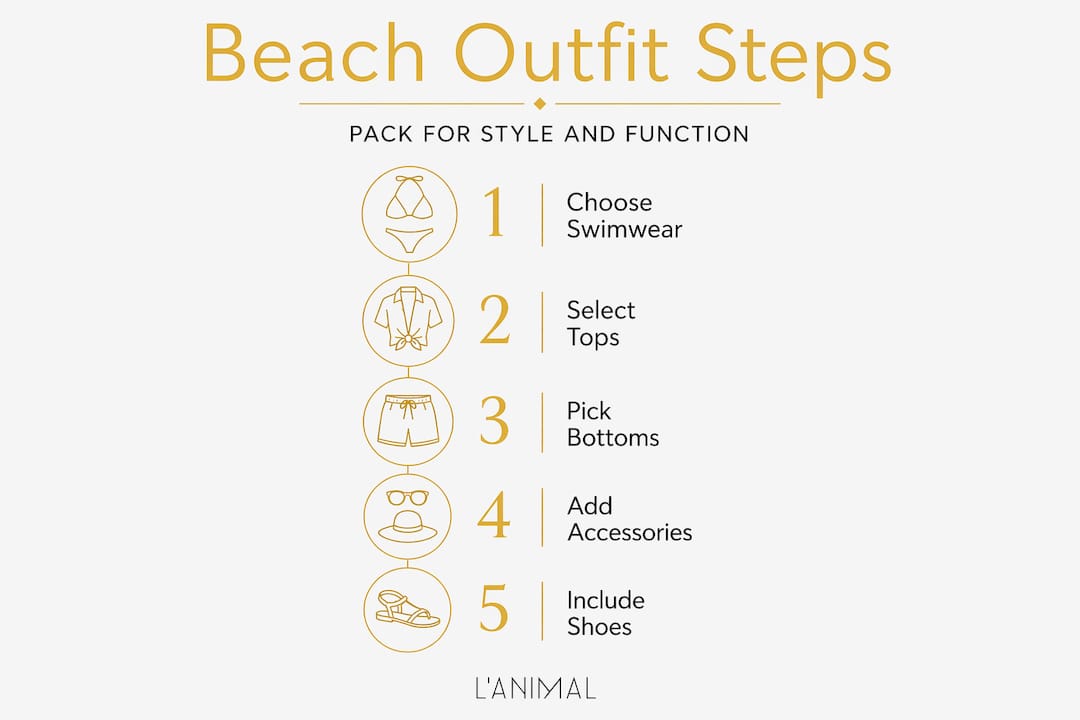
Most beach vacationers pack too much, think too little, and still end up standing at the shoreline wondering why nothing quite works together. A step by step beach outfit approach changes that entirely. This guide covers how to pack with purpose, layer swimwear for real-world versatility, choose accessories that hold up from sand to social settings, and pose naturally for photos that actually look like you. Whether you are planning a weekend escape or a two-week vacation, what follows is a practical, specific, and style-forward beach outfit guide built for people who care about how they look and how little they carry to get there.
Building a strong beach outfit starts before you leave home. The decisions you make while packing determine whether your vacation wardrobe feels intentional or scattered.
The 5-4-3-2-1 packing method gives you a simple formula: 5 tops, 4 bottoms, 3 accessories, 2 shoes, and 1 swimsuit. For beach trips specifically, that swimsuit slot expands to 2 or 3 pieces to allow rotation, especially when suits take time to dry between wears. This adjustment keeps your bag light while giving you real outfit options across multiple days.
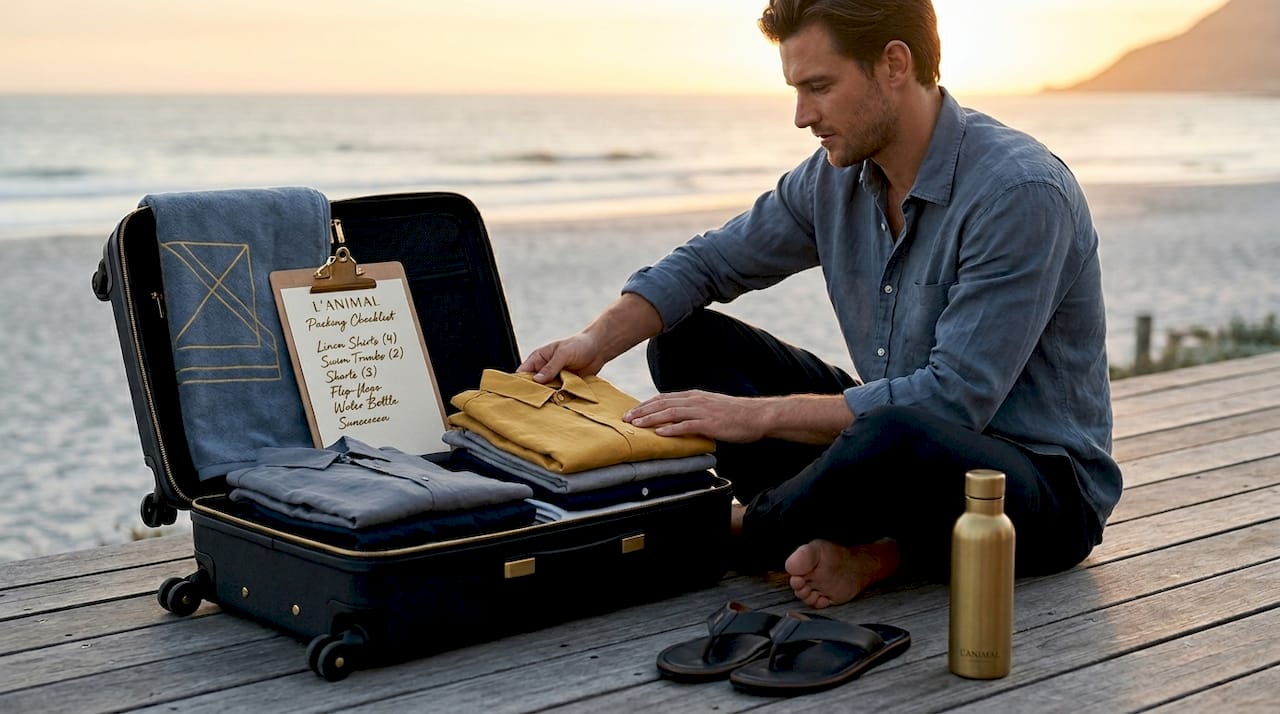
The deeper benefit of this method is that it forces you to think in combinations rather than individual items. Every piece you pack should work with at least two others. A white linen button-down, for example, works over a bikini at the beach, tucked into a skirt for brunch, and tied at the waist over shorts at a market. That is three looks, one item. Thinking this way when building a vacation wardrobe cuts the mental load of getting dressed each day.
One underused strategy: organize your packing by activity layer rather than clothing type. Most people pack all their tops together, all their bottoms together, and wonder at the trip why they keep forgetting things. Instead, group items by beach-day, evening, and recovery. Recovery is the layer most travelers skip, and it shows: no aloe vera, no dry shampoo, no SPF lip balm, and by day three the whole outfit plan starts to unravel from sunburn discomfort.
| Category | Minimum count | Example items |
|---|---|---|
| Swimsuits | 2 to 3 | One-piece, bikini set, sporty two-piece |
| Tops | 5 | Linen shirts, ribbed tanks, breezy blouses |
| Bottoms | 4 | Denim shorts, linen trousers, midi skirt, wrap skirt |
| Accessories | 3 | Straw hat, tote, sunglasses |
| Shoes | 2 | Leather slides, espadrille wedges |
| Recovery items | 1 pouch | Aloe vera, SPF lip balm, hair brush |
Must-pack items per category:
Pro Tip: Pack your recovery pouch in the outermost pocket of your bag so it is the first thing you reach for at the end of a beach day. Include SPF lip balm, a small jar of aloe vera, and a wide-tooth comb to deal with salt-air tangles before you put on your evening layer.
Swimwear is not just the thing you wear in the water. It is the foundation of every look you build at the beach, and that distinction matters when choosing what to buy and what to pack.
Layering for beach-to-brunch transitions works best when you start with swimwear that has structure, real fabric integrity, and a clean silhouette. A suit that bags out or loses its shape when wet will undermine every cover-up or layer you put over it. Structured one-pieces, in particular, function almost identically to a bodysuit when paired with linen trousers or a ribbed midi skirt. No extra layer needed. Less to pack.
For the pieces you layer on top, fabric choice makes the biggest difference. Linen and cotton poplin are the most practical for beach vacations. They are breathable, they dry quickly, and they look relaxed without appearing sloppy. Avoid anything too thick or structured at the layer level since you want pieces that fold easily into a beach bag when you take them off.
Layering staples worth packing:
To add dimension without adding weight, use scarves tied as belts, or drape a cardigan over the shoulders for a late afternoon look. Minimalist gold or pendant jewelry finishes a layered beach outfit without competing with the overall vibe. When picking beachwear style and fit, always consider how the swimsuit will sit under clothes, not just how it looks on its own.
Pro Tip: Pack quick-dry fabrics and choose dark bottoms for your first-layer cover-ups. Dark colors hide water marks and salt residue, so you can walk from the beach to a cafe without changing or worrying about visible wet patches.
Getting the accessories right is where most beach outfits go from good to genuinely pulled together. The goal is purposeful coordination, not volume.
Accessories move you from sand to city faster than any outfit change. The ones worth packing are those that serve more than one function. A structured raffia tote holds your beach towel, sunscreen, and wallet, and still looks intentional enough for a restaurant lunch. A straw fedora is both sun protection and a style statement. Crossbody bags in woven or leather finishes keep your hands free and look polished when you swap out of your beach tote.
For sunglasses, cat-eye and wayfarer frames are the most universally flattering shapes and photograph well in bright light. Jewelry should stay minimal at the beach: slim gold hoops, a delicate cuff bracelet, or a layered chain necklace that sits close to the collarbone.
Footwear is often where elevating beachwear style is won or lost. Flip-flops are fine for the water, but they rarely transition well. Better options:
Accessory and footwear do’s and don’ts:
| Do | Don’t |
|---|---|
| Coordinate a three-color palette across accessories | Mix four or more competing colors |
| Mix textures (raffia, leather, woven) | Carry logo-heavy or oversized branded bags |
| Choose shoes that clean easily | Wear sand-caked shoes into restaurants |
| Keep jewelry simple and close to the skin | Stack heavy layered jewelry in heat |
Your outfit is only as good as the way it reads in photos. At the beach, the biggest mistake people make is going rigid the moment a camera appears.
Authentic beach photos come from movement, not static poses. Walking along the shoreline, adjusting the brim of your hat, turning back over your shoulder, reaching for a water bottle: these small actions create the kind of images that look effortless because they are capturing actual motion rather than a held position.
Posture is the structural piece underneath the movement. Shift your weight to your back leg to create a natural lean. Keep your knees soft rather than locked. Roll your shoulders back and down before the shot rather than trying to correct mid-frame. These adjustments happen in two seconds and make a significant difference in how your body reads in the photo.
Common posing mistakes to avoid:
“The secret to a polished beach photoshoot is to avoid static poses and move fluidly to capture authentic shots.” This applies directly to how your outfit is perceived: movement shows how fabric drapes, how a cover-up flows, and how the full look holds together in natural light.
And when it comes to confidence in beachwear style, confidence itself is the final layer. No amount of styling covers a rigid, self-conscious posture in the frame.
Pro Tip: Pack a waterproof phone pouch so you can capture candid moments in and around the water without worrying about your device. The best beach photos often happen in the five minutes after you get out of the water, before anyone has time to pose.
Even with a solid plan, beach vacations have a way of surfacing small outfit problems that compound over a trip. Knowing the fixes in advance saves both time and wardrobe stress.
Organizing packing by activity layers reduces the chance of forgetting essentials and eliminates the morning scramble of figuring out what works together. The three-layer system: beach-day, evening, and recovery, gives each day a clear starting point and an end-of-day routine that protects both your skin and your clothes.
Common packing and style mistakes:
Outfit challenges and solutions:
| Challenge | Solution |
|---|---|
| Sheer fabric shows through when wet | Choose woven or structured fabrics with opacity |
| Sand sticking to clothing | Dry off fully before re-layering; pack baby powder as a quick fix |
| Outfit looks great but shoes sink in sand | Carry flats in your tote and switch at the waterline |
| No time to change between beach and dinner | Structure your swimsuit as a base and swap only the outer layer |
| Hair unmanageable after saltwater | Wide-tooth comb and light leave-in conditioner in your recovery pouch |
Quick outfit fixes for the beach:
Pro Tip: A compact recovery pouch is one of the most underrated things you can pack. Include aloe vera, a facial mist with SPF, and dry shampoo. Using it right after the beach keeps your skin comfortable and your hair manageable before you transition into your evening look.
Most people think of swimwear as a single-use item, something to wear in the water and cover up immediately after. That mindset is what leads to over-packing, awkward outfit transitions, and the sense that your beach looks never quite come together.
When you start treating your swimsuit as a base layer rather than a standalone piece, the entire approach to building a versatile vacation wardrobe changes. You need fewer tops. You need fewer bodysuits. The suit you wear at 10am can still be the foundation of your brunch outfit at noon and your afternoon market look by 3pm, with nothing more than a fabric swap at the outer layer.
The key is in the cut and the fabric. Structured swimsuits with high-integrity fabrics can function as bodysuits under linen trousers or midi skirts without awkward seams or visible lines. A scoop-neck one-piece with a clean neckline tucks into a high-waisted skirt as cleanly as any bodysuit would, with the added benefit that you can walk into the ocean in the same outfit.
“When swimwear is chosen with structure and fabric quality in mind, it stops being a costume for the water and starts being a versatile foundation for the entire day’s styling.”
This perspective also changes how you shop. Instead of buying swimwear for the beach and separates for the rest, you invest in pieces that serve both purposes. You spend less overall, pack less per trip, and feel more cohesive in your looks because every layer connects back to a strong, intentional foundation.
The confidence shift that follows is practical, not abstract. When your base garment works hard, every layer you add feels like a choice rather than a cover-up. That distinction shows in photos, in posture, and in how comfortable you feel moving through your vacation day.
Now that you have the full step by step beach outfit framework, the next step is building your wardrobe from pieces designed to work exactly this way: as structured, stylish foundations that carry you from the water to wherever the day takes you.

At L’ANIMAL, every swimwear piece is designed with fabric integrity and silhouette in mind. The luxury one-piece swimsuits are cut to function as bodysuits under linen and tailored bottoms, without compromising their look in the water. The watercolor bikini top layers under open shirts and over high-waisted shorts with equal ease. And the sportif bikini bottom pairs with cover-ups, skirts, and shorts for a clean, versatile base. Italian fabrics, sculpting fits, and timeless design are the throughlines across every collection. Pair your swimwear with coordinating cover-ups and accessories found on the site to build complete, camera-ready looks from a single destination.
Use the 5-4-3-2-1 packing method with 2 to 3 swimsuits for rotation to minimize bulk while keeping outfit options open across multiple beach days. This method works because it forces you to think in combinations from the start.
Choose structured swimsuits with supportive, opaque fabrics that sit cleanly under linen trousers or midi skirts, then swap only your outer layer when transitioning from beach to brunch. The swimsuit stays on; only the context around it changes.
The key accessories are a structured raffia tote, a straw hat, minimalist gold jewelry, and leather slides. As the guidance on purposeful beach accessories confirms, coordinated and functional choices always outperform volume when moving between sand and social settings.
Focus on fluid movement rather than held positions: walk, adjust your hat, or look off-camera. Keep your weight on your back leg, soften your knees, and relax your shoulders before the shot rather than during it.


