Free Shipping on US orders over $150
-
Collections
-
Bikini
- One Pieces
- Cover-Ups
- Men's
- Sale
- MODA GLAM x L'ANIMAL
- Nice Breed
-


Most people treat swimwear as a purely practical item. You grab what fits, what covers what it needs to cover, and you head to the water. But that thinking leaves a lot on the table. Style in beachwear balances aesthetics with functionality, enabling self-expression, confidence, and versatility across activities like lounging, swimming, and resort wear for both men and women. What you wear to the beach is a direct signal about how you carry yourself, and the right pieces can genuinely change how a day at the water feels.
| Point | Details |
|---|---|
| Style boosts confidence | Choosing beachwear with style elevates your self-expression and mood. |
| Color influences mood | Strategically picking colors can regulate emotions and perceptions at the beach. |
| Choose fabric for function | Select fabric weights based on your activity level—lighter for style, heavier for performance. |
| Trade-offs are inevitable | Resort styles often compromise swim function, so balance your needs and preferences. |
| Versatility is key | Look for timeless designs that transition from lounging to active use seamlessly. |
Swimwear has moved well past its original job of keeping you covered while you swim. Today, a well-chosen piece communicates personality before you say a single word. It sets the tone for your whole beach day, whether you are lying on a resort lounger, walking the shoreline, or transitioning into a waterfront dinner.
“Style elevates beachwear from a functional necessity into a genuine fashion statement, connecting personal identity with the environment you move through.”
The shift matters for both men and women. A structured bikini top or a sharp pair of boardshorts tells a different story than a simple black training suit. Neither is wrong, but they signal different intentions and different attitudes. When you align what you wear with how you want to feel, the result is more confidence and more comfort in how you move through the day.
Our style, function, and fit guide outlines how these elements interact in real-world scenarios. Here is why style in beachwear matters beyond aesthetics:
Looking at how celebrity bathing suit styles handle vacation looks also gives useful reference points. Celebrities rarely choose purely functional swimwear because they understand that the beach is a social space where appearance carries real weight.
Now that style’s importance is clear, let’s examine how design choices reflect and shape individual expression.
Three elements define whether a swimwear piece is genuinely stylish or just serviceable: color, fabric weight, and fit. Getting all three right is what separates a piece you return to every season from one that sits at the back of a drawer.
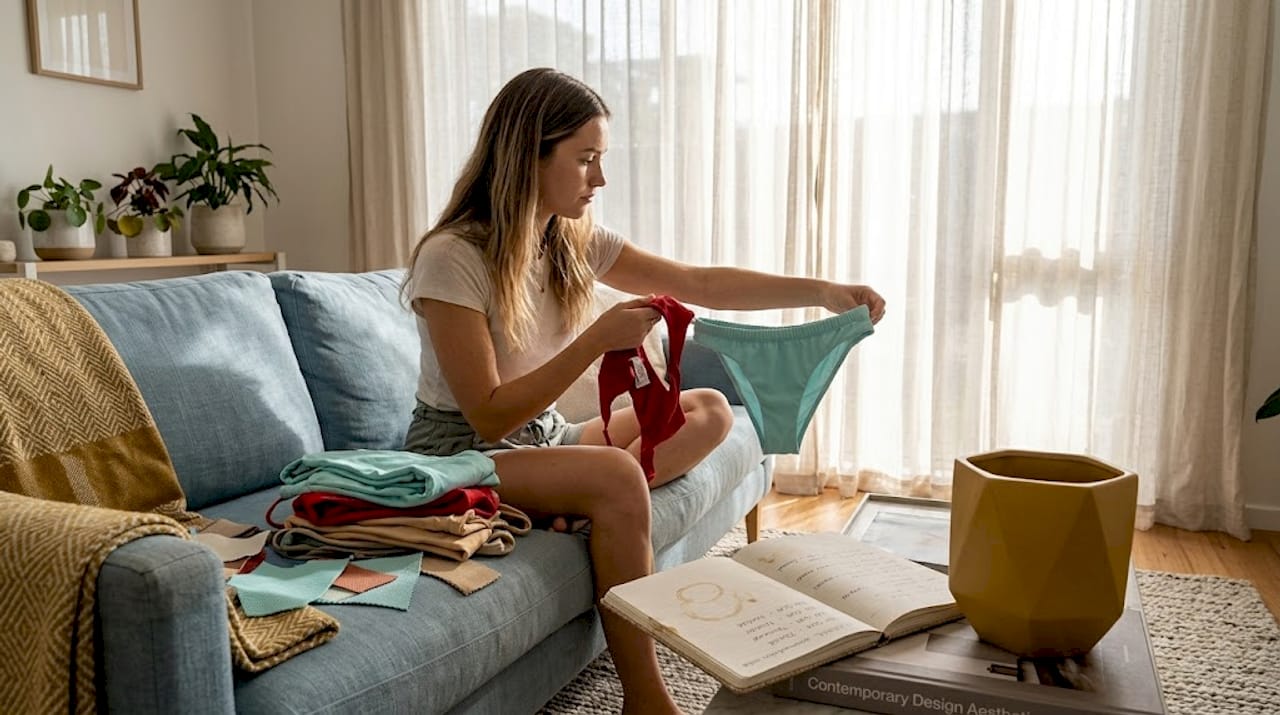
Color is not just decoration. Blue reduces stress and calms in social environments, while red projects confidence and passion. There is no universally “most attractive” shade, but color does aid emotional regulation and shapes how others perceive you. That means your color choice carries real, measurable weight in social beach settings.
For a calm, resort feel, cool blues, soft aquas, and sandy neutrals work well. For a bold, social statement, reds, deep corals, and vibrant prints draw attention. Earth tones like terracotta and olive have become popular in recent seasons because they signal relaxed elegance without trying too hard.
Fabric weight is measured in GSM (grams per square meter). This single number tells you more about a garment’s quality and intended use than almost any other data point.
| Fabric Weight (GSM) | Category | Best Use |
|---|---|---|
| 180–200 GSM | Fashion swimwear | Lounging, resort, casual swim |
| 210–250 GSM | Performance swimwear | Active swimming, water sports |
| 150–175 GSM | Lightweight coverups | Transitional layering |
Fashion swimwear sits at 180–200 GSM, while performance swimwear uses 210–250 GSM for greater support and durability under active use. Interlock spacer fabrics used in high-quality pieces can elongate 422–518%, giving both stretch comfort and shape retention over time.
Fit is where most people make the biggest mistakes. A piece can be the right color and right fabric weight but still feel wrong because the fit does not match the wearer’s body shape.
Research shows that clothing pressure is higher on hourglass bodies, averaging 36.73 kPa, compared to rectangle body shapes at 32.03 kPa. That means hourglass figures feel more restriction from the same garment that sits loosely on a straighter frame. This is why sizing up or choosing designs with adjustable straps and ties often works better for more curved frames.
Here is a practical guide for fit decisions:
Pro Tip: When checking fit online, look at the fabric composition, not just the size chart. A piece with 20% or more elastane (spandex) will stretch and recover far better than one with only 10%.
Use our fit guide for beachwear to match these principles to specific piece types. Understanding these crucial design elements lets us explore how style choices play out across different beachwear categories.
Here is a tension most swimwear brands do not address directly: style and swim performance often pull in opposite directions. Resort-forward pieces use lighter fabrics, softer construction, and decorative elements that look great on a sunbed but lose shape quickly in the water. Performance pieces use compression-grade fabrics and minimal detailing that hold up lap after lap but rarely photograph well at a rooftop pool.
Fashion-forward resort pieces sacrifice swim performance for elegance, while performance-oriented swimwear prioritizes fit and support over trends. Neither category is better in absolute terms. The question is what you actually need the piece to do.
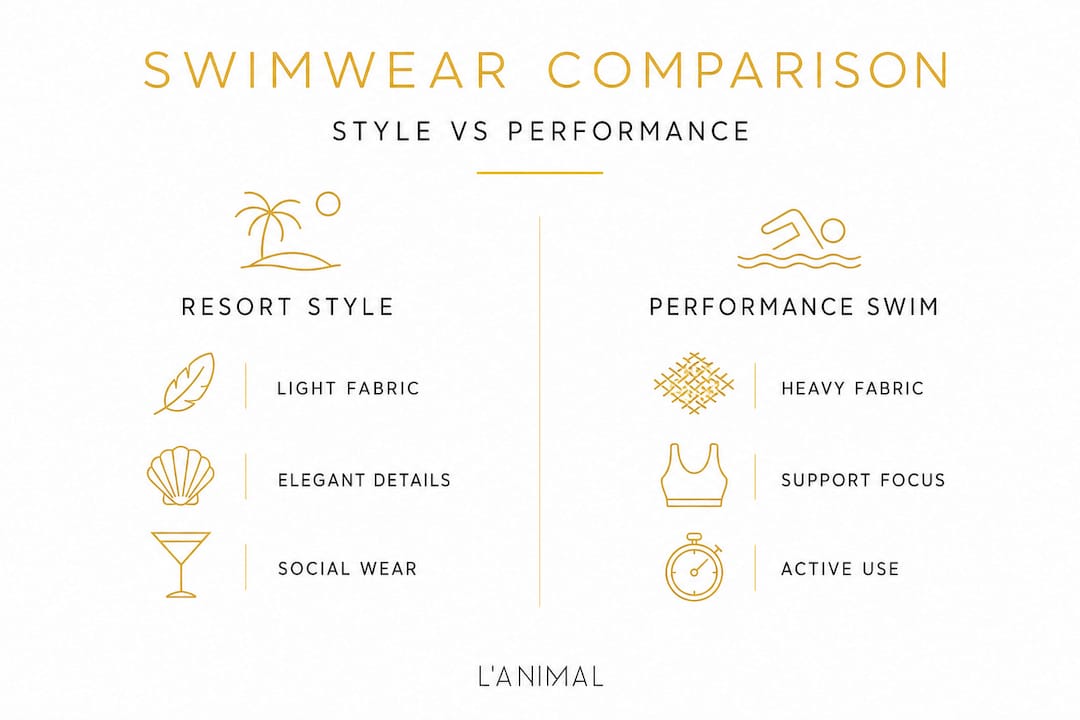
Here is a side-by-side comparison to make the trade-offs visible:
| Feature | Resort Style | Performance Swimwear |
|---|---|---|
| Fabric weight | 180–200 GSM | 210–250 GSM |
| Primary purpose | Aesthetics, lounging, socializing | Active swimming, water sports |
| Embellishments | Frequent: hardware, ruffles, prints | Minimal or none |
| Shape retention in water | Moderate | High |
| Versatility out of water | High | Low |
| Price point | Moderate to high | Moderate to high |
Current trends add another layer to this trade-off. Maximalist prints and embellishments compete directly with minimalist earth tones. Sporty compression styles sit alongside soft, draped resort silhouettes. Tan-through fabrics, which allow UV rays to pass through the fabric for an even tan, challenge traditional UV-protective materials that block more rays.
Considerations worth thinking through before you buy:
Understanding custom bikini trade-offs helps clarify when it is worth investing in made-to-measure options versus buying off the rack. For event-specific occasions, like a pool party, our pool party outfit ideas guide makes the selection process faster and more targeted.
Pro Tip: Buy two core pieces per season: one true resort piece for social and transitional use, and one performance piece for active days. That split removes the style-versus-performance tension entirely.
With these style-versus-performance nuances in mind, we can turn to real-world strategies for making smart beachwear choices.
The gap between knowing what makes good beachwear and actually buying the right piece is where most people get stuck. These steps give you a clear, repeatable process that works for both men and women across different body types and activity levels.
Define your desired vibe first. Before looking at any piece, decide what feeling you want to project. Calm and elegant? Bold and social? Athletic and capable? That decision filters out 80% of irrelevant options immediately. Self-expression, confidence, and versatility all start with knowing your intended context.
Assess your activity mix. Will you be resort lounging, casual swimming in calm water, or doing actual water sports? This determines the minimum fabric weight and construction you need. Most people overestimate how much performance they need and buy pieces that are too structured for primarily social use.
Check fabric weight and composition. Look for the label. Fashion swimwear should be 180–200 GSM. Performance should be 210–250 GSM. Aim for at least 15–20% elastane for meaningful stretch and shape retention. Anything below 10% elastane will lose its shape faster with repeated use and chlorine exposure.
Match fit to your body type. Use the body-type fit guide outlined in the previous section. Pay attention to adjustable elements, especially ties, straps, and underwire options. These allow fine-tuning that standard sizing cannot deliver.
Test for versatility. A piece earns its price if it can work in at least two different contexts. A structured bikini that also looks right with a sarong at lunch, or boardshorts that read as casual streetwear, give you more use per wear. Check our complete beachwear guide for specific examples of versatile pieces.
Consider coverage and occasion. For men, our guide to boardshorts breaks down length, liner options, and fabric types in detail. For women, coverage preferences vary by activity, so matching neckline and bottom cut to planned activity prevents discomfort during movement.
Pro Tip: Before finalizing any online purchase, search the brand’s return policy and look for fabric composition listed in the product description. If the composition is not listed, that is a red flag about quality transparency.
Here is a quick checklist to carry into any beachwear shopping decision:
These practical steps make it easier to move beyond confusion and confidently select beachwear that is both stylish and functional.
Most articles about beachwear avoid saying this directly: when you choose a piece for its elegance, you are almost always giving something up in functional terms. That is not a flaw. It is just an honest trade-off that deserves to be named clearly.
Fashion-forward resort pieces demand trade-offs that active use simply cannot accommodate. A beaded strap or a structured underwire cup looks sharp on a resort lounger, but it will not hold through aggressive swimming or a kayaking session. Soft, draped fabrics that move beautifully on the beach lose their structure in the water after one wave.
The issue runs deeper than just construction. Support and comfort rarely align perfectly with what is trending. Trending silhouettes are designed to photograph well and follow cultural aesthetics, not to distribute pressure evenly across different body types or to stay in place during physical movement. Most shoppers do not know this until they experience it directly.
The practical lesson: invest in timeless, versatile pieces rather than chasing what is current right now. A well-made solid-color piece in a flattering cut will serve you across multiple seasons and multiple contexts. A heavily embellished, trend-specific piece may look current for one summer and feel dated by the next. The math on cost-per-wear is not even close.
Reading sustainable bikini advice reinforces this point. Quality materials and considered construction outlast trend cycles. That is not just an environmental argument. It is a practical one. Pieces built with care retain their color, shape, and fit longer, which means better value over time and less frustration at the start of every beach season.
If the decision criteria above resonated with you, the next logical step is finding pieces that actually meet them without extensive searching.
At L’ANIMAL, designer and stylist Lital Simel-Rhedrick built the collection specifically around timeless design, quality construction, and versatility for both men and women. Every piece reflects attention to fabric, fit, and detail. The sculpting one-piece swimsuits collection offers structured, flattering options that move between water and resort settings with ease. The watercolor bikini top delivers bold, artistic color in a well-constructed cut. The sportif bikini bottom bridges the gap between active fit and clean aesthetic. Free shipping is available on all US orders over $150.
Blue reduces stress and calms in social environments, while red projects confidence and passion. There is no universally most attractive shade, but your color choice actively shapes both your emotional state and how others perceive you.
Fashion swimwear uses 180–200 GSM, while performance swimwear uses 210–250 GSM for greater support and durability. Match the weight to your primary use case, whether that is resort lounging or active swimming.
Yes. Resort pieces favor elegance and aesthetic appeal, which typically means lighter construction, decorative elements, and fabrics that lose shape in the water more quickly than performance-grade materials.
Hourglass figures experience higher average clothing pressure at 36.73 kPa compared to rectangle body shapes at 32.03 kPa, which means the same garment can feel significantly tighter on a curved frame than a straighter one.


