Free Shipping on US orders over $150
-
Collections
-
Bikini
- One Pieces
- Cover-Ups
- Men's
- Sale
- MODA GLAM x L'ANIMAL
- Nice Breed
-


Most people pack for a beach vacation treating swimwear and beachwear as the same thing, then arrive with a suitcase full of gaps. The truth is, understanding what is beachwear vs swimwear shapes every purchase decision you make before a holiday. Dictionary definitions actually anchor the two terms to distinct purposes: swimwear is clothing built for water activities, while beachwear covers the broader category of what you wear in the beach environment. Knowing the difference means smarter packing, better outfits, and clothing that actually performs when you need it to.
| Point | Details |
|---|---|
| Beachwear is for the beach | Beachwear includes clothes worn on the beach but not necessarily for swimming, such as cover-ups and wraps. |
| Swimwear is water-ready | Swimwear is designed specifically for swimming and other water activities with quick-drying, durable fabrics. |
| Functional fabric differences | Swimwear uses synthetic, fast-drying materials; beachwear favors breathable, comfortable fabrics for after-swim wear. |
| Smart shopping means knowing | Understanding these categories helps you buy the right pieces for comfort, style, and utility on vacation. |
| Versatile styling tips | Combine swimwear with matching beachwear cover-ups to create stylish and practical vacation outfits. |
The confusion starts because both categories appear in the same retail sections, often side by side. But their definitions are distinct. Beachwear describes clothing worn on a beach, not necessarily designed for swimming. It is the umbrella term for the full range of what you might put on from the moment you arrive at the shore to the moment you leave. Swimwear, by contrast, is clothing specifically engineered for swimming and water activities.
This distinction matters in practice. A linen cover-up you throw over your shoulders while walking the boardwalk is beachwear. The bikini or one-piece you actually swim in is swimwear. Both can appear in the same outfit, but they are serving completely different functions. Understanding that separation is the foundation of building a well-balanced beachwear wardrobe.
Beachwear typically includes:
Swimwear typically includes:
The overlap occurs because swimwear is often the foundation layer of a beachwear outfit. You put on your swimsuit first, then layer beachwear pieces on top. Strip the layers away and you are back to swimwear alone.

The material difference between these two categories is where function truly separates from fashion. Swimwear fabrics are purpose-built for water. Nylon and polyester blended with spandex (also called elastane) dominate swimwear construction because they dry fast, hold their shape after repeated stretching, and resist chlorine and saltwater degradation. A swimsuit that absorbs water and goes saggy is a design failure.
Beachwear operates under different rules. Quick-drying and stretch-recovery fabrics matter for transition wear, but beachwear also incorporates natural fibers like linen, cotton, and silk because comfort in the sun and breeze takes priority over water performance. A linen kaftan will wilt if you swim in it, but it is perfect for lunch at an open-air restaurant after a morning in the water.
Key functional differences to know:
Pro Tip: When shopping online, check the fabric composition in the product description. If you see 80% nylon / 20% spandex, that is a swimwear fabric. If you see linen, cotton, or rayon, it is beachwear. This single detail prevents most purchase regret. Explore the bikini shopping checklist and the reasoning behind custom bikini fits to make more informed decisions.
| Feature | Swimwear | Beachwear |
|---|---|---|
| Primary use | Water activities, swimming | Beach environment, sun, sand |
| Typical fabrics | Nylon, polyester, spandex | Linen, cotton, rayon, blended synthetics |
| Fit | Form-fitting, secure | Ranges from fitted to relaxed |
| Water performance | Quick-dry, shape-retaining | Variable, often not water-optimized |
| Design focus | Athletic function, coverage | Style, comfort, versatility |
| Examples | Bikinis, one-pieces, boardshorts | Cover-ups, kaftans, beach dresses, shorts |
The table above covers fabrics, but the swimwear vs beachwear difference runs deeper when you factor in care, longevity, and how each category fits into your overall vacation packing. Beachwear focuses on durability, quick-drying, and transition wear while swimwear targets water submersion and sunbathing functions.
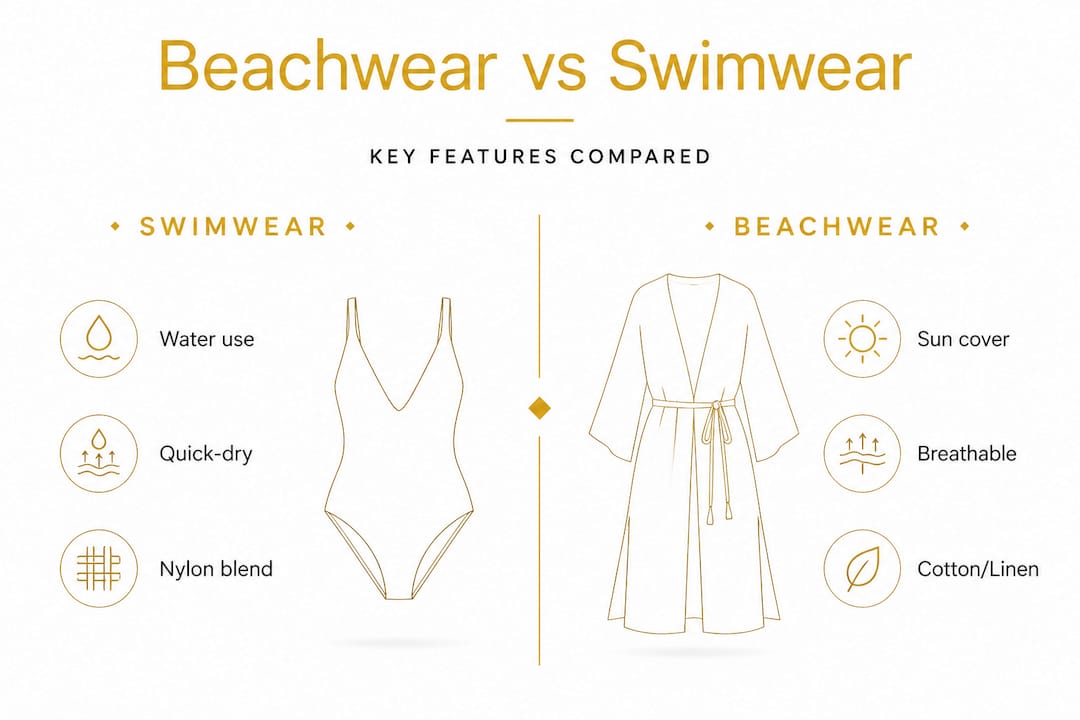
What does that mean for real-world use? If you wear a swim bikini as a top with shorts for dinner, you are repurposing swimwear as beachwear. That works stylistically, but the fabric was not designed for prolonged sun and sweat exposure outside the water. It holds up, but dedicated beachwear fabrics are more comfortable in that context.
Items commonly found in each category:
Swimwear:
Beachwear:
Understanding this list helps you pack with intention. Two swimwear pieces plus three versatile beachwear items can create more than six different outfit combinations on a one-week trip. That is the practical payoff of keeping these categories separate in your head. Explore how style shapes confidence in beachwear for a deeper look at building a cohesive beach wardrobe.
Knowing the definitions is one thing. Knowing what to actually buy and how to combine pieces is where theory becomes a wardrobe. Here is a practical approach:
Start with swimwear as your foundation. Choose two to three swimwear pieces in colors or prints that coordinate with each other. One-pieces and bikinis serve different purposes: bikinis allow for easy bathroom breaks; one-pieces often provide better support for active water sports.
Build beachwear around your swimwear palette. If your swimwear leans toward warm tones, choose cover-ups and wraps in complementary neutrals. This allows you to layer without clashing.
Prioritize fabric for your climate. Hot, humid destinations call for linen and loose cotton beachwear. If you plan to be in and out of the water frequently, look for beachwear with at least some synthetic content so it dries faster when it catches splash.
Layer intentionally for sun protection. A cover-up is equally important when you are done splashing in the ocean, to stay cool and stylish. UV-protective rash guards and lightweight long-sleeve cover-ups serve this function without sacrificing your look.
Think about transitions. Many beach vacations move from sand to lunch to shopping without a wardrobe change. Beachwear pieces that work in all three settings, such as a linen dress over a swimsuit, earn their place in your bag.
Pack light by choosing versatile pieces. A sarong functions as a beach wrap, a skirt, a top, and even a light blanket. One item, four uses.
Pro Tip: Mix prints and solids strategically. A printed swimsuit pairs well with a solid cover-up, while a printed cover-up works best over a solid swimsuit. This one rule prevents most outfit clashes at the beach. For a full framework on building your travel wardrobe, the vacation wardrobe guide and the beach trip packing checklist are worth bookmarking before your next trip.
Most shoppers browse beach collections and buy based on how something looks on a hanger or model, without considering whether it is swimwear or beachwear. That leads to buying a beautiful piece that turns out to be completely wrong for its intended use. A stunning crochet dress is beachwear. Wear it in the ocean and it stretches out, takes forever to dry, and possibly never looks the same again.
Store labeling often blurs these lines, with collections that blend water-compatible and after-water pieces under one broad “beachwear” banner. This is not always a mistake from retailers, it reflects genuine consumer demand for versatile pieces. But it puts the responsibility on you to know what you are buying.
There is also a sustainability angle worth considering. When you understand exactly what each piece is designed to do, you stop buying duplicates and start buying intentionally. One quality one-piece swimsuit used 40 times is a better purchase than three cheaply made swimsuits that each get worn twice before the elastic degrades. The same logic applies to beachwear. A well-made linen cover-up that travels with you every summer for four years is better for your wallet and the environment than four seasonal fast-fashion wraps.
The emotional benefit is real too. Arriving at a beach destination knowing you have exactly the right pieces, swimwear for the water and beachwear for everything else, removes a specific kind of travel stress. You can focus on wearing your beachwear with genuine confidence instead of improvising with pieces that were never meant for that context.
L’ANIMAL CO was built around one purpose: swimwear and beach style that performs as well as it looks. Designer Lital Simel-Rhedrick created the brand to fill a gap between purely functional swimwear and purely decorative beach fashion. The result is a collection that covers both sides of the beachwear vs swimwear equation.

The luxury one-piece swimsuits combine sculpting construction with fabrics that hold up in saltwater and chlorine, built for actual water use. For color and print options, the watercolor bikini top is a strong starting point. And if you want to see the full range, the complete collections cover swimwear for both women and men, along with influencer collaborations that bring fresh styling perspectives to each season.
Some beachwear items can handle getting wet, but they lack the quick-dry and shape-retention of proper swimwear, so beachwear blends water-compatibility with after-water use rather than replacing swimwear for actual water activities.
A swimsuit is technically swimwear, but it becomes part of a beachwear outfit when layered with cover-ups or other beach clothing items like wraps, shorts, or dresses.
Swimwear uses high-performance synthetic blends like nylon and spandex for quick drying and durability, while beachwear favors breathable natural fibers like linen and cotton for post-swim comfort and style.
Bring two to three core swimwear pieces and layer them with versatile beachwear like cover-ups and lightweight wraps. A cover-up after swimming keeps you stylish and comfortable during the transition from water to sand to wherever the day takes you.


