Free Shipping on US orders over $150
-
Collections
-
Bikini
- One Pieces
- Cover-Ups
- Men's
- Sale
- MODA GLAM x L'ANIMAL
- Nice Breed
-


Forgetting sunscreen, a towel, or even a change of clothes can turn a great beach day into a frustrating one fast. A solid beach packing checklist is the difference between showing up prepared and spending money at overpriced resort shops. This guide breaks down exactly what to bring to the beach, how to organize it, and which items matter most depending on your trip type. From sun safety to snacks, you will leave nothing behind.
| Point | Details |
|---|---|
| Use a categorized checklist | Organize items by sun care, clothing, food, and safety to pack faster and forget less. |
| Sunscreen application matters more than SPF number | Apply the right amount and reapply every two hours for real protection. |
| Know rip current basics | Swim parallel to shore if caught in one. Panic is the main danger, not the current itself. |
| Match your list to your trip type | A solo day needs less than a family beach trip. Prioritize by context. |
| Store your checklist with your gear | Keeping a physical list in your beach bag or car cuts prep time and reduces stress. |
Before you pack a single item, think about what kind of trip you are taking. A quick solo afternoon at the beach looks very different from a full-day family beach packing guide with kids, snacks, and floats.
Ask yourself these questions before building your list:
Pro Tip: Write your checklist once, print it, and tape it inside your beach bag. Every time you pack, run through it. Keeping a master checklist physically nearby your gear reduces anxiety and prevents repeat mistakes.
This is the core of any beach vacation checklist. Breaking items into categories makes packing faster and spotting gaps easier.
Clothing
Your swimwear is the foundation. Pack at least two suits if you are staying multiple days. A rotating two-suit system lets one dry fully while you wear the other. Damp suits cause skin irritation over time. Add a cover-up or loose linen shirt for walking to lunch or resting in the shade. Flip flops work for the boardwalk. Water shoes matter on rocky or reef-heavy shores.
Do not forget a wide-brim hat. It protects your face, ears, and neck without requiring reapplication. For tips on choosing the right beachwear for both function and style, check out Lanimal’s fit guide.
Sun care
This category has the highest stakes. SPF 30 blocks 97% of UVB rays and SPF 50 blocks 98%. The jump is minimal. What matters far more is how you apply it and how often. Pack at least one full-size bottle of SPF 30 or higher, a lip balm with SPF, and after-sun lotion for the ride home.
Also note: sunscreen at beach resorts costs 200 to 300 percent more than at local stores. Pack it in advance.
Accessories
A microfiber towel saves space compared to a standard bath towel. A beach umbrella or pop-up tent gives you a shaded base. A waterproof phone case protects your device during water activities. A dry bag or zip-lock pouches keep valuables safe from sand and splash. Sunglasses with UV protection are non-negotiable, not optional.
Food and hydration
Pack a reusable water bottle per person, and plan to refill it. Dehydration hits fast in the sun. A soft-sided cooler keeps drinks cold and doubles as a seat. For snacks, go for items that do not melt or spoil quickly: trail mix, cut fruit, granola bars, and hard cheese. Avoid anything in glass containers at public beaches, as many prohibit them.
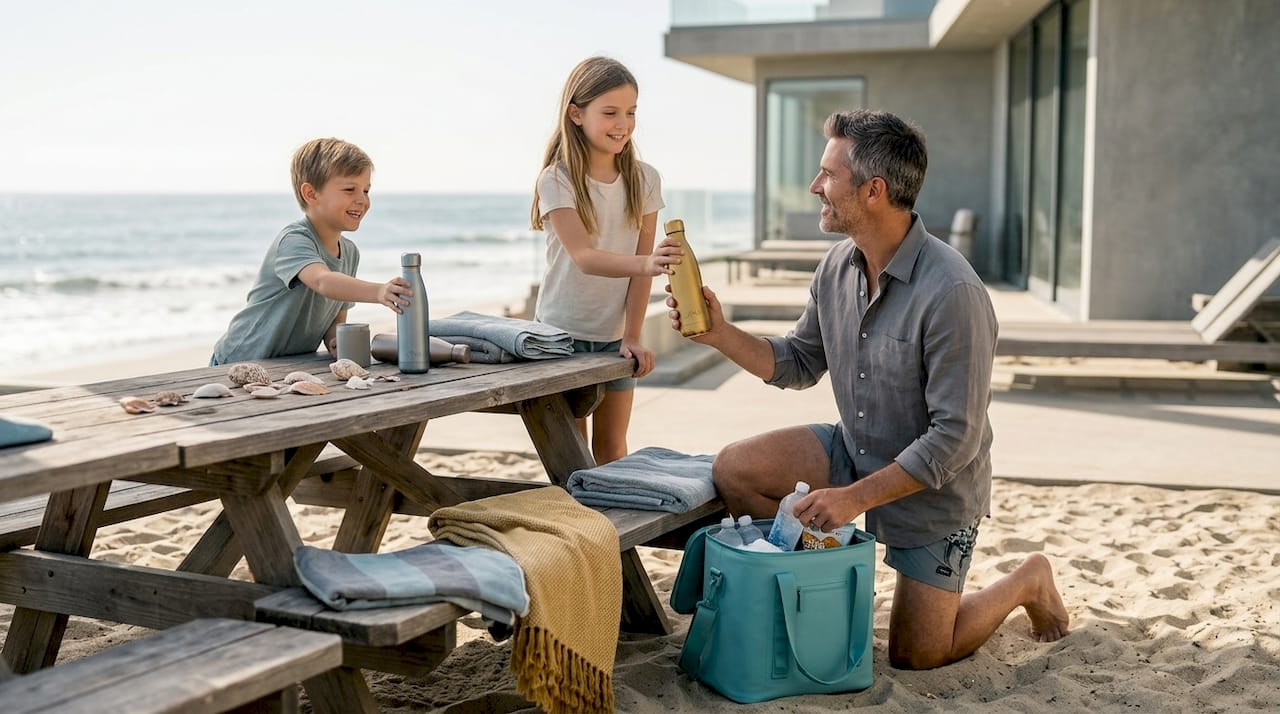
Pro Tip: Freeze a water bottle the night before and pack it at the bottom of the cooler. It acts as an ice pack and turns into cold water as it melts.
Safety gear
A basic first-aid kit should include adhesive bandages, antiseptic wipes, and pain relievers. If you have kids, add children’s sunscreen, a rash guard, and puddle jumpers or life vests. A whistle is small but useful if someone needs to signal for help. Rip current flags and warnings are posted at most lifeguarded beaches. Check them before entering the water.
Not every item deserves equal space in your bag. This table helps you prioritize based on trip type.
| Item | Must-pack | Nice to have | Best for |
|---|---|---|---|
| Sunscreen SPF 30+ | Yes | All trips | |
| Microfiber towel | Yes | All trips | |
| Reusable water bottle | Yes | All trips | |
| Wide-brim hat | Yes | Sun-heavy days | |
| Beach umbrella or tent | Yes | Full day or family trips | |
| Waterproof phone case | Yes | Water activities | |
| Dry bag | Yes | Active water sports | |
| Beach games (frisbee, paddle) | Yes | Group or family trips | |
| Portable speaker | Yes | Solo or group days | |
| Snorkel gear | Yes | Clear water destinations | |
| Extra outfit or coverup | Yes | Multi-activity days | |
| First-aid kit | Yes | Family trips and remote beaches |
When space is tight, focus on the must-pack column first. Active water sports days and family trips justify bringing more from the nice-to-have column. For a solo reading day, you can cut that list in half.
The checklist only works if you actually use it well. These tips sharpen your packing routine and keep you safer once you are there.
Sunscreen application done right
An average adult needs a full shot glass of sunscreen per application to cover the face and body effectively. Most people use a fraction of that. Apply sunscreen 15 to 20 minutes before going outside if you are using a chemical formula. Chemical sunscreens need time to absorb before they become effective. Reapply immediately after swimming or towel drying.
Only 14% of beachgoers reapply sunscreen at recommended intervals. That means most people are unprotected well before their beach day ends. Set a phone timer for every two hours as a reminder.
If you use spray sunscreen, apply generously and rub it in. Avoid spraying directly on your face. Uneven coverage is common with sprays and harder to detect until it is too late.
Water safety and rip currents
Rip currents can reach 8 feet per second, faster than an Olympic swimmer. You cannot outswim one by heading straight to shore. Swim parallel to the shore to escape the current’s pull, then angle back in once you are free of it.
Rip currents do not pull you under. They pull you away from shore. Panic is what leads to drowning. Float, conserve energy, and signal for help if you are too exhausted to swim.
Rip currents can form on calm, sunny days caused by distant storms. Never assume still-looking water is safe. Check posted beach flags and talk to lifeguards before swimming.
Packing and organization tips
Pro Tip: A master checklist stored with your gear cuts your packing time in half on repeat trips. Use the list in this article as your starting template and customize it once for your usual beach crew.
I have seen the same mistakes happen repeatedly at the beach. People bring four towels but forget after-sun lotion. They pack a full cooler but leave the sunscreen on the kitchen counter. The problem is not effort. It is the absence of a system.
What changed my beach days was treating the checklist as permanent gear rather than a pre-trip task. My list lives clipped inside my beach bag. I refresh it after every trip, not before. That shift removed almost all the stress from packing.
The sun safety piece is the one I take most seriously. I have seen people burn badly in under two hours because they skipped reapplication. Dermatologists confirm SPF 30 works when applied correctly and reapplied on schedule. The product is not the issue. The habit is.
Style also matters, and I refuse to sacrifice it for practicality. A well-chosen swimsuit that fits properly performs better in the water and looks better out of it. Grabbing whatever is available usually means you are uncomfortable by noon. Picking pieces intentionally, ones that support both activity and your personal style, makes the whole day feel better.
The checklist and the wardrobe work together. Neither one is an afterthought.
— Lital
Your beach packing checklist covers the gear. Lanimal covers the swimwear.

Lanimal designs swimwear built for real beach days, not just photos. Every piece is made with attention to fit, fabric quality, and staying power in the water. The luxury one-piece swimsuits are sculpted for comfort and confidence, whether you are swimming laps or lounging under the umbrella. If you prefer a two-piece, the Sportif Bikini Bottom is designed for active beach use without compromising on style.
For those who want a statement piece, the Sail One-Piece Swimsuit uses Italian fabric with mesh detail that holds its shape through a full day in the sun and water. Pair it with the Watercolor Bikini Top for a mix-and-match look that fits right into any beach fashion essentials list.
Browse the full collection at lanimal.co and find the pieces your checklist is missing.
The core items are sunscreen, a towel, water, snacks, a hat, sunglasses, a swimsuit, and a cover-up. Add a first-aid kit and waterproof case for longer or more active trips.
Pack at least one full-size bottle per person for a full day. An average adult needs 1.5 ounces per application and should reapply every two hours or after swimming.
Families should add children’s sunscreen, rash guards, life vests or puddle jumpers, extra snacks, a portable first-aid kit, and beach toys or games. A pop-up tent for shade is especially useful with young kids.
Both work well. SPF 50 offers only slightly more protection than SPF 30 and consistent reapplication matters far more than the SPF number you choose.
Do not swim directly toward shore. Swim parallel to the shoreline to escape the current, then angle back toward the beach. Float and signal for help if you are too tired to swim out.


