Free Shipping on US orders over $150
-
Collections
-
Bikini
- One Pieces
- Cover-Ups
- Men's
- Sale
- MODA GLAM x L'ANIMAL
- Nice Breed
-


Most people grab a regular swimsuit and a bottle of sunscreen before heading to the beach, assuming that combination covers them fully. It doesn’t. What is UPF swimwear, and why does it offer something standard swim fabric simply cannot? UPF swimwear is clothing built with fabrics engineered to physically block ultraviolet radiation from reaching your skin. Unlike a regular swimsuit, which may let a significant amount of UV rays through, UPF garments are rated and tested for their blocking ability. For swimmers, beachgoers, and anyone spending real time outdoors in water, understanding this difference is the starting point for smarter sun protection.
| Point | Details |
|---|---|
| UPF is not SPF | UPF rates fabric protection, while SPF rates sunscreen. They measure completely different things. |
| UPF 50+ blocks 98% of rays | Fabrics rated UPF 50+ allow only 2% of UV radiation to penetrate, covering both UVA and UVB. |
| Protection stays in water | UPF protection is built into the fabric structure, so it does not wash out or diminish when wet. |
| Certification matters | Look for the Skin Cancer Foundation Seal of Recommendation to verify a product has passed lab testing. |
| Layering is necessary | UPF swimwear covers what it covers. Sunscreen, hats, and sunglasses are still needed for exposed skin. |
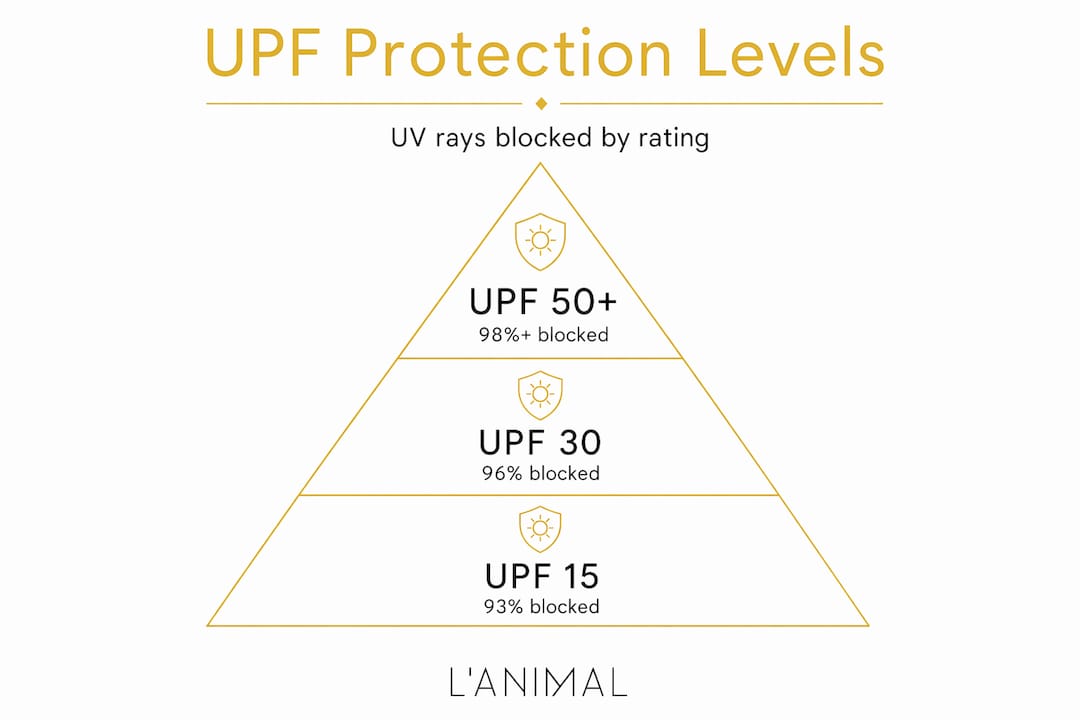
UPF stands for Ultraviolet Protection Factor. It is a textile rating that measures how much UVA and UVB radiation a fabric allows to reach your skin. The number tells you the fraction of UV rays that pass through. A fabric rated UPF 50 lets 1/50th of UV radiation through, which translates to about 2% penetration and 98% blockage.
This is where most people get the comparison wrong. SPF, the number on your sunscreen bottle, measures how long skin takes to burn when a product is applied versus unprotected skin. SPF is time-based and specific to UV rays causing sunburn. UPF covers the full UV spectrum, blocking both UVA rays, which drive skin aging and deeper tissue damage, and UVB rays, which cause sunburn and are linked to skin cancer risk.
Here is what the UPF scale looks like in practical terms:
| UPF Rating | UV Rays Blocked | UV Rays Transmitted | Protection Category |
|---|---|---|---|
| UPF 15 | ~93% | ~6.7% | Good |
| UPF 30 | ~96.7% | ~3.3% | Very Good |
| UPF 50 | ~98% | ~2% | Excellent |
| UPF 50+ | 98% or more | 2% or less | Maximum |
The practical gap between UPF 15 and UPF 50+ is real. At UPF 15, roughly 1 in 15 UV rays still reach your skin. At UPF 50+, only 1 in 50 does. For anyone spending hours on the water or at the beach, that difference accumulates fast.
Pro Tip: Not all UPF fabric performs equally. Darker colors and tighter weaves typically deliver higher ratings than light, loosely woven materials, even at the same labeled UPF number.
The biggest functional advantage of UPF swimwear over sunscreen is consistency. Sunscreen requires reapplication every two hours, and water washes it off faster than most people realize. UPF protection, by contrast, is built into the fabric fibers and structure of the garment. You put it on, and it works the entire time you wear it.
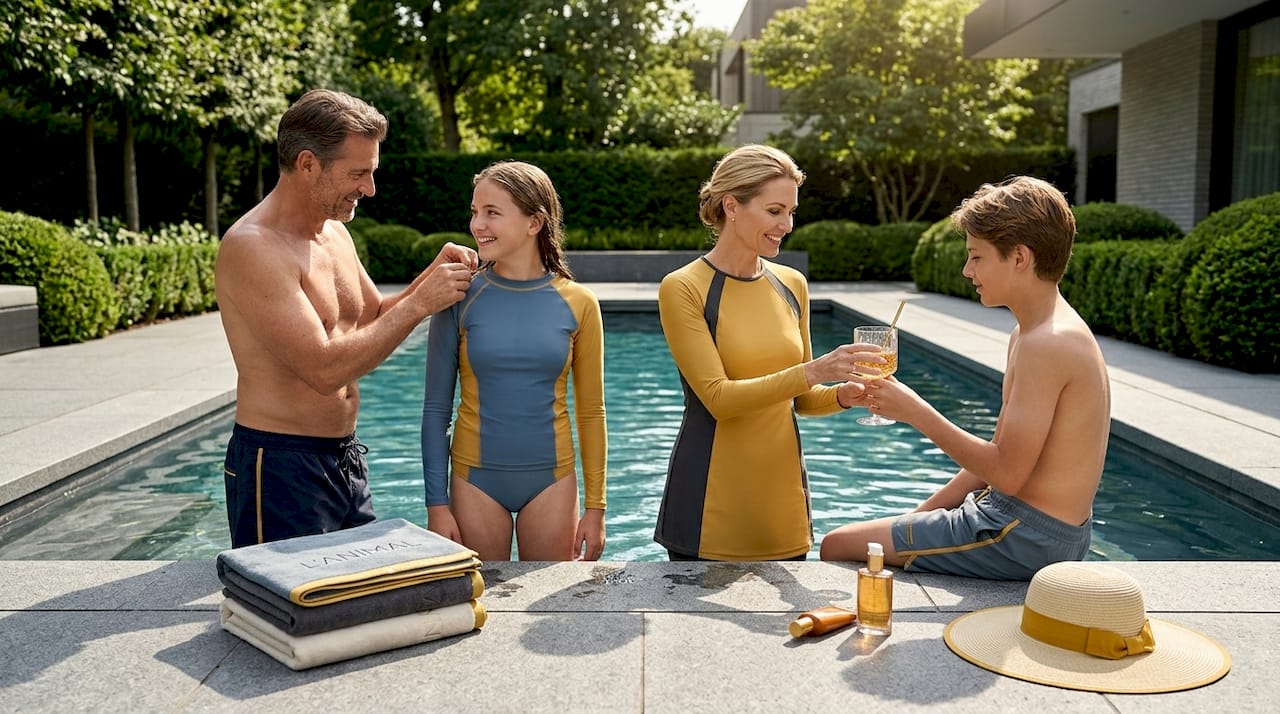
Regular swimwear fabric, even when wet, can let a substantial amount of UV radiation through. A thin, light-colored standard swimsuit offers almost no measurable UV protection. UPF swimwear uses synthetic fibers like polyester and nylon with specific weave densities designed to physically and chemically absorb or reflect UV rays before they contact skin.
A few things determine how effective your UPF swimwear will actually be in practice:
Pro Tip: Apply sunscreen to the skin around your swimwear edges before you dress. Once you’re in the water, those borders are the hardest spots to reapply, and they’re directly exposed.
Swimmers often underestimate UV exposure in water. Water reflects UV rays back up at your face and neck, increasing exposure on skin that isn’t covered by your suit. A layered protection approach, combining UPF swimwear for covered skin with broad-spectrum sunscreen for everything else, is what dermatologists consistently recommend.
A UPF label on a hang tag is not the same as verified protection. Any brand can print “UPF 50+” on a garment without independent testing. This is where certification standards matter.
The Skin Cancer Foundation Seal of Recommendation is the most recognized marker in this space. The Seal requires minimum UPF 50 with third-party laboratory testing reviewed by the Foundation’s Photobiology Committee, a panel of certified dermatologists and photobiologists. Products earn the Seal individually, not by brand. That means a brand can have a Seal on one product and not on another.
The Skin Cancer Foundation has also updated its minimum UPF requirement to 50 for Seal eligibility, raising the standard beyond what it previously accepted. This reflects increasing evidence that higher UV protection levels meaningfully reduce long-term skin damage risk.
Here is a quick breakdown of what separates credible UPF swimwear from marketing noise:
When a product carries the Skin Cancer Foundation Seal, you can verify the claim against a published, medically reviewed standard. When it doesn’t, you’re relying on the brand’s own word.
Knowing what UPF swimwear is gets you halfway there. Choosing the right piece for your activity and using it correctly gets you the rest of the way.
For a practical pre-trip checklist when selecting vacation swimwear, the bikini shopping checklist at Lanimal covers fit, function, and certified sun protection in one place.
I’ve worked with swimwear fabrics long enough to say this clearly: most people shopping for swimwear are still not asking whether a piece actually blocks UV radiation. They’re thinking about cut, color, and how it looks. That’s understandable. But it’s also the reason so many people end up with a beautiful suit that offers essentially no sun protection.
What I’ve seen consistently is that consumers assume any swimwear sold at a decent price point includes sun protection. It does not. The fabric specification matters enormously, and most brands do not disclose it because they’re not required to. When I design or curate swimwear, the fabric’s UV blocking ability is part of the brief from the start, not an afterthought added to the marketing copy.
The other mistake I see often is people treating UPF swimwear as a full solution. It covers what it covers. Your face, neck, and the tops of your feet are almost always exposed, and they’re often the first places sunburn shows up. The right approach is UPF swimwear as the foundation, with sunscreen and accessories filling the gaps. That layered system is what the research supports, and it’s what I recommend to anyone spending real time near water.
— Lital
Lanimal was built around the idea that protection and style are not trade-offs. Lital Simel-Rhedrick designed the collection to meet both standards without compromise.

The Lanimal collection includes one-piece swimsuits crafted with sculpting fits and sun-protective fabrics built to perform in and out of the water. Each piece is selected for quality of construction, including fabric density and composition that supports real UV protection. For active swimmers and beach-focused travelers, the range gives you coverage that holds up session after session. Browse the full collection to find pieces that match your sun safety needs and your personal style.
UPF stands for Ultraviolet Protection Factor and measures how much UV radiation a fabric blocks. A UPF 50 rating means the fabric blocks 98% of UV rays, allowing only 2% to reach your skin.
UPF swimwear provides consistent, no-reapplication protection on covered skin, while sunscreen washes off and requires reapplication every two hours. Using both together gives the most complete protection.
Yes. UPF protection is built into the fabric structure, not applied as a surface treatment, so it remains effective in chlorinated or saltwater. Rinse garments after each use to preserve fabric integrity.
UPF 50+ is the highest and most protective rating available, blocking 98% or more of UV rays. The Skin Cancer Foundation Seal of Recommendation requires a minimum UPF 50 with independent lab testing.
Yes. UPF ratings cover the full UV spectrum, blocking both UVA rays that cause aging and deeper skin damage, and UVB rays that cause sunburn and contribute to skin cancer risk.


