Free Shipping on US orders over $150
-
Collections
-
Bikini
- One Pieces
- Cover-Ups
- Men's
- Sale
- MODA GLAM x L'ANIMAL
- Nice Breed
-


Men’s swimwear trends 2026 come down to two directions: shorter, tailored silhouettes that look sharp on land, and hybrid trunks with playful, considered prints that still hold their shape in the water. The inseam sweet spot typically falls around a mid range length suitable for many men, and the fabric priority is quick-dry stretch blends with real recycled content. The right brands build toward exactly this mix, pairing tailored fits with statement colorways instead of chasing every micro-trend.
TL;DR:
- Inseam lengths are shifting toward 5 to 7 inches, with 7 inches recommended as the safest middle ground for most men.
- Hybrid trunks designed for both water and land wear are now the most versatile option, suitable for beach, casual dining, and everyday activities.
- Bright saturated colors and nostalgic patterns are trending, with bold hues in warm or cool tones depending on skin undertone, paired with simple styling.
- Recycled fabric blends with four-way stretch and quick-dry properties are standard, but fit and construction quality now drive differentiation.
- A capsule wardrobe can be built with just two or three pieces, including a neutral hybrid trunk, a bolder tailored short, and an active performance option for versatility.
The shift away from baggy, knee-grazing trunks has been building for a few seasons, but 2026 is the year it becomes the default rather than the exception. Here’s what’s actually showing up on shelves and in editors’ closets.
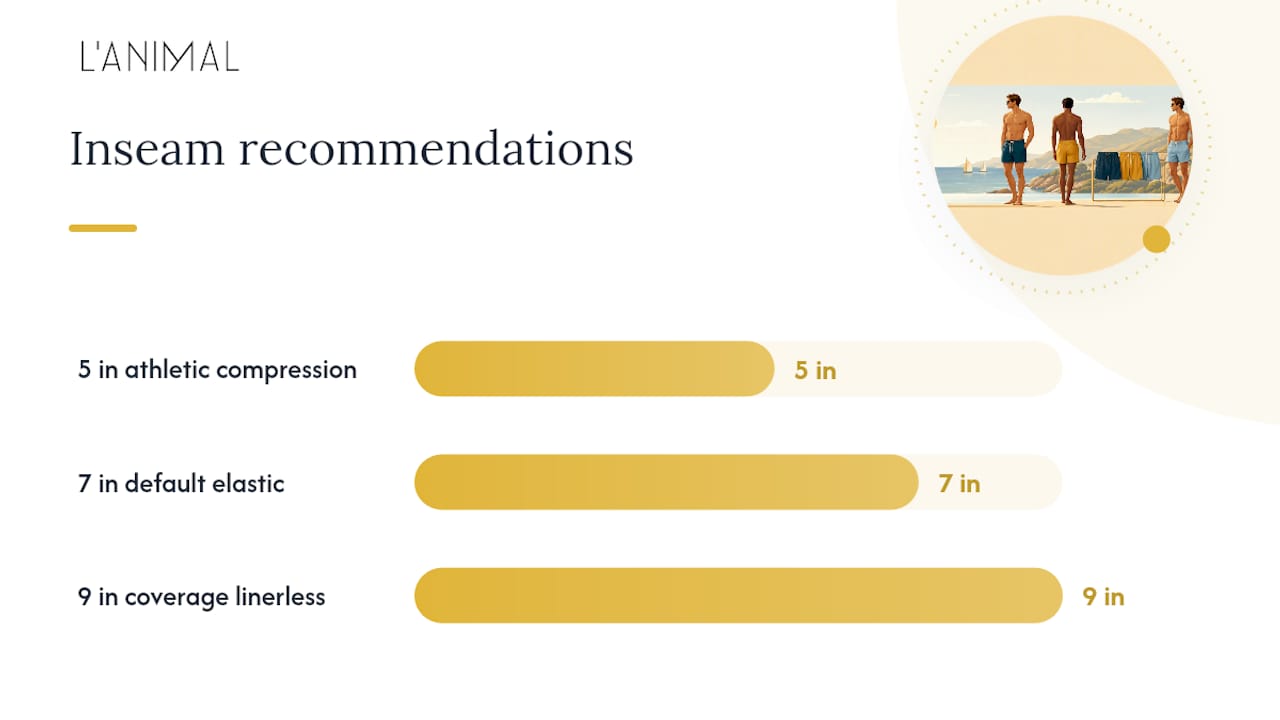
Shorter inseams (5 to 7 inches). The longer boardshort era is fading. Esquire notes inseam lengths of 5, 7, or 9 inches and calls seven inches “a good middle-of-the-road length” for most builds. Shorter hems flatter the leg and photograph better, which matters more than it used to now that every vacation ends up on a feed somewhere.
Hybrid trunks built for beach-to-bar wear. GQ has been pushing swim trunks that double as land wear: lightweight, quick-drying, and cut enough like regular shorts that you can walk into a lunch spot without changing. This is the single biggest functional shift of the year.
Dopamine color and considered pattern work. Bright, saturated shades and nostalgic prints are climbing fast. Trend roundups tracking the 2025-2026 shift describe shorter hemlines paired with bold patterns as a defining combination, with the advice to keep everything else simple when the trunk itself is loud. Pick a bold color that plays off your undertone rather than the trendiest shade of the season: warm skin tones lean into burnt orange, olive, and mustard; cooler tones read better in cobalt, magenta, and true red.
Retro athletic detailing. Side stripes, piping, and varsity-style color blocking are back, borrowed straight from '70s and '80s swim culture. It’s a low-risk way to add personality without going full print.
Florals versus geometrics, and when to wear which. Florals skew resort and dinner. Geometrics and abstract prints skew pool day and daytime. A rule of thumb: if the print has curves and organic shapes, dress it up; if it’s angular and repeating, keep it casual.
Performance and sustainable fabric blends. Recycled nylon and polyester blends with four-way stretch are now table stakes rather than a premium feature, which means the differentiator has moved to fit and finish instead.
Functional hardware as a style layer. Zip pockets, woven belts, and seersucker-textured panels are showing up across collections. GQ’s coverage of 2026 trunks flags these details as the new way brands add a tactile, slightly elevated feel without redesigning the silhouette.
A few things to skip this year:
Getting the trend right means nothing if the fit is wrong. Four decisions determine whether a pair of trunks actually works for you.
Inseam length. Five inches suits a leaner, more athletic build and reads distinctly modern. Seven inches is the safest bet for most men and the length Esquire recommends as a default. Nine inches still exists for men who want more coverage or are self-conscious about thigh definition, but it’s fading fast from the trend conversation.
Liner type. This is more personal preference than most guides admit. Extensive testing across dozens of pairs found that soft compression liners are often more comfortable than mesh briefs, while linerless trunks win on comfort and drying speed for men who wear board shorts or compatible underwear underneath. If you’re active in the water, go compression. If you’re mostly lounging poolside, linerless dries faster and avoids chafing. For more detail on how liner choice affects support and movement, this guide on lined versus unlined swim trunks breaks down the trade-offs further. A partner option worth knowing about if you want serious mesh support under looser trunks is this mesh performance boxer brief.
Waistband. Elastic waists with a drawstring are the classic swim trunk default and forgive a range of body types. A set waistband, closer to tailored shorts, gives a cleaner line for the hybrid and dinner-ready pieces and signals the “tailored” side of this year’s split.
Fabric checklist. Look for four-way stretch, quick-dry finishing, a stated recycled content percentage, and UPF protection if you’ll be in direct sun for hours.
Pro Tip: Measure your waist and hip before you buy online, check the brand’s specific inseam number rather than assuming “medium” means the same thing across labels, and confirm the return policy before committing to a print you haven’t seen in person.
You don’t need eight trunks to look current all summer. A tight capsule covers more ground than a drawer full of one-and-done prints.
Compromise on the print before you compromise on fit or fabric. A perfectly fitted neutral trunk outlasts three ill-fitting bold ones. Save the splurge budget for tailoring and finish, not for chasing every color trend at once. To keep the fabric and color intact, rinse chlorine or salt water out promptly, skip the dryer, and lay pieces flat.
Nylon dries faster and holds color better; polyester resists chlorine damage more effectively; elastane is what gives four-way stretch its recovery. Most 2026 trunks blend all three, and the ratio matters more than the marketing name.
“Recycled nylon” without a number attached is a claim, not a spec. Trend coverage of 2026 collections points to recycled fabric as the sustainability tactic most brands lean on, but transparency varies wildly between brands.
When a label lists no percentage and no certification, treat the sustainability claim as unverified rather than assume the best case.
Hybrid trunks pair naturally with a camp shirt, an open linen button-down, or a simple polo, plus minimal sandals or slides. Skip the graphic tee. It competes with a printed trunk instead of complementing it.
Coordinate colors when the trunk is loud; contrast textures when the trunk is neutral. A bold geometric short works best with a plain white or sand-colored top, a rule several 2026 trend roundups call out directly.
Don’t mix two competing prints in one outfit. Do let one statement piece (the trunk) carry the look while everything else stays quiet. For more outfit-specific combinations, see this guide on styling swim trunks for summer.
The difference between a trunk that looks tailored and one that just looks tight is almost always in the waistband construction and the stitching at the inseam. A set waistband needs real structure underneath the fabric, not just elastic doing all the work. That’s where a lot of budget pieces fall apart after a few wears.
A thoughtful approach to fit prioritizes fabric weight and stretch recovery over trend-chasing prints. Longevity comes from choosing blends that hold shape after repeated chlorine or salt exposure, not from the boldness of the pattern.
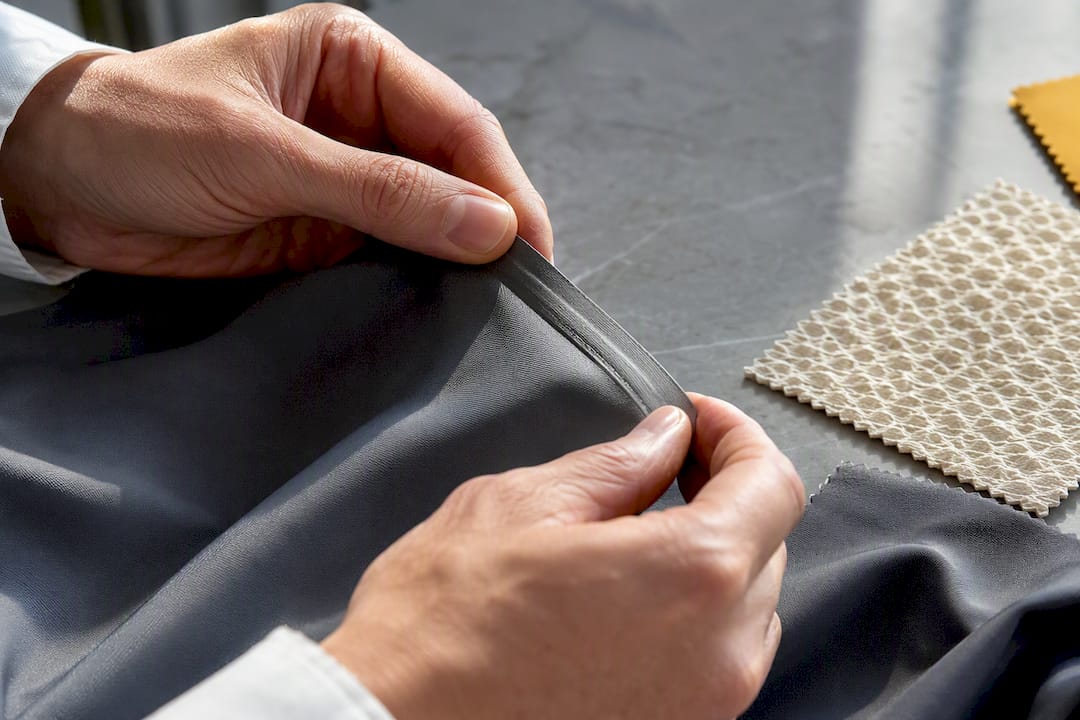
Pro Tip: Check the inseam stitching before you buy. Flat, double-stitched seams last through a season of regular swimming; single-stitched seams tend to fray within a few wears.
The 2026 palette splits into two lanes that mirror the silhouette story. One lane runs toward saturated, high-energy color: burnt orange, cobalt, magenta, and a mustard-yellow that’s shown up across several collections this year. The other lane runs toward muted, sun-faded pastels: dusty sage, soft terracotta, chalky blue, all reading closer to resortwear than beachwear.
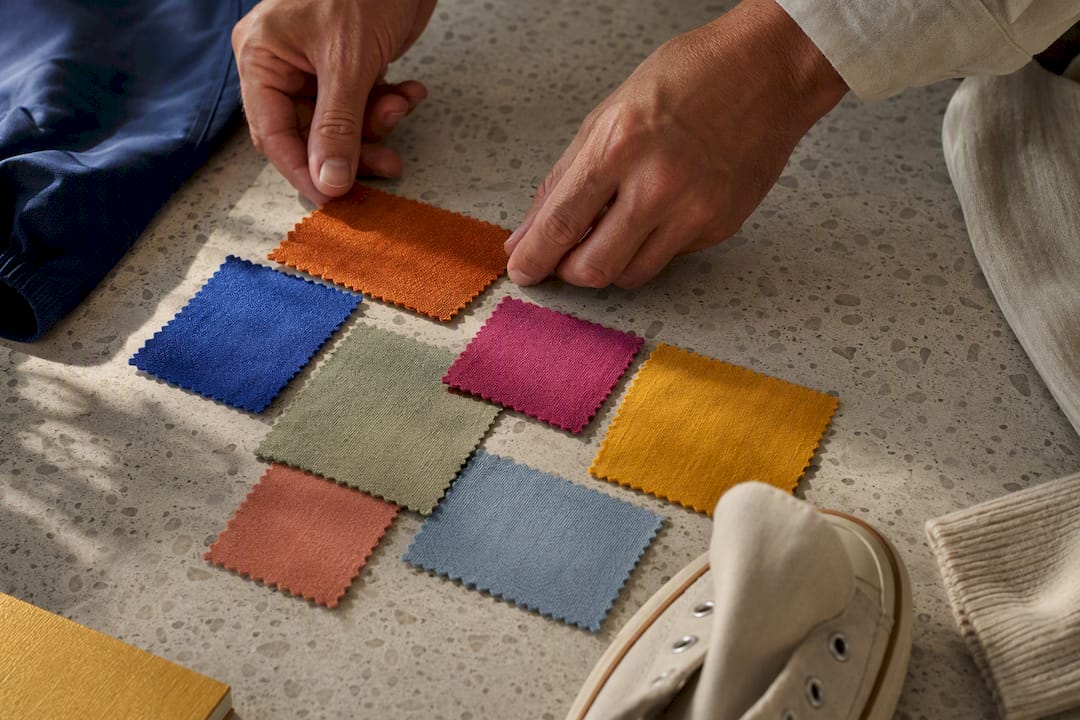
Both lanes borrow directly from the wider menswear color story for the year, which has leaned into warmer neutrals and less black overall. That crossover matters practically: a swim trunk in mustard or sage doesn’t just work at the pool. It coordinates with the same warm-toned linen shirts, canvas sneakers, and lightweight knits showing up in summer menswear generally. That’s part of why hybrid trunks work so well right now. The color choices you make for swimwear can carry straight into your regular wardrobe instead of sitting in a separate “vacation only” category.
The practical takeaway: buy your bold statement piece in a shade that already exists somewhere else in your closet. It stretches the piece’s usefulness well past the trip you bought it for.
Recycled nylon and polyester dominate the sustainability conversation, but the more interesting shifts are happening in finishing and construction. Quick-dry technology has moved past simple thin-fabric tricks into actual weave structures designed to wick moisture away from the body rather than just resist absorbing it.
Four-way stretch fabric, once reserved for performance swimwear, is now standard even in tailored, dinner-ready shorts. That’s part of what makes the hybrid category work: you get the drape of a tailored short with the recovery and movement of an athletic fabric.
Seersucker and other textured weaves are showing up as a tactile alternative to smooth swim fabric, giving pieces a slightly more elevated, dressed-up feel without adding actual tailoring. Bonded seams, which skip stitching entirely in favor of heat-sealed construction, are also appearing on higher-end pieces. They reduce chafing and improve dry time at the seam lines, which is often where trunks wear out first.
None of this replaces good old-fashioned fit. A well-constructed classic fabric still beats a gimmicky new one poorly cut.
The shorter, more tailored silhouette didn’t appear out of nowhere. It tracks a broader menswear shift toward slimmer, more considered proportions that’s been building since tailored trousers and shorter suit trousers came back into rotation a few years ago. Swimwear is simply catching up to where the rest of the wardrobe already went.
The hybrid trend has a clear cultural driver too: more men are traveling to destinations where the beach, the boat, and the restaurant are all part of the same afternoon. A trunk that only works in the water is increasingly impractical for that kind of trip, which is exactly why GQ’s coverage frames hybrid trunks as an everyday piece rather than a specialty item.
Retro athletic detailing connects to the wider nostalgia cycle running through menswear generally, pulling references from '70s and '80s sportswear into modern cuts. And the split between bold prints and refined minimalism mirrors a real divide in how men are approaching getting dressed generally right now. Some want quiet, well-made basics. Others want a single loud piece that does the talking. 2026 swimwear just gives both camps a lane.
I’ve watched enough seasons of swimwear come and go to know the pattern always wins the headline and the fit always wins the actual wear. A perfectly cut trunk in last year’s color will outperform a trendy print that bunches at the waist or rides up when wet, every time.
Two moves I’d try immediately: size down slightly if you’re between two sizes on an elastic waist trunk, since fabric relaxes with wear and water. And buy your bold print in a shade you already own elsewhere in your closet, so it earns its place beyond one trip.
Check L’ANIMAL’s trend posts through the season. Fit guidance and color direction shift more than people expect between early and late summer.
— Lital
Some collections are built around the exact split this guide has been describing: tailored shorts with structured waistbands for dinners and resort days, and hybrid trunks in statement colorways for everyday beach-to-bar wear. Neither category asks you to choose fit or style. Every piece is designed to do both, which is the actual gap many fast-fashion swimwear lines leave open.
If you’re building your capsule, start with one tailored piece and one hybrid piece in complementary tones rather than matching sets. Check the size guide closely before ordering. Cuts run closer to true tailored fit than a loose boardshort, and sizing between the two categories isn’t identical. Returns are straightforward if the fit needs adjusting once it arrives.
Browse the current men’s swim collection to see which pieces fill your tailored and hybrid slots for the season.
Esquire on inseam length, GQ on hybrid trunks, Travel + Leisure on liner testing, WhoWhatWear on 2026 trend direction, and A Perfect Gentleman on pattern and hemline trends.


