Free Shipping on US orders over $150
-
Collections
-
Bikini
- One Pieces
- Cover-Ups
- Men's
- Sale
- MODA GLAM x L'ANIMAL
- Nice Breed
-


Most people grab a swimsuit off a rack, hope the sizing works, and settle for whatever print happens to be trending that season. The result is a suit that gaps in the wrong places, fades after three washes, and looks identical to what everyone else is wearing at the pool. Custom bikinis solve all of that, and they do it without the intimidation factor most shoppers assume comes with the territory. This guide covers the real differences between custom and mass-produced swimwear, how to translate your personal style into a design you will actually wear, what fit truly means for comfort and performance, and why sustainability is no longer a side conversation.
| Point | Details |
|---|---|
| Superior style and fit | Custom bikinis let you showcase your style and ensure a comfortable, confidence-boosting fit. |
| Lasting comfort | Personalized suits solve common issues like improper support and awkward sizing. |
| Eco-friendly options | Many custom brands use sustainable materials and ethical production methods for a lower environmental impact. |
| Simple, rewarding process | Ordering custom swimwear is increasingly accessible and lets you enjoy a unique, thoughtful garment. |
The gap between a custom bikini and an off-the-rack suit is bigger than most people realize. It is not just about price or exclusivity. It comes down to three core areas: fit, materials, and design control.
Off-the-rack swimwear is built around standardized sizing charts that represent an average body, not your body. That means a size medium top might fit your shoulders but not your bust, and a size small bottom might work at the waist but pull across the hips. Custom bikinis start from your actual measurements, which eliminates the guesswork entirely.
Material choice is another major difference. Mass-produced suits typically use whatever synthetic blend keeps manufacturing costs low. With a custom piece, you can request specific fabrics based on your priorities, whether that is chlorine resistance, UV protection, or softer texture against the skin. Learning about understanding bikini construction details helps you ask better questions when commissioning a design.
The design control factor is where custom swimwear becomes genuinely exciting. You choose the cut, the color palette, the embellishments, and the coverage level. Nothing is predetermined.
Custom vs. off-the-rack: A quick comparison
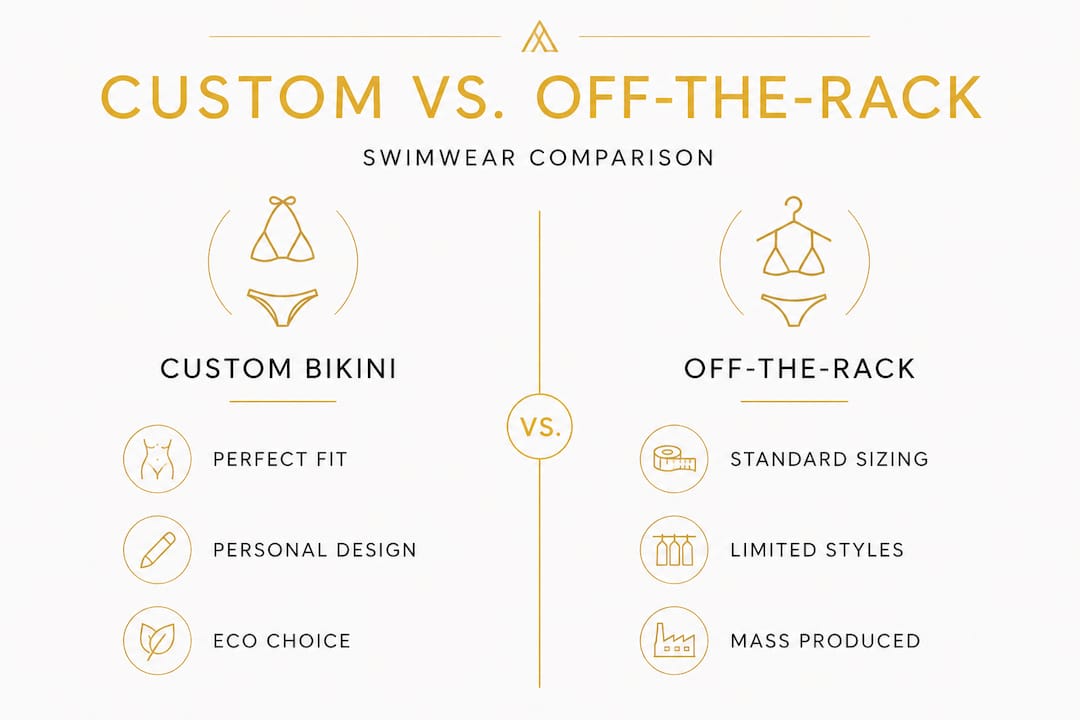
| Feature | Custom bikini | Off-the-rack bikini |
|---|---|---|
| Fit accuracy | Based on your measurements | Standardized sizing |
| Material options | Specified by buyer | Set by manufacturer |
| Design control | Full creative input | Limited to available styles |
| Production waste | Made to order | Often overproduced |
| Longevity | Built for your use case | Generic durability |
| Price point | Higher upfront | Lower upfront |
Key reasons shoppers choose custom:
On the sustainability side, swimwear materials and production processes carry real environmental consequences. Reputable coverage consistently points to the need for better material choices and more responsible manufacturing approaches. Custom production, because it is made to order, naturally reduces the overproduction problem that plagues mass-market swimwear.
Swimwear is one of the few clothing categories where you are wearing significantly less fabric than usual, which means every design decision is amplified. A color that clashes with your skin tone is more noticeable. A cut that does not suit your proportions is harder to ignore. Getting it right matters more here than in almost any other wardrobe category.
Custom bikinis give you the tools to get it right. You are not choosing between what is available. You are deciding what you actually want and then having it made. That shift in control has a direct effect on confidence.
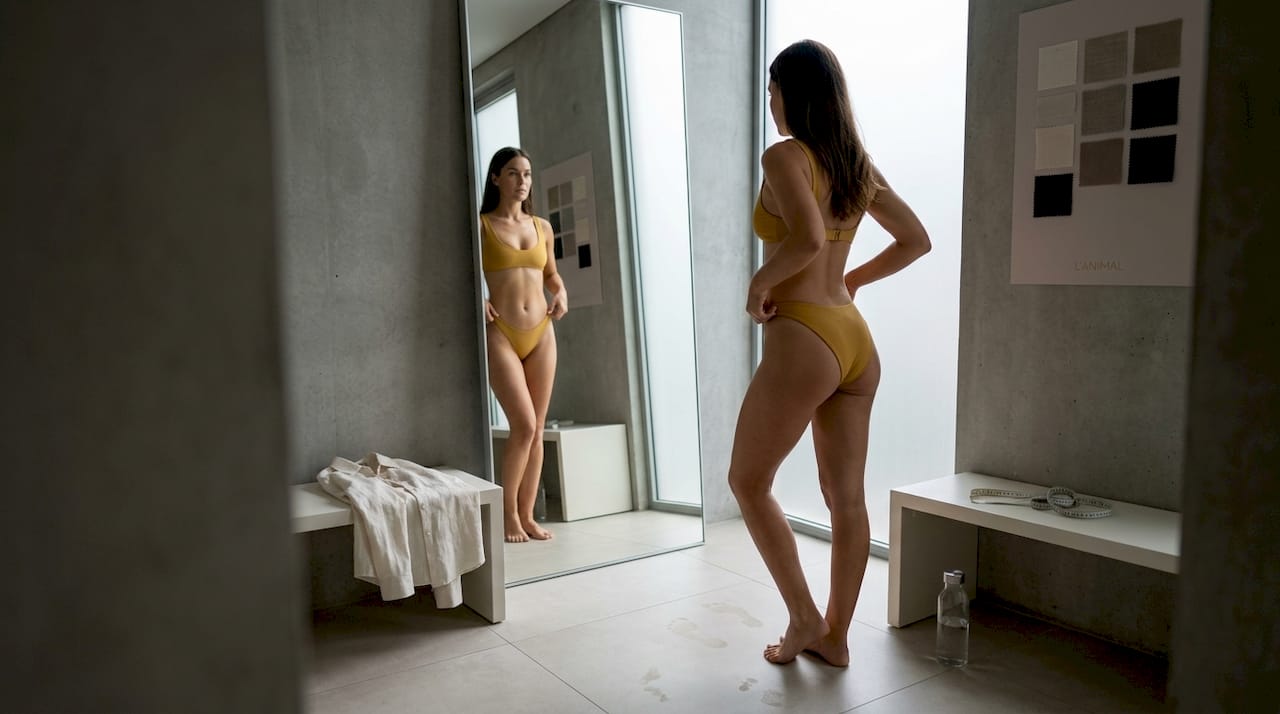
The benefits of specialized swimwear go beyond aesthetics. When a suit fits correctly and reflects your style, you spend less mental energy adjusting it or second-guessing how it looks. That frees you up to actually enjoy the beach.
Here is a practical process for translating your style into a custom design:
Pro Tip: When briefing a designer, bring three reference images that represent what you want and one image that shows what you want to avoid. That contrast gives the designer a much clearer creative direction than inspiration images alone.
Off-the-rack swimwear has a specific set of recurring problems. Tops that gap at the sides. Bottoms that ride up during any real movement. Straps that dig in or slide off. Underwire that pokes rather than supports. These are not random bad luck. They are the predictable result of designing for an average that does not exist.
Custom bikinis address these issues by building the suit around your actual body. The difference is most noticeable in a few specific areas:
“Tailoring and customization decisions should account for swimwear material constraints. Altering stretchy synthetic fabrics requires swimwear-aware techniques so that elasticity and seam integrity are not compromised.” Can you tailor a bathing suit?
This point matters whether you are commissioning a new custom suit or altering an existing one. Swimwear fabrics behave differently from woven fabrics. They stretch, recover, and respond to water in ways that standard tailoring does not account for. A skilled custom swimwear designer understands this and builds accordingly.
Pro Tip: When evaluating a custom bikini’s construction quality, stretch the fabric gently at the seams. The seam should hold without puckering or pulling. If it distorts under light tension, it will not hold up to real wear in the water.
If you want to see how thoughtful construction translates to real wearability, reversible designs for fit are a good example of how construction complexity can add practical value without sacrificing comfort.
Swimwear is not inherently sustainable. Most conventional suits are made from nylon or polyester, both derived from fossil fuels. These fabrics shed microplastics during washing, and at the end of their life, they are nearly impossible to recycle. The environmental impact of swimwear includes microplastic pollution, difficult end-of-life disposal, and the carbon footprint of high-volume manufacturing. Some designers are responding with recycled materials, bio-based alternatives, low-waste cutting techniques, and greater supply chain transparency.
Custom swimwear is positioned well to support these approaches because production is demand-driven. There is no overstock sitting in a warehouse. Each piece is made because someone ordered it.
Material types and their environmental profiles
| Material | Source | Eco impact | Performance |
|---|---|---|---|
| Virgin nylon | Fossil fuels | High impact | Excellent |
| Recycled nylon (ECONYL) | Reclaimed waste | Lower impact | Excellent |
| Virgin polyester | Fossil fuels | High impact | Good |
| Recycled polyester | Plastic bottles | Moderate impact | Good |
| Bio-based elastane | Plant-derived | Lower impact | Developing |
| Natural rubber | Renewable plants | Variable | Limited use |
Features to look for in a genuinely sustainable custom bikini:
The shift toward sustainable swimwear innovations is accelerating. More designers are publishing material sourcing information and production audits. When you commission a custom piece, you have the ability to ask these questions directly and get real answers, something that is nearly impossible with mass-market brands.
The process of ordering a custom bikini is more straightforward than most people expect. The main barrier is unfamiliarity, not complexity. Here is a clear roadmap:
Common mistakes to avoid: ordering without confirmed measurements, skipping the design proof step, choosing a designer based on price alone without reviewing their construction quality, and not asking about fabric content before committing.
A good starting point for exploring what customizable options look like in practice is this example of a customizable bottom, which shows how reversibility and design flexibility can work together.
The conventional assumption is that custom swimwear is primarily a luxury purchase, a way to spend more for a status item. That framing misses the point entirely.
The real value of custom swimwear is not the price tag. It is the knowledge you bring to the decision. Shoppers who know what they need, understand basic construction quality, and can ask the right questions about materials and fit will get far more value from a custom piece than someone who simply orders based on aesthetics alone.
Most buyers focus almost entirely on how a suit looks in photos. Construction quality, seam placement, fabric recovery, and long-term durability rarely come up until something goes wrong. The nuances of bikini detailing are worth understanding before you order, not after.
There is also a practical argument for buying for longevity rather than trend cycles. A well-made custom suit in a classic cut and a color that works for your skin tone will outlast three seasons of trend-driven off-the-rack purchases. The upfront cost looks different when you factor in replacement frequency.
Pro Tip: When vetting a custom swimwear brand, ask three specific questions. What fabric do you use and where is it sourced? Can I see examples of completed orders with customer fit feedback? What is your policy if the fit is not correct? The answers tell you more about the brand’s integrity than any marketing copy.
At L’ANIMAL, designer Lital Simel-Rhedrick built the brand around exactly the principles this article covers: precise construction, quality materials, and designs that hold up beyond a single season. Every piece in the collection reflects attention to detail that mass-market swimwear simply does not offer.
Browse custom one-piece swimsuits for full-coverage options built with the same design precision as the bikini range. If you are drawn to artistic, painterly aesthetics, the custom watercolor designs offer a genuinely distinctive look. For elevated detailing and luxury construction, the embellished swimwear collection showcases what thoughtful design looks like at its best. L’ANIMAL is the practical next step for anyone ready to move past generic swimwear and invest in something that actually fits, lasts, and reflects personal style.
Custom bikinis can be more sustainable when they use recycled or eco-friendly materials and transparent production methods, and because they are made to order, they avoid the overproduction waste common in mass-market swimwear.
Yes, but altering stretch fabrics requires a tailor experienced with swimwear-specific techniques to preserve elasticity and seam integrity.
Most custom bikinis are ready within two to six weeks, depending on the designer’s workload and the complexity of the design details requested.
Custom swimwear is worth the cost when you factor in fit accuracy and ethical production, longer wear life, and the elimination of repeat purchases from suits that never fit correctly in the first place.


