Free Shipping on US orders over $150
-
Collections
-
Bikini
- One Pieces
- Cover-Ups
- Men's
- Sale
- MODA GLAM x L'ANIMAL
- Nice Breed
-


Bikini body positivity is defined as the practice of embracing your body with self-love and acceptance, allowing you to wear a bikini confidently without conforming to unrealistic beauty standards. This bikini body positivity guide covers the core tools you need: body neutrality techniques, swimwear fit principles, daily mindset practices, and strategies for handling social pressure. Mental health experts now recommend body neutrality as the most sustainable path to reducing self-criticism, and body acceptance focuses on what your body does rather than how it looks. Confidence in swimwear comes from intentional choices, not from achieving a particular size or shape.
Body neutrality is the practice of focusing on what your body can do rather than how it looks. Unlike forced positivity, it does not require you to love every inch of your appearance. Medical and mental health experts recommend body neutrality to reduce self-criticism and ease the pressure to meet societal beauty standards. This approach is more sustainable than demanding constant self-love, because it removes the performance aspect entirely.
The practical starting point is rewriting negative self-talk. When a critical thought appears, such as “I hate my stomach,” you replace it with a neutral, functional statement: “My stomach digests food and keeps me moving.” This technique, endorsed by current mental health guidance, separates self-worth from appearance and gradually quiets the inner critic.
A media audit is the second core technique. You review the accounts you follow on Instagram, TikTok, and Pinterest, then unfollow any that trigger comparison or shame. You replace them with accounts that show diverse body shapes in swimwear. This single action changes the visual reference points your brain uses to judge your own body.
Pro Tip: Set a 10-minute timer once a week to review your social feeds. Remove any account that made you feel worse about your body in the past month. Consistency here matters more than a single big purge.
Confidence in a bikini stems from intentional fit and support, not from wearing a specific size. A bikini that fits well lets you move freely, swim without adjusting, and relax without distraction. That freedom is what makes confidence feel natural rather than forced.
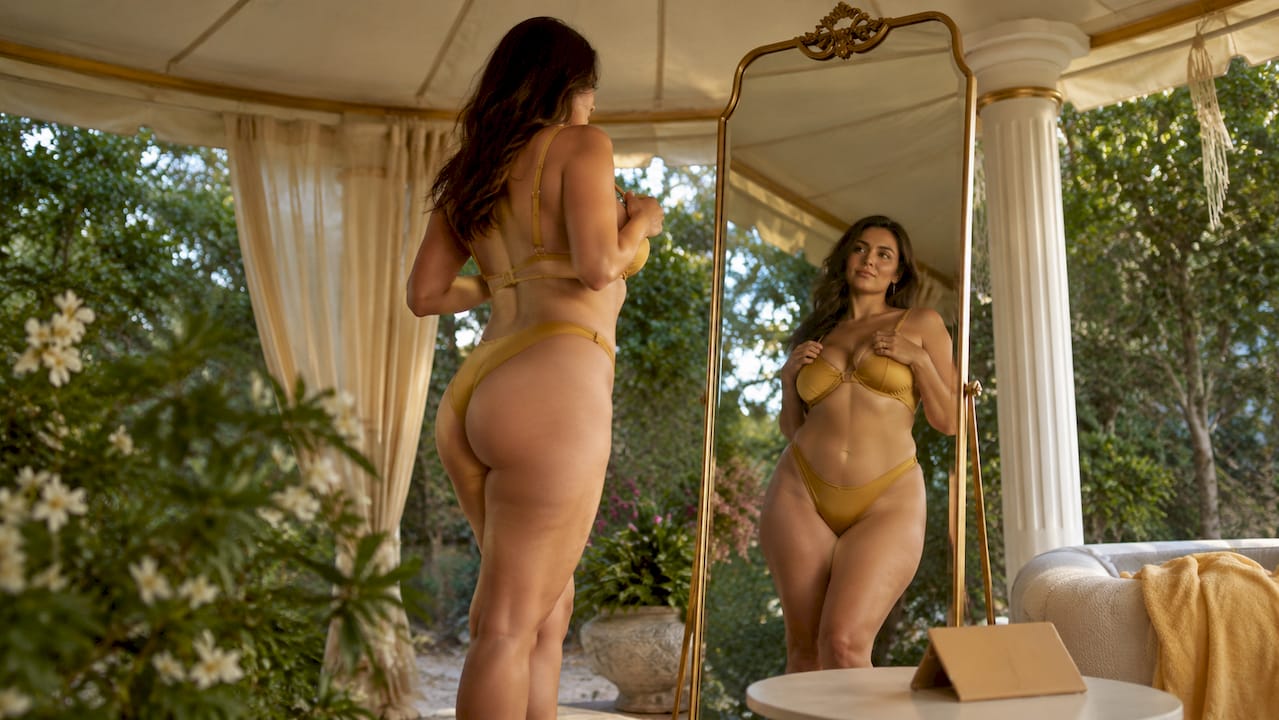
Swimwear made from quality fabrics with good stretch and support maintains its silhouette throughout the day. Blends of nylon and elastane are the industry standard for swimwear because they hold their shape in water, resist fading, and provide consistent compression. Thicker, double-lined materials add coverage and prevent transparency when wet. These are not luxury features. They are the baseline for a bikini that actually works for your body.
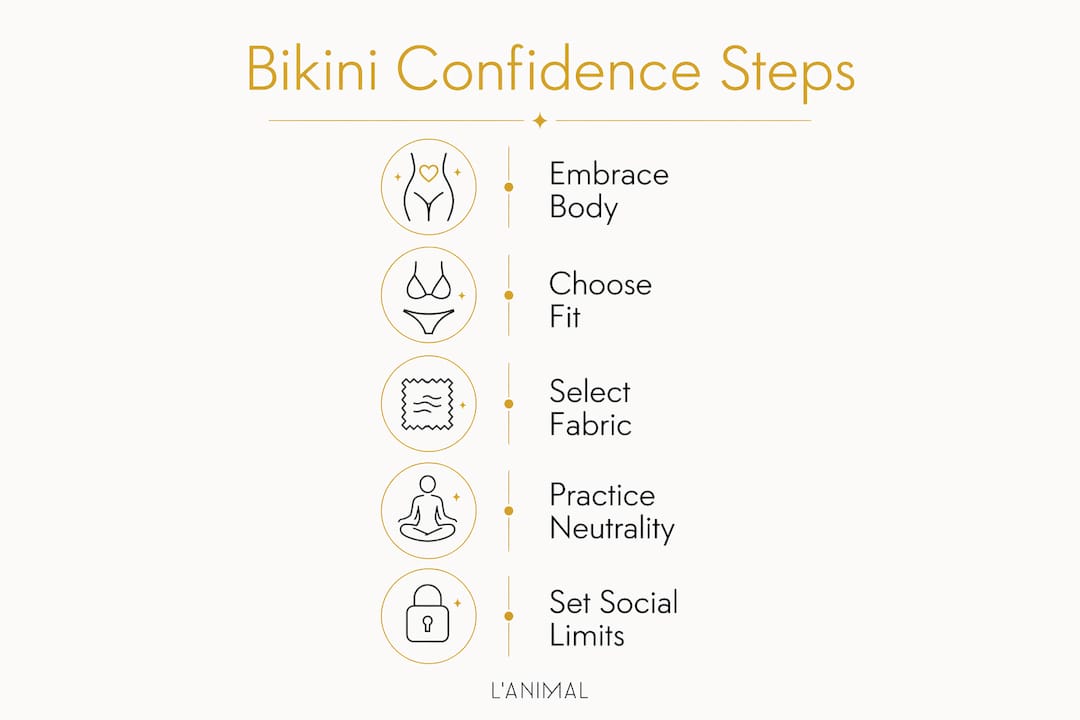
The goal is not to “flatter” your body by hiding parts of it. The goal is to find styles that feel secure and comfortable so you can stop thinking about your swimwear and start enjoying your day. Here are practical style considerations:
Pro Tip: Try your bikini on at home and move around in it. Sit down, bend over, and reach up. If you are adjusting it after every movement, the fit is wrong regardless of the size on the label. Finding the perfect bikini fit for your shape is a process worth taking seriously.
Buying a size smaller because you think you “should” fit into it is the most common mistake. A too-small bikini creates discomfort, restricts movement, and draws attention to areas you may already feel self-conscious about. Size up when in doubt. The number on the tag is irrelevant to anyone but you.
| Fit issue | What it signals | Fix |
|---|---|---|
| Top gaps at the cup | Cup size too large or style wrong for bust shape | Try a smaller cup or molded style |
| Bottom rolls or digs in | Band size too small | Size up in bottoms |
| Straps fall constantly | Shoulder width mismatch | Try racerback or adjustable straps |
| Top rides up when swimming | Style not suited for active use | Choose a sports-style or underwire top |
Lasting bikini confidence is built through daily practice, not a single decision. Positive affirmations and visualization reduce anxiety and prepare your mind to feel at ease in swimwear. The key is making these practices realistic rather than forced.
“Body-positive affirmations work best when they are grounded and balanced. Forcing yourself to say ‘I love my body’ when you don’t believe it can backfire and increase negative feelings. A better approach is to reframe: ‘My body is strong and capable, and I deserve to enjoy the beach.’”
This insight from Verywell Mind reflects the current expert consensus. Affirmations should feel true enough to repeat without internal resistance.
Here is a practical daily sequence to build confidence before and during beach season:
Body image wellness is not a destination. It is a practice that gets easier with repetition. The women who feel most confident in swimwear are not the ones with the “best” bodies. They are the ones who have practiced self-acceptance long enough that it has become their default.
Social pressure is the most common barrier to bikini confidence. It comes from external sources like comments and social media, and from internal sources like internalized stereotypes. Both are manageable with the right tools.
Managing social media exposure by unfollowing negative accounts and engaging with body-positive communities directly improves body image. This is not a passive benefit. It is a measurable shift in the visual and emotional input your brain receives daily. Curating your feed is an act of self-care.
Pro Tip: Before your first beach outing of the season, wear your bikini at home for an hour. Walk around, make a snack, sit on the couch. Normalizing how your body looks in swimwear in a private setting reduces the shock of wearing it publicly.
Dealing with internalized stereotypes takes longer than managing external comments. The stylist tips for every body approach works here: focus on what makes you feel good rather than what you think you are supposed to look like. That shift from external judgment to internal preference is the core of summer body empowerment.
A bikini body positivity guide works because it combines mindset tools, practical swimwear knowledge, and social strategies into a repeatable daily practice.
| Point | Details |
|---|---|
| Body neutrality over forced positivity | Focus on what your body does, not how it looks, to reduce self-criticism sustainably. |
| Fit and fabric drive confidence | Choose nylon-elastane blends and styles that allow free movement without constant adjusting. |
| Affirmations must be grounded | Realistic, balanced self-talk outperforms forced positivity and avoids backfiring. |
| Curate your social feed | Unfollowing negative accounts and following body-diverse creators measurably improves body image. |
| Confidence is a daily practice | Posture, visualization, and self-compassion build lasting ease in swimwear over time. |
Designing swimwear for real women taught me one thing faster than anything else: the women who feel best in a bikini are almost never the ones who changed their bodies. They are the ones who changed their relationship with their bodies.
I used to think the right cut or the right color would solve the confidence problem. It helps, and fit genuinely matters. But I have watched women in perfectly fitted swimwear still spend the whole beach day pulling at their tops and avoiding photos. The swimwear was not the issue.
What actually works is the combination of a well-made piece and a practiced mindset. When you stop waiting to feel ready and just wear the bikini, something shifts. The first time is uncomfortable. The fifth time is easier. By the tenth time, you are thinking about the water, not your waistline.
My honest advice: stop treating confidence as a prerequisite for wearing a bikini. Wear it first. The confidence follows the action, not the other way around. Patience with yourself is not weakness. It is the only path that actually works.
— Lital
Lanimal designs swimwear for women who want to feel at ease in their bodies, not perform for anyone else. The Sportif Bikini Bottom is built with quality stretch fabric that moves with your body, holds its shape in water, and fits without digging or shifting.
Designer and stylist Lital Simel-Rhedrick created Lanimal with one goal: swimwear that works for real bodies and real movement. The Sportif Bikini Bottom pairs with a range of tops to suit different bust sizes and style preferences. If you want to see how body positivity in swimwear translates into actual design decisions, this piece is a clear example of that commitment.
Bikini body positivity is the practice of embracing your body with self-acceptance and wearing a bikini confidently without conforming to unrealistic beauty standards. It centers on self-love and body function rather than appearance.
Body neutrality focuses on appreciating what your body does rather than demanding that you love how it looks. It is considered more sustainable than body positivity because it removes the pressure to feel positive at all times.
Choose swimwear made from nylon-elastane blends that hold their shape, and prioritize fit over size. A bikini that allows free movement without constant adjusting builds confidence naturally.
Grounded, realistic affirmations reduce anxiety and reframe negative self-talk without forcing false positivity. Statements like “my body is capable and deserves rest” are more effective than statements you do not yet believe.
Prepare a brief, neutral response in advance and limit social media exposure before beach outings. Engaging with body-positive communities online also reduces the impact of external criticism over time.


