Free Shipping on US orders over $150
-
Collections
-
Bikini
- One Pieces
- Cover-Ups
- Men's
- Sale
- MODA GLAM x L'ANIMAL
- Nice Breed
-


Supporting small swimwear brands delivers three direct benefits: lower environmental impact, fairer labor conditions, and higher product quality. Brands like Lanimal, founded by designer Lital Simel-Rhedrick, and research from Sustainable Brands show that sustainability functions as an operational discipline, not a marketing claim. Every sourcing, production, and packaging decision compounds.
Lanimal is one clear example of a U.S. small brand putting these principles into practice.
The case for independent swimwear comes down to five concrete advantages:
Pro Tip: A higher retail price at a small brand usually reflects real input costs: recycled fabric, domestic labor, and low-volume production. It is not arbitrary markup.
Sustainability at a small swimwear brand is not a tag on the hang-card. It shows up in procurement, production, and fulfillment decisions made before a single unit ships.
Materials. Recycled nylon costs more per yard than virgin alternatives, but it reduces reliance on petroleum-based inputs and, when combined with UPF ratings, extends the garment’s usable life. That longer life is itself a circularity strategy: one suit worn for four seasons replaces two or three cheaper ones.
Domestic cut-and-sew. According to Sustainable Brands, domestic manufacturing added a notable per-garment cost premium compared with overseas benchmarks in one small-brand case study. That cost buys faster problem-solving, direct supplier visibility, and the ability to catch a fit issue before an entire run is cut wrong.
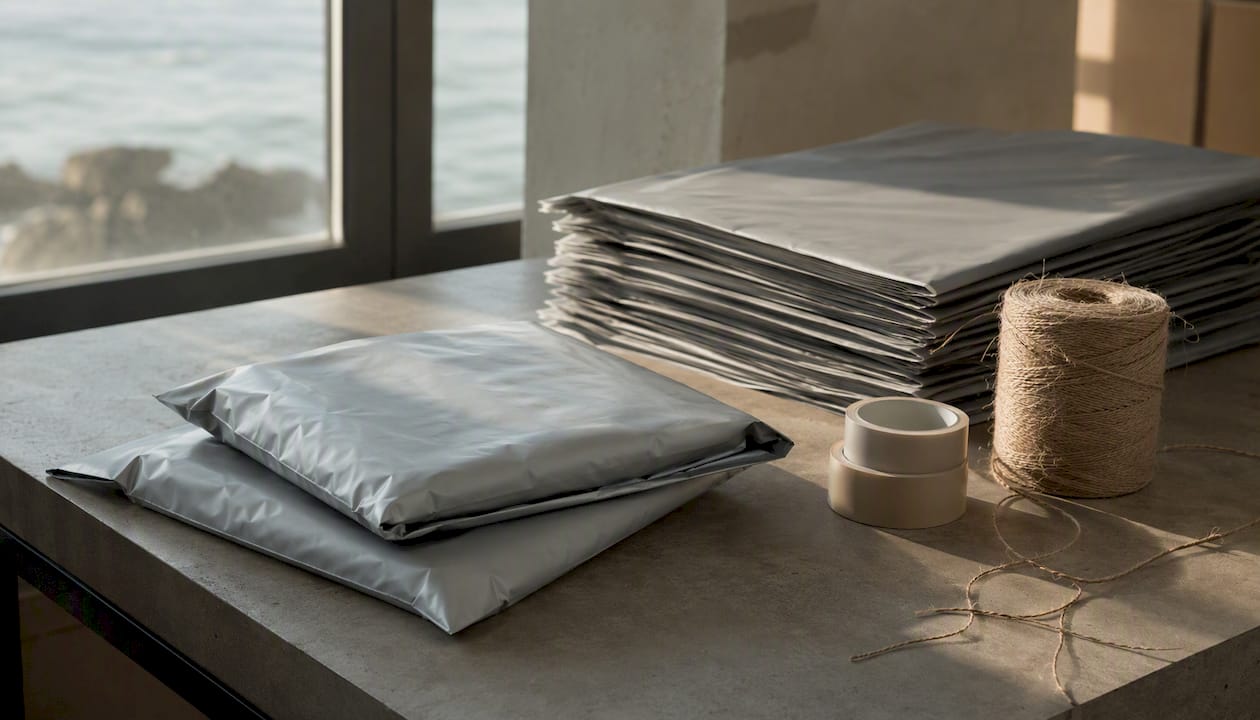
Packaging. Ocean-bound recycled polymailers cost more per unit than standard poly bags. Brands that absorb that cost are making a deliberate choice about their plastic footprint, not a convenient one.
Pro Tip: When reviewing a brand page, look for specifics: fabric origin, factory location or region, production run size, and packaging material. Vague language like “eco-friendly” with no detail is a signal to ask follow-up questions.
What to look for on a brand’s product page:
Pro Tip: Send a direct message or email asking one specific question: “What factory or region produces this piece?” A brand with nothing to hide answers quickly and specifically. A non-answer tells you what you need to know.
Proper care is where cost-per-wear is won or lost.
Pro Tip: UPF-rated fabrics are engineered to resist UV degradation, but direct sun-drying still shortens their life. Shade-drying preserves both the UPF rating and the color longer.
For brand-specific care instructions and repair options, check Lanimal’s product pages directly.
Lanimal was built by designer and stylist Lital Simel-Rhedrick with a clear priority: quality and timeless design over volume. The brand produces swimwear for women and men, including bikinis, one-piece suits, men’s swim shorts, cover-ups, and resortwear, alongside collaboration collections with fashion influencers.
Pro Tip: Lanimal’s influencer collaboration collections are among the fastest to sell out. If a drop interests you, act at launch rather than waiting.
Small swimwear brands that embed sustainability into operations, not just marketing, deliver measurable environmental, social, and quality benefits that mass production cannot replicate.
| Point | Details |
|---|---|
| Sustainability is operational | Look for brands that name fabrics, factories, and run sizes — not just “eco-friendly” language. |
| Cost-per-wear reframes price | A $180 suit worn 60 times costs $3 per use, while a $60 suit that lasts 15 wears costs $4 per use. |
| Small runs reduce waste | Limited-batch production cuts deadstock and forces demand-driven restocking. |
| Care extends value | Rinse, hand-wash, and shade-dry to protect recycled fibers and UPF ratings. |
| Lanimal is a working example | Founded by Lital Simel-Rhedrick, Lanimal produces limited-run designer swimwear with attention to materials, fit, and design integrity. |
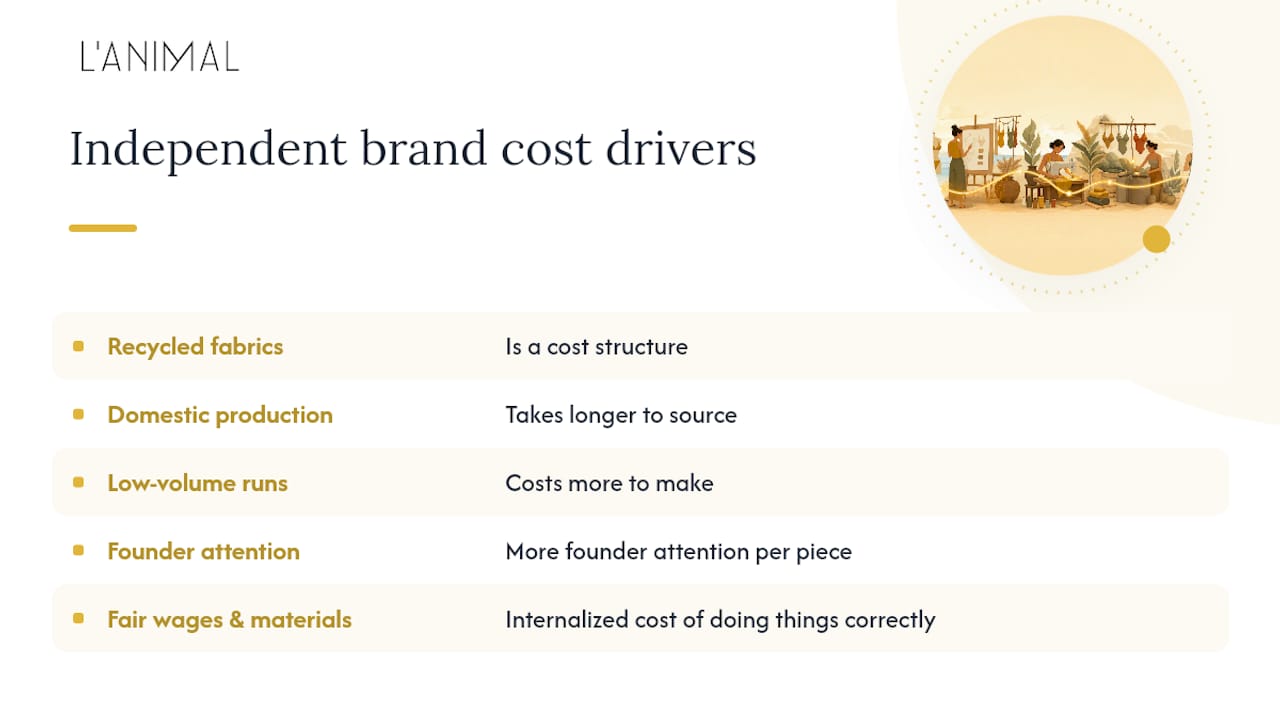
The conventional narrative around sustainable fashion focuses on the consumer’s choice. What gets less attention is the operational reality on the brand side. Choosing recycled fabrics, domestic production, and low-volume runs is not a positioning decision. It is a cost structure. Every unit costs more to make, takes longer to source, and requires more founder attention per piece than a mass-market alternative.
That cost structure is why the price difference between a small independent brand and a fast-fashion swimwear line is not markup. It is the internalized cost of doing things correctly: paying fair wages, using better materials, and refusing to produce more than the market actually needs.
Shoppers who understand this are not just making a purchase. They are deciding which cost structure gets to survive. Supporting independent swimwear means the economics of responsible production stay viable for the brands willing to practice it.
Three low-friction ways to support small swimwear brands today:
Visit Lanimal’s collection to see current limited-run pieces and find your size before the run closes.


