Free Shipping on US orders over $150
-
Collections
-
Bikini
- One Pieces
- Cover-Ups
- Men's
- Sale
- MODA GLAM x L'ANIMAL
- Nice Breed
-


Island-style dressing is defined as a creamy, tangy condiment made from mayonnaise, ketchup, and sweet pickle relish, rooted in the Thousand Islands region of the St. Lawrence River. Most people recognize it as Thousand Island dressing, the standard culinary term for this American classic. Its flavor sits at the intersection of creamy, sweet, and acidic, which explains why it works far beyond salads. Fashion travelers and food lovers alike are drawn to its connection to a specific place, a specific era, and a very specific kind of American style.
Island-style dressing, formally known as Thousand Island dressing, builds its flavor from three core ingredients. The classic recipe combines mayonnaise, ketchup, and sweet pickle relish in a ratio that delivers creaminess, color, and a bright, tangy finish. Every other ingredient in the recipe plays a supporting role to that trio.
The full ingredient list typically includes:
Common variations include horseradish for heat, chili sauce for a deeper tomato note, and hard-boiled eggs for a richer, more textured finish. These additions deepen the flavor without breaking the classic ratio.
Professional chefs note that the balance of creamy sweetness and acidity is the key to the dressing’s widespread appeal. Remove any one of the three core ingredients and the dressing loses its identity.
Pro Tip: Use full-fat mayonnaise as your base. Yogurt or light mayo disrupts the classic taste balance and produces a noticeably thinner, less satisfying result.
Thousand Island dressing is one of the few American condiments named after a specific geographic region. The Thousand Islands region sits along the St. Lawrence River between the United States and Canada, and it comprises exactly 1,864 islands. That number is not a marketing figure. It is the official count used to define the archipelago.
Historical accounts credit Sophia LaLonde, the wife of a fishing guide, as the dressing’s original creator. She reportedly served it to guests during fishing trips in the region. George Boldt, the wealthy owner of the Waldorf Astoria Hotel in New York, encountered the dressing and brought it back to his hotel kitchen. May Irwin, a well-known actress of the era, is also credited with helping spread the recipe among wealthy social circles. Together, these three figures turned a regional fishing camp condiment into a Gilded Age status symbol.
“The dressing represents a culinary souvenir of the Gilded Age, popularized by wealthy tourists and celebrities in the Thousand Islands region.”
The dressing’s rise mirrors the broader story of American regional identity becoming national culture. Wealthy tourists traveled to the Thousand Islands in the late 1800s and early 1900s for summer retreats. They brought the dressing home as a taste of the experience.
| Key figure | Role in the dressing’s history |
|---|---|
| Sophia LaLonde | Original creator, served it on fishing trips |
| George Boldt | Brought it to the Waldorf Astoria Hotel |
| May Irwin | Helped popularize it among celebrities |
| Thousand Islands region | Geographic namesake and cultural origin point |
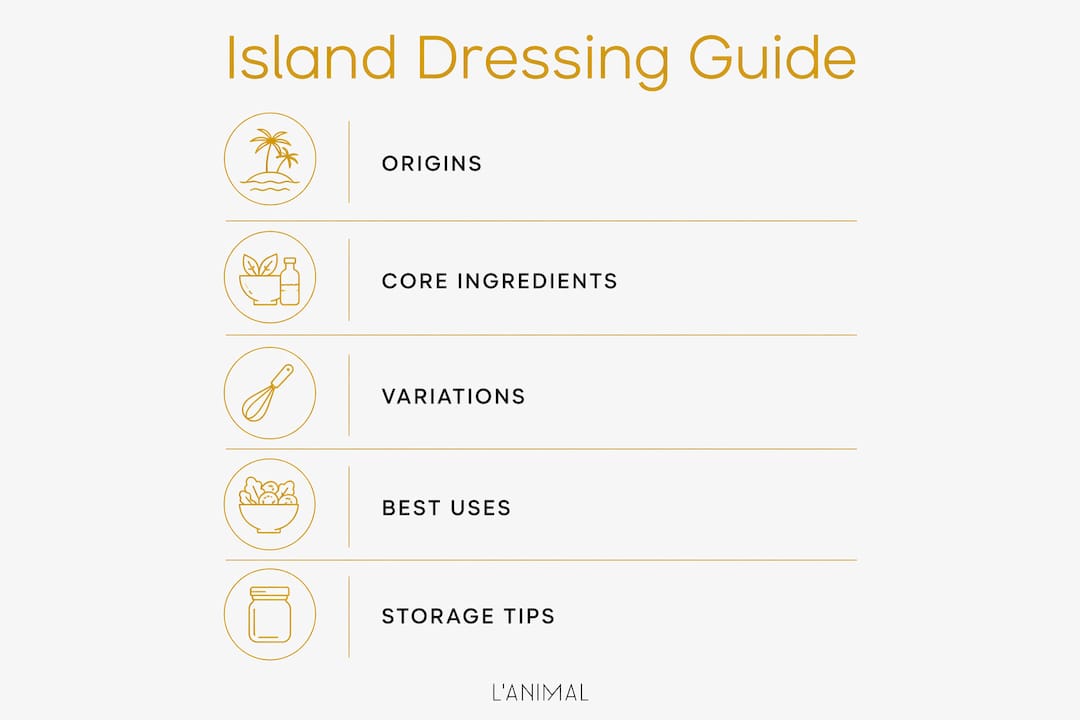
The dressing evolved from a regional specialty into a nationwide classic condiment sold in every American grocery store. That transition took decades, but the geographic name stuck. Today, the Thousand Islands region still claims the dressing as part of its cultural identity.
Making island-style dressing at home takes under 10 minutes and produces a noticeably fresher result than store-bought versions. Homemade preparations avoid the preservatives and stabilizers found in commercial products, and they allow full control over the flavor balance.
Follow these steps for the best result:
The resting step is the most overlooked part of the process. Flavor develops significantly after 24 hours of refrigeration, as the aromatics soften and meld into the base. A dressing served immediately after mixing tastes sharp and uneven. The same dressing served the next day tastes balanced and complete.
Storage guidelines to follow:
Pro Tip: Grate hard-boiled eggs with a cheese grater instead of chopping them. The result is a more uniform texture that blends cleanly into the dressing without large chunks.
The homemade version yields approximately 6 servings per batch. That makes it practical for a week of use without the need to make a large quantity at once.
Thousand Island dressing functions as one of the most versatile condiments in American cuisine. Its uses extend well beyond the classic wedge salad or iceberg lettuce bowl.
The most common applications include:
The fast food connection is the most surprising fact about this dressing. Millions of people consume a version of Thousand Island dressing every day without knowing it. The Big Mac sauce is essentially the dressing with minor adjustments to the relish and spice ratios.
For fashion travelers and lifestyle enthusiasts, the dressing also carries a strong aesthetic identity. The Thousand Islands region has long been associated with summer leisure, waterfront dining, and the kind of relaxed, sun-soaked lifestyle that defines island culture. The dressing connects food to place in a way that few American condiments do. Pairing a meal featuring this tropical-inflected sauce with beach-to-bar dressing creates a full sensory experience rooted in island aesthetics.

The creamy, bright color of the dressing also mirrors the visual palette of tropical style: warm pinks, coral tones, and sun-bleached whites. That is not a coincidence. The Gilded Age tourists who popularized the dressing were the same people who defined American summer style.
Island-style dressing, formally known as Thousand Island dressing, is an American regional condiment defined by its mayo-ketchup-relish base, its Gilded Age origins, and its versatility across salads, sandwiches, and fast food.
| Point | Details |
|---|---|
| Core ingredients | Mayonnaise, ketchup, and sweet pickle relish form the essential base of the dressing. |
| Geographic origin | The dressing is named after the Thousand Islands region, which contains exactly 1,864 islands. |
| Historical creators | Sophia LaLonde created it; George Boldt and May Irwin brought it to national prominence. |
| Best preparation tip | Rest the dressing refrigerated for 24 hours before serving to allow flavors to fully meld. |
| Culinary range | The dressing appears in Reuben sandwiches, burgers, and as the base for major fast food secret sauces. |
I have spent years working at the intersection of fashion, travel, and lifestyle, and the thing that strikes me most about Thousand Island dressing is how much cultural weight it carries for something so simple. Most condiments are anonymous. This one has a name, a place, a cast of characters, and a backstory that spans the Gilded Age to the modern fast food counter.
What I find genuinely interesting is how the dressing’s identity mirrors the identity of island style itself. Both are defined by a specific geography. Both carry a sense of leisure, warmth, and a certain effortless quality. The Thousand Islands region was a playground for the wealthy in the 1800s, and the dressing became a portable souvenir of that lifestyle. That is exactly what great style does. It takes a place and a feeling and makes it wearable, or in this case, edible.
The dressing’s endurance also tells you something real about American taste. It has survived more than a century of food trends because its flavor balance is genuinely well-constructed. The ratio of creamy to sweet to acidic is not accidental. It works because it was refined by real cooks in a real place for real guests. That kind of authenticity is rare, and it is the same quality I look for in fashion. Pieces that last are not trendy. They are well-made and rooted in something true.
— Lital
The same sensibility that makes Thousand Island dressing a classic shapes the collections at Lanimal. Designer Lital Simel-Rhedrick built the brand around the idea that great swimwear, like great food, should be timeless, well-constructed, and rooted in a specific feeling.

The Sportif Bikini Bottom captures that island energy directly. Clean lines, confident cuts, and a sporty silhouette that moves from the water to the table without losing its edge. For travelers who want their wardrobe to match the lifestyle they are chasing, the full range of Lanimal collections offers swimwear designed with the same attention to detail and cultural clarity that defines the best of island style.
Island-style dressing is the informal name for Thousand Island dressing, a creamy American condiment made from mayonnaise, ketchup, and sweet pickle relish. It originates from the Thousand Islands region of the St. Lawrence River.
The three core ingredients are mayonnaise, ketchup, and sweet pickle relish. Common additions include minced onion, lemon juice, paprika, and optionally hard-boiled eggs or horseradish.
Stored in an airtight container in the refrigerator, homemade Thousand Island dressing stays fresh for 3–10 days. Flavor improves noticeably after the first 24 hours of resting.
Tropical dressing is a broader, informal category that includes fruit-based or citrus-forward dressings. Island-style dressing specifically refers to the Thousand Island style, which is mayo-based rather than fruit-based.
Thousand Island dressing works as a spread on Reuben sandwiches and burgers, as a dipping sauce for fries and vegetables, and as the base for fast food secret sauces including the McDonald’s Big Mac sauce.


