Free Shipping on US orders over $150
-
Collections
-
Bikini
- One Pieces
- Cover-Ups
- Men's
- Sale
- MODA GLAM x L'ANIMAL
- Nice Breed
-


Sculpting swimwear is swimwear engineered with internal structure and firmer fabric to smooth, shape, and support the midsection, bust, or hips. The word “sculpt” only means something when it shows up in the construction, not just the product description. Real sculpting suits carry visible proof: power mesh lining stitched behind the outer fabric, dedicated control panels across the belly or waist, and a double-layered front that adds density where you need it most.
Before you shop, scan a listing for these three things:
The most reliable proof of a suit’s sculpting ability is explicit internal construction, not a marketing adjective. If a listing can’t tell you what’s inside the fabric, assume it can’t tell you what the suit will actually do.
Genuine sculpting swimwear proves itself through power mesh, layered panels, and named stabilizers, not through adjectives on a product page.
| Point | Details |
|---|---|
| Definition first | Sculpting swimwear uses internal structure and firmer fabric, not just marketing language, to shape the body. |
| Construction beats claims | Check for power mesh, control panels, and layer count before trusting any “sculpting” label. |
| Fit comes before compression | Correct torso length and cup size matter more than firmness; shaping can’t fix a wrong-size suit. |
| Care preserves the effect | Rinse after wear, hand-wash, and skip the dryer to protect elastane and mesh over time. |
| L’ANIMAL’s approach | L’ANIMAL builds sculpting into pieces like the Sail One-Piece and Sportif Bikini Bottom using Italian fabrics and targeted mesh panels. |
Sculpting swimwear works through three mechanical routes: compression fabric with high stretch tension, internal control panels sewn behind the outer layer, and structural lining that redistributes how fabric pulls across your body. None of these require magic. They’re the same principles behind athletic compression gear, adapted for water.
Power mesh is the workhorse. It’s a dense, stretchy synthetic knit sewn as a second skin under the swimsuit’s outer fabric, and it’s tighter than the outer layer, which means it pulls inward rather than out. When a brand doubles up the front panel with power mesh, that section resists stretching as much as the rest of the suit, and the result is a smoother line across the stomach. Power mesh, tricot, and stabilizer materials are the building blocks most swimwear engineers rely on for this effect.
Seam placement matters as much as fabric choice. A seam angled diagonally across the waist can visually narrow it. A seam that curves under the bust can lift without a single extra layer of mesh. This is where things get murky for shoppers, because ruching and strategic seams create a visual illusion of shaping without adding real compression. Both approaches are legitimate design tools, but they solve different problems: one changes how light falls across your body, the other physically holds tissue in place.
Pro Tip: Check where a suit’s mesh panel sits, not just whether it has one. Front-only power mesh smooths the belly but does nothing for the waist or hips. Full front-and-side mesh does both, at the cost of a slightly firmer overall fit.
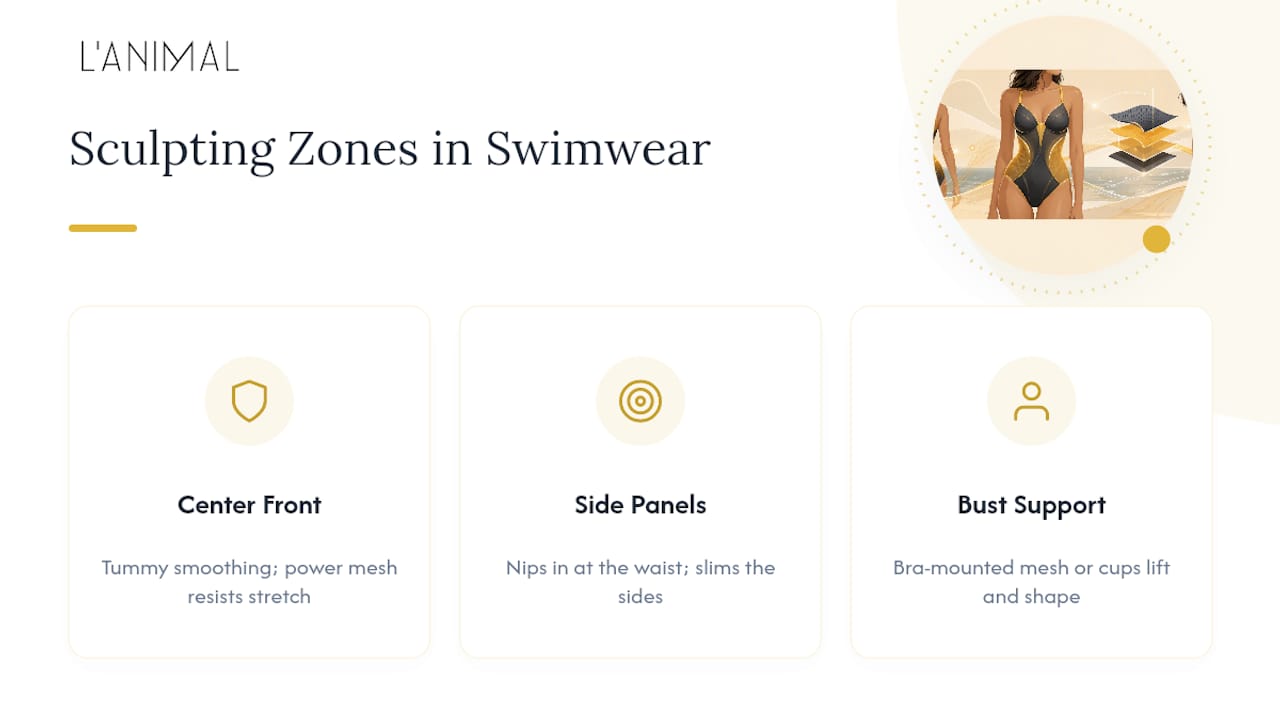
Picture the internal architecture like this: a center-front panel handles tummy smoothing, side panels nip in at the waist, and a bra-mounted mesh or sewn-in cup shapes and lifts the bust independently. Each zone does a different job, which is why the best sculpting suits describe their construction zone by zone rather than making one blanket claim.
Fabric content is the first thing worth checking, and it’s usually printed right on the tag or product page. Lycra, spandex, and elastane are stretch fibers blended into nylon or polyester bases, and the percentage of that stretch fiber determines how much recovery the fabric has after it’s stretched. A higher elastane percentage generally means a suit holds its shape through more wears before it starts to sag.
Beyond the base fabric, several structural components do the actual shaping work:
| Component | Primary Role |
|---|---|
| Power mesh | Compresses and smooths against the skin |
| Tricot | Lines and softens contact with outer fabric |
| Stabilizer | Blocks stretch in targeted zones (waist, bust band) |
| Gusset | Reinforces and, in specialty builds, waterproofs the base |
| Underwire/sewn-in cups | Lifts and supports bust independent of body fabric |
Fabric innovation is pushing this further. Eurojersey’s Sensitive Sculpt fabric is a warp-knitted textile built with a reported high Lycra fiber content and Xtra Life Lycra certification, marketed specifically for silhouette control. The takeaway isn’t that every sculpting suit needs that exact number. It’s that elastane content isn’t a footnote. It’s the fiber doing most of the physical work, and a suit that’s vague about its percentage is usually vague for a reason.
A label that says “sculpting” or “tummy control” is a marketing claim, not a spec sheet. Compression and sculpting terminology gets used inconsistently across listings, which means the burden of proof is on the construction details, not the adjective.
Look for these before you trust a sculpting claim:
Red flags run the opposite direction. Vague phrases like “flattering fit” with no construction mention, a single-layer fabric claim paired with a sculpting promise, and product photos that only show the outside of the suit should all make you pause. Review patterns matter too. A cluster of reviews mentioning the suit “runs tight at first but breaks in” is a different signal than reviews describing sagging after a few wears.
Pro Tip: Search the product Q&A section for the word “tight” before you buy. Early tightness that eases with wear is normal for compression fabric. Complaints about tightness after several washes usually point to weak stretch recovery, not a fit issue.
Full one-piece suits are the most common sculpting carrier, since the continuous fabric panel across the torso gives designers the most room to layer mesh and control panels. Most one-piece sculpting suits target overall torso smoothing rather than one specific zone.
High-waist bottoms sculpt differently. They cover more of the lower abdomen and hip, which means the compression zone sits lower and wider than a one-piece’s front panel. Balconette or underwire bikini tops handle bust support on their own, independent of whatever the bottom is doing. Tankinis with a built-in control panel split the difference, offering torso coverage without full one-piece commitment.
Pro Tip: If a suit relies on ruching or color-blocking instead of internal panels, that’s not a flaw. It’s a different tool. Visual tricks work well for someone who wants a leaner look without firm compression, while true panels suit someone who wants physical hold.
Sculpting swimwear tends to suit anyone who wants extra smoothing or support: women with fuller midsections, postpartum bodies still adjusting, and anyone who prefers firmer bust lift than an unlined suit provides. If you’re shopping after surgery of any kind, check with your doctor before choosing a suit with strong compression around the treated area.
Here’s the tradeoff nobody puts on the product page: shaping panels can’t fix the wrong torso length or inadequate cup support. A suit with excellent compression fabric but a torso that’s two inches too short will dig and bunch no matter how good the mesh is. Shaping only works when the underlying fit is correct first, which is why measuring matters more here than with a basic suit.
Measure three things before you buy: your natural waist, your bust at the fullest point, and your torso length from shoulder to crotch (for one-pieces especially). If you fall between sizes, size up for comfort rather than down for maximum compression. A proper fit for your body type will always outperform a suit that’s technically the “shaping” version but physically too small.
Run this quick fit-check once you try a suit on:
Prioritize construction proof over marketing adjectives every time. That’s the entire rule, and everything else on this list just helps you apply it.
Red flags worth repeating: no construction details anywhere on the page, zero inside photos, and claims that promise dramatic transformation with no mention of what’s actually sewn into the suit.
Gentle cleaning and air drying preserve Lycra, spandex, and power mesh better than any other combination. Rinse the suit in cool water right after wearing it, especially after chlorine or salt water exposure. Hand-wash or use a mesh bag on your machine’s delicate cycle, and skip the dryer entirely. Heat is the fastest way to break down elastane’s stretch recovery. Rotating between two suits also extends the life of the compression fabric, since it gives the elastic fibers time to recover between wears.

Pro Tip: Use a swim-specific detergent (not regular laundry soap) if you swim more than once a week. If you notice torn mesh or a lining that’s stretched out and won’t snap back, that’s a repair or replace situation, not a wash-it-harder one.
Sculpting swimwear uses swim-safe fabrics and structural elements built to shape while staying breathable and chlorine-resistant. Lingerie shapewear, by contrast, is typically not designed for water exposure and relies on different fiber blends that break down fast when wet.
The real confusion is between compression and contouring. Compression means firm, physical hold from mesh or panels. Contouring means the visual effect of a seam or cut, without necessarily adding stretch resistance. Product pages routinely use “hold,” “sculpt,” and “contour” as if they’re interchangeable, when they describe different levels of firmness entirely.
| What to Check | Real Sculpting Swimwear | Visual Contouring Only |
|---|---|---|
| Layering | Double-layer or power mesh lining | Single layer with strategic seams |
| Construction notes | Named stabilizer, panel, or mesh zone | Vague terms like “flattering cut” |
| Inside photos | Lining visible in product images | Outside view only |
Some specialty pieces, like period-friendly swimwear, use a similar layered logic with an added waterproof backing layer, a good reminder that “layered construction” isn’t unique to sculpting suits, it’s a broader swimwear engineering principle.
Skip firm compression if comfort or range of motion matters more to you than shaping. Competitive or lap swimmers usually do better in a streamlined, low-compression suit built for movement, not hold. If your torso length or cup size doesn’t match what’s available, no amount of panel structure will fix that fit problem. Certain post-surgery restrictions also call for lighter compression, so check with your doctor first. One safety note worth remembering: any swimwear that feels like it’s cutting off circulation, rather than simply firm, should come off immediately.
Effective sculpting comes down to one balance: structure plus comfort, not structure instead of comfort. A suit that compresses hard enough to smooth every line but leaves you counting the minutes until you can take it off has failed at half its job.
Construction choices reflect that tradeoff constantly. Power mesh across the front handles tummy smoothing without restricting the sides, where most of your movement happens when you sit, bend, or swim. Side panels, when added, define waist shape but need enough give to avoid digging in. Stabilizers and underwire come in only where bust support genuinely requires them, since adding structure where it isn’t needed just adds bulk.
L’ANIMAL’s Sail One-Piece applies this directly, built from Italian fabric with mesh detailing placed to shape without over-compressing.
Sculpting done well should disappear the moment you forget you’re wearing it. If you’re aware of the suit all day, the construction missed the mark somewhere.
Sculpting a swimsuit isn’t about hiding anything. It’s about giving a body the support it deserves so you can stop adjusting straps and start actually enjoying the water. That’s the standard I hold every L’ANIMAL piece to.
We work with Italian stretch fabrics because recovery matters more than day-one compression. A suit that holds its shape through a full season of wear is worth more than one that feels dramatic for two weeks and sags by the third.
If a fit isn’t right, our sizing guidance and return policy exist so you’re not stuck with a suit that compresses in the wrong places.
Every principle covered here, power mesh placement, double-layer fronts, panel zones tuned to movement, is exactly what shows up in L’ANIMAL’s designer pieces.

Our sculpting styles use Italian fabrics with elastane blends chosen for recovery, mesh panels positioned for smoothing without restriction, and adjustable straps so bust support fits your frame rather than a generic size chart. The Sportif Bikini Bottom applies this same construction logic to bottoms, with control paneling built into the waistband rather than bolted on as an afterthought. If you want to see how these features look across a full range of styles, browse the Collections page and check the fabric and construction notes on any piece before you buy, the same way this article just walked you through doing.
What is sculpting swimwear, in simple terms? Sculpting swimwear is a suit built with internal fabric layers, mesh, or panels designed to smooth and support the body, rather than relying on the outer fabric alone to hold its shape.
How does sculpting swimwear work without feeling like shapewear? It works through targeted compression, usually power mesh sewn behind the outer layer, placed only where support is needed, so the rest of the suit stays flexible for movement.
Is sculpting swimwear the same as tummy-control swimwear? They overlap heavily. Tummy control usually refers to compression at the midsection specifically, while sculpting swimwear can include broader shaping across the bust, waist, and hips.
Can I tell if a suit is truly sculpting before buying it online? Check the fabric description for power mesh or double-layer mentions, look for inside-view photos, and read reviews for comments about compression level and initial tightness.
Does sculpting swimwear work for every body type? It benefits most body types looking for extra smoothing or support, but the suit still has to fit your torso length and cup size correctly. Panels can’t compensate for the wrong size.


