Free Shipping on US orders over $150
-
Collections
-
Bikini
- One Pieces
- Cover-Ups
- Men's
- Sale
- MODA GLAM x L'ANIMAL
- Nice Breed
-


Double-layered swim fabrics deliver reliable opacity, structural shaping, and gentle support by combining an outer shell with an inner lining that together increase effective fabric weight (GSM) and block light transmission even when wet or stretched. The result is a suit that holds its shape, stays modest, and keeps padding in place.
Top 3 benefits at a glance:
Lanimal, founded by designer Lital Simel-Rhedrick, applies this construction across its swimwear collection, pairing outer shells with microfiber tricot linings selected for both coverage and comfort.
The outer shell handles appearance and color. The inner lining does something different: it breaks the path of light traveling through the fabric and stabilizes the shell under stretch. When fabric is pulled taut or gets wet, its refractive index shifts, making single-layer fabrics more transparent. A second layer interrupts that light path before it reaches the skin, which is why double-layer construction is the standard engineering solution for opacity in fashion swimwear.
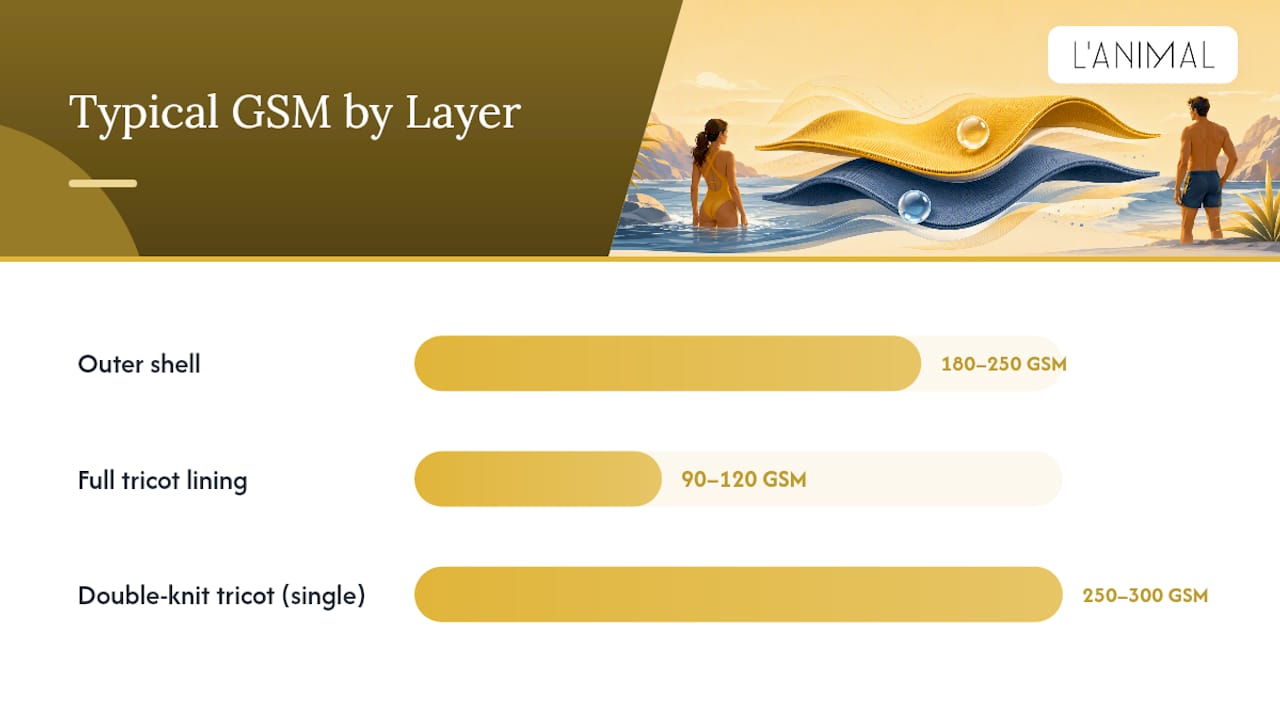
GSM (grams per square meter) is the key metric. According to Sportek International, outer swim fabrics generally have medium to heavy weight, while standard linings are typically light to medium weight. Combining both layers raises the effective GSM at any given panel, improving coverage without requiring a single heavier fabric.
| Layer | Typical GSM | Primary function | Effect on opacity |
|---|---|---|---|
| Outer shell | 180–250 GSM | Color, texture, appearance | Moderate alone |
| Full tricot lining | 90–120 GSM | Light break, stretch stabilization | High when combined |
| Double-knit tricot (single layer) | 250–300 GSM | Built-in opacity and compression | High, no lining needed |
Stat callout: Two layers of lining paired with a medium to heavy outer shell significantly increase effective coverage — a practical reason why swimwear linings are standard in quality construction.
The best double-layer construction pairs a warp-knit outer shell with a soft nylon/spandex tricot or microfiber tricot lining. Each lining type has a different profile:
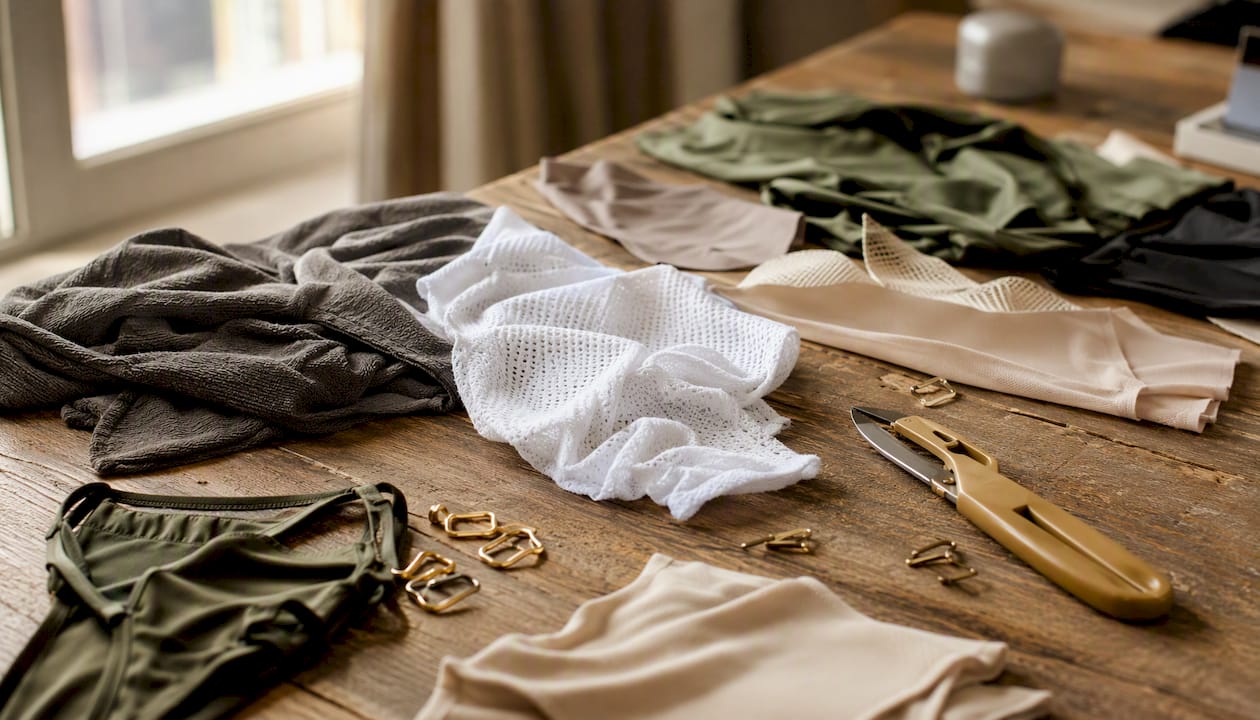
| Lining type | GSM range | Best for | Tradeoff |
|---|---|---|---|
| Nylon/spandex tricot is a light to medium weight lining | General coverage, everyday wear | Slightly slower drying than mesh | |
| Microfiber tricot is a light to medium weight lining | Luxury feel, breathability | Slightly less compression | |
| Power mesh is a very light weight lining | Tummy control, active use | Semi-sheer alone; needs solid outer |
According to Spandexbyyard’s lining guide, full linings increase opacity and support but add some weight and can slow drying, while mesh linings are lighter and faster-drying but typically need pairing with a solid outer for light-colored fabrics.
For readers prioritizing sustainable material choices, recycled nylon tricot linings are now widely available and perform comparably to virgin nylon in stretch and opacity.
Pro Tip: Match the stretch percentage of the lining to the shell. If the outer fabric stretches 50% in four directions, the lining should too. Mismatched stretch causes bubbling, puckering, and premature delamination at seams.
Double-layer construction is the right choice for anyone who prioritizes coverage, support, or longevity over minimal weight. It’s particularly well-suited to:
Pro Tip: For active water sports, choose a power mesh lining insert at the tummy panel rather than a full tricot lining. Power mesh delivers compression and control without the added weight of a full lining across the entire suit.
The single most important rule: rinse in fresh water immediately after use, hand wash with a mild detergent, and air-dry flat away from direct sun. Heat and UV exposure degrade spandex in both the shell and lining, and the lining is often the first layer to lose elasticity.
Step-by-step care:
Pro Tip: Run a stretch-to-light test and a wet opacity test on your suit every season. Hold the fabric to a light source and pull it taut; then wet both layers and check coverage. If the lining has lost opacity or the layers separate, it’s time to replace the suit.
Double layers add weight and can slow drying. For most fashion and resort swimwear, that tradeoff is worth it. For a few specific uses, it isn’t.
Common drawbacks of double-layer construction:
Single-layer construction makes sense when speed and minimal weight are the top priorities, such as in competitive performance suits. Double-knit tricot fabrics in the 250–300 GSM range can also function as a single opaque layer, providing built-in coverage without a separate lining. For performance swimwear designed for racing, a single technical layer often outperforms a double-layer fashion construction.
One-line summary: confirm the lining type, check that stretch percentages match, and run a wet test if possible before committing.
| Checklist item | What to look for |
|---|---|
| Lining type stated | Tricot, microfiber tricot, or power mesh — not just “lined” |
| GSM or weight noted | Outer shell is medium to heavy weight; lining is light to medium weight |
| Pad pocket present | Secure pocket, not just a loose insert |
| Matched stretch | Shell and lining stretch in the same directions and percentages |
| Seam quality | Lining attached at all edges, no loose sections |
| Care instructions | Separate care notes for lined construction |
Pro Tip: When shopping online, contact customer service and ask two questions: what is the lining GSM, and do the shell and lining share the same stretch percentage? A brand that can answer both is working from a proper tech pack. One that can’t may be using a generic lining that doesn’t match the shell.
Double-layered swim fabrics improve opacity, fit, and support by combining a 180–250 GSM outer shell with a 90–120 GSM lining that blocks light, stabilizes stretch, and secures padding.
| Point | Details |
|---|---|
| GSM and opacity | Outer shells run 180–250 GSM; linings add 90–120 GSM, raising effective coverage when combined. |
| Lining type matters | Microfiber tricot gives a soft feel; power mesh adds compression; full tricot maximizes opacity. |
| Stretch matching | Shell and lining must share the same stretch percentage to prevent bubbling and seam stress. |
| Care rule | Rinse, hand wash, and air-dry flat after every use to preserve lining elasticity and opacity. |
| Lanimal construction | Lanimal pairs outer shells with microfiber tricot linings and pad pockets across its women’s swimwear collection. |
Most swimwear conversations focus on color and silhouette. The construction underneath those decisions is what actually determines whether a suit fits well after two hours in the water or loses its shape by noon.
Double-layer construction isn’t a premium add-on. It’s the baseline for any swimwear that needs to perform across a full day at the beach, a pool session, or a resort trip. A lining that matches the shell’s stretch percentage, sits flat against the skin, and holds padding in place is doing structural work that no amount of attractive outer fabric can replicate. Skipping it to reduce cost or weight is a tradeoff that shows up immediately when the suit gets wet.
The detail that separates quality construction from average construction is whether the lining was selected to match the shell, or just attached because a lining was required. Microfiber tricot linings in the 90–110 GSM range, used in Lanimal’s designs, reflect that kind of deliberate pairing: lightweight enough to avoid bulk, dense enough to maintain coverage, and soft enough to sit against skin all day. Readers who want to understand more about what goes into quality swimwear construction can find additional detail on the Lanimal blog.
Lanimal’s women’s swimwear is built with microfiber tricot linings, pad pockets, and matched stretch specifications across key panels — the construction details this guide covers.
Every piece is designed by Lital Simel-Rhedrick with attention to lining selection, seam placement, and fabric weight. If you’ve been researching double-layer construction and want to see it applied to designer swimwear, the full collection is available at lanimal.co. Filter by style, check the product descriptions for lining details, and contact the team directly with any construction questions.
The following sources informed the technical guidance in this article.
Further reading on the Lanimal blog:


